Vacheron Constantin 222: Pure Seventies Architecture in Yellow Gold
An afternoon at Vacheron Constantin's Geneva boutique handling the Historiques 222, Jorg Hysek's 1977 masterstroke in yellow gold that remains horology's most disciplined luxury sports watch.
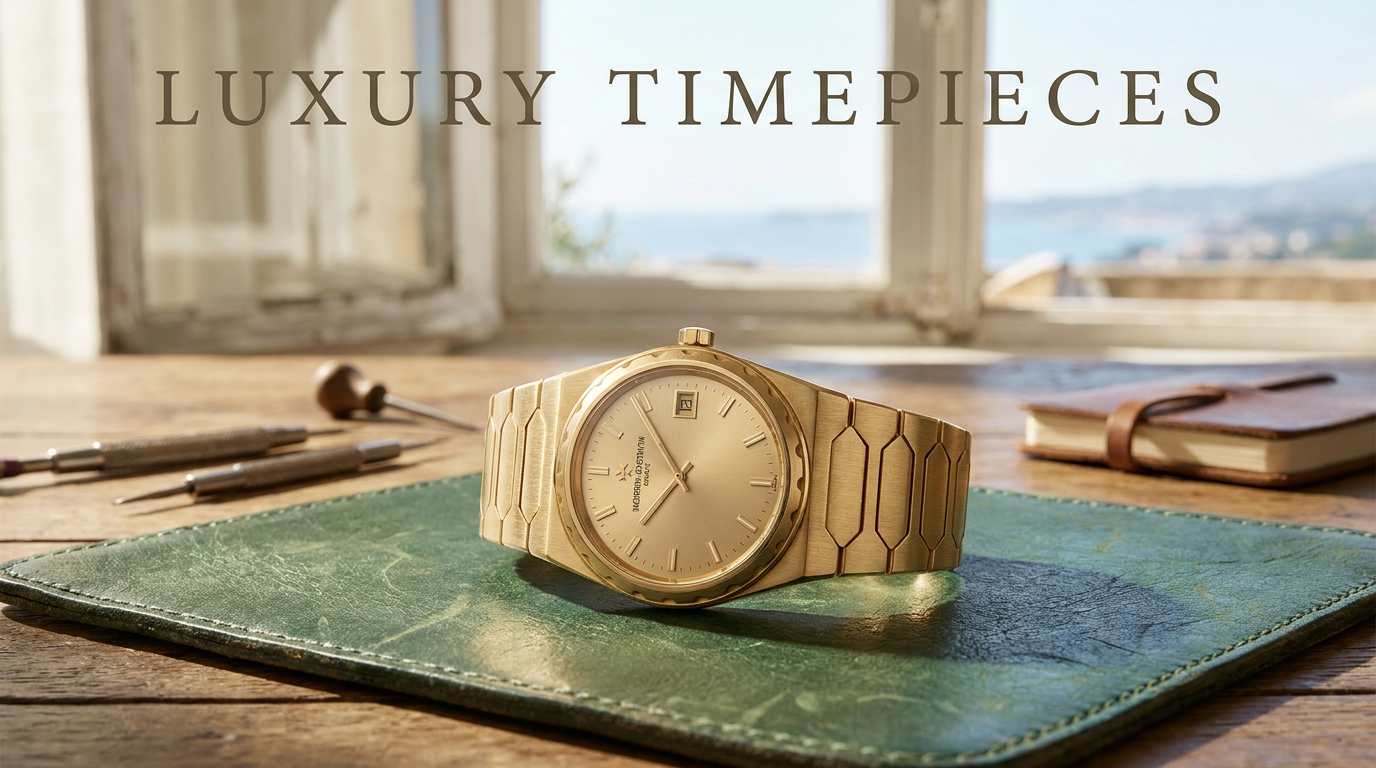
An overcast late-October drizzle had settled over the Rue du Rhône, turning the grey paving stones slick beneath my brogues. Inside the quiet upstairs salon of the Vacheron Constantin heritage boutique, the sound of the Geneva traffic vanished behind thick acoustic panelling and heavy velvet drapery. A demitasse of black espresso steamed beside a dark green leather tray. The boutique director turned a brass key, lifted the felt-lined display pad, and laid down reference 4200H/222J-B935.
In the flesh, the modern Historiques 222 produces a physical shock of pure, uninterrupted yellow gold. It does not possess the cool aloofness of stainless steel, nor the muted politeness of contemporary pink alloys. It is an unapologetic, buttery, seventies ingot that catches the salon's dim halogen spots with unmistakable warmth.
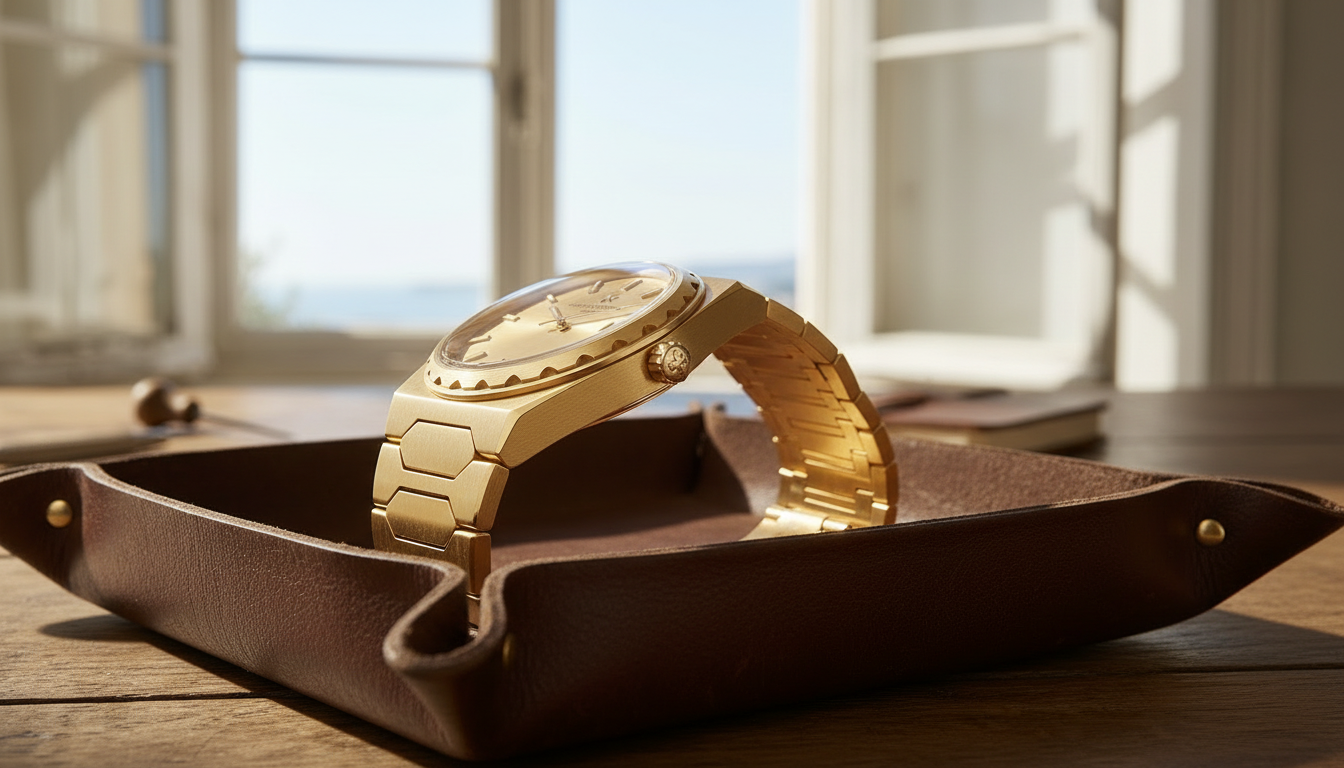
When the original reference 222 appeared in 1977 to celebrate the maison's 222nd anniversary, it was widely misattributed to Gérald Genta, whose Royal Oak and Nautilus had already redefined luxury sports horology. In truth, the commission had gone to a young Jorg Hysek, then barely twenty-four years old. Hysek possessed an eye unburdened by nautical portholes or royal oak screws. His design was altogether more severe, drawing from industrial purity and monolithic architecture. Where Genta leaned into exposed hardware and marine flourishes, Hysek gave Vacheron Constantin a flat, sculpted monobloc form that felt chiseled from a single block of gold.
Holding the modern reissue in hand, that distinct architecture remains astonishingly intact. The tonneau case measures an exacting 37 millimetres in diameter, preserving the legendary "Jumbo" proportions of the 1977 original. At just 7.95 millimetres thick, it sits virtually flush against the wrist, sliding beneath a tailored cuff with effortless discretion. The case geometry relies on a series of crisp, razor-sharp bevels that contrast beautifully against the satin-brushed planes of the upper case.
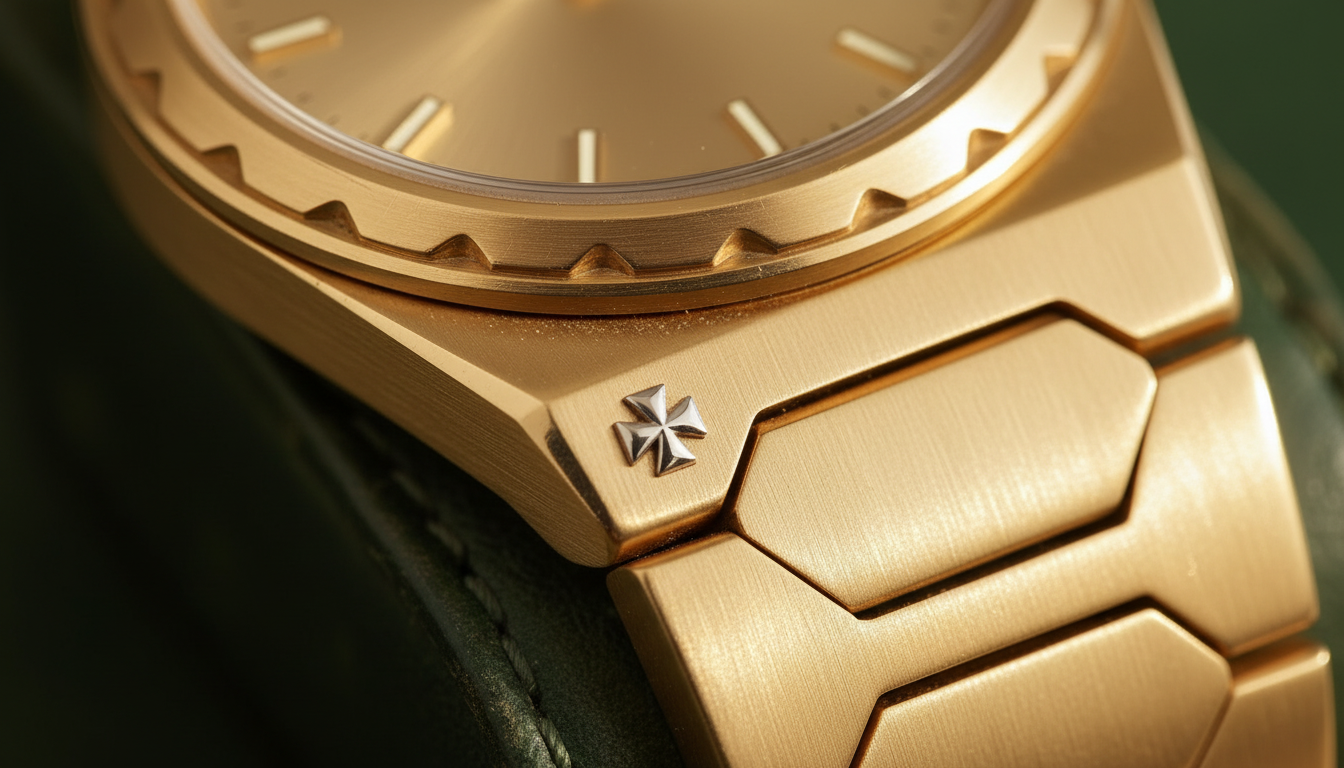
The bezel is immediately distinctive: a circular ring with deep, scallop-like fluting that resembles the teeth of an industrial gear or a vintage bottle cap. It provides texture and visual grip, balancing the sleek flatness of the case. Yet the watch's most celebrated signature sits quietly at five o'clock on the case flank. There, stamped in polished white gold and soldered directly into the corner of the tonneau case, sits a miniature Maltese cross. It is an eccentric, asymmetric detail that defies traditional Swiss orthodoxy, catching the light like an unexpected talisman whenever the wrist turns.
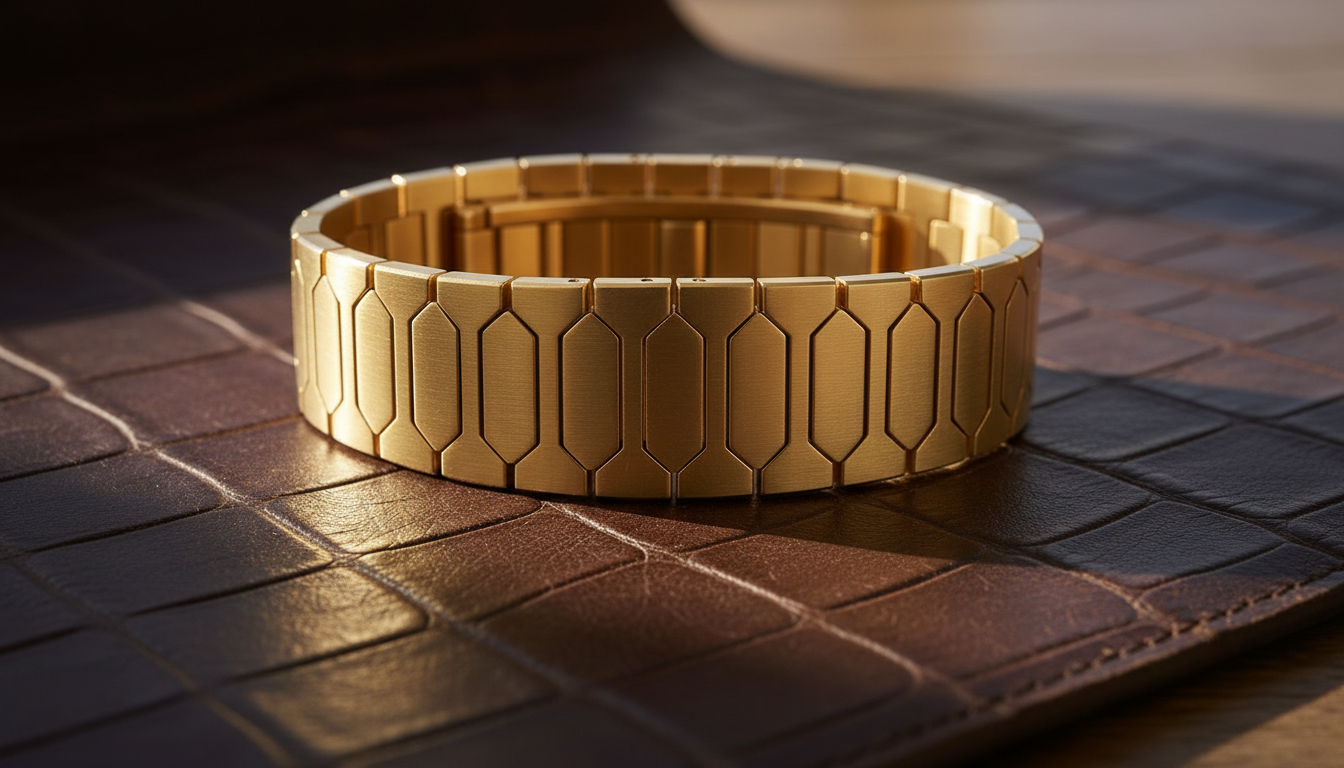
The bracelet is equally a triumph of tactile engineering. Composed of hexagonal central links flanked by brushed exterior elements, it articulates with fluid weight. There are no pinches, no rattling tolerances. The modern clasp has been updated with a secure triple-blade folding mechanism, but on the wrist, the drape feels entirely vintage. The gold feels dense yet silky, settling against the skin with that specific, cool heft that only solid eighteen-karat gold can deliver.
Behind the sapphire crystal, the matte gold-toned dial exhibits remarkable discipline. It foregoes the elaborate guilloché tapisserie of Le Brassus or the horizontal deck grooves of Geneva rival Patek Philippe. Instead, Hysek chose a calm, brushed surface punctuated by straight yellow-gold baton indices and simple pencil hands. Super-LumiNova fills the hands and indices, tinted with an off-white cast that nods to aged tritium without drifting into theatrical faux-patina. The date aperture at three o'clock features a tone-matched gold wheel, avoiding the harsh interruption of a stark white background.
Turning the case over reveals where the modern reissue departs decisively from the 1977 original. The historical model employed the Calibre 1120, based on the legendary Jaeger-LeCoultre 920 ébauche, hidden behind an engraved solid caseback. Reference 4200H exposes Vacheron Constantin's in-house Calibre 2455/2 through a sapphire exhibition back.
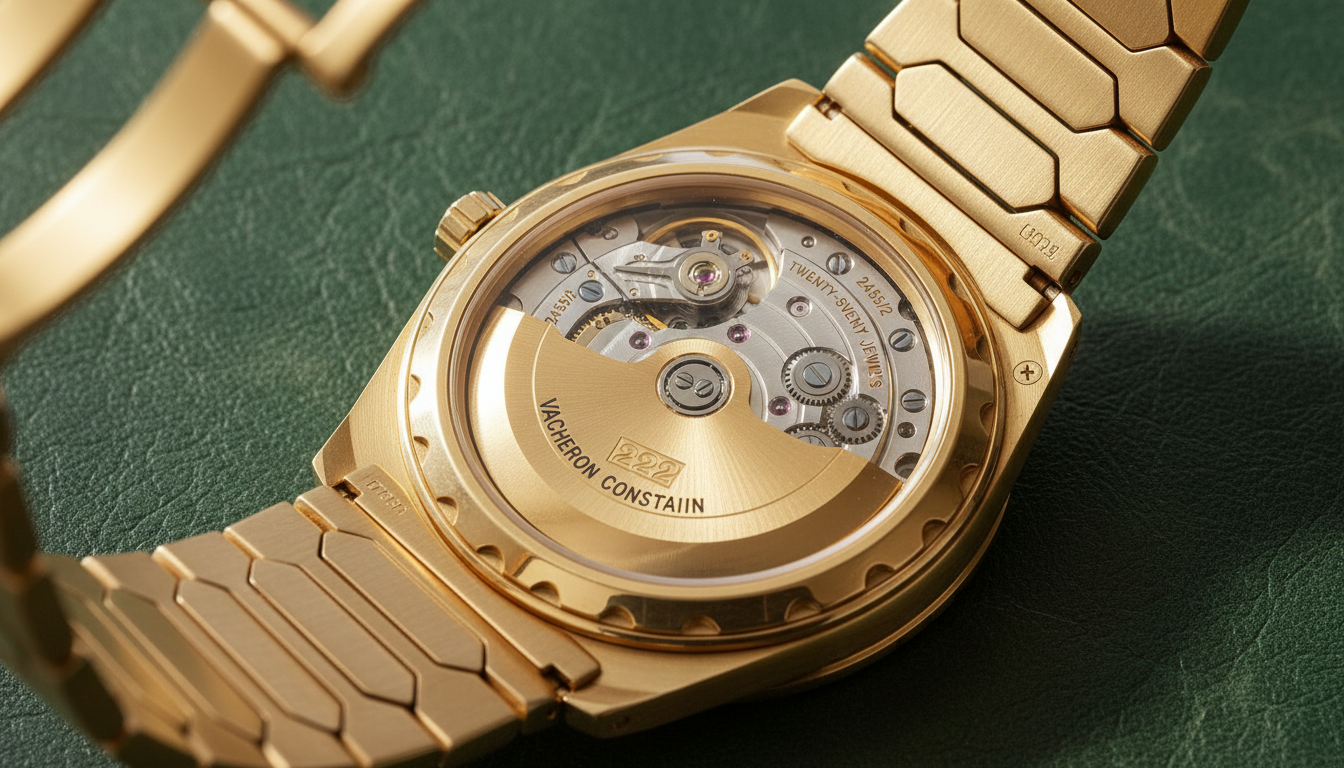
Beating at an updated frequency of 28,800 vibrations per hour, the movement provides a contemporary rapid-set date mechanism that spares the wearer the midnight-to-nine-o'clock shuffle of vintage pieces. The oscillating weight, crafted from twenty-two-karat gold, features the original 222 logo engraved alongside fluted notches that echo the watch's bezel. Bearing the Hallmark of Geneva, every bridge displays immaculate Côtes de Genève, while the bevelled sinks and polished screw heads glitter softly beneath the loupe.
As the boutique director fastened the clasp around my wrist for a brief final appraisal, the watch asserted its singular presence. While its seventies contemporaries have become ubiquitous status symbols traded like liquid commodities, the Historiques 222 retains a discerning, connoisseur's charm. It does not shout across a dining room, yet anyone who recognizes that five o'clock Maltese cross understands instantly that its wearer values historical nuance and rigorous industrial form over passing horological fashion. I unclipped the folding clasp with genuine reluctance, watching the golden silhouette disappear into its soft suede travel pouch as the cold Geneva drizzle resumed outside.