The Boss Over-and-Under: Mayfair’s Mechanical Masterpiece
Within the quiet confines of Boss & Co. on Mount Street, the 1909 patent over-and-under remains the peerless benchmark of the gunmaker’s art—a triumph of proportion, engineering, and bench craft.
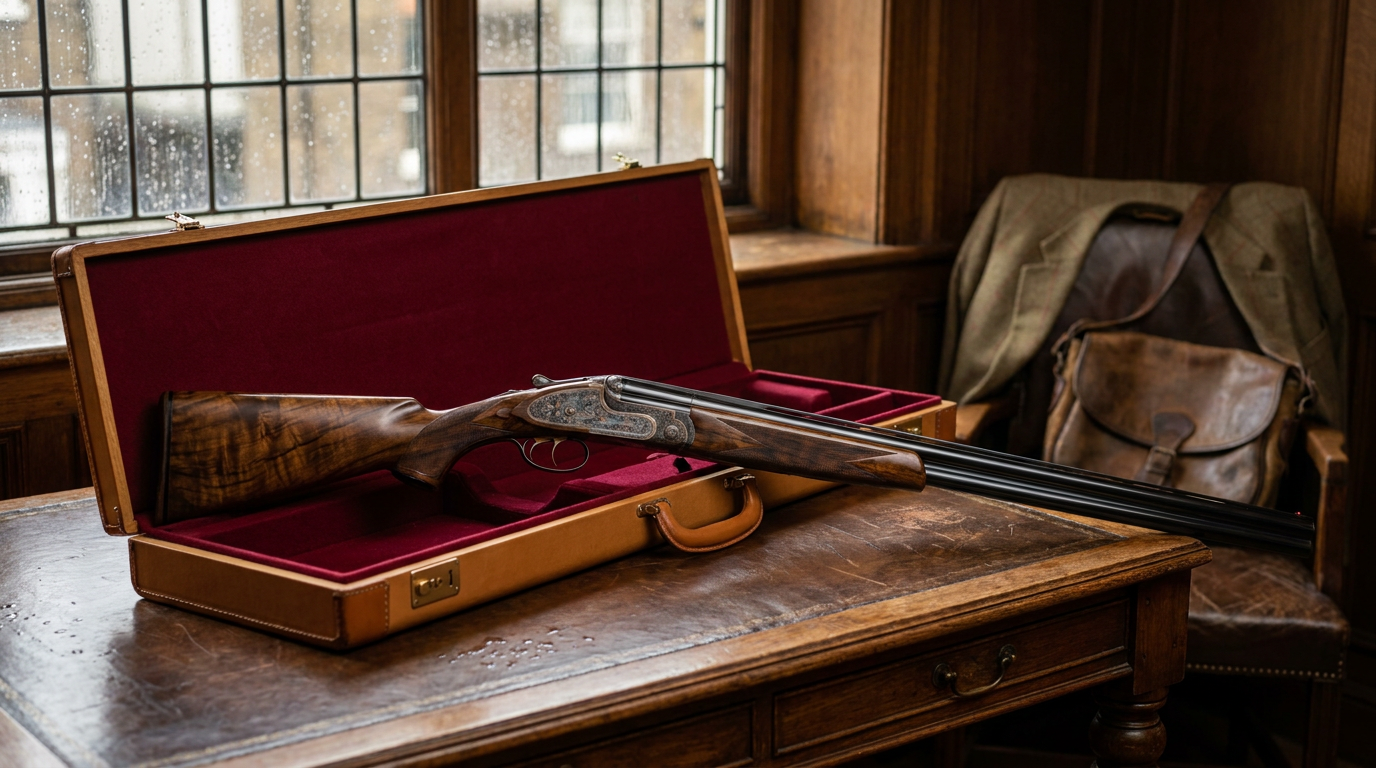
The late-autumn light along Mount Street had turned the colour of weak tea when the heavy oak door of Boss & Co. swung shut, cutting off the muted rumble of Mayfair traffic. Inside, the atmosphere possesses that singular quietude common to private banks, Savile Row cutting rooms, and rare-manuscript libraries. There is the scent of beeswax, aged French walnut, and Rangoon oil—a dry, alkaline perfume that signals serious mechanical enterprise. On the baize-lined mahogany table before me lay a newly finished 20-bore Boss & Co. Over-and-Under, built on the maker’s legendary 1909 patent, waiting for its final inspection before departing for an estate shoot in North Yorkshire.
To understand the sporting shotgun as an instrument of high human craft, one must eventually reckon with Boss. Founded in 1812 by Thomas Boss, the house never pursued the volume of its illustrious London neighbours. Where James Purdey & Sons built the definitive game gun for Victorian emperors and Holland & Holland perfected the sidelock for the Edwardian aristocracy, Boss steadfastly remained what it termed "the builder of best guns only." It has never offered a second grade. It produces fewer than twenty guns in a good year, every pin, tumbler, and spring shaped by hand, taking between two and three years from the initial measurement in the gunfitter’s cradle to delivery.
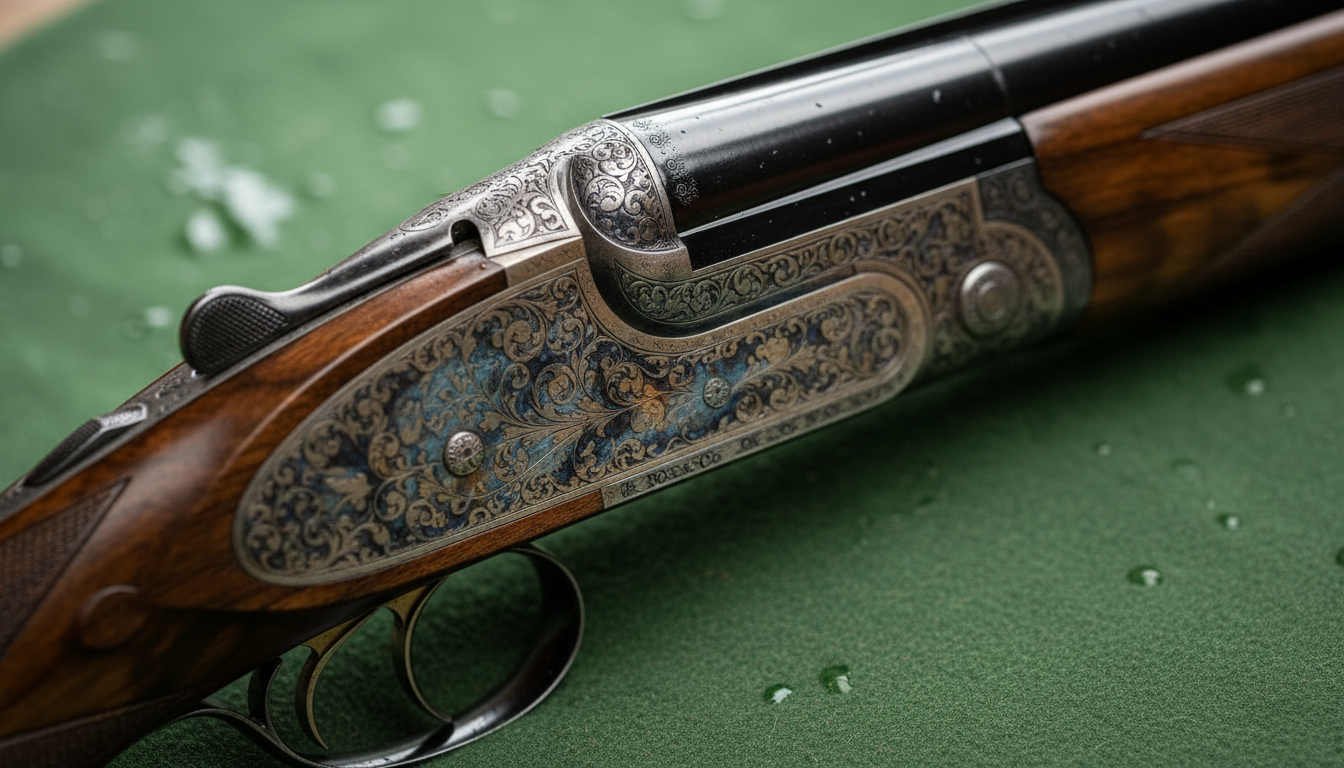
The gun lying on the table represents the zenith of this philosophy: the Boss Over-and-Under, patented in 1909 by John Robertson, the firm’s visionary proprietor. At a time when vertical barrel arrangements were clumsy, tall-profiled contrivances requiring monstrous actions, Robertson achieved the impossible. By abandoning the conventional through-pin hinge in favour of quadrant lumps machined directly into the sides of the barrels, rotating into corresponding recesses in the action walls, Robertson lowered the barrels deep into the body. The resulting gun was as shallow and elegant as a classic side-by-side, yet possessed the instinctive single-sighting-plane that modern game shots covet.
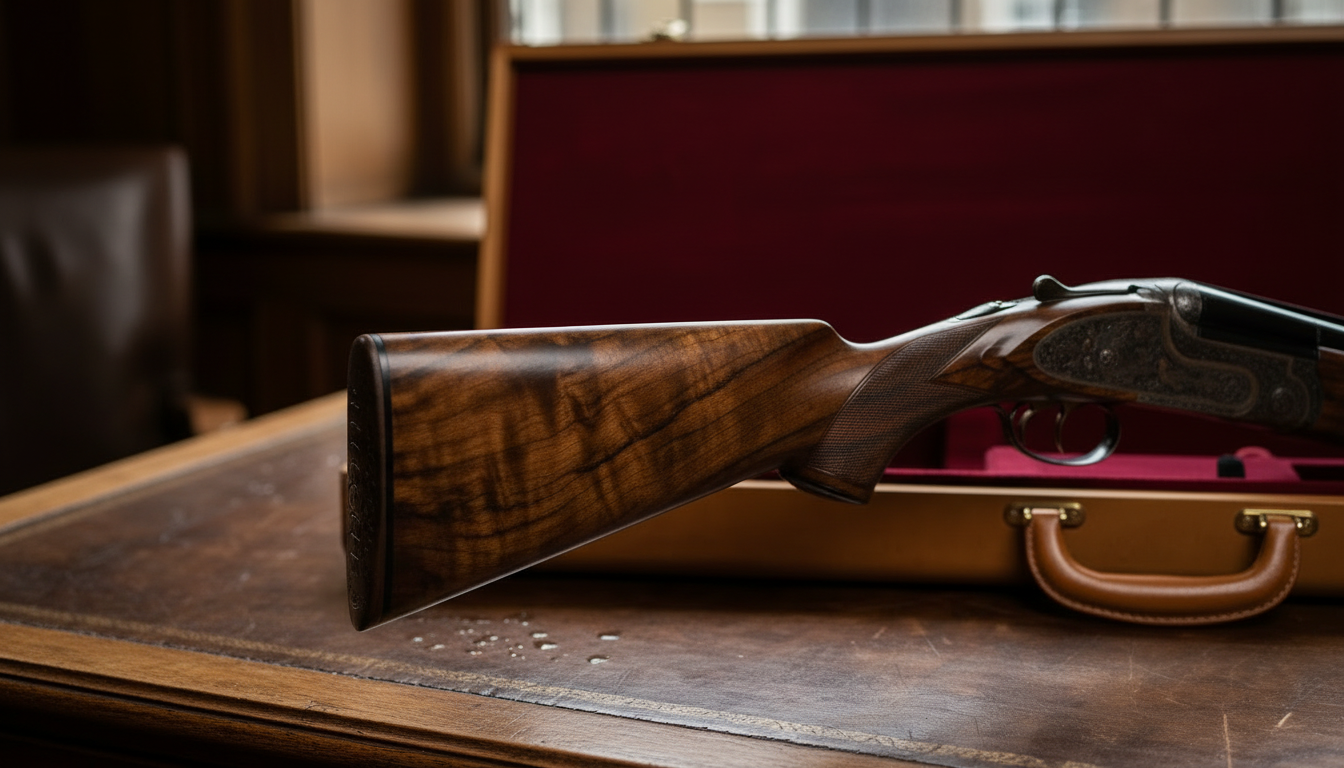
Lifting this 20-bore from the baize, the first impression is not of metal and wood, but of dynamic weightlessness. Tipping the scales at a hair over six pounds, with twenty-nine-inch chopper-lump barrels, its balance sits precisely between the hands. There is none of the muzzle-heavy inertia common to Continental competition guns; the Boss points as effortlessly as an outstretched forefinger. The stock, carved from a dense blank of Turkish circassian walnut that seasoned for twelve years in the drying lofts, displays a dark, fiddleback marble figure. Its oil finish is soft rather than mirror-bright, having absorbed dozens of coats of boiled linseed applied by the palm over four months.
The mechanical execution is an exercise in microscopic discretion. The action body is engraved with the firm’s classic small rose-and-scroll motif—a delicate, swirling tendril pattern cut with such depth and control that it softens the steel without obscuring its geometry. The colour case-hardening, achieved using charred bone and leather charcoal in a sealed crucible, washes across the lockplates in shades of mottled slate, petrol blue, and straw. On each side of the action, the famous Robertson patent ejectors sit concealed, cocked upon opening by dedicated slides that eliminate unsightly exterior clutter.
The lock mechanism itself is a Boss sidelock of astonishing jewel-like perfection. Unlike over-and-under designs that settle for trigger-plate or boxlock mechanisms, Robertson insisted on full bar-action sidelocks with intercepting safety sears. Opening the top lever produces a dry, definitive snick—the sound of hand-lapped surfaces releasing with zero tolerance. Closing the gun does not produce an iron clatter, but rather the velvet thud of a bank vault door seating into its frame. The fit between the rear face of the barrels and the standing breech is measured in ten-thousandths of an inch; holding the assembled barrels to the light reveals no daylight whatsoever.
Earlier this month, on a bright, frosty morning in the Rievaulx valley near Helmsley, I had the privilege of walking a line of pegs with an older sibling to this gun—a 12-bore Robertson patent built in 1928, still in active service after nearly a century of sporting use. Watching the high, curling birds clear the lip of the bracken-clad limestone scarp, one observed the absolute utility behind this uncompromising engineering. A gun that balances properly does not demand physical correction; it moves in unison with the shooter's vision, neutralising recoil through geometry rather than sheer ballast.
In an era when five-axis CNC milling machines and laser engraving have homogenised the sporting gun industry, Boss & Co. remains a defiantly stubborn outpost of the bench artisan. Down in the workshop beneath the showroom, actioners still work with smoke-black oil lamps to check the bearing surfaces of steel against steel, while stockers employ chisels ground to custom sweeps to inlet the locks, shaving walnut fibres one cell at a time. The 1909 Robertson action is notoriously expensive and difficult to build; several of London’s finest makers attempted to copy it over the century, only to abandon the effort due to the sheer cost of hand-fitting those bifurcated lumps.
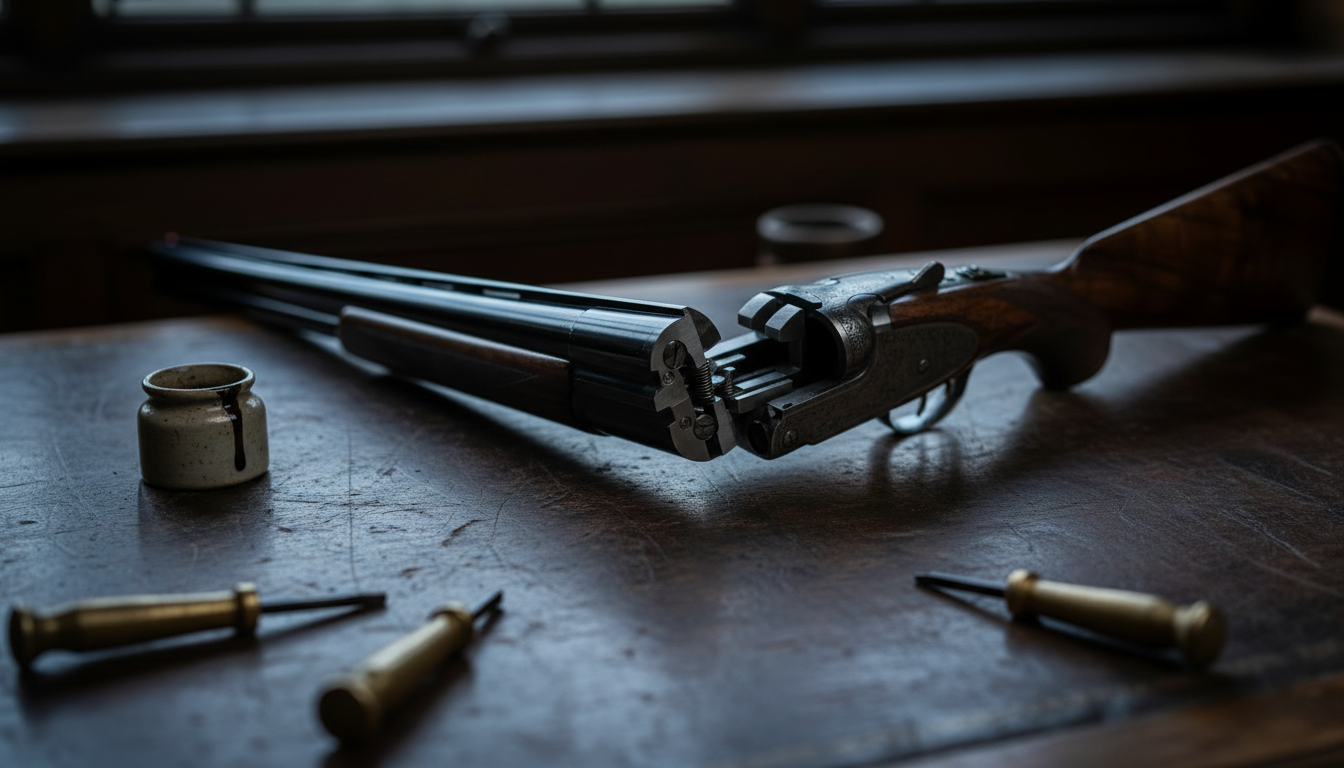
To handle a Boss Over-and-Under is to realise that luxury, in its truest and least corrupted sense, is not an accumulation of ornament, but the absolute refinement of function. The gun possesses an understated confidence—devoid of ostentation, utterly lethal in the field, and built to survive three generations of mud, rain, and relentless sporting pursuit without losing an iota of its poise. As the gun was carefully wiped down and laid into its fitted oak-and-leather case, strapped in crimson baize alongside its turn-screws and horn-handled oil bottle, one was reminded that some objects do not merely capture time; they defy it entirely.