The H. Upmann Sir Winston: A Study in Classical Measure
Two hours with Havana’s most aristocratic Churchill on a damp November evening in Knightsbridge, where patience and provenance still hold sway.
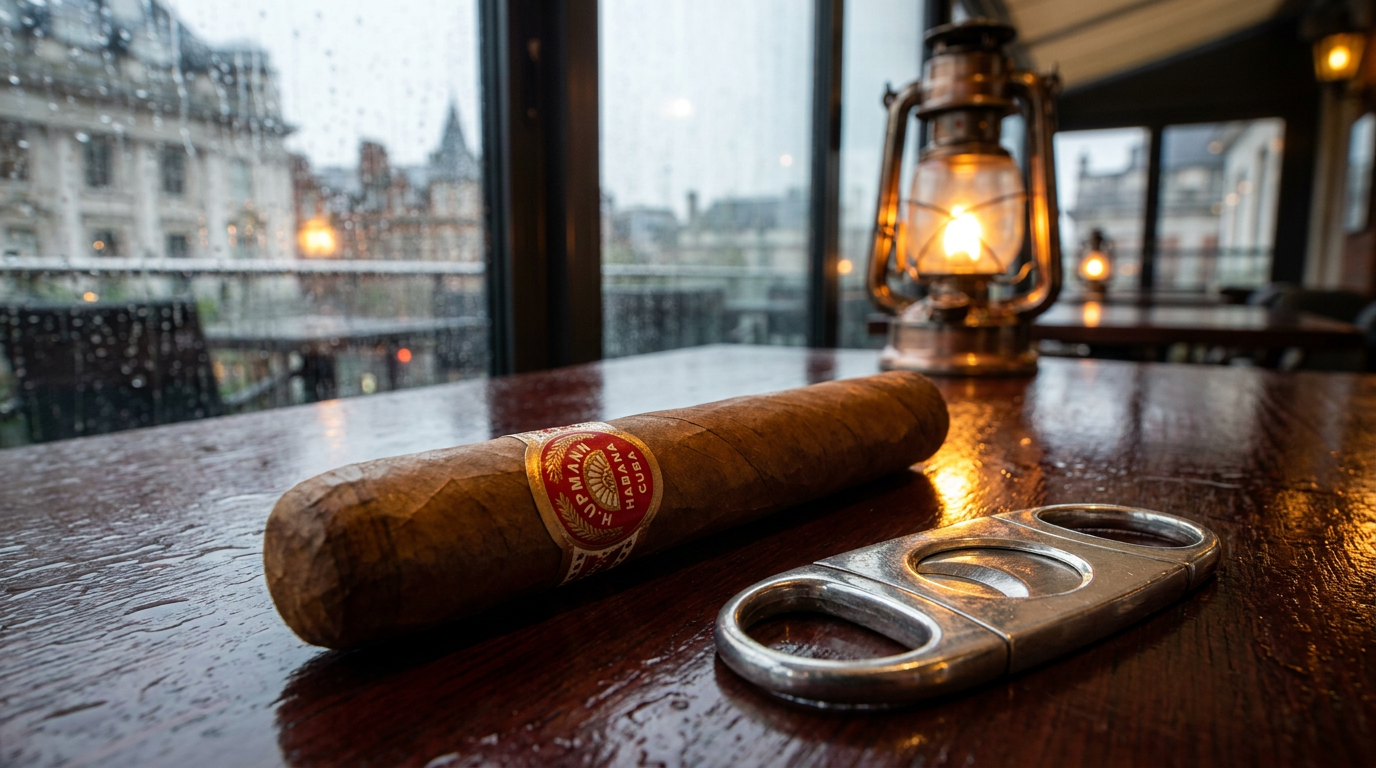
The terrace of The Wellesley overlooks Hyde Park Corner with the measured indifference of a private drawing room. On a damp Thursday evening earlier this month, as November mist settled over the plane trees along Duke of Wellington Place, the heated screens had descended, the ambient hum of London traffic had softened into a muted murmur, and the cigar sommelier arrived bearing a lacquered tray. Upon it rested a single, unbroken wooden cabinet: ten sticks of the H. Upmann Sir Winston.
Among the pantheon of Cuban vitolas de galera, the Julieta No. 2—better known as the classic Churchill—demands an investment that modern life seldom encourages. Measuring seven inches by a forty-seven ring gauge, it is an unapologetic declaration of time. In an era when the industry has capitulated to the stout, hurried convenience of fifty-four and fifty-six ring gauges, the Sir Winston remains a purist's refuge. It is rolled exclusively from the finest sun-grown leaf harvested in the Vuelta Abajo, the fertile limestone basin of Pinar del Río whose microclimate produces tobacco of unmatched aromatic elasticity.
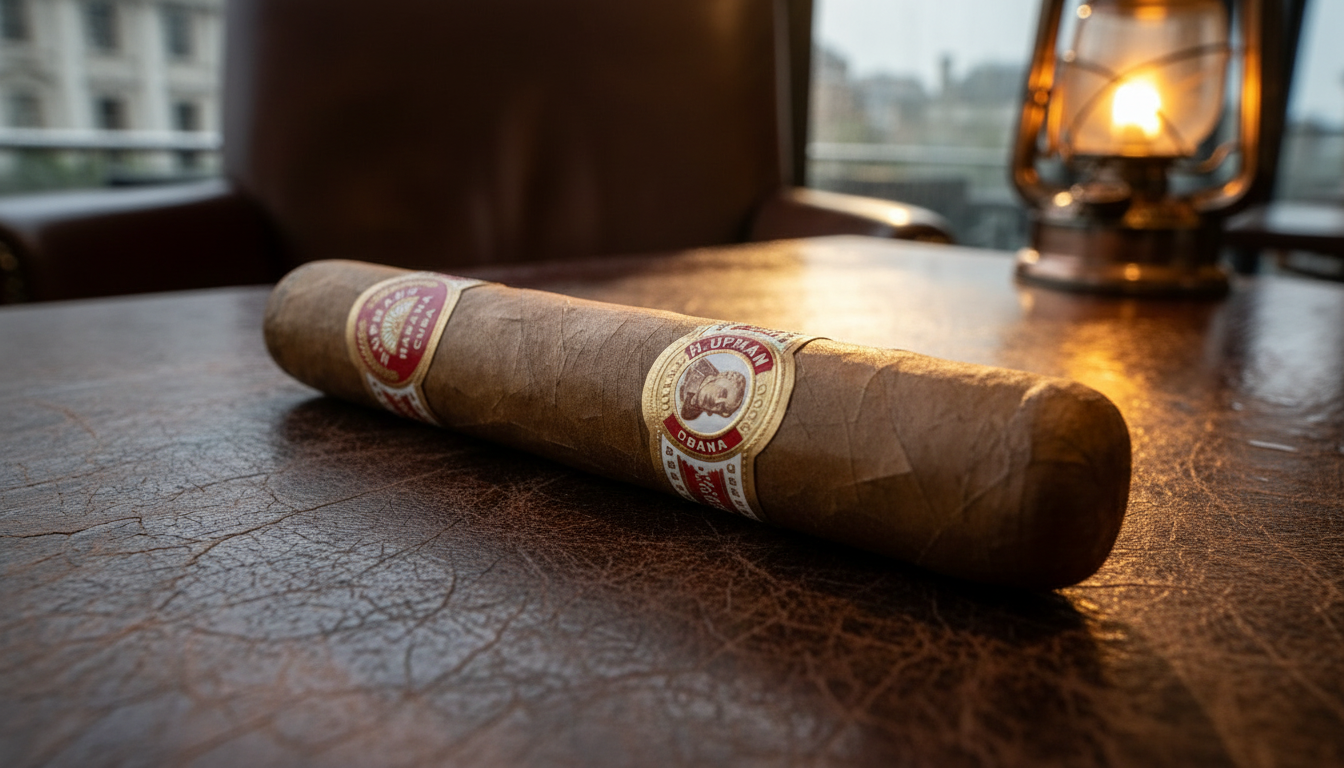
The example set before me bore a wrapper of silky, reddish-hued Colorado shade, tautly stretched with veins so faint as to appear painted upon the leaf. Before the flame touches it, the unlit foot yields aromas of toasted brioche, damp cedar, and that faint, unmistakable sweetness reminiscent of stewed apricots—a hallmark of mature Vuelta Abajo tobacco. Herman Upmann, the German banker who established his eponymous brand on Havana’s Calle San Miguel in 1844, understood that subtlety is often the truest expression of luxury. He famously had his cigars packed into cedar boxes bearing his own signature and seal, guaranteeing an unbroken lineage of condition. The Sir Winston, formally anointed with its current name in the 1960s to honour the British statesman whose loyalty to the factory’s output was legendary, continues that fastidious discipline.
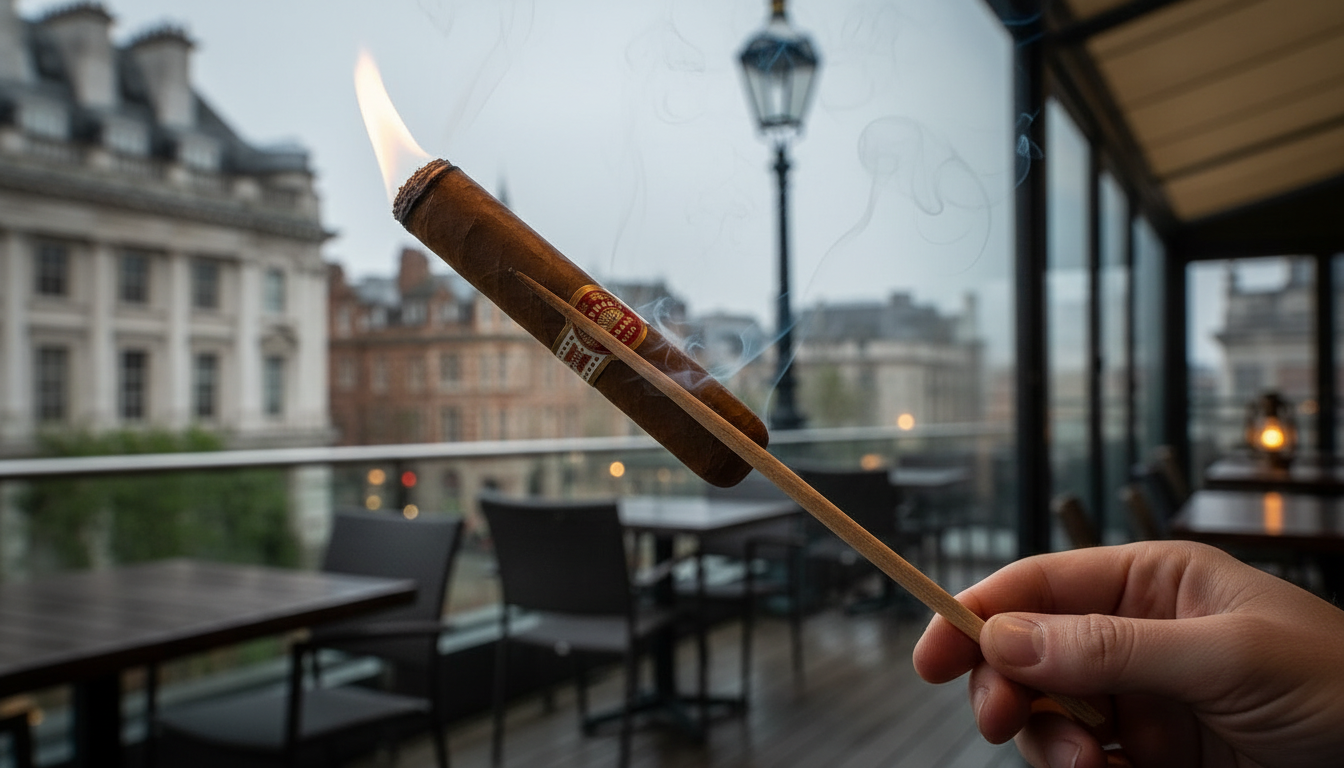
The ritual of ignition was leisurely. Using a long cedar spill drawn from a slim silver caddy, I toasted the foot with patient circular sweeps, never allowing the yellow flame to lick the wrapper directly. The draw was firm yet generous, offering just enough resistance to steady the cadence of the breath.
The first third opens not with the raw pepper of a newly minted stick, but with an almost tea-like clarity. There are whispers of toasted sourdough, dried almond, and sweet grass, framed by an extraordinarily delicate combustion line. The smoke is creamy, settling in pale, stratified ribbons beneath the canopy of the terrace. Paired against a measured dram of twenty-year-old Armagnac—its rancio and prune notes echoing the lighter esters of the tobacco—the initial ten minutes were an exercise in quiet contemplation.
By the time the burn reached the second third, the ash held in a tight, silver-grey cylinder, striated with fine concentric rings that attested to the roller’s mastery. In the grand torcido tradition of El Laguito and H. Upmann, constructing a Julieta No. 2 requires an artisan of Grade 9 competence. The filler leaves must be aligned with absolute parallelism—the volado providing combustibility at the core, the seco delivering delicate flavour, and the denser ligero placed precisely in the centre to regulate burning temperature. A single twist or knot in a seven-inch cylinder is fatal. Here, the construction was unimpeachable.
As the evening deepened and the chill gathered along the edge of the Park, the cigar underwent its slow, orchestrated transformation. The profile darkened, shedding its herbaceous sweetness for roasted hazelnut, damp autumn leaves, and bitter cocoa. It is in this central passage that the Sir Winston distinguishes itself from its heavier siblings in the H. Upmann portfolio, such as the Magnum 50. Where the thicker ring gauges push dense, oily earth toward the palate, the forty-seven ring gauge allows sufficient ambient air into the combustion chamber to cool the smoke, preserving intermediate floral and mineral nuances that broader formats obliterate.
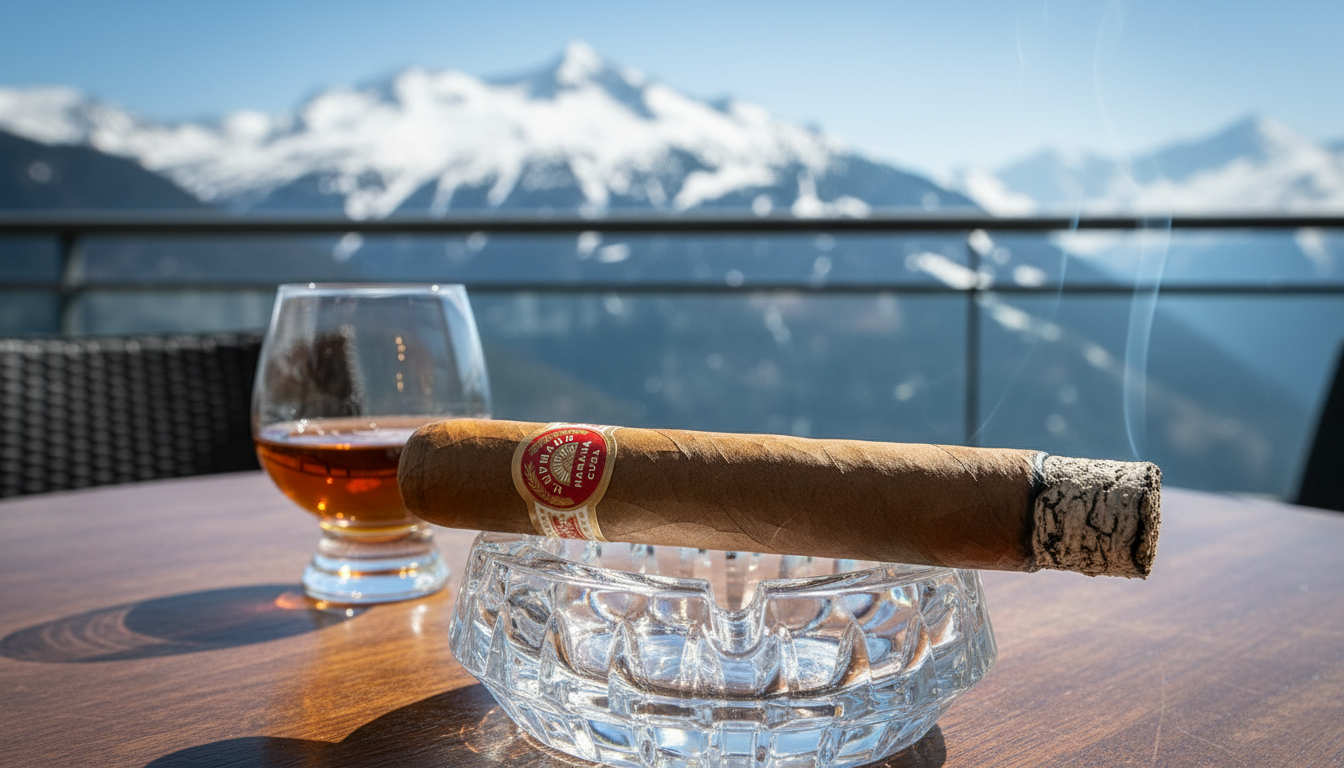
Entering the final third, after nearly an hour and forty minutes of steady, unhurried draws, the cigar reached its crescendo. The strength mounted from medium to a rich, resonant medium-full, yet without a single note of astringency or heat. The flavours converged into dark espresso bean, aged leather, and a faint salinity that clung gracefully to the palate. I laid the band—that understated golden circle with the imperial crest—aside, resting the remaining two inches of glowing tobacco in the heavy crystal ashtray to expire on its own terms. To crush a Churchill is an indignity; a cigar of this breeding deserves to extinguish itself in silence, leaving behind only the ghost of cedar and the memory of an evening stolen back from the clock.