The Vacheron Constantin 222: A Study in Gilded Form
Forty-nine years after its debut, the re-edition of Vacheron Constantin's iconoclastic sport-luxury watch offers a lesson in the enduring power of a singular, uncompromising vision. It is a timepiece born of the seventies, yet it feels entirely of this moment.
'''
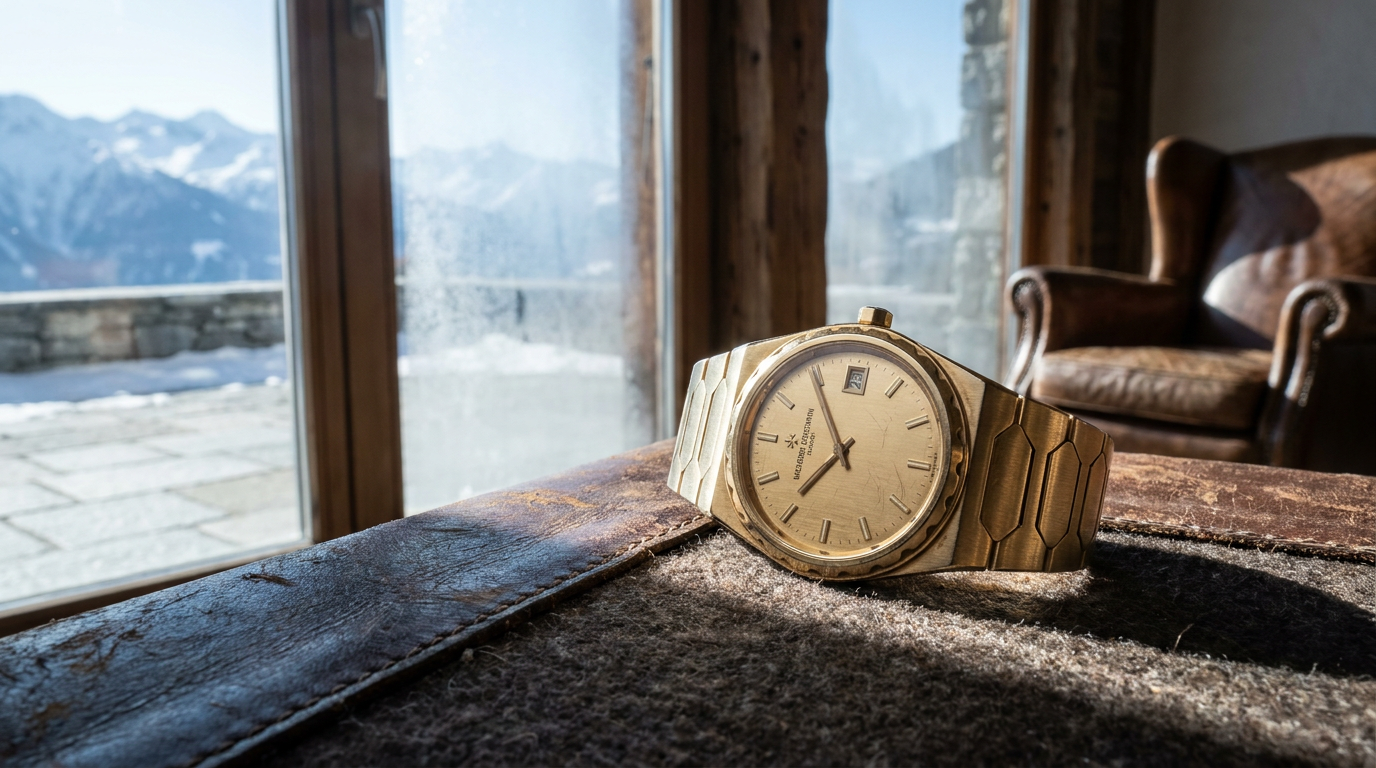
It arrived at the table just as the sun was setting over the lake in Geneva. A friend, recently returned from a visit to the Vacheron Constantin boutique on the Place de Longemalle, passed it across the starched white linen. "Jumbo," he said, with a quiet smile. The weight in the hand was the first surprise. In an era of feather-light titanium and ceramic composites, the heft of solid 18-karat 3N yellow gold is an unapologetic statement. This was the Vacheron Constantin Historiques 222, a watch I had been eager to spend some time with since its re-introduction. Seeing it there, the warm gold catching the last of the day’s light, felt less like an encounter with a re-edition and more like a reunion with an old principle.
A Child of the Seventies
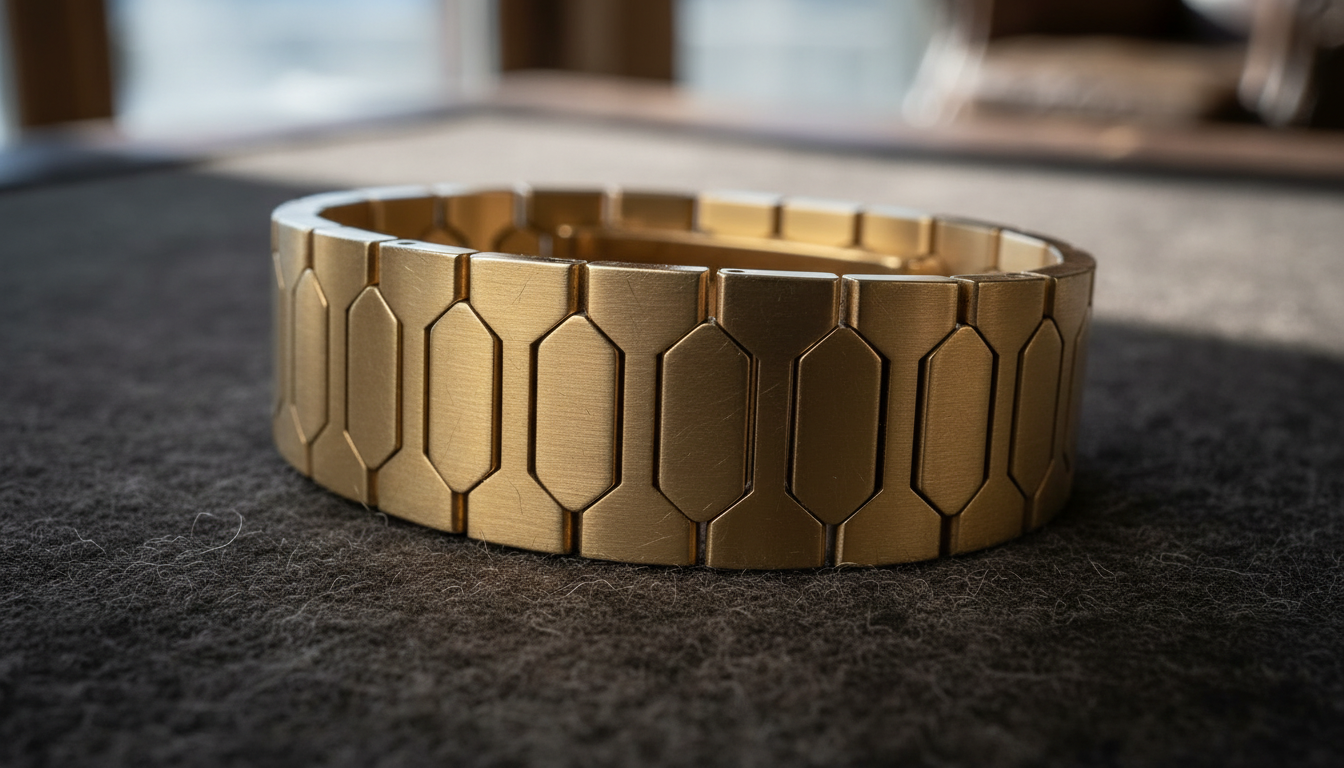
The original 222, launched in 1977 to mark the maison’s 222nd anniversary, was a product of its time. It was an era of profound change in watchmaking, a period that saw the rise of the integrated-bracelet luxury sports watch, a category arguably created by Audemars Piguet and Patek Philippe. Vacheron’s entry was designed not by Gérald Genta, as is often assumed, but by a young, visionary designer named Jörg Hysek. His design was leaner, more angular, and possessed a certain brutalist elegance that set it apart. The monobloc case, the distinctive fluted bezel, and the hexagonal centre links of the bracelet were confident, almost aggressive, design cues. Yet, it was always the outlier, the connoisseur’s choice against its more famous octagonal and nautically-inspired brethren. It was discontinued in the mid-1980s, seemingly a footnote in the grand history of the Jet Set era.
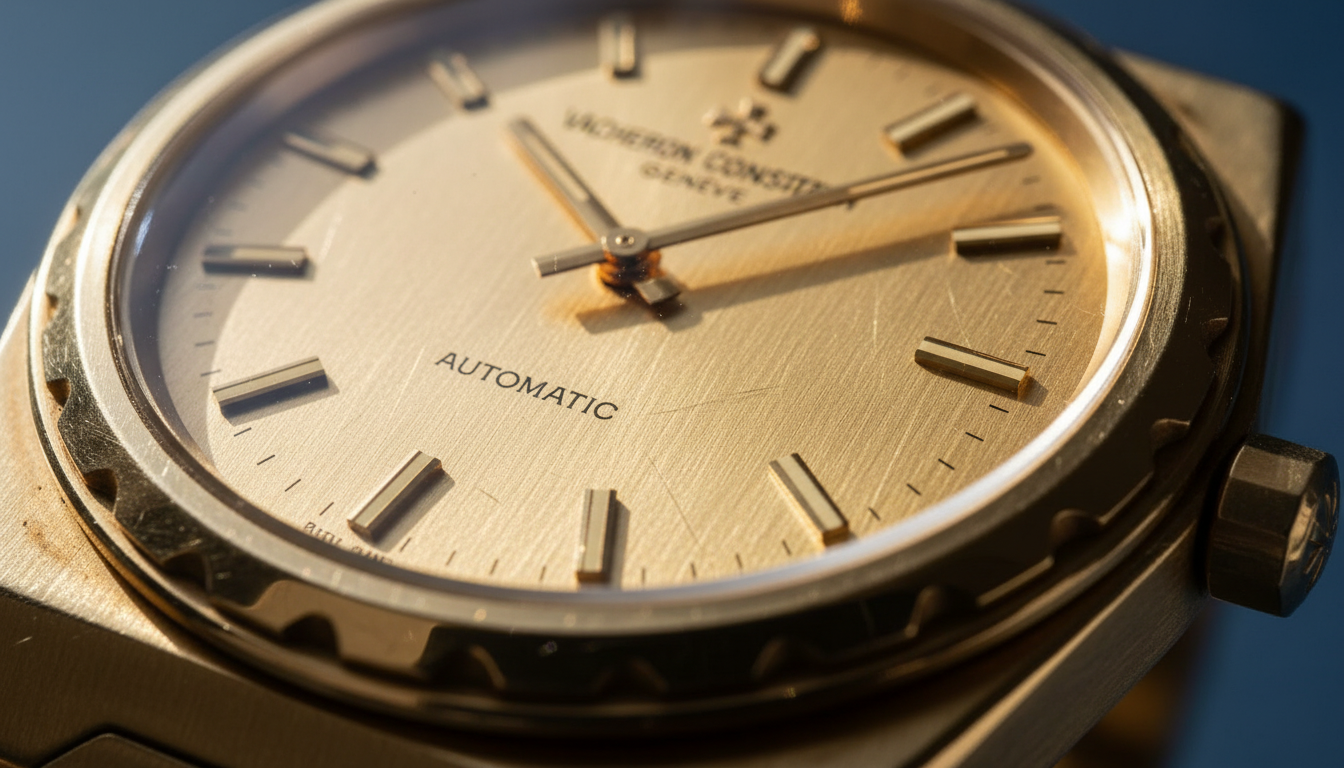
Handling this modern iteration, one is struck by the fidelity to that original vision. The case, a svelte 37mm in diameter, feels perfectly judged. It wears larger than its dimensions suggest, thanks to the broad shoulders of the integrated bracelet, but it slips under a cuff with an ease that many of its modern counterparts cannot manage. The dial is a masterpiece of texture and restraint—a finely grained, gold-toned canvas that shifts from champagne to a deeper amber depending on the light. The applied Maltese cross at five o’clock is not merely a logo; it is a tiny, polished ingot of gold, a subtle but potent symbol of the manufacture’s heritage, nestled discreetly in the corner.
The Calibre Within
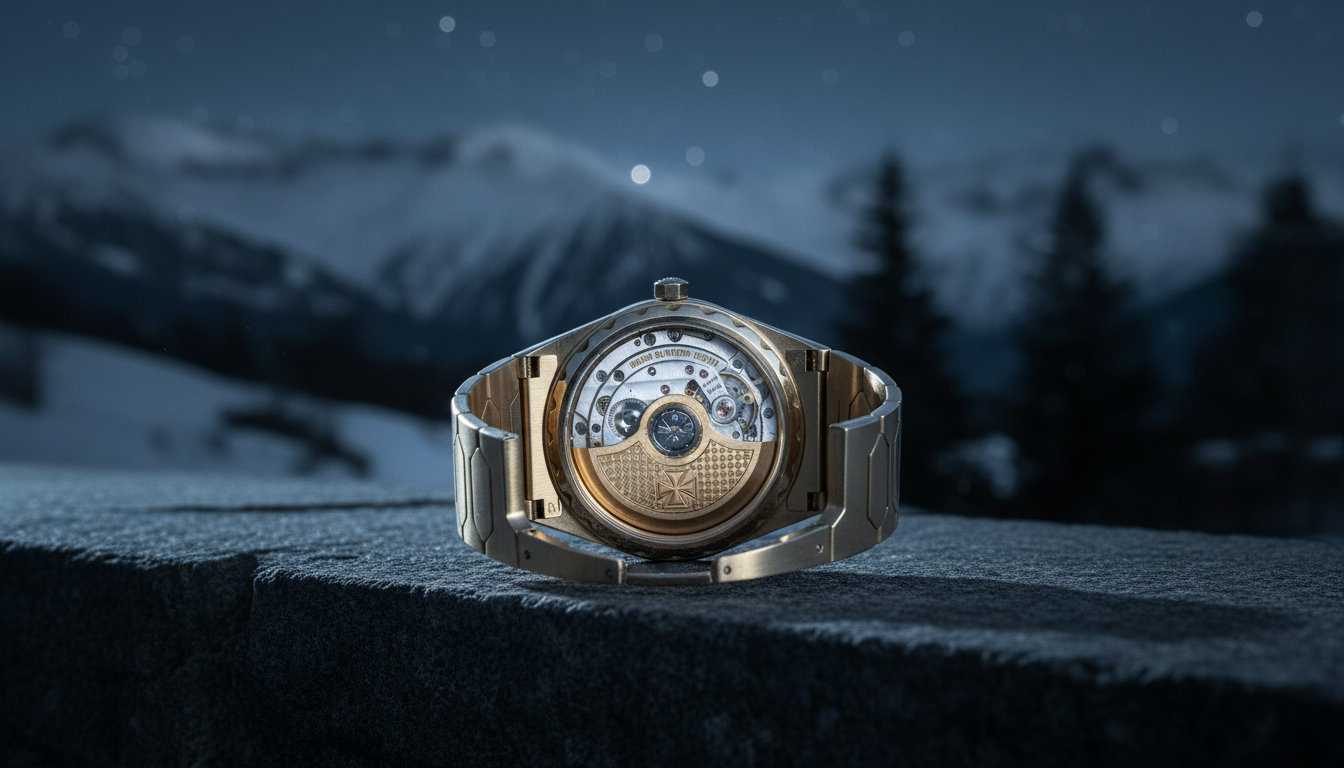
Of course, the most significant update lies beneath the surface. The original 222 housed an ultra-thin Jaeger-LeCoultre-based calibre. This modern version, however, is powered by Vacheron’s own in-house Calibre 2455/2. Turning the watch over, the exhibition caseback—a concession to modern tastes, as the original was solid—reveals the movement in its entirety. The finishing is, as expected, exemplary. The 22-karat gold rotor, engraved with the original 222 logo, spins with a satisfying density. The bridges are adorned with immaculate Côtes de Genève, the screw heads are polished to a black gleam, and every edge is chamfered and polished by hand. It is a world away from the utilitarian movements of the 1970s, a reminder of how far the craft of fine watchmaking has advanced, even in its most traditional forms.
The bracelet deserves its own study. It is a complex, fluid construction of satin-finished and polished links that articulates around the wrist with the suppleness of fabric. It does not pull or pinch; it simply drapes. The clasp is a modern triple-blade folding design, a vast improvement in security and comfort over the simpler clasps of the past, yet it integrates so seamlessly as to be almost invisible. It is this synthesis of vintage form and modern function that defines the experience. It feels old, in the best possible sense of the word, but it performs with the precision and reliability of a contemporary machine.
As I passed the watch back across the table, the city lights had begun to glitter on the surface of the lake. The 222 is not a watch for every occasion, nor for every man. It is a specific and potent expression of a certain kind of confidence, one rooted in an appreciation for audacious design and uncompromising substance. It is a reminder that true style is not about following trends, but about understanding the principles that transcend them. In reviving the 222, Vacheron Constantin has not simply re-issued a classic; it has re-asserted the value of a singular, powerful idea.
'''