The Patek Philippe 5270P: A Perpetual Calendar for the Modern Era
In a world of digital immediacy, the Patek Philippe 5270P-001 offers a tangible connection to the grand tradition of horology. It is a chronograph and perpetual calendar of immense complexity, yet it presents its information with a clarity and grace that feels entirely contemporary.
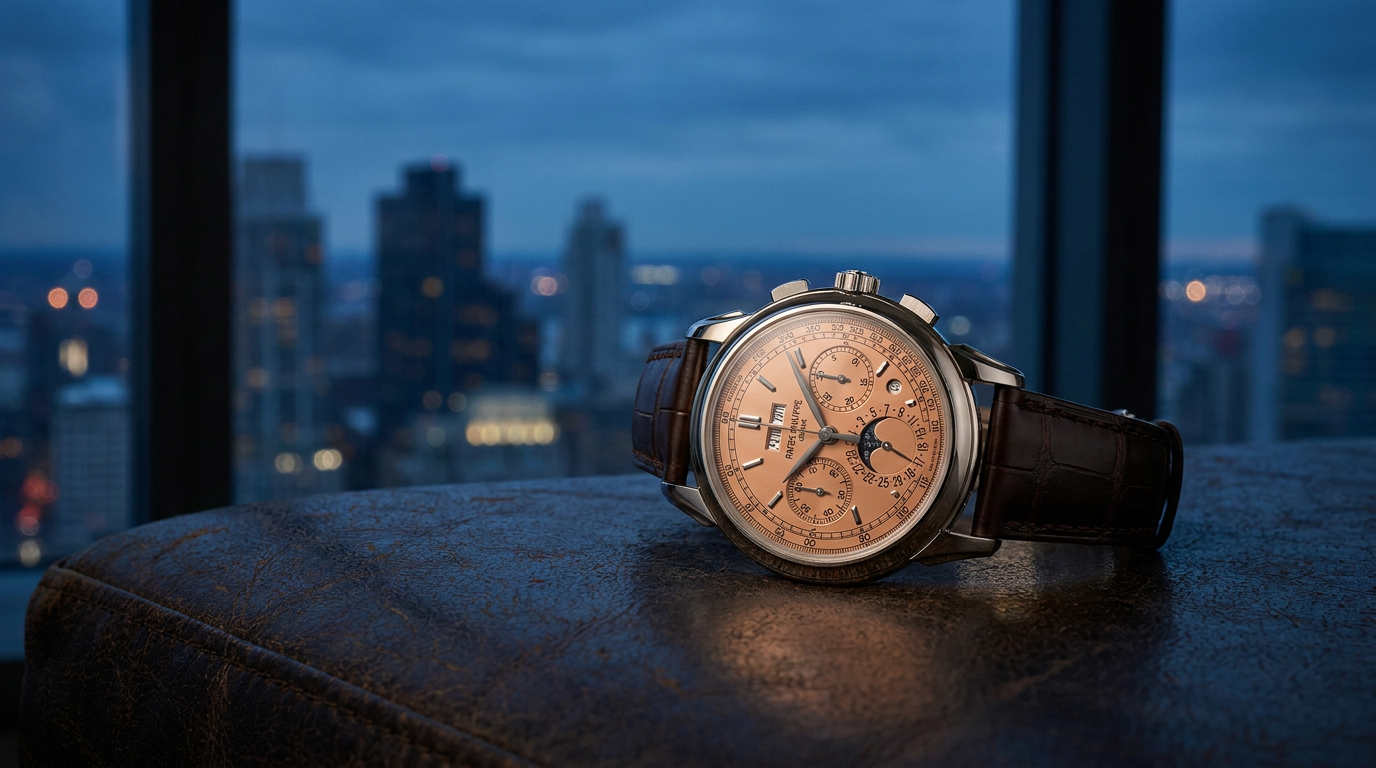
There are moments in horology that demand a quiet room. Such was the case last month in Geneva, when the boutique manager at the Patek Philippe Salon on Rue du Rhône placed the Ref. 5270P-001 on a velvet tray. The heft of the platinum case was the first impression—a dense, cool, and substantial presence that signals a departure from the lighter feel of its gold siblings. This is a watch with gravity, in every sense of the word.
A Lineage of Complication
The 5270 is the latest in a revered line of Patek Philippe perpetual calendar chronographs that began with the Ref. 1518 in 1941. It is a lineage that has defined the very concept of a grand complication wristwatch. Where its predecessors often feel like relics of a bygone era—beautiful, certainly, but belonging to the past—the 5270, particularly in this platinum guise with its golden opaline dial, feels resolutely of the moment. The 41mm case, while not small, is perfectly proportioned. The concave bezel and the two-tier lugs are exercises in sculptural subtlety, catching the light without shouting for attention. It is a design that understands the power of restraint.
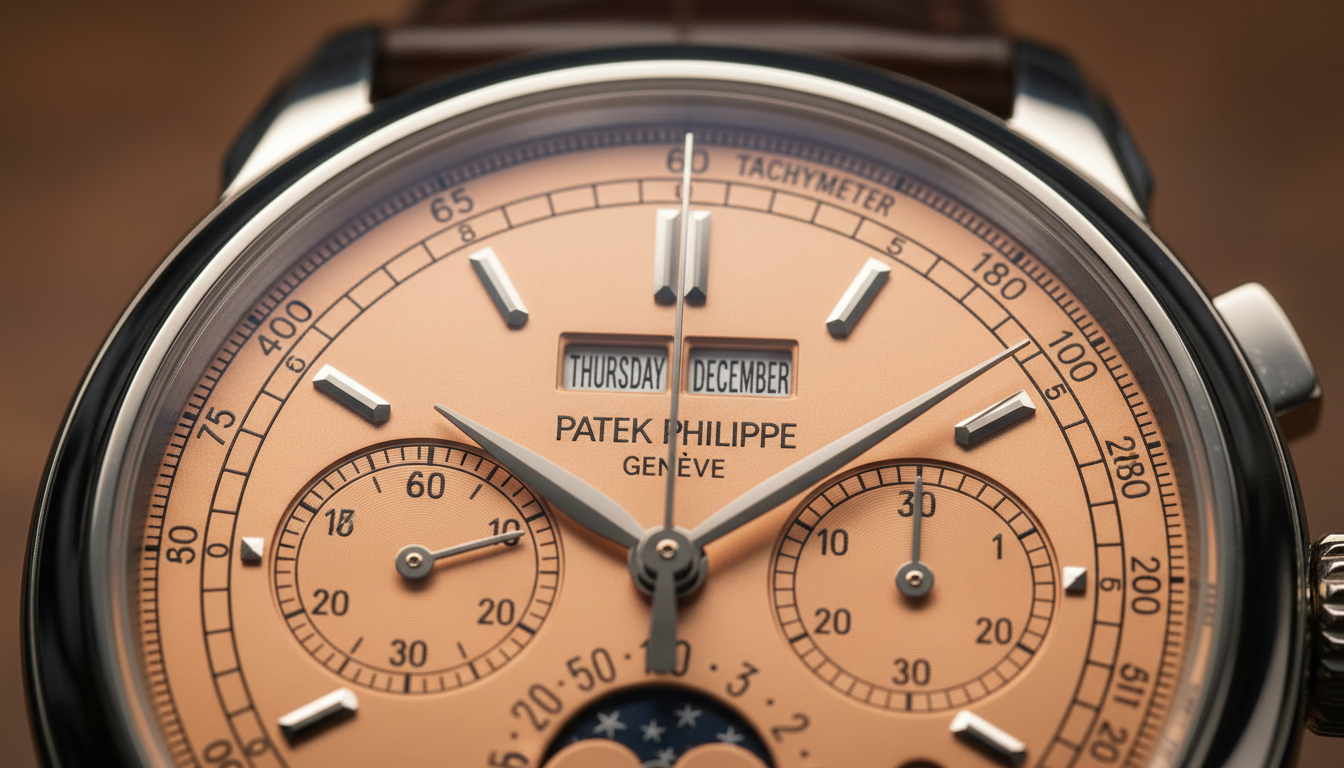
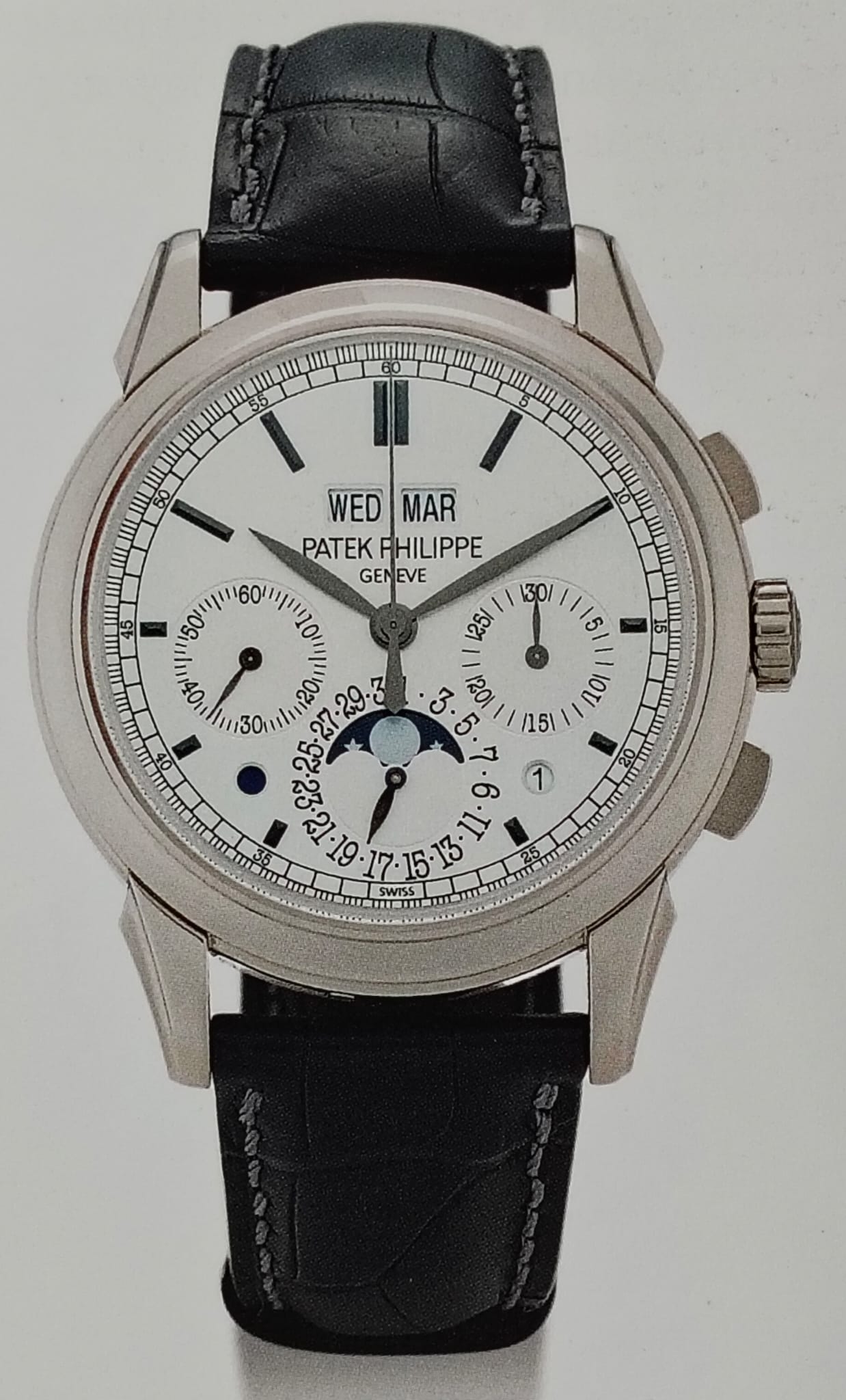
On the wrist, the watch is a lesson in balance. The weight of the platinum is ever-present but never burdensome. The golden, almost salmon-hued, dial is the main event. It possesses a warmth that is often absent in more austere, silver-dialed references. The printed black tachymeter scale and chemin de fer minute track are executed with microscopic precision. The day and month are displayed in neat apertures at 12 o'clock, the date and moonphase at 6, and the chronograph counters at 3 and 9. It is a vast amount of information, yet the dial remains uncluttered, a testament to Patek’s mastery of layout and typography.
The Heart of the Matter
Turning the watch over reveals the true spectacle. Through the sapphire caseback, the Calibre CH 29-535 PS Q is on full display. This was the first in-house perpetual calendar chronograph movement from Patek Philippe, a significant milestone when it was introduced. The architecture is classical, with a column wheel and a horizontal clutch, but it is filled with modern innovations—six patented improvements to the chronograph function alone. The finishing is, as expected, beyond reproach. Every bridge is adorned with Geneva stripes, every edge is chamfered and polished by hand, and every screw head is a mirror-finished black. It is a city of gears and levers, working in silent, intricate harmony. Observing the crisp, clean activation of the chronograph via the rectangular pushers is a tactile pleasure that no smartwatch can replicate.
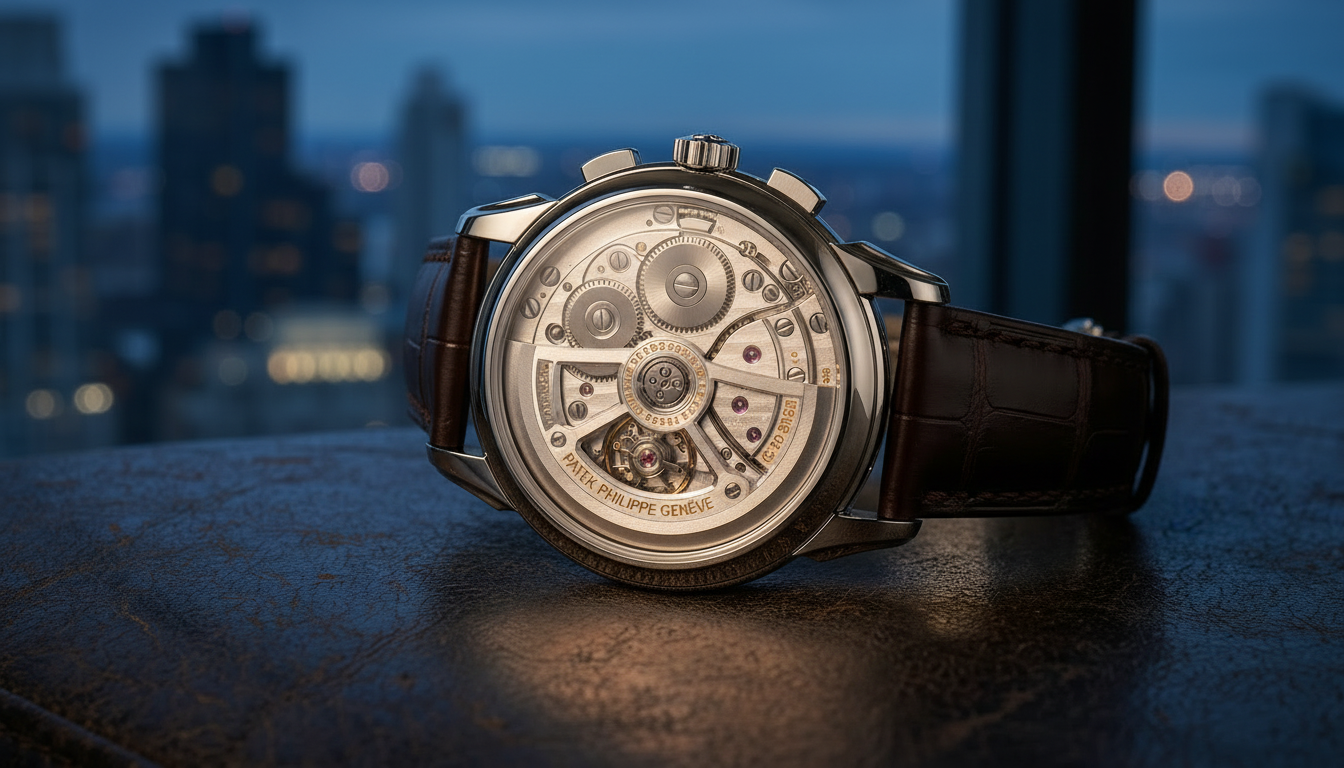
What truly sets this reference apart is its character. The combination of platinum and a salmon dial is a knowing nod to the great Patek Philippe wristwatches of the 1940s and 50s, a colour scheme beloved by collectors. Yet, the larger size and modern movement prevent it from being a simple heritage reissue. It is a bridge between the past and the present. The inclusion of a leap year indicator and a day/night indicator within the small subdials adds a layer of practicality that makes the watch genuinely usable day-to-day, assuming one has the nerve to wear such a piece with regularity.
A Considered Conclusion
After an hour with the 5270P, its place in the pantheon of great timepieces becomes clear. It is not a watch of fleeting trends or audacious design. It is a quiet statement of purpose, a physical manifestation of over 180 years of continuous watchmaking tradition. It respects its storied past without being enslaved by it. As I handed it back across the polished wood table, the weight of its history felt as tangible as the platinum in my palm. In an age of disposability, the 5270P is a powerful argument for permanence, a reminder that some things are built not just for a lifetime, but for generations.