The Jaguar E-Type: A Study in Pure Form
More than a machine, the E-Type is a monument to a particular vision of Britain — a postwar, jet-age, optimistic Britain that could still conjure moments of startling, unassailable beauty. To drive one now is to commune with that moment.
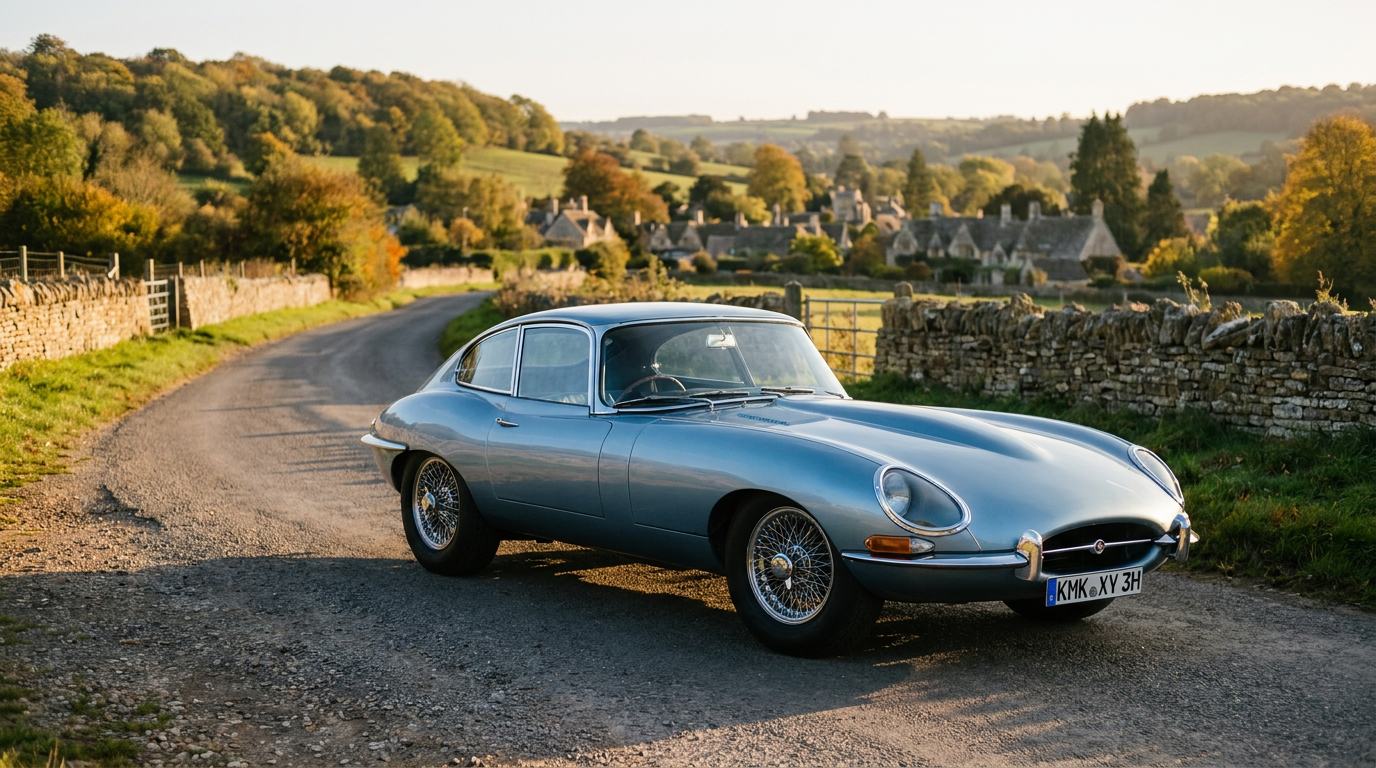
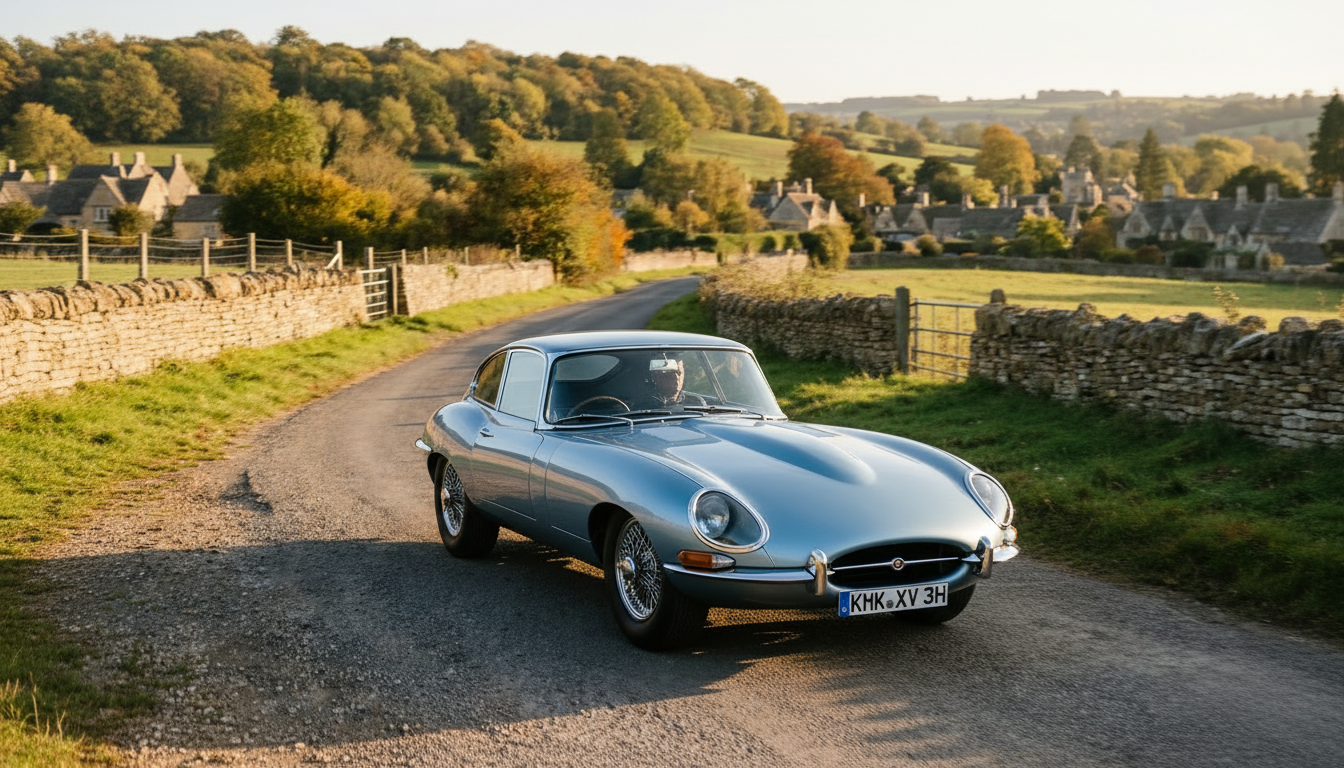
'''It is a shape that needs no introduction, a silhouette that has been shorthand for automotive desire for more than half a century. To approach the Jaguar E-Type, particularly the early Series 1 Fixed-Head Coupé, is to feel the magnetic pull of an object that transcends mere engineering and enters the realm of sculpture. I found myself doing just that on a crisp September morning last month, the keys to a 1966 model in Opalescent Silver Blue feeling heavy with significance in my palm. The car was waiting, low and poised, dew still clinging to its impossibly long bonnet, a promise of the day's drive through the Cotswolds ahead.
The door opens with a satisfying mechanical click, a world away from the soft-close servos of modern grand tourers. One slides down and in, sinking into the Connolly leather seats, the view out framed by the low-slung roof and the vast expanse of that louvered bonnet. The cockpit is a study in purposeful analogue design: a row of toggle switches, a constellation of Smiths gauges, and the thin, wood-rimmed steering wheel that feels alive in one's hands. Starting the 4.2-litre straight-six sends a tremor through the chassis, the engine settling into a deep, resonant idle that speaks of latent power. It is a sound that is both refined and feral, a perfect acoustic metaphor for the car itself.
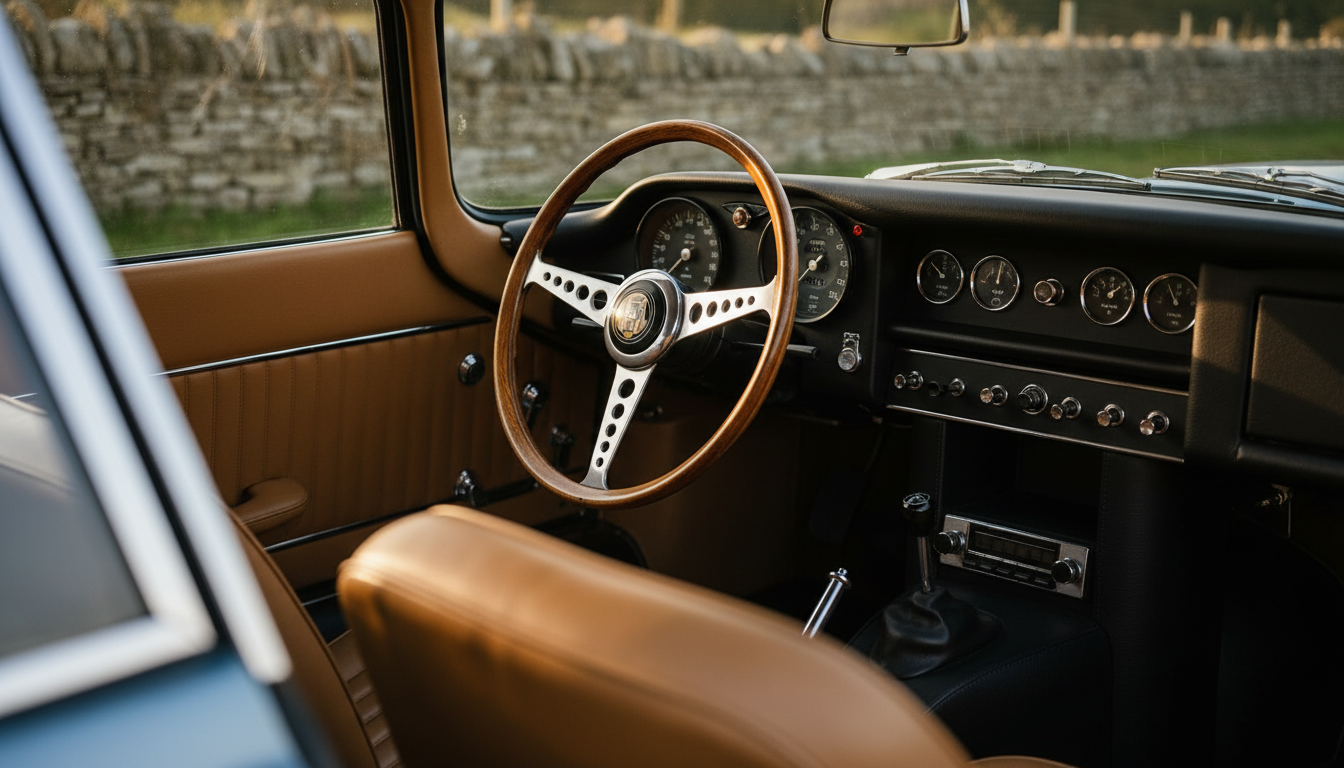
Out on the open road, the E-Type reveals its true character. The steering is heavy at low speeds but becomes communicative and precise as the pace quickens. The Moss gearbox, with its unsynchronized first gear, requires a firm, deliberate hand — a mechanical conversation between driver and machine that modern automatics have rendered obsolete. I learned its rhythms on the B-roads winding from Broadway to Stow-on-the-Wold, the car flowing through the Cotswold stone villages like a river of silver-blue light. It is not a car for the timid, but one that rewards concentration with an experience of pure, unadulterated connection to the road.
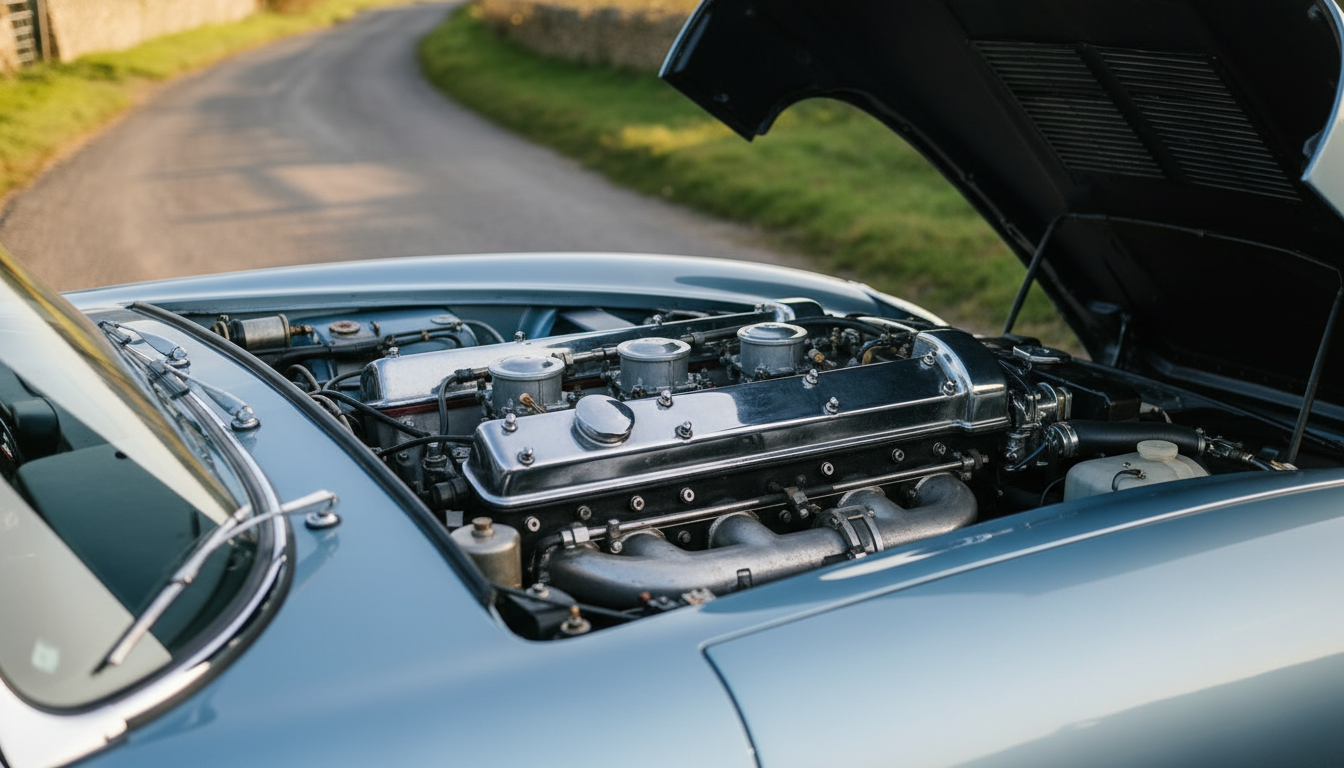
The E-Type's beauty is more than skin deep. Beneath that iconic clamshell bonnet lies the XK engine, a dual overhead camshaft masterpiece that powered Jaguar to five Le Mans victories in the 1950s. Its design was revolutionary, its performance startling. To see it laid bare is to appreciate the artistry of its engineering, the polished cam covers and triple SU carburettors a testament to an era when the mechanical heart of a car was a thing of beauty in its own right. It is a reminder that this was not just a pretty face; it was, and remains, a formidable performance machine.
As the afternoon light began to fade, casting long shadows across the rolling hills, I pulled over near the village of Bibury. The car ticked and cooled, its journey done for the day. Looking at its profile against the ancient stone, it seemed less a car and more a piece of history come to life. The E-Type hails from a time when beauty was its own justification, when a car could be created simply to be the most beautiful object it could possibly be. Driving it is not just a journey through a landscape, but a journey back in time, a fleeting connection to a moment of pure, unbridled automotive optimism. It is an experience that lingers, much like the scent of petrol and old leather, long after the engine has fallen silent.
'''