The Monsieur de Chanel: Graphic Architecture in Beige Gold
Handling the Calibre 1 in a private salon off Place Vendôme, where Chanel's radical architectural movement redefines the jumping hour with severe French restraint.
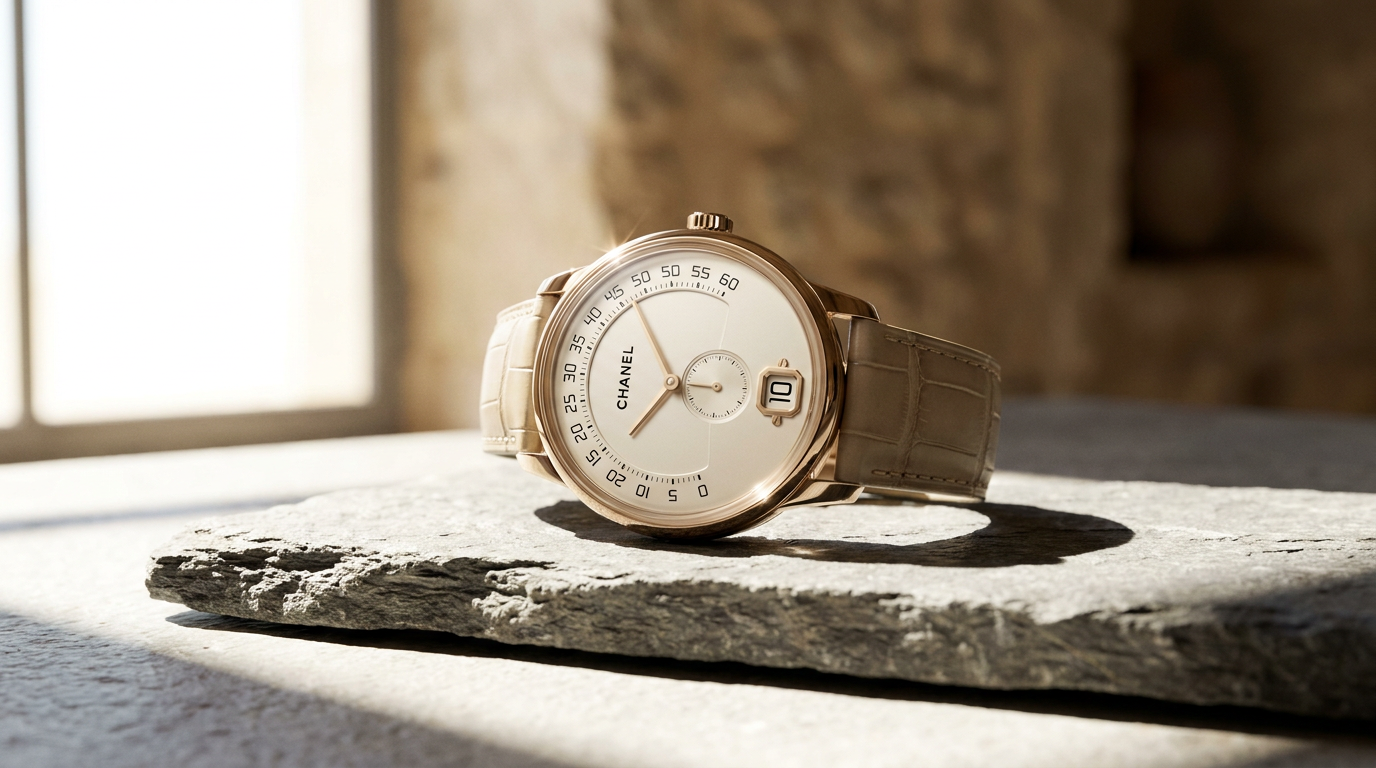
The rain had turned the cobblestones of Place Vendôme into dark mirrors when I slipped through the tall doors of number 18 earlier this month. Autumn in Paris has a way of stripping away frivolous ornament, leaving only stone, slate, and cold gray light. It is precisely the light in which Chanel’s Monsieur de Chanel should be viewed—a watch that eschews ornamental theatricality in favor of severe, architectural logic.
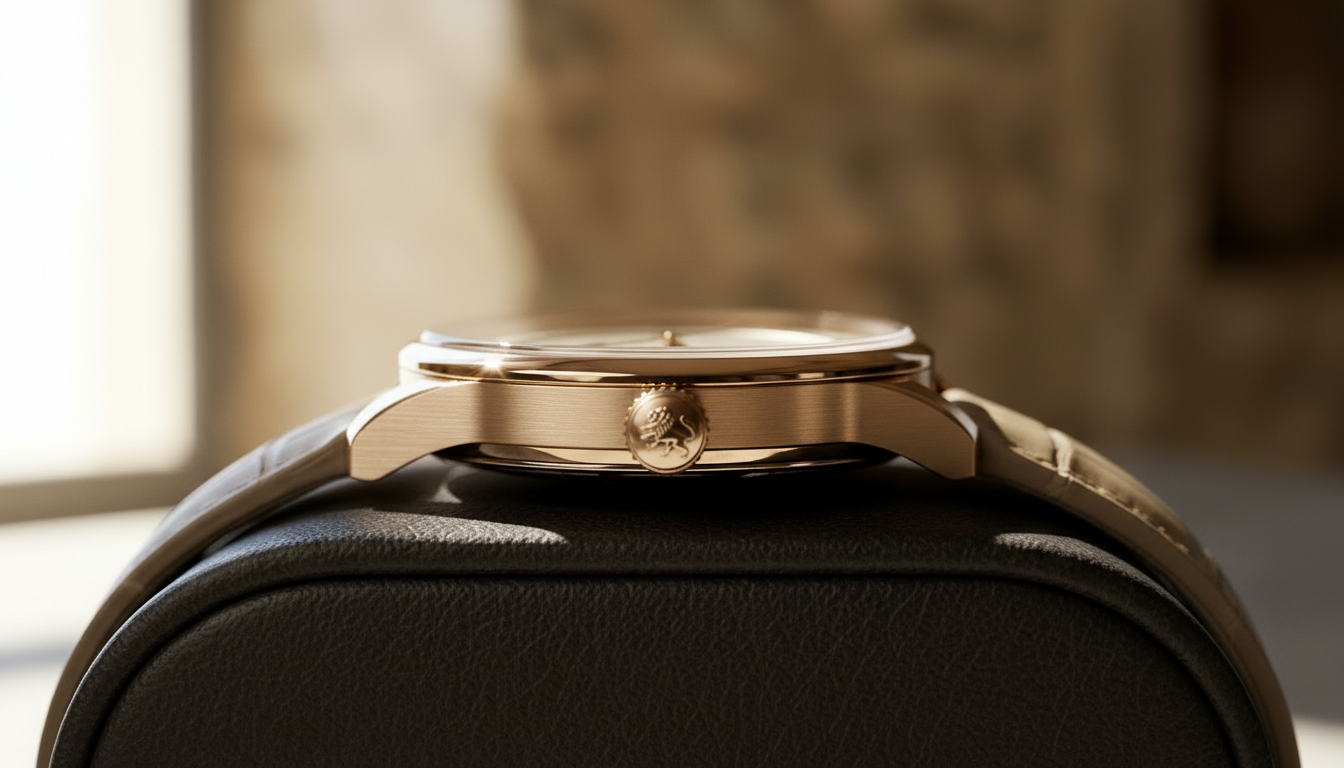
A private salon upstairs was arranged with quiet discipline. On a black leather presentation tray sat the Monsieur in beige gold, resting beside a glass of mineral water and an espresso whose crema had just settled. Chanel debuted the Monsieur in 2016, an audacity that surprised a collector community accustomed to regarding the house strictly through the lens of women’s high jewelry or ceramic sporting watches. Yet this was not an exercise in licensing or catalog embellishment; it was the debut of the Calibre 1, the manufacture’s first in-house, ground-up manual complication.
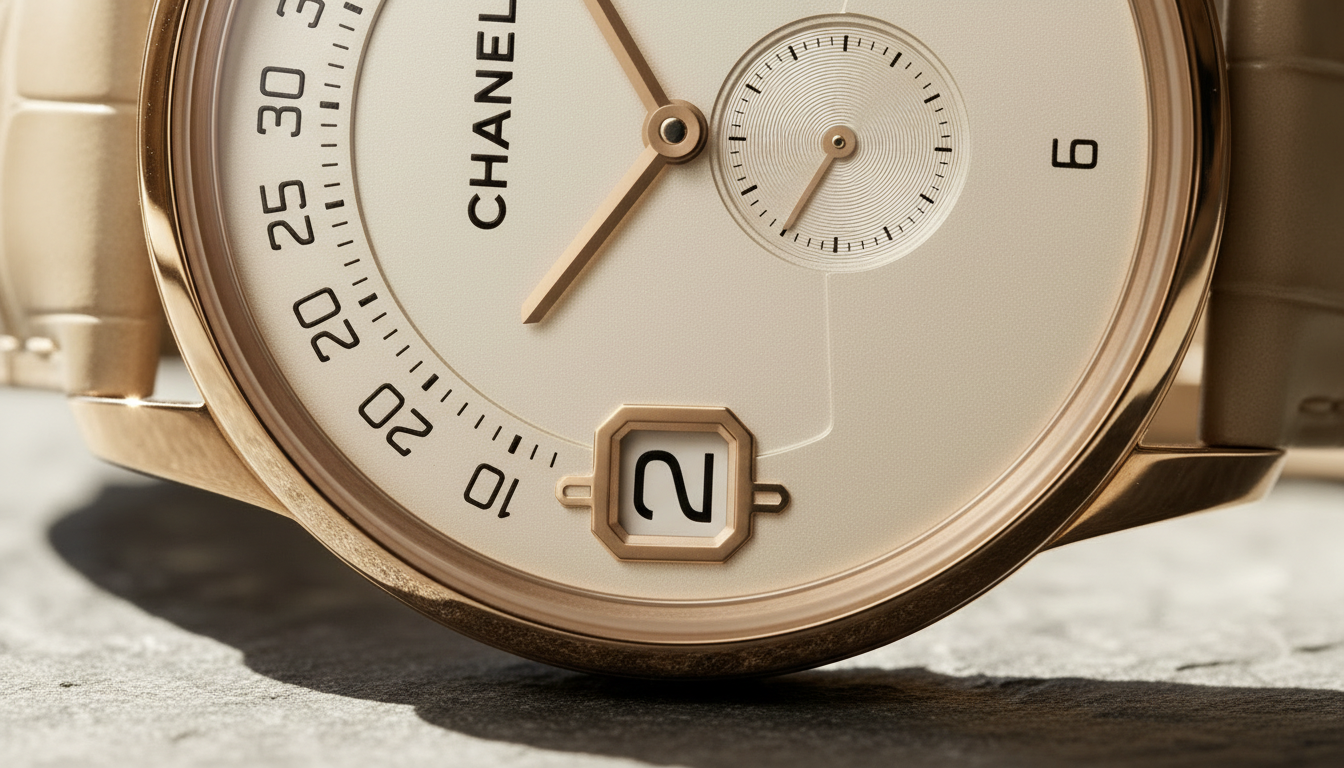
To hold the Monsieur de Chanel is to confront a masterclass in typographic balance. The dial does not attempt to disguise its intentions. At the six o’clock position sits an octagonal jumping hour aperture—a direct nod to the geometry of Place Vendôme and the stopper of the No. 5 flacon. Above it, sweeping across a generous 240-degree arc, is an instantaneous retrograde minute track. Where many retrograde designs appear nervous or crowded, the spacing here possesses the breathing room of classical typesetting. The font, designed bespoke for the house, is sharp, sans-serif, and unapologetically modernist.
When the boutique director handed me the piece, the first instinct was to engage the winding crown. The tactile feedback of the Calibre 1 is dry, firm, and deliberate. Chanel spent five years developing this movement in La Chaux-de-Fonds, aided by the independent watchmaking maestro Romain Gauthier, in whose atelier Chanel holds an equity stake. As the minutes tick toward sixty, the retrograde hand builds tension along its wide perimeter, yet the jump itself—occurring in a split fraction of a second—is entirely devoid of shudder.
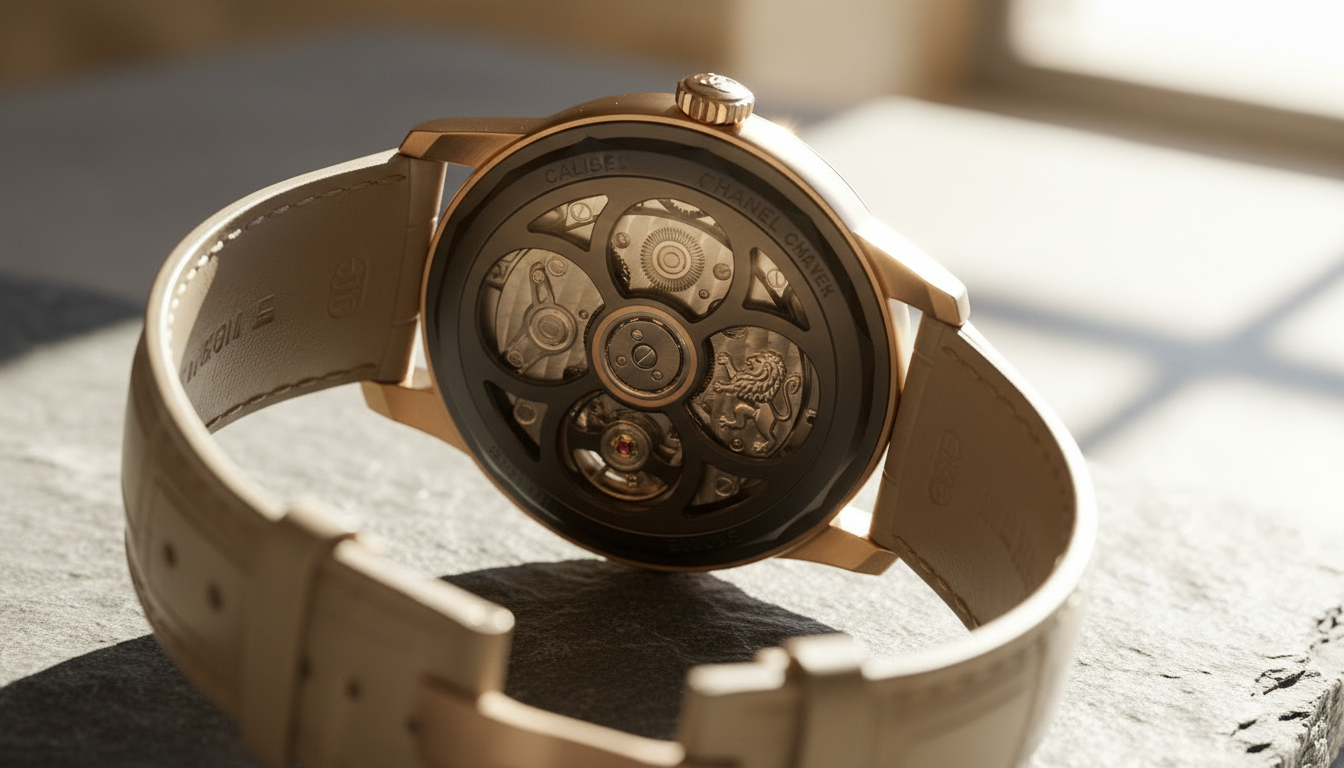
Turning the 40mm case reveals what may be one of the most cohesive architectural movements of modern horology. Rather than adhering to conventional Swiss finishing tropes—Geneva stripes, brassy gilt, and standard rhodium plating—the Calibre 1 is rendered entirely in deep, matte black anthracite. Circular bridges intersect in a succession of overlapping rings, an arrangement that echoes both industrial machinery and pure graphic design. It is unapologetically contemporary, yet the hand-chamfering on the darkened bridges catches the pale Parisian daylight with razor-sharp brilliance.
A small stylized lion’s head, the official hallmark of Chanel’s haute horlogerie manufacture, is engraved discreetly into the plate. The dual spring barrels, connected in series, yield a three-day power reserve, their open-worked covers exposing the coiled mainsprings within. Watching the free-sprung balance wheel oscillate at 28,800 vibrations per hour against the charcoal-colored bridge architecture is hypnotic; it feels less like a traditional Swiss engine and more like a minimalist sculpture engineered to dissect time into clean mathematical parcels.
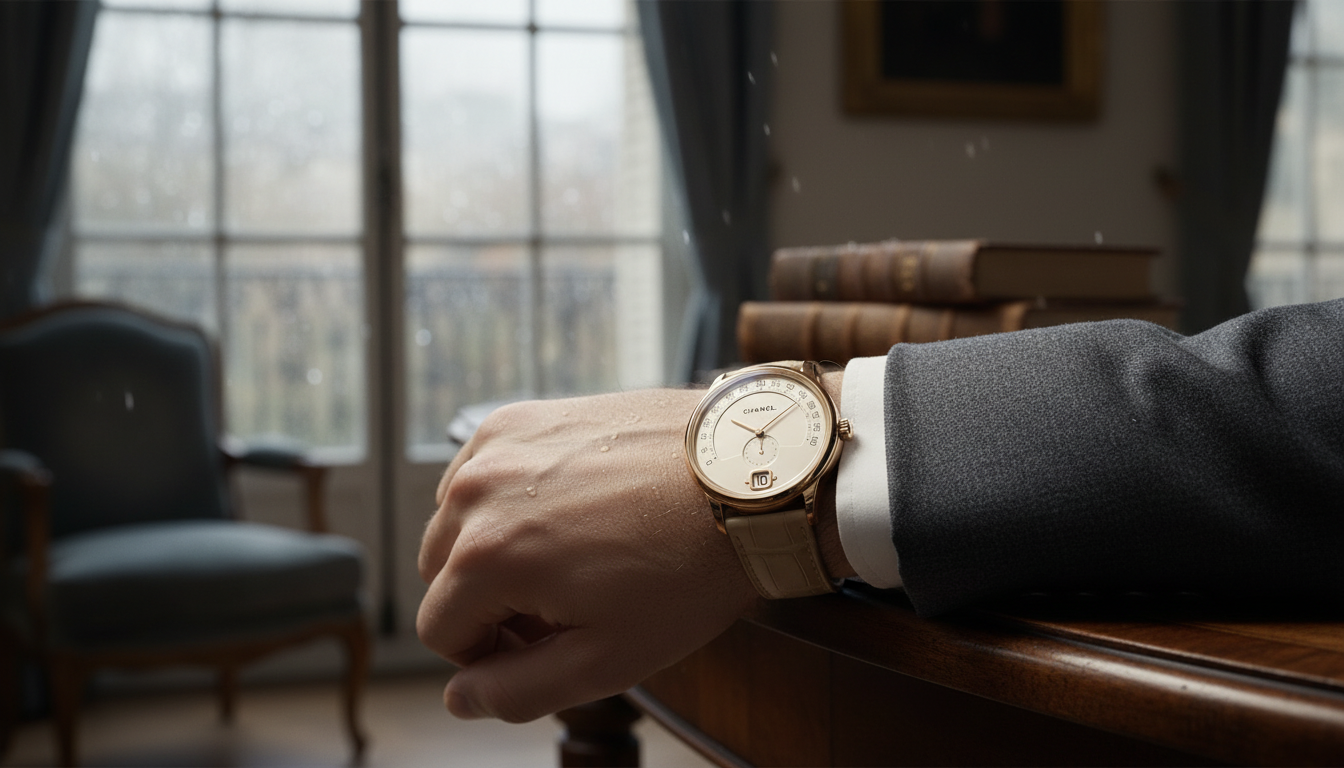
Fastened to the wrist, the Monsieur sits with quiet, proportioned assurance. At just under ten millimeters thick, the beige gold case slips neatly beneath a bespoke flannel cuff, offering substantial wrist presence without unwarranted bulk. The warmth of the proprietary beige gold alloy—subtler than yellow gold, softer than rose—counterbalances the intellectual severity of the opaline ivory dial. It is a watch designed not for the glance of strangers across a crowded room, but for the solitary pleasure of the wearer awaiting the exact arrival of the hour.
As the minute hand swept through the final marker of the arc and snapped invisibly back to zero, the hour numeral clicked forward with an authoritative, mechanical snap. Outside, the traffic along Rue Saint-Honoré moved in its usual disordered blur. Within the quiet perimeter of the salon, however, Chanel had achieved something rarer: an enduring demonstration of how modern watchmaking can reorder the hour into an act of pure, calculated grace.