The McLaren F1: An Analogue Definition of Speed
More than three decades after its debut, Gordon Murray’s masterpiece remains the purest expression of a supercar. A recent drive through the Cotswolds in late May served as a potent reminder of what we have lost to the digital age.
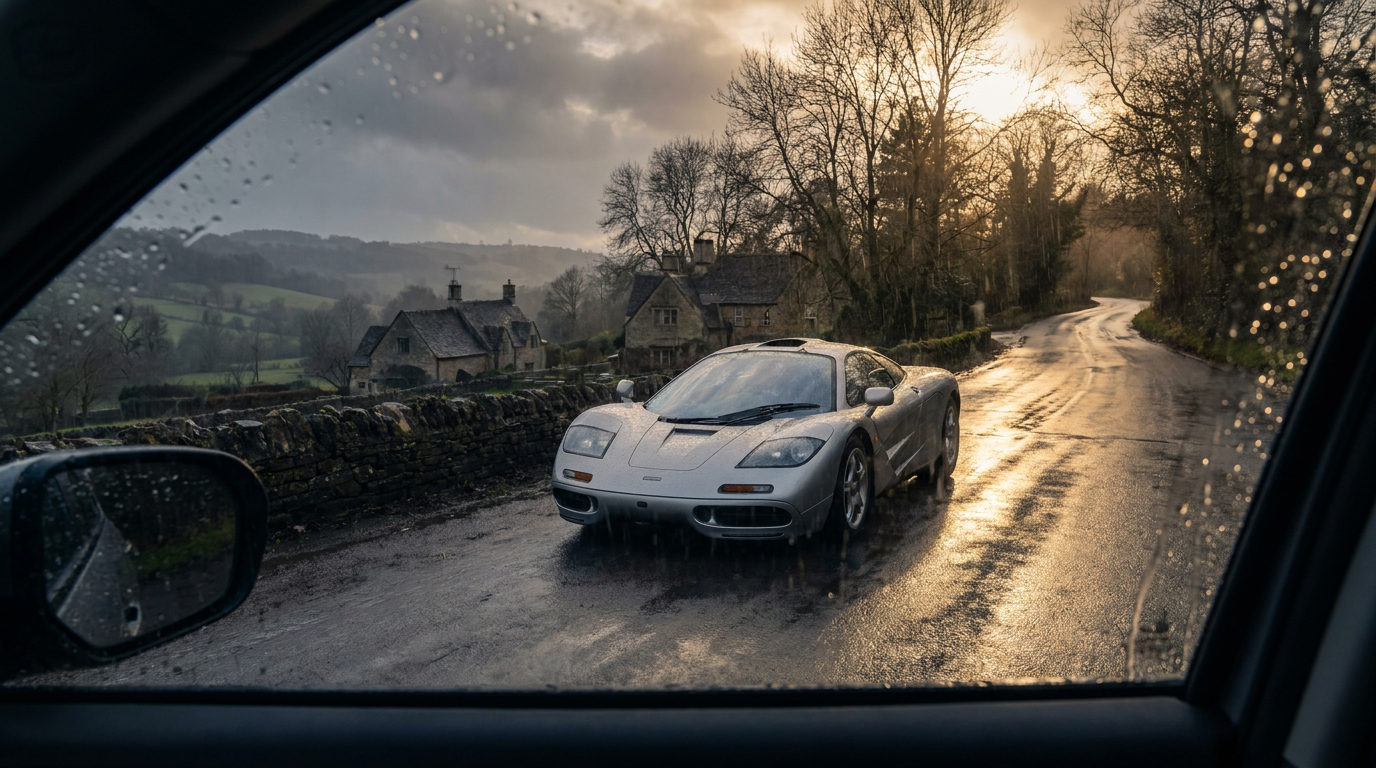
It is a curious sensation to feel that a machine from a bygone era is, in fact, from the future. Not a science-fiction future of silent, autonomous pods, but a future we might have had—one where the relentless pursuit of purity and driver engagement was not diverted by the digital cul-de-sac of managed experiences and simulated feedback. Such was the feeling a fortnight ago, slipping into the central seat of the McLaren F1 on a crisp morning in the Cotswolds, the key a simple, unadorned piece of metal that promised nothing more than the awakening of an engine.
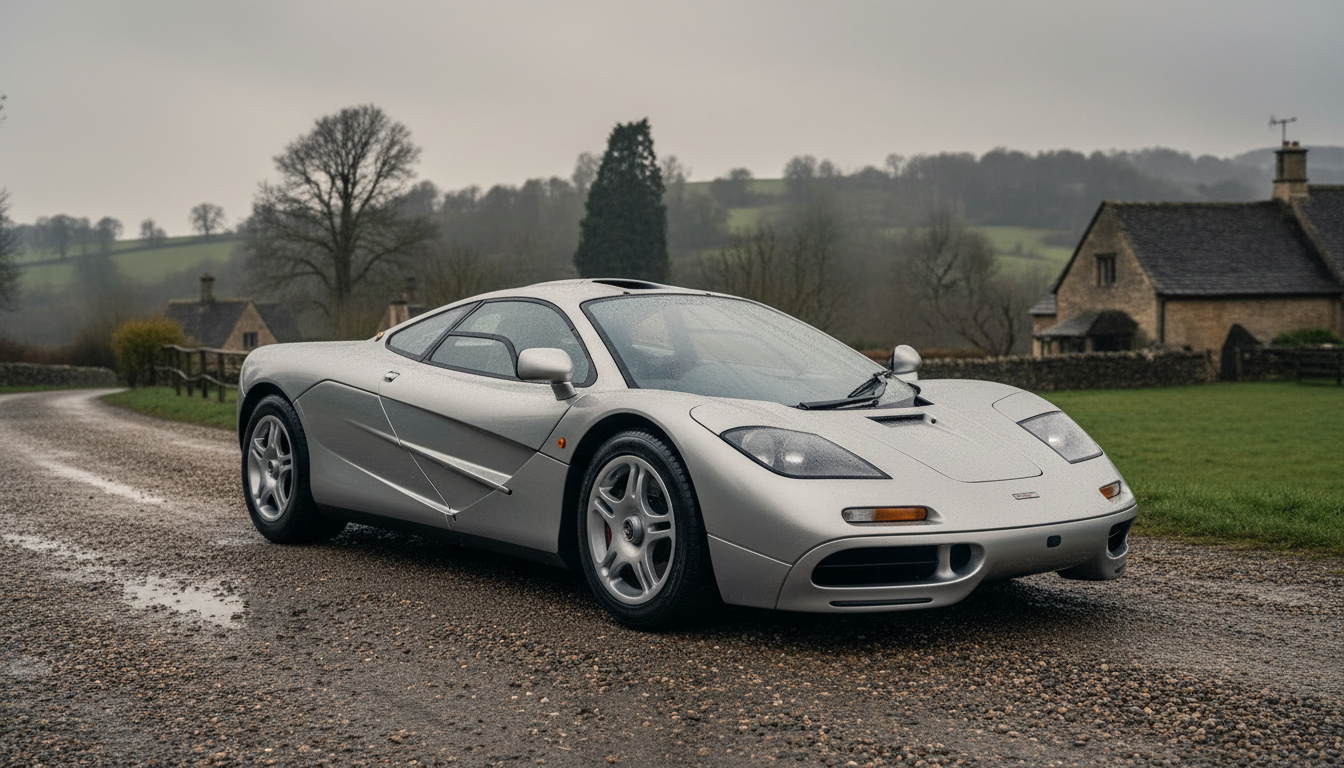
The car appears impossibly small by modern standards, its carbon-fibre form shrink-wrapped over the mechanicals with an obsessive’s attention to purpose. There is no extraneous decoration, no aggressive venting for its own sake. Every line, from the dihedral doors to the subtle roof snorkel, serves a function. Finished in a discreet silver, it sat on the damp gravel not as a preening peacock, but as a compact, coiled instrument of intent. The world has become accustomed to supercars that shout; the F1 merely states its case with unshakeable confidence.
A Singular Vision
To understand the F1 is to understand the mind of its creator, Gordon Murray. His design brief was not to build the fastest car in the world—though he did—but to create the ultimate road car. The distinction is crucial. The project was a distillation of Formula 1 principles, chief among them a fanatical devotion to lightweighting, aerodynamic efficiency, and packaging. The result was the first production car with a full carbon-fibre monocoque chassis, a piece of engineering so advanced that even today it remains a benchmark.
This pursuit of lightness is palpable in every interaction. The unassisted steering communicates the road surface with a granular fidelity that has been all but lost. The car changes direction with an immediacy that borders on telepathic, its compact dimensions making it feel perfectly at home on the narrow, hedge-lined lanes of Gloucestershire. There are no drive modes, no adaptive suspension settings, no electronic stability programs to flatter the driver. There is only the chassis, the engine, and the delicate, continuous conversation between the driver’s hands and the front wheels. It demands precision and respect, but the rewards are an order of magnitude greater than any modern equivalent.
The Heart of the Matter
The ignition sequence is a deliberate, mechanical process. A turn of the key, a flip of a red cover, a press of the starter button. The 6.1-litre, naturally-aspirated V12, a bespoke masterpiece from BMW Motorsport, awakens not with a theatrical roar, but with a dense, complex hum. It is an engine that feels alive, its idle a subtle tremor that runs through the carbon tub. The engine bay, famously lined with pure gold foil for its heat-reflective properties, is a work of art in itself—a testament to a budget that was, in essence, unlimited.
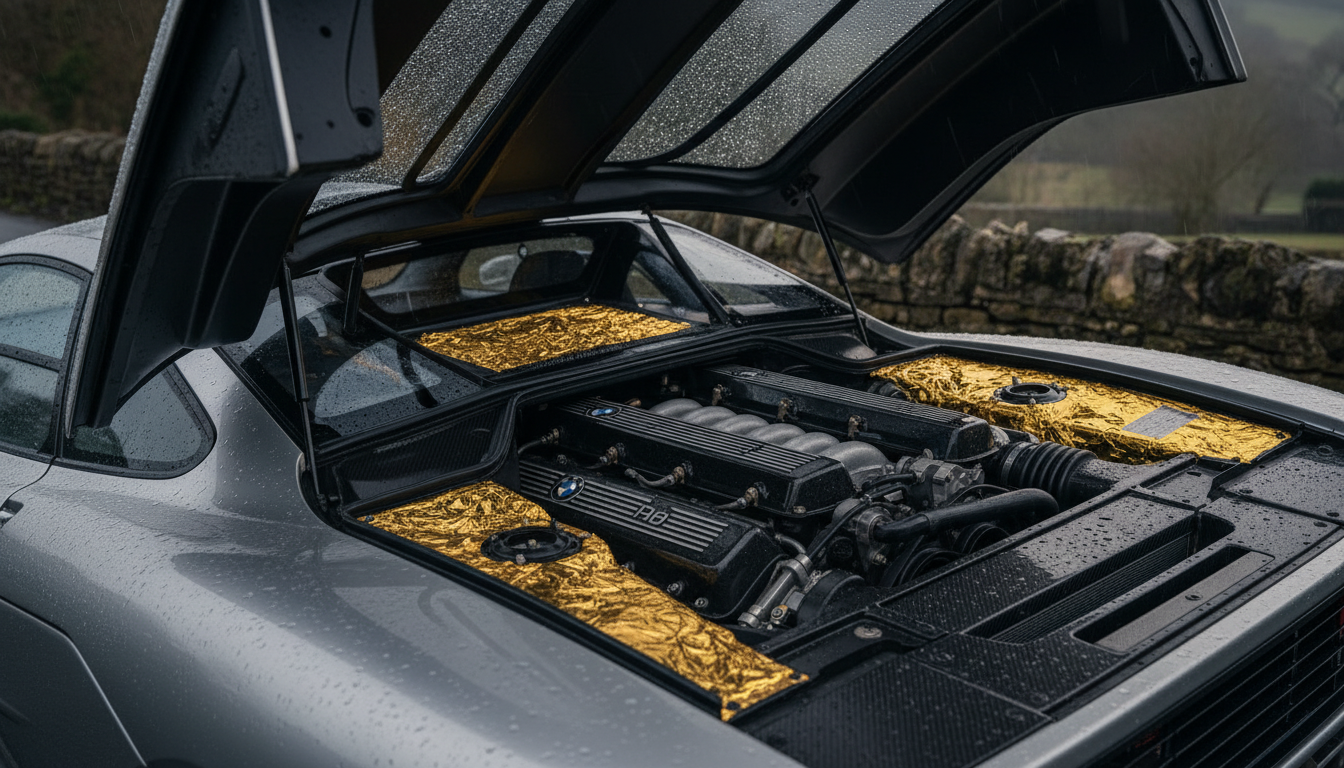
Once on the move, the character of the BMW S70/2 engine reveals itself. It is docile and tractable at low speeds, pulling cleanly from little more than 1,500rpm. But as the revs climb past 4,000, it undergoes a profound transformation. The induction noise from the roof snorkel fills the cabin, a hard-edged, multi-layered symphony that is arguably the greatest soundtrack in motoring. The acceleration is relentless, a single, seamless surge that compresses time and distance. Pushing through the six-speed manual gearbox—a beautifully weighted, mechanical linkage—is an act of physical and mental engagement, a dance of clutch and throttle that modern paddle-shift systems can never replicate. Even after all these years, the sheer force of its performance is enough to recalibrate one’s senses.
The Central Seat
Of all its innovations, the F1’s three-seat configuration is perhaps its most defining. Climbing in requires a specific technique, sliding across the passenger seat into the central driving position. Once settled, the logic is undeniable. The view of the road ahead is panoramic and perfectly symmetrical, framed by the slender A-pillars. It feels less like driving a car and more like piloting a fighter jet for the road. The pedals and steering wheel are perfectly aligned with the driver’s body, eliminating the offset that is an accepted compromise in virtually every other vehicle.
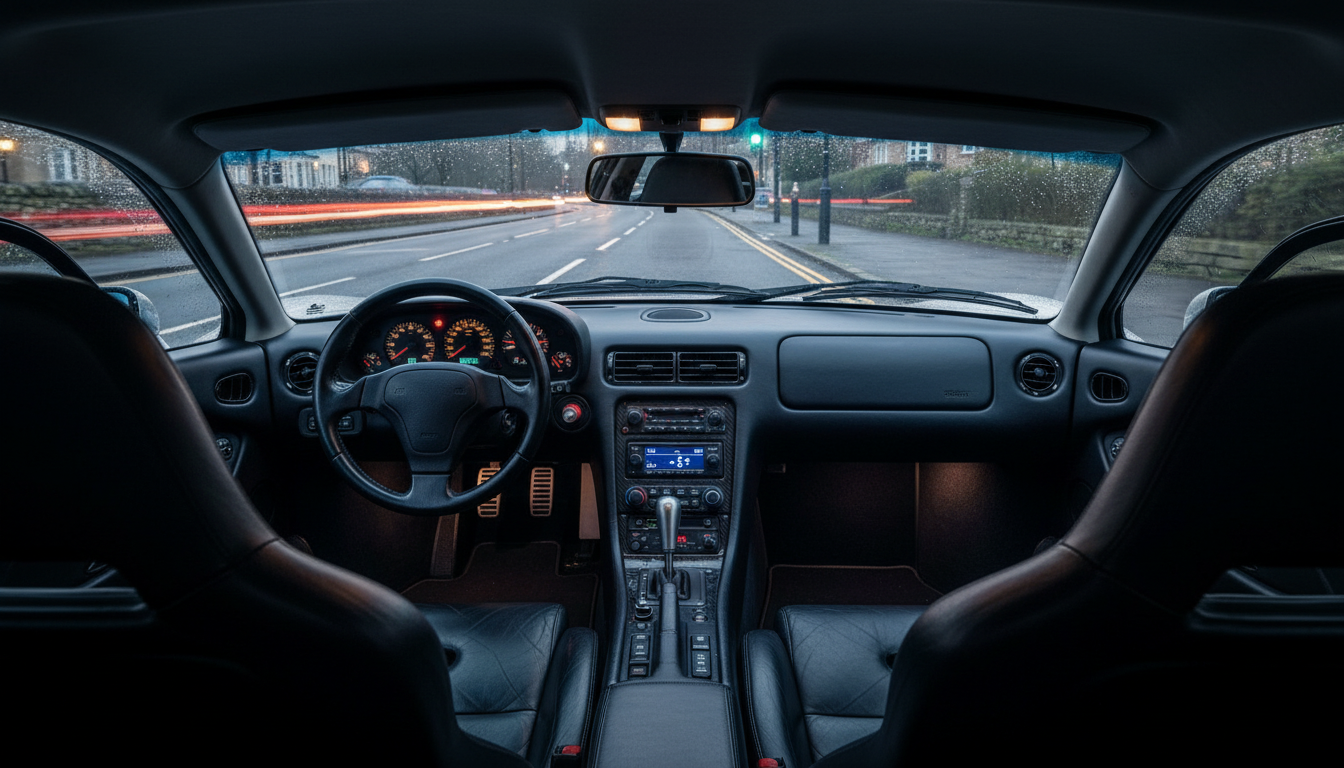
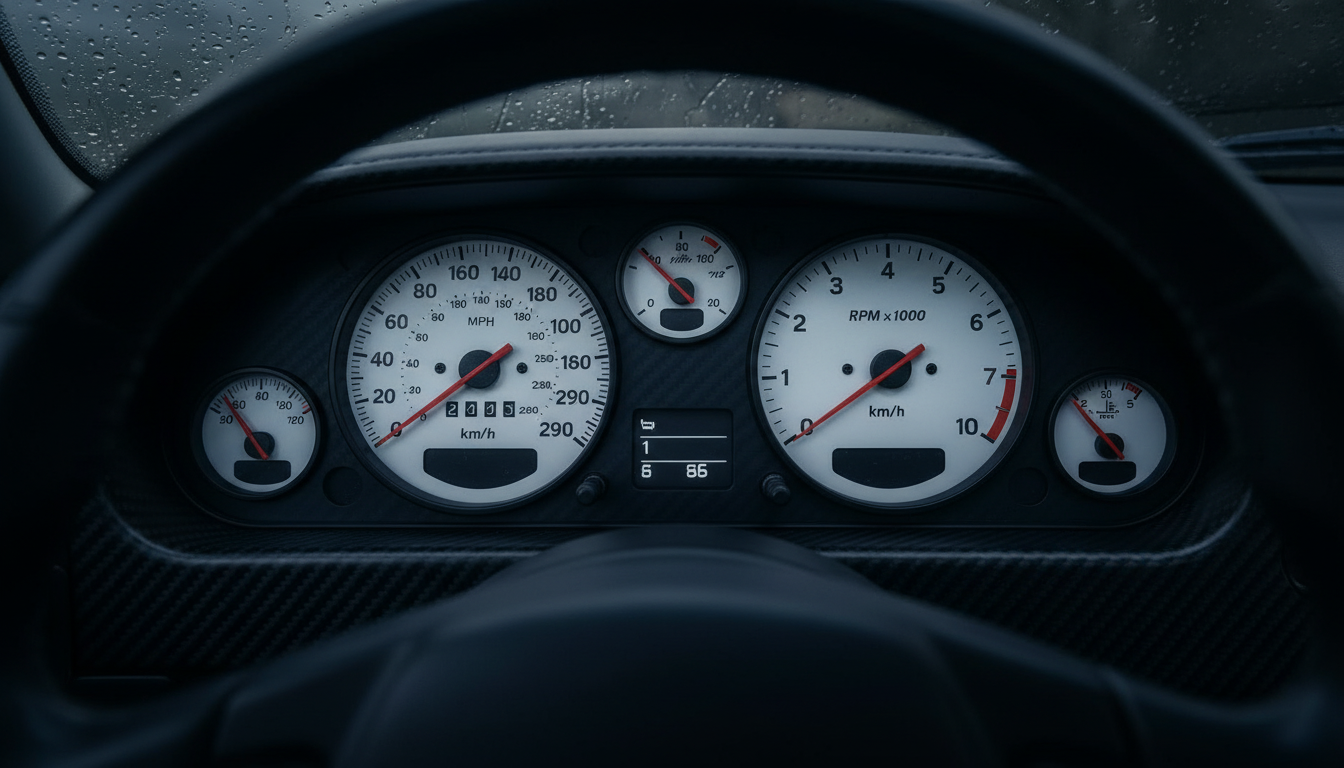
This layout fundamentally changes the social dynamic of a journey. Two passengers can be accommodated in slight offset, sharing in the experience in a way that is impossible in a traditional two-seater. It also reinforces the car’s ultimate focus: the driver. Every control, every instrument, is arranged in a perfect arc around the central throne. The analogue dials, crafted like fine Swiss watches, are a model of clarity. There are no screens, no menus, no distractions. There is only the essential information, beautifully rendered.
An Analogue Apex
Driving the McLaren F1 in 2026 is a poignant experience. It is a rolling monument to an era when the pinnacle of automotive engineering was measured in purity, not processing power. It won Le Mans in 1995, not as a purpose-built racer, but as a road car adapted for the track, a feat that will surely never be repeated. It held the production car speed record for over a decade, but its true legacy is not in the numbers it produced, but in the feeling it imparts.
As the day drew to a close and the low sun cast long shadows across the Cotswold stone walls, a final run through a series of sweeping bends confirmed the F1’s place in the pantheon. It is a car that gets better the faster you go, its aerodynamics generating stability, its chassis communicating its intentions with perfect transparency. It is the analogue apex, a machine of such singular focus and brilliant execution that it remains, thirty years on, the definitive supercar. It is not just a relic of a past golden age, but a lesson for the future—a reminder that the most profound experiences are those that are earned, not given.