The Jaeger-LeCoultre Reverso Tribute Duoface: A Tale of Two Dials
Born of sporting necessity on the polo fields of colonial India, the swiveling case has evolved from a simple shield into a canvas for complication, a discreet testament to travel, and a study in Art Deco grace.
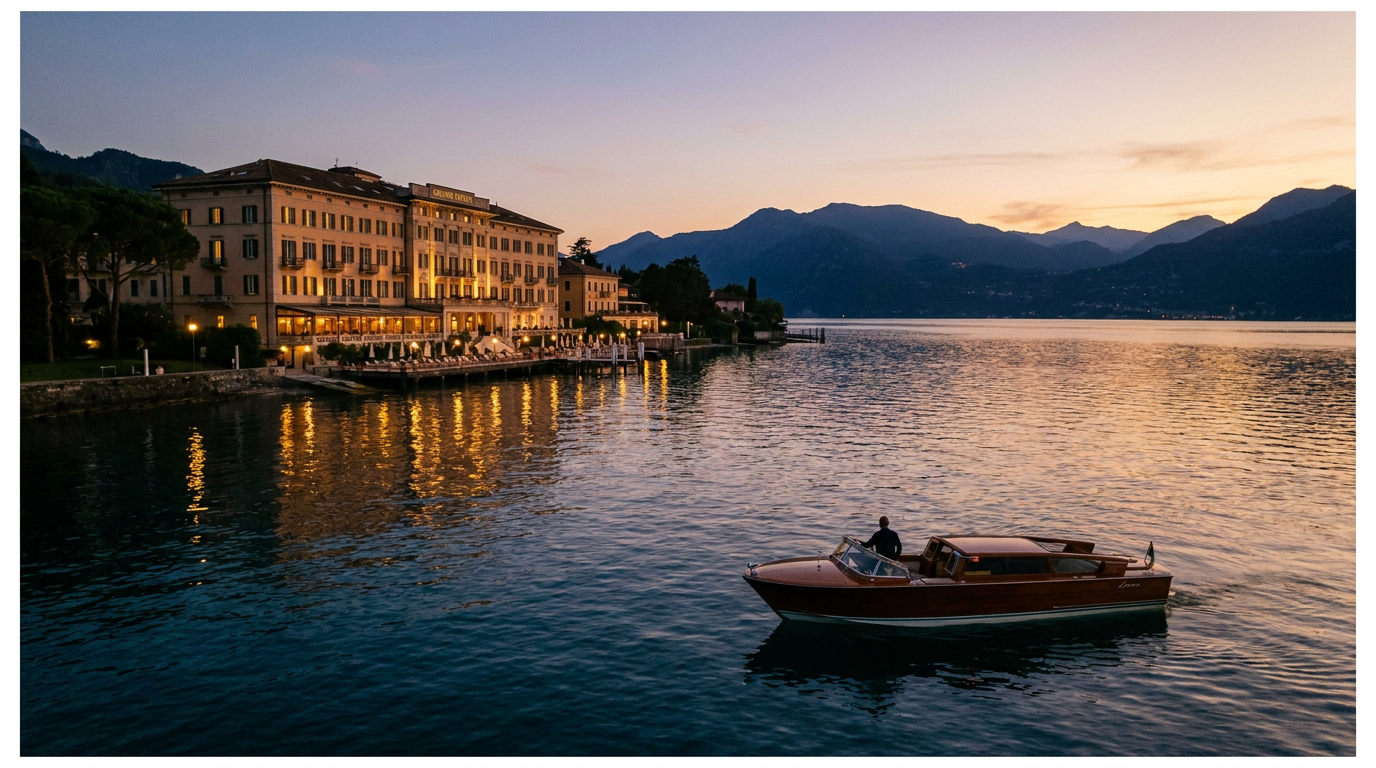
'''It was a late spring afternoon in Paris, the kind where the light seems to hang in the air, softened by the high, thin clouds. I had just stepped out of the Jaeger-LeCoultre boutique on the Rue de la Paix, a small, weighty box in my hand. Inside was not a new acquisition, but a familiar one, freshly serviced: my Reverso Tribute Duoface. The ritual of collection is a pleasure in itself—the quiet conversation, the presentation on a leather tray, the first winding. But with a Reverso, there is an additional, tactile ceremony: the first swivel of the case. Pushing it gently from the left, it slides with a machined precision, a faint whisper of metal on metal, before clicking securely into its reversed position. It is a sensation that never dulls, a private, mechanical handshake that confirms the genius of this ninety-year-old design.
A Sporting Proposition
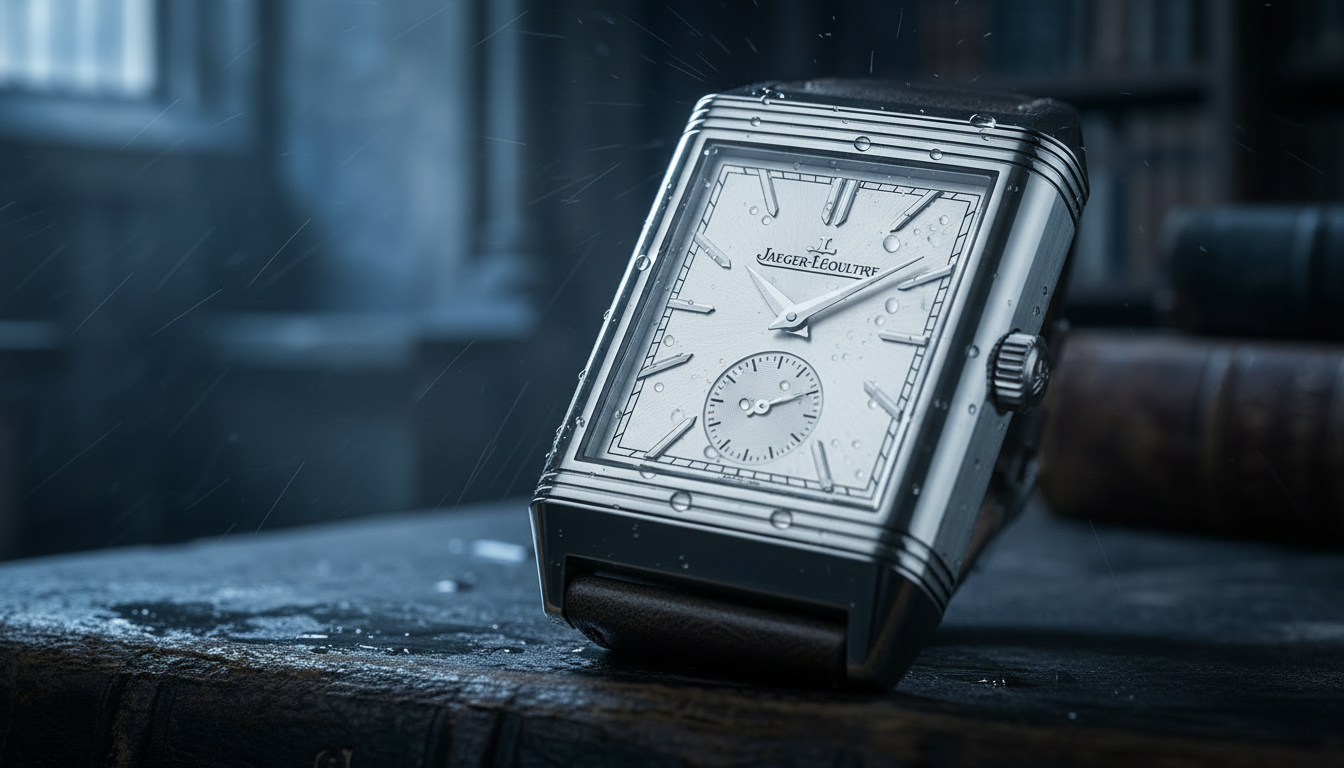
The story of the Reverso is, by now, a familiar chapter in the grand narrative of horology, yet it bears repeating. It begins not in the hushed workshops of the Vallée de Joux, but on the dusty polo fields of British India in the early 1930s. The lament of an officer, his watch glass shattered for the umpteenth time during a match, reached the ears of the watch dealer César de Trey. The challenge was relayed to Jacques-David LeCoultre: create a timepiece elegant enough for an officer, yet robust enough to withstand the rigours of the game. The solution, devised by the French engineer René-Alfred Chauvot and patented in 1931, was not a brute-force guard or a thicker crystal, but a case that could pivot on its own axis to hide its fragile face, presenting a solid metal back to the world. It was a response of pure ingenuity, a design born of function that happened to be beautiful. That satisfying slide and click I felt on the Rue de la Paix is the direct descendant of that original, practical need. The polished steel back, originally a shield, became a canvas for engravings, enamel miniatures, and personal histories.
The Second Face
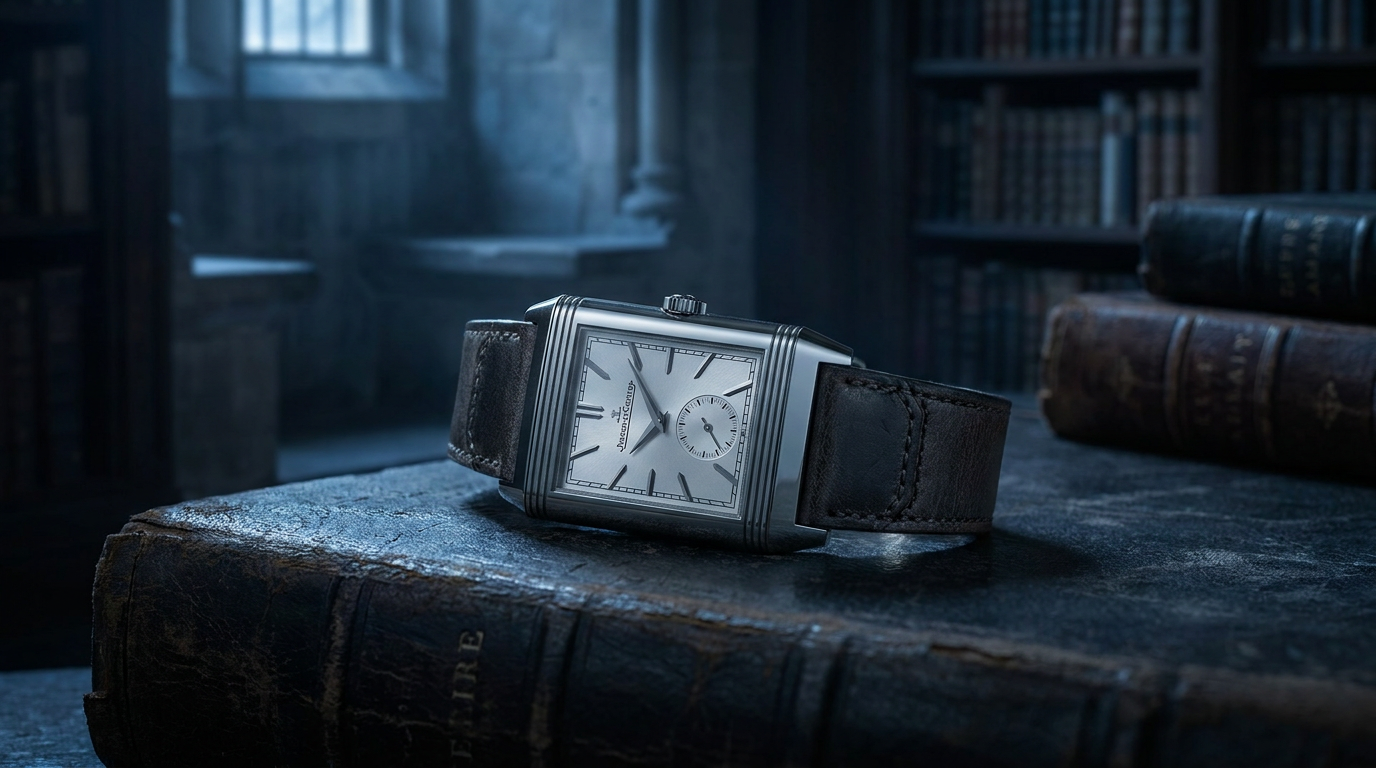
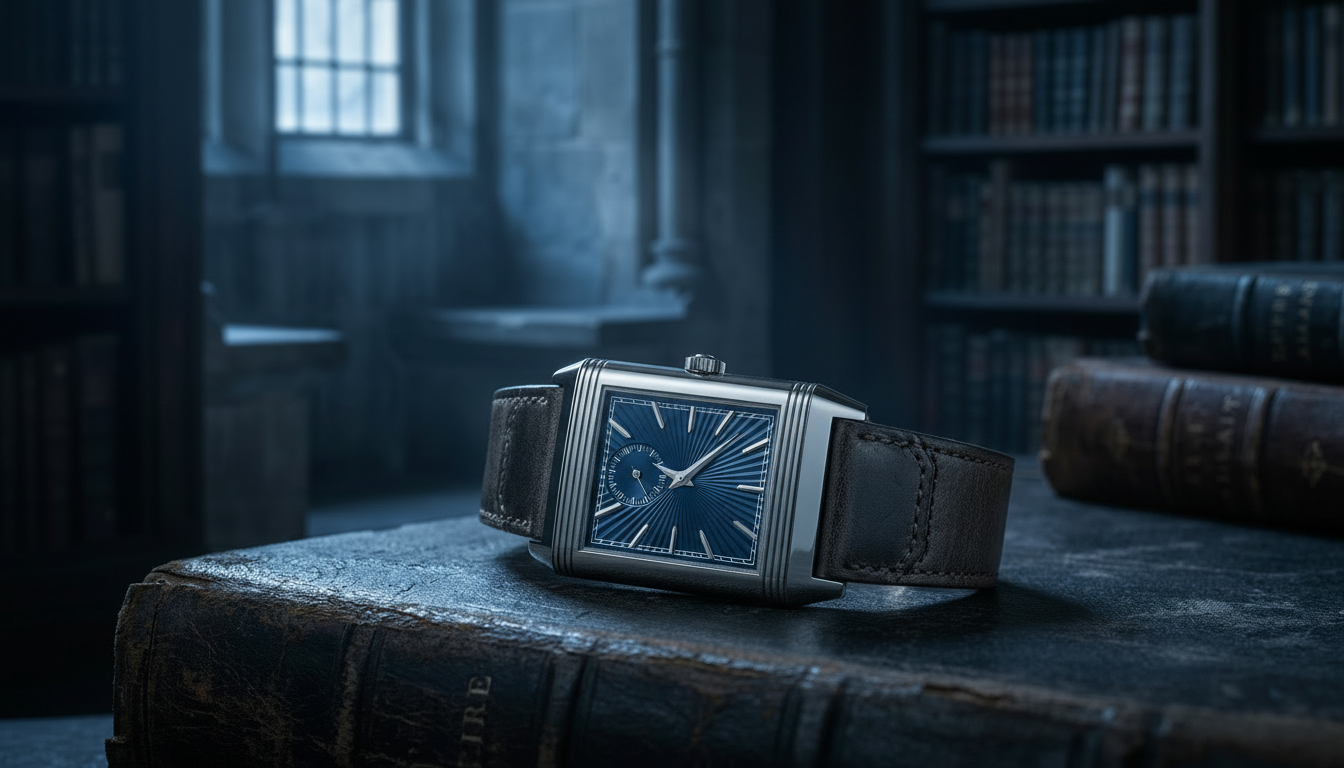
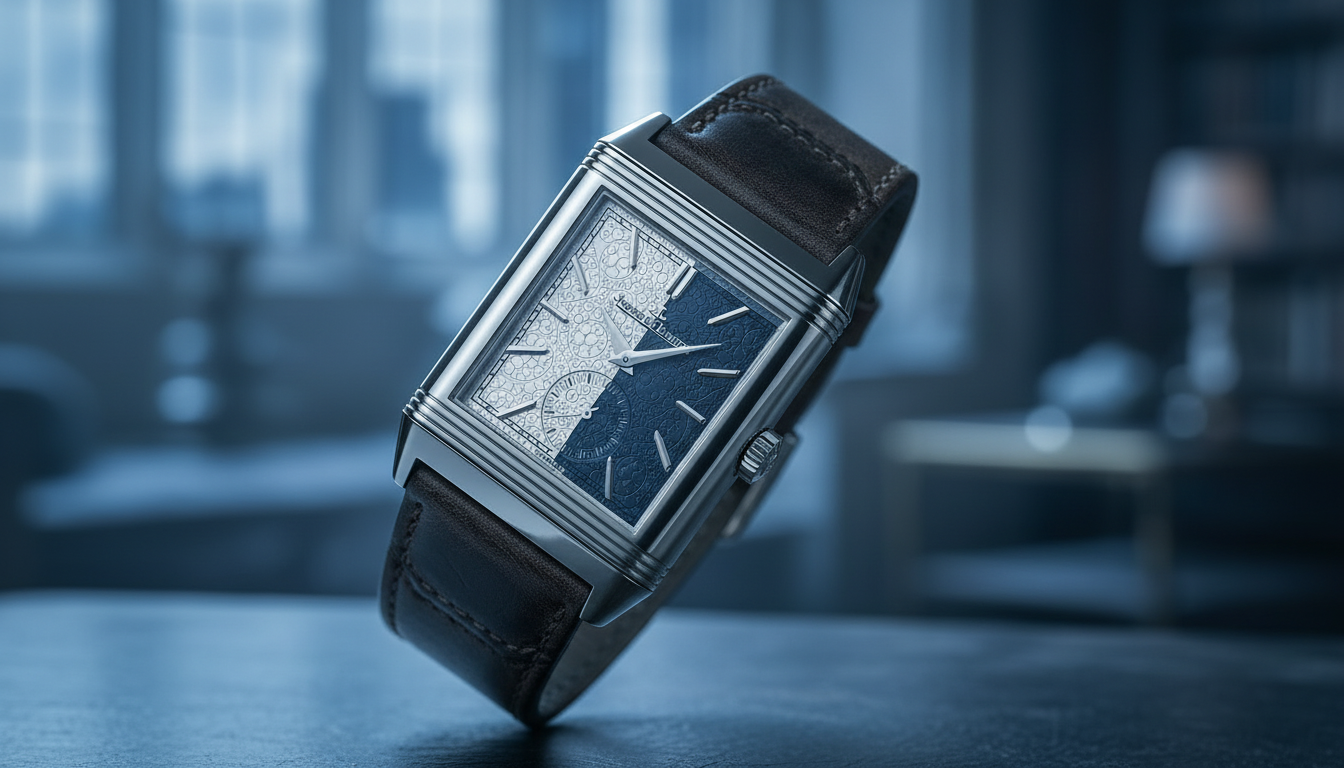
For decades, the Reverso’s reverse side was a blank slate, a place for personalisation. But in 1994, the maison introduced the Duoface, transforming that protective function into a platform for horological complexity. The solid back was replaced by a second dial, offering a second time zone. This was the model I chose, and the one I had just collected. The primary face is a model of restraint—a silvered, sunray-brushed dial, dauphine hands, and simple, applied indices. It is clean, legible, and deeply rooted in the Art Deco sensibilities of its birth. But a slide and a click reveals its counterpart: a rich, deep blue dial, animated by a Clous de Paris guilloché pattern. A small sub-dial at six o’clock provides a 24-hour day/night indication, clarifying whether it is 10 a.m. or 10 p.m. in one’s home city. Flying from Paris to London a fortnight ago, a simple push of the corrector slide on the top of the case advanced the local time hour by hour, while the blue dial kept perfect track of time on the continent. It is an exceptionally elegant and intuitive execution of a GMT complication, a private affair for the wearer alone. There are no extra hands cluttering the main dial, no rotating bezels. Just a hidden face, a secret kept between the watch and its owner.
An Art Deco Canvas
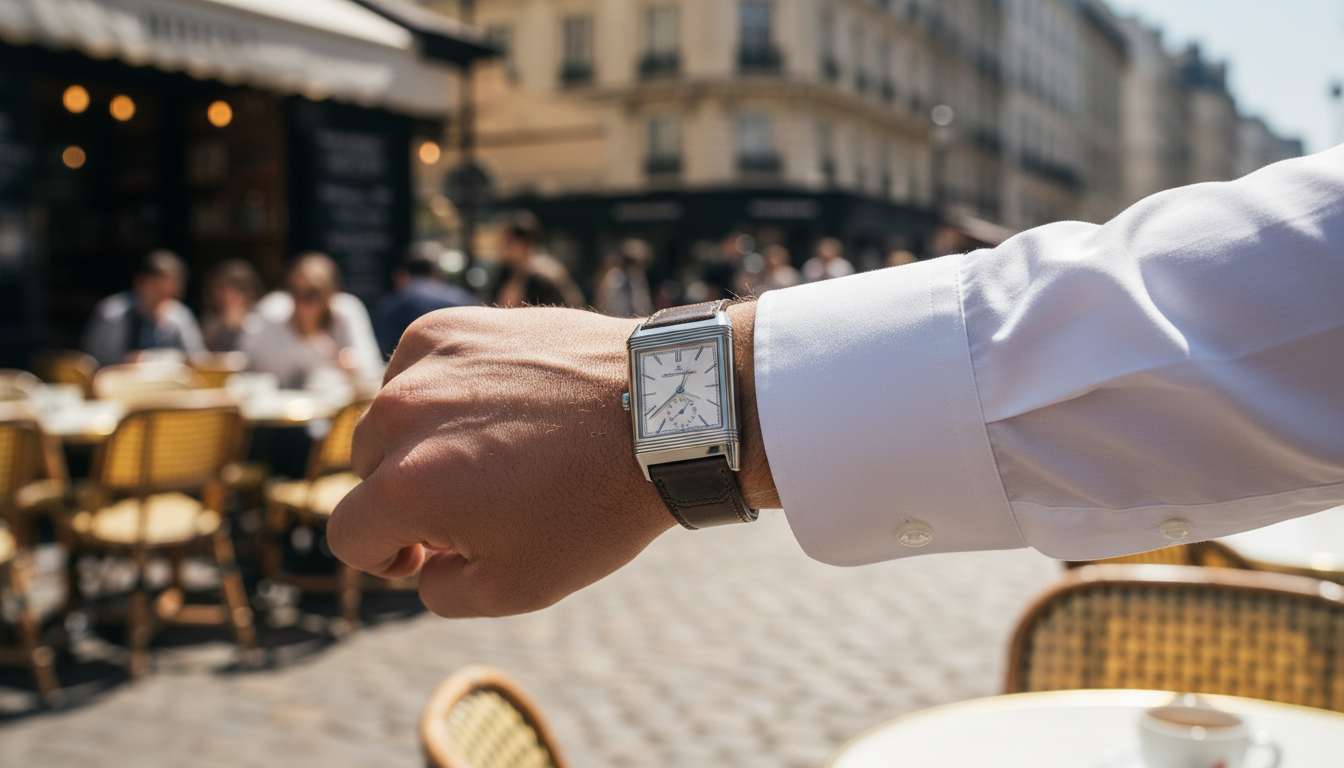
Beyond its clever mechanism, the Reverso endures as a masterpiece of industrial design. In a world dominated by the circle, its rectilinear form is a quiet statement. The signature three gadroons that flank the top and bottom of the case provide a subtle architectural frame, catching the light and adding a sense of dimension. The proportions are simply perfect. On the wrist, it does not shout; it speaks. It sits flat and comfortably, disappearing under a cuff with a discretion that few sports watches can manage. This is the essence of its appeal. It was born of sport, but it is the epitome of a dress watch. This duality is its strength. The cool, geometric precision feels as modern today as it must have in 1931. It is a reminder that true style is not about ephemeral trends, but about line, proportion, and purpose. Wearing it is a constant appreciation of form, a small piece of wearable sculpture that also happens to tell the time in two places at once.
A Legacy in Miniature
The Reverso is inextricably linked with the identity of the manufacture that produces it. Jaeger-LeCoultre is known as the “watchmaker’s watchmaker” for good reason. For much of its history, the Grande Maison in Le Sentier has supplied movements, ébauches, and components to many of the most revered names in Swiss watchmaking. This deep, integrated manufacturing capability gives the Reverso a substance that goes far beyond its swiveling case. The Calibre 854A that powers my Duoface is a compact, manually-wound, rectangular movement designed specifically for this case shape—not a circular movement shoehorned into a square peg. This integrity of design, where the outside and inside are conceived as a whole, is a hallmark of true haute horlogerie. The knowledge that this small, ticking engine was born of a single, storied manufacture in the Vallée de Joux adds an intangible layer of satisfaction. It is a product of a place, a history, and a philosophy of craft that is increasingly rare. The Reverso is not merely a clever idea; it is the vessel for a profound and enduring watchmaking tradition.
Returning to my apartment, I placed the watch on my desk, its blue face turned upwards, a reminder of the city I had just left. The genius of the Reverso is not just in its history or its mechanics, but in its dual personality. It is both sporty and elegant, public and private, a shield and a window. It is a watch that does not demand attention, but rewards it, offering a private, tactile pleasure with every slide and a quiet story of ingenuity with every glance.
'''