The Kyle of Lochalsh Line: Scotland's Great Western Passage
More than mere transport, the railway from Inverness to the sea is a slow-motion immersion into the wild heart of the Highlands, a journey best measured in landscapes revealed, not miles travelled.
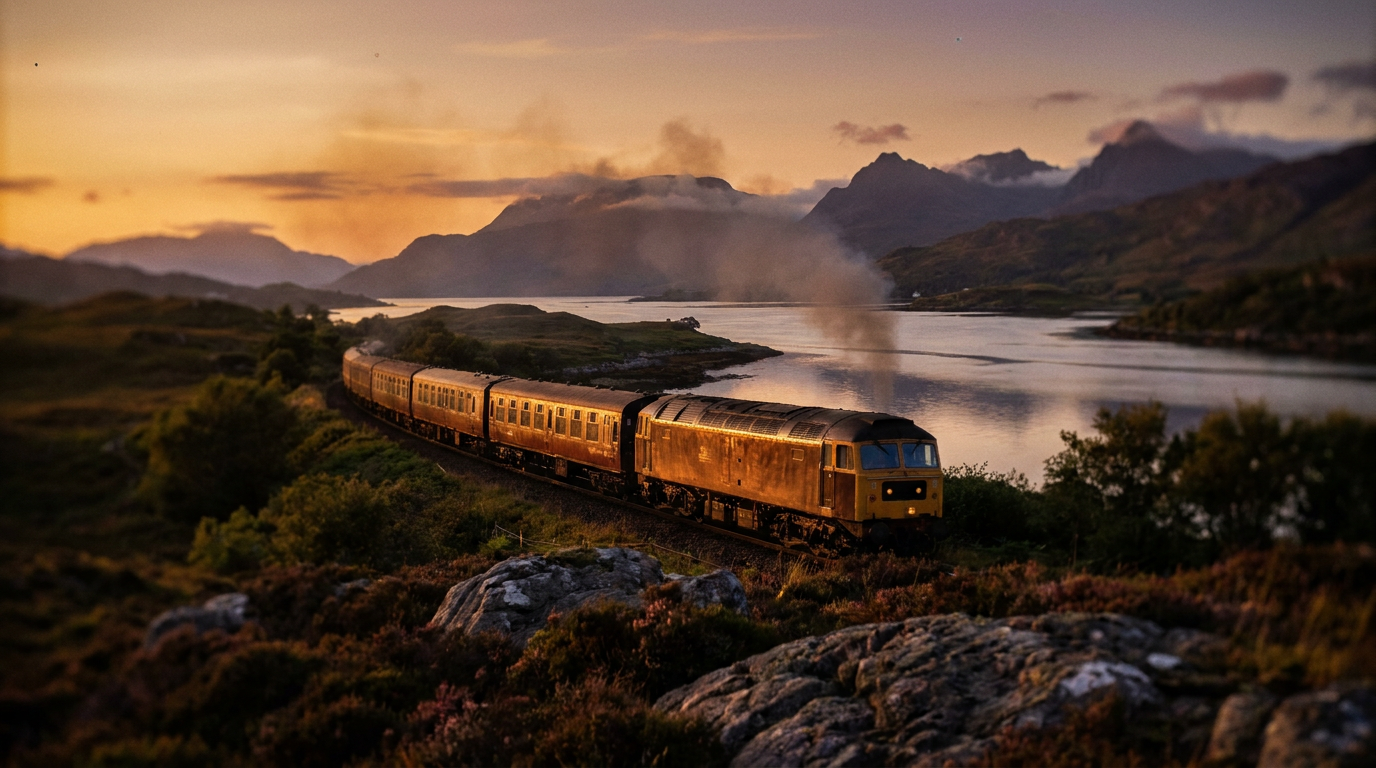
To depart from Inverness by rail is to feel the last vestiges of the city fall away with surprising speed. One moment, the solid, sensible granite of the Highland capital; the next, the calm expanse of the Beauly Firth. I boarded the morning train for Kyle of Lochalsh not seeking luxury, for this is no privately chartered observation car, but a simple ScotRail service. Its purpose is not to cosset, but to convey. And in its straightforward, unadorned utility lies its profound appeal. The journey itself is the destination.
The carriage was clean, the window large, the seat firm enough for the four-hour passage. A quiet hiss of the doors, a gentle lurch, and we were away. The initial stretch is a study in pastoral transition, tracing the firth past Muir of Ord and Conon Bridge before turning west at Dingwall, a name that feels satisfyingly Norse on the tongue. Here, the true journey begins, as the line leaves the coastal plain and commits to the interior.
The Passage Inland
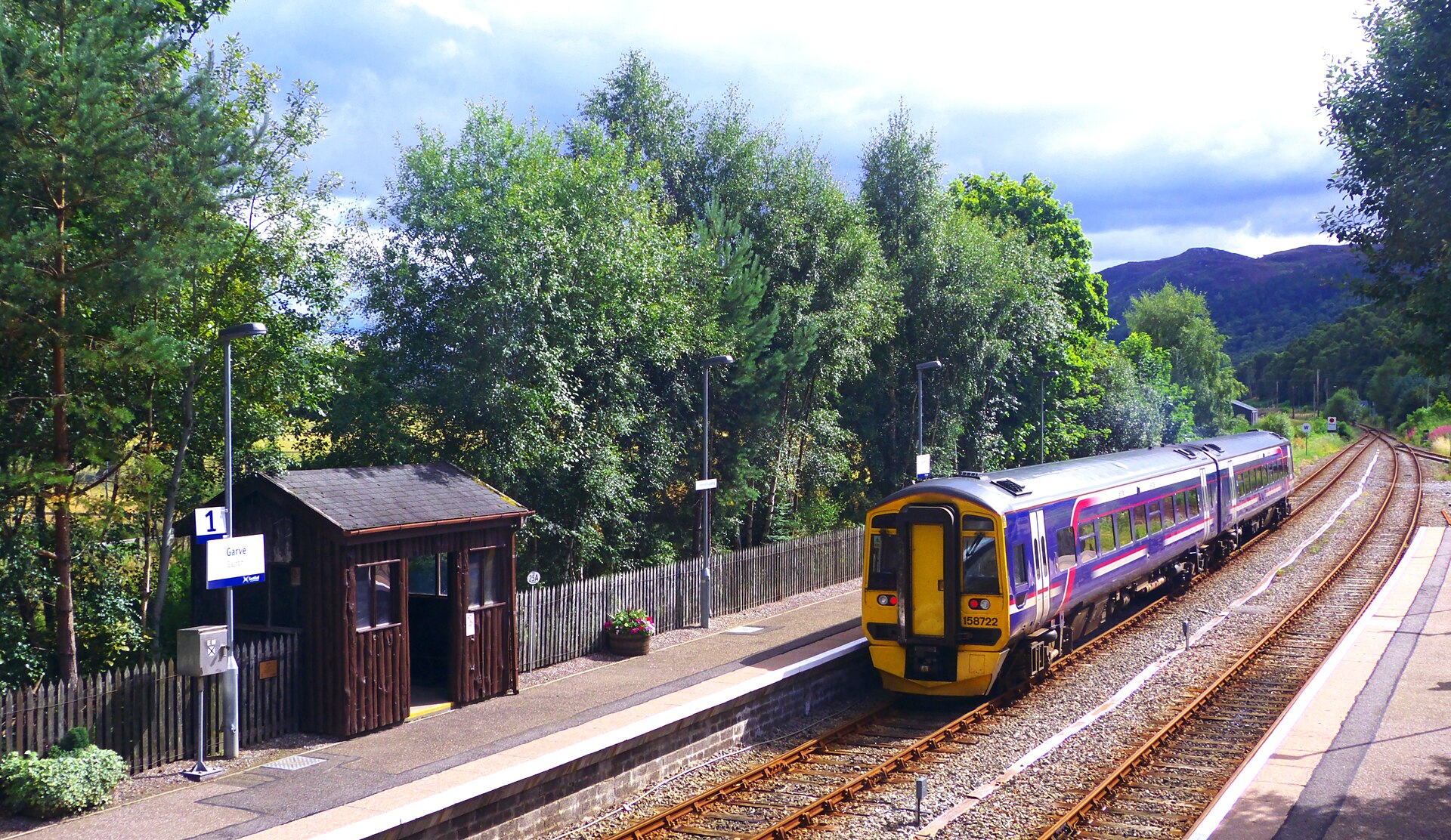
The line, a single track for much of its length, forces a slower, more considered pace. It must weave and climb where a motorway would simply blast through. It follows the contours of the land with a nineteenth-century deference. We passed through Garve, the landscape beginning to shed its softness, the fields giving way to bracken and the first hints of imposing geology. The train becomes a travelling theatre, the window a proscenium arch for the unfolding drama of the Highlands. Other passengers, a mix of locals and discerning travellers, seemed to understand this. There was a shared, unspoken appreciation, a quiet contemplation as the scenery took hold. The rhythmic clatter of the wheels on the track is not an intrusion but a mantra, a steadying percussion against the visual symphony outside.
As we gained elevation, the world outside grew more elemental. The train felt like a fragile but determined vessel navigating a vast, empty sea of moorland and peat. We climbed towards the summit at Achnasheen, where the station stands as a lonely outpost in a vast, windswept expanse. It is here that one feels the true scale of the Highlands. Mountains, once distant suggestions, now dominate the skyline. Their names—Liathach, Beinn Eighe—are whispered among those in the know, monolithic presences in the Torridon range, their quartzite peaks glinting in the shifting light.
Into the Wild
This is not the manicured, picturesque beauty of the Alps. It is a wilder, more brooding magnificence. The colours are a subtle palette of ochre, moss green, and deep, peaty brown, punctuated by the startling purple of heather in late summer. I watched as curtains of rain swept across a distant glen, followed moments later by a burst of sun that set the wet landscape alight. The train continued its resolute journey, passing the still, dark waters of Loch Gowan and Loch Scaven. There are no grand viaducts here, only the steady, determined progress of a railway engineered with grit and ingenuity, a testament to the Victorian conviction that no corner of the kingdom should remain inaccessible.
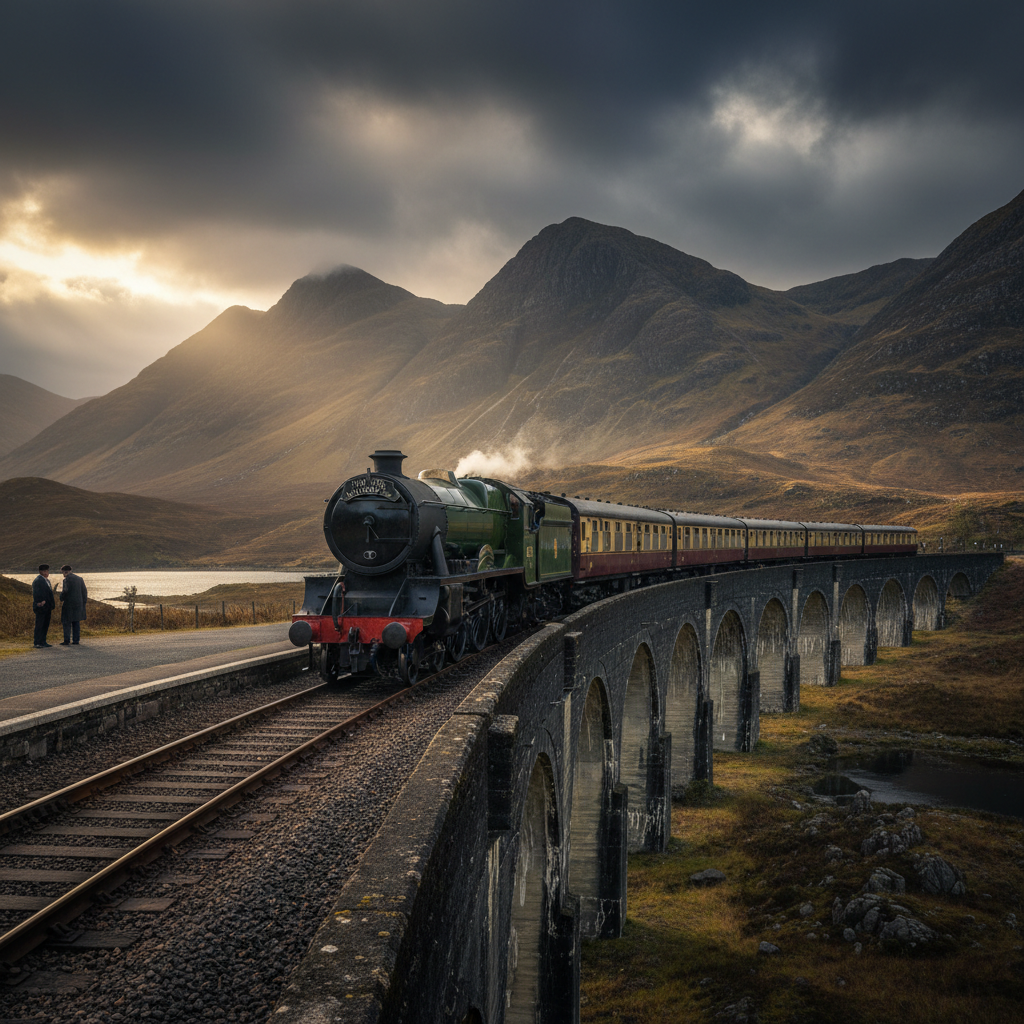
The highest point is passed without fanfare. The achievement is not in conquering the landscape, but in passing through it with respect. From Achnasheen, the slow descent to the sea begins. The line clings to the mountainside, offering staggering views down into Glen Carron. The character of the journey shifts again. The sense of high-altitude isolation gives way to a gradual re-engagement with the world, but a world on a different scale.
The Descent to the Sea
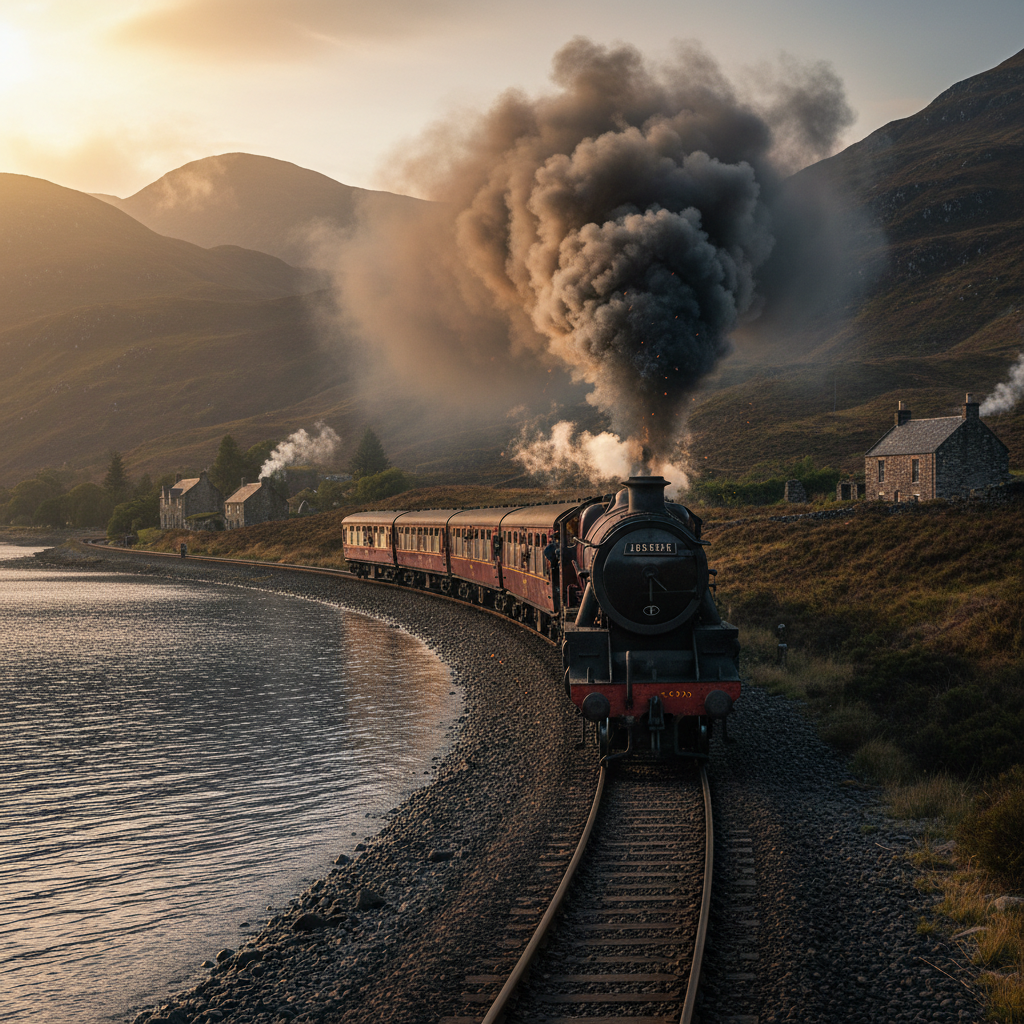
The railway meets the coast along the edge of Loch Carron, a sea loch that brings the salty air of the Atlantic deep into the Highlands. For several miles, the train runs mere feet from the water, the tide lapping against the embankment. We passed through Attadale and Stromeferry, the latter’s name a reminder of the time before the railway offered a more reliable passage. The light here on the west coast is different—softer, more luminous. It catches the surface of the water and the slick, dark seaweed on the rocks. Just before the final stop, the train passes Plockton, its palm trees—a bizarre and charming feature sustained by the Gulf Stream—and whitewashed cottages nestled in a sheltered bay. It is a final, impossibly pretty vignette before the journey’s end.
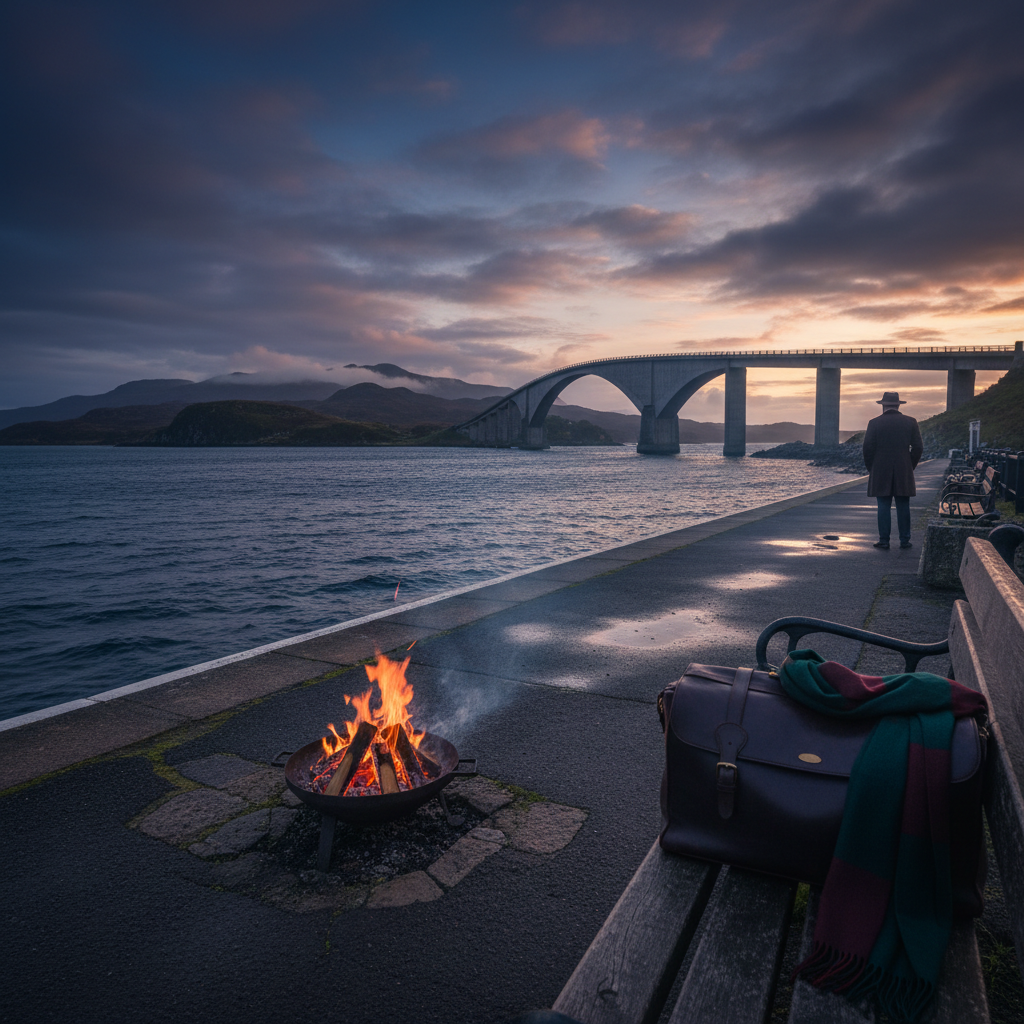
Arrival at Kyle of Lochalsh is definitive. The track runs out. The station buffers are set against the sea itself, the platform looking directly across the water to the Isle of Skye and its formidable bridge. The village exists because of this railway; it was the terminus, the point of transfer for ferries to the Hebrides. That history is palpable. One feels a sense of completion, of having traversed the breadth of Scotland from the North Sea to the Atlantic. I stepped from the carriage into the crisp, salt-laced air, the gulls crying overhead. The purpose of the journey was not merely to arrive here, but to have experienced the eighty-two miles of astonishing country that lie between here and Inverness.
Journey's End
In an age of immediate gratification and high-speed travel, a journey like the Kyle of Lochalsh line is an act of deliberate deceleration. It is a reminder that the spaces between places have value, that to watch a landscape unfold at a human pace is a pleasure worth seeking. It offers no champagne service or velvet upholstery, only a clean window and a steady rhythm. And that, I reflected, is more than enough. It is an honest journey through a magnificent land, and there are few things more luxurious than that.