The Holland & Holland Royal Over-and-Under: A Study in Modern Balance
A morning with Holland & Holland's Royal Over-and-Under reveals how London's venerable master gunmaker re-engineered modern driven game shooting without abandoning the soul of the bench.
A crisp, pale sun hung low over the oak woods of Hampshire when I arrived at the Holland & Holland Shooting Grounds in Northwood earlier this month. The grass along the drive still carried the silver residue of an early autumn frost, and the air smelled faintly of burnt walnut husks, wet clay, and spent nitro powder. It is an unmistakable perfume, familiar to anyone who has spent a lifetime in the field, yet rarely does one encounter it in such civilized surroundings. Inside the lodge, a coal fire was quietly collapsing into embers, casting an amber glaze over row upon row of polished walnut and case-hardened steel.
I had come specifically to spend a morning with the Royal Over-and-Under, the flagship sporting gun from Holland & Holland that remains, in the eyes of many who understand the architecture of firearms, the absolute summit of modern London gunmaking. While the side-by-side sidelock defined the golden Edwardian age, the Royal Over-and-Under represents an uncompromising modern response to the physics of high-flying birds, engineered not as an adaptation of European competition guns, but as an unapologetic continuation of the firm’s bespoke heritage.
The Architecture of the Action
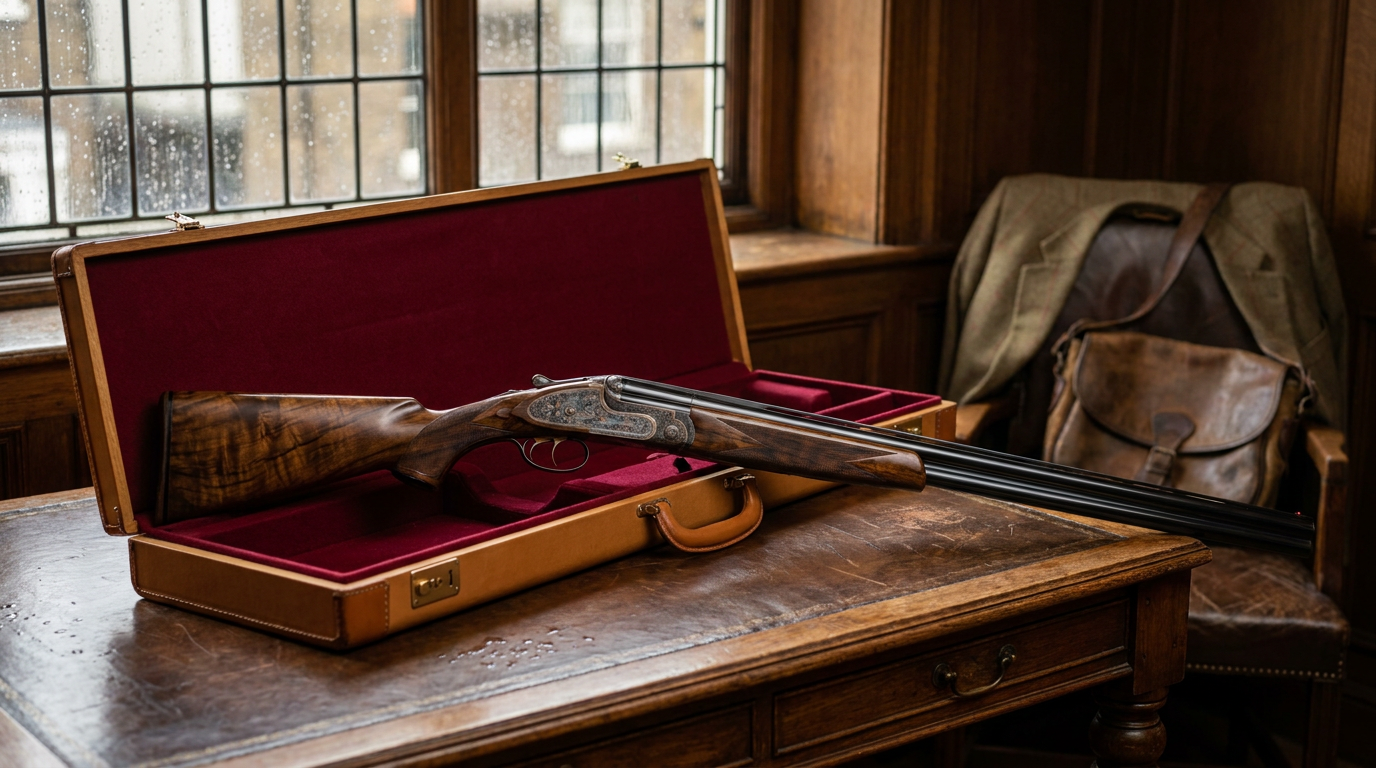
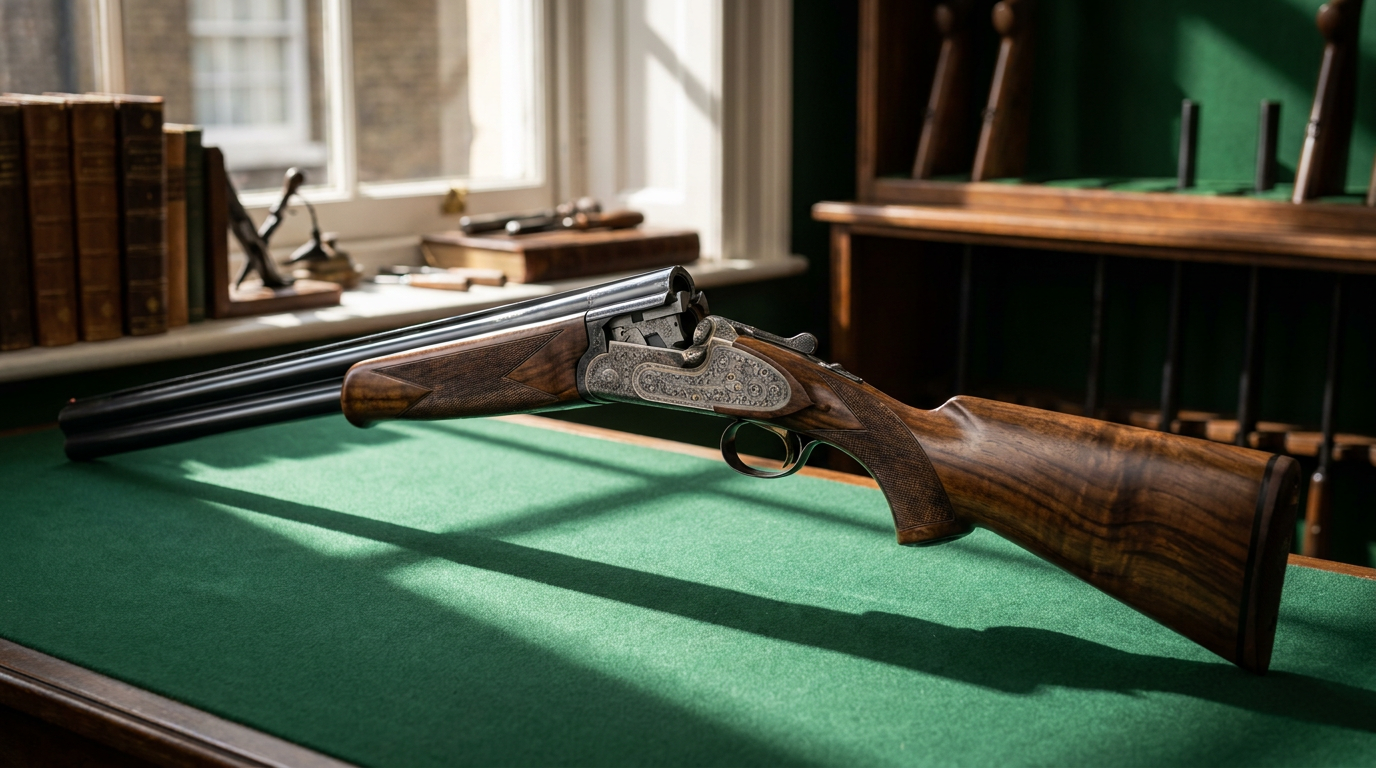
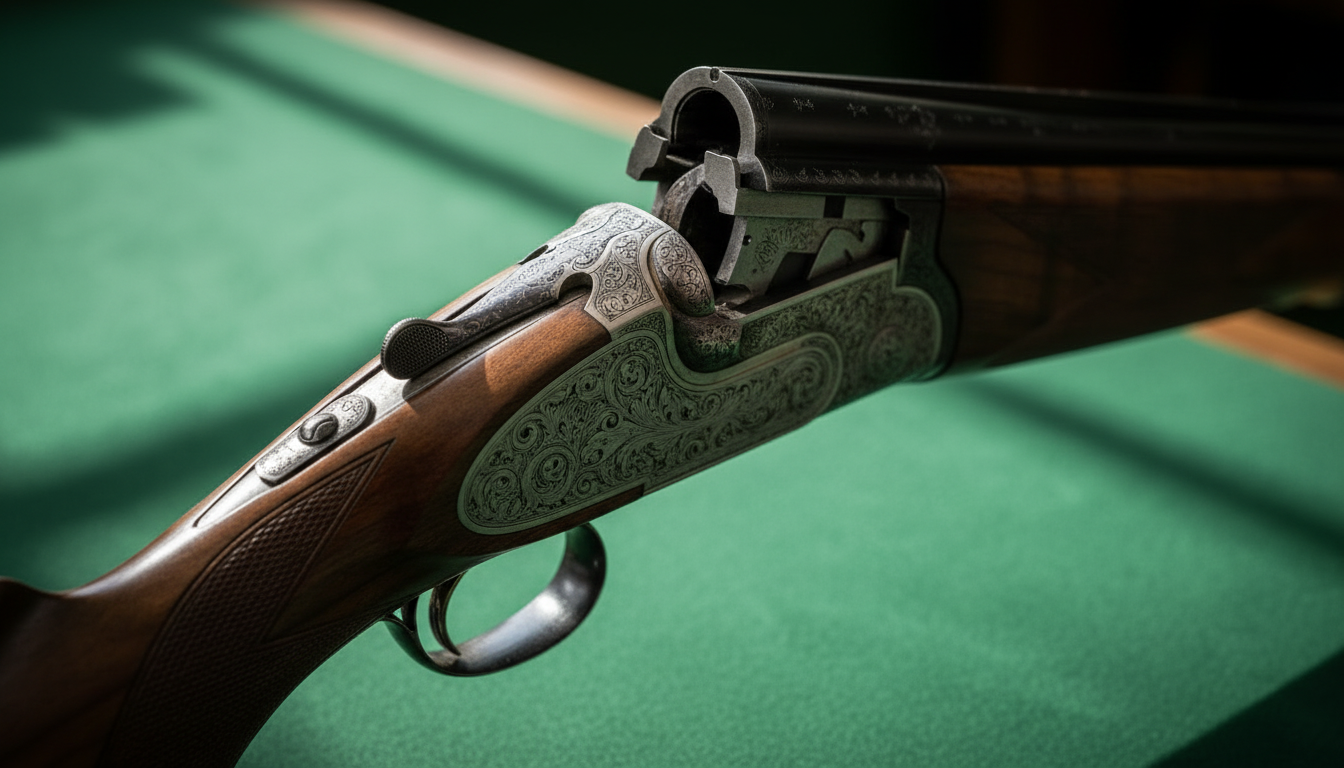
Holding the gun unstrung from its oak-and-leather case, the first impression is one of astonishing low profile. Where many over-and-under designs suffer from a deep, slab-sided action body required to seat the under-lumps, Holland & Holland uses a proprietary bifurcated bolt system and side-trunnions. The barrels pivot on replaceable hinge pins nestled low in the action face, allowing the profile of the steel to remain slender and classically English. It does not feel like an anvil between the hands; it feels like an organic extension of bone and muscle.
The lockwork itself is an interpretation of the back-action sidelock, an intricate mechanical watch in miniature. Cocking is achieved on the opening stroke through robust interior levers, operating with a silky, velvet hydraulic resistance that only decades of hand-regulation by a master actioner can achieve. The lockplates carry the house's signature bold acanthus leaf engraving, deeply chiseled and tempered into subtle swirls of charcoal, straw, and case-colour blue. Running one’s thumb along the radiused edges of the action reveals no microscopic gaps or tooling marks; the fit of steel to steel is entirely absolute, trued by soot-lamp and oil stone.
Balancing the Barrels
We walked out toward the high tower stand, situated within a quiet clearing where beech trees were shedding their first russet leaves. My host, an instructor whose eye for gun mount is as ruthless as it is quiet, watched as I assembled the 30-inch barrels to the action. The sound of the gun closing is not a metallic clatter; it is an airtight, hollow snick, the acoustic hallmark of hand-jointed London lumps bedding into the receiver floor with zero tolerance.
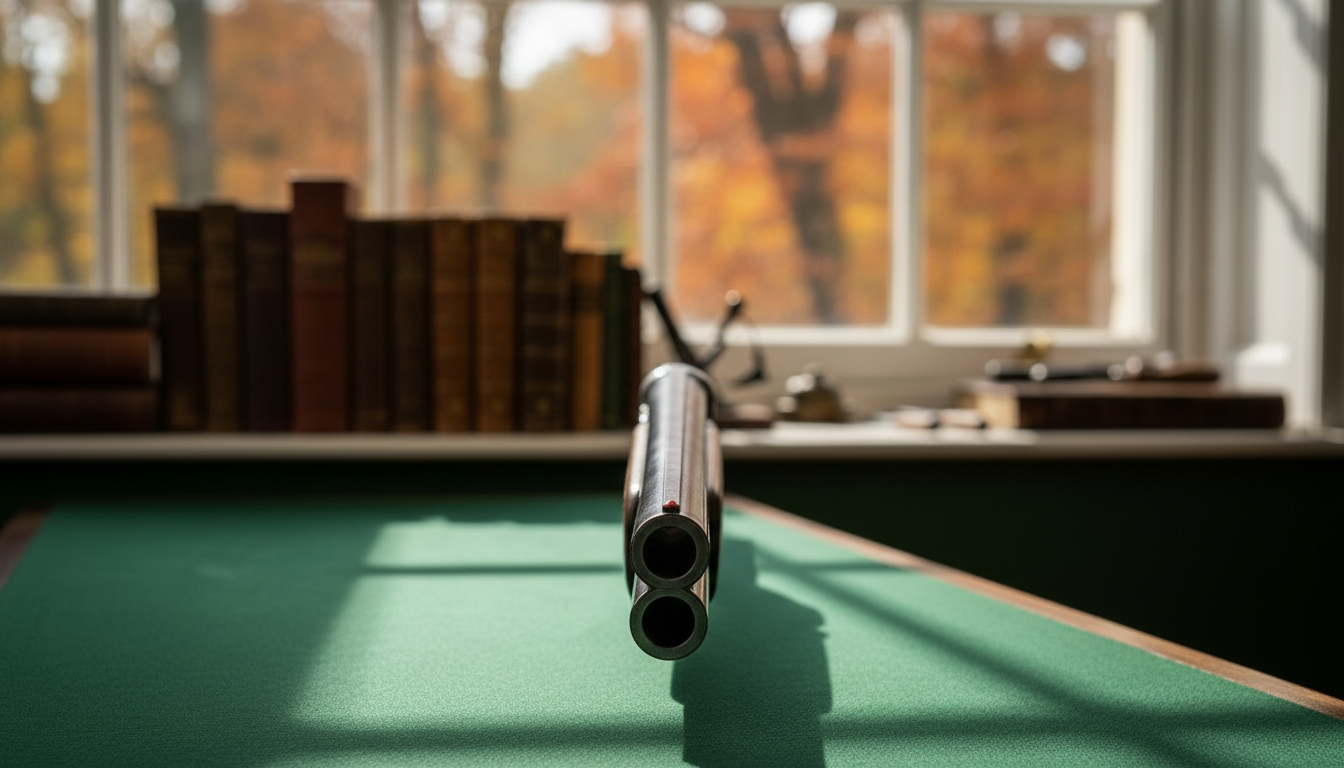
The barrels themselves are struck by hand from chrome-molybdenum forgings, joined by solid side ribs and topped with a delicate, file-cut Churchill-style top rib that tapers forward to draw the eye toward the horizon without distraction. At seven pounds, ten ounces, the balance of this 12-bore sits precisely beneath the hinge pin. Weight in a sporting gun is misunderstood by the novice; excessive lightness promotes an erratic, whip-like swing, whereas calibrated mass distributes momentum cleanly. Through the arc of a swing, the Royal Over-and-Under moves with a stately, unbroken cadence, smoothing out the hesitations of the shooter’s nervous system.
In the Field
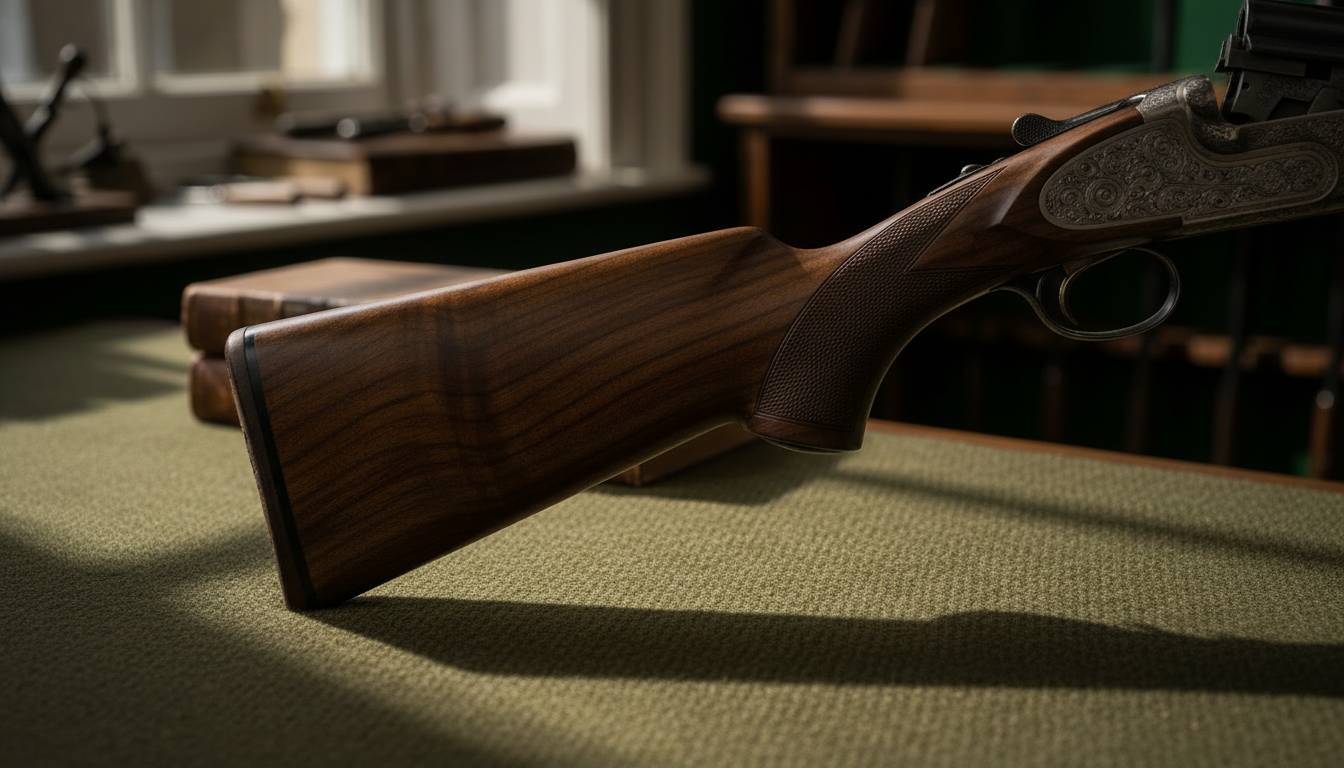
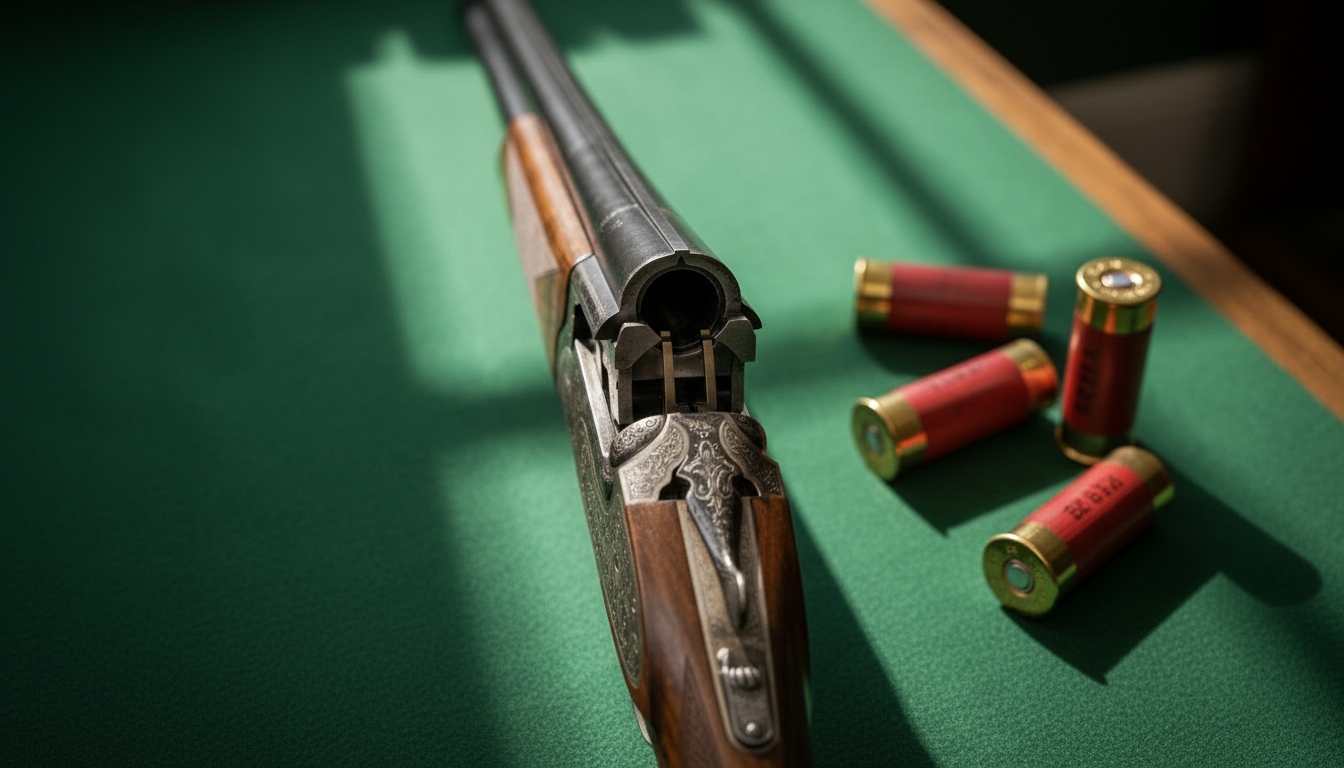
At the tower, simulated birds were launched from ninety feet overhead, cutting across a brisk northerly crosswind at speeds that mimic late-season pheasants flushing from steep Devon valleys. Slipping two brass-headed game cartridges into the chambers, I closed the action and mounted the gun to my shoulder. The stock, carved from a dense blank of Turkish walnut cured for twenty years, nestled into the hollow of my shoulder with uncanny repetition. The comb was shaped with a subtle cast-off that aligned my master eye automatically with the flat plane of the rib.
When the trigger broke, it did so with a crisp, glass-rod release calibrated at precisely three and a quarter pounds. There was no creep, no sponge, no overt travel. The shot column cleared the muzzle, followed instantly by the authoritative crack of ignition, and the target shattered into black smoke. The ejectors, powered by heavy V-springs concealed beneath the forend wood, threw the spent paper hull high over my right shoulder with clean, simultaneous precision. On high driven targets, the advantage of the single-plane barrel alignment became immediately obvious: visual acquisition of the bird remains uninterrupted by the second barrel, allowing the shooter to stay locked to the line of flight with minimal barrel cant.
The Value of Permanence
In a world increasingly dominated by CNC-machined, disposable sporting goods, the Royal Over-and-Under stands as a monument to human deliberation. Over eight hundred hours of bench craftsmanship are poured into a single specimen before it ever receives its nitro proofing and final oiling. The stock finish alone—an alchemical cocktail of boiled linseed, alkanet root, and elbow grease—requires weeks of rubbing until the grain appears suspended beneath a sheet of liquid amber.
As we walked back to the lodge for a midday cup of black tea, the barrels still warm against my palm, I reflected on the quiet dignity of such an object. It does not advertise its status through ostentation. Instead, it offers an unyielding standard of performance that makes no excuses for the man behind it. A Holland & Holland of this calibre is never truly acquired for oneself; it is merely commissioned, broken in over forty seasons of heather and stubble, and preserved for hands that have not yet learned to swing.