The Ferrari 275 GTB/4: An Autumnal Ascent
Crossing the limestone ridges of the Maritime Alps in a 1968 Ferrari 275 GTB/4, tracing the pure lineage of Maranello’s Colombo V12 before the era of compromise began.
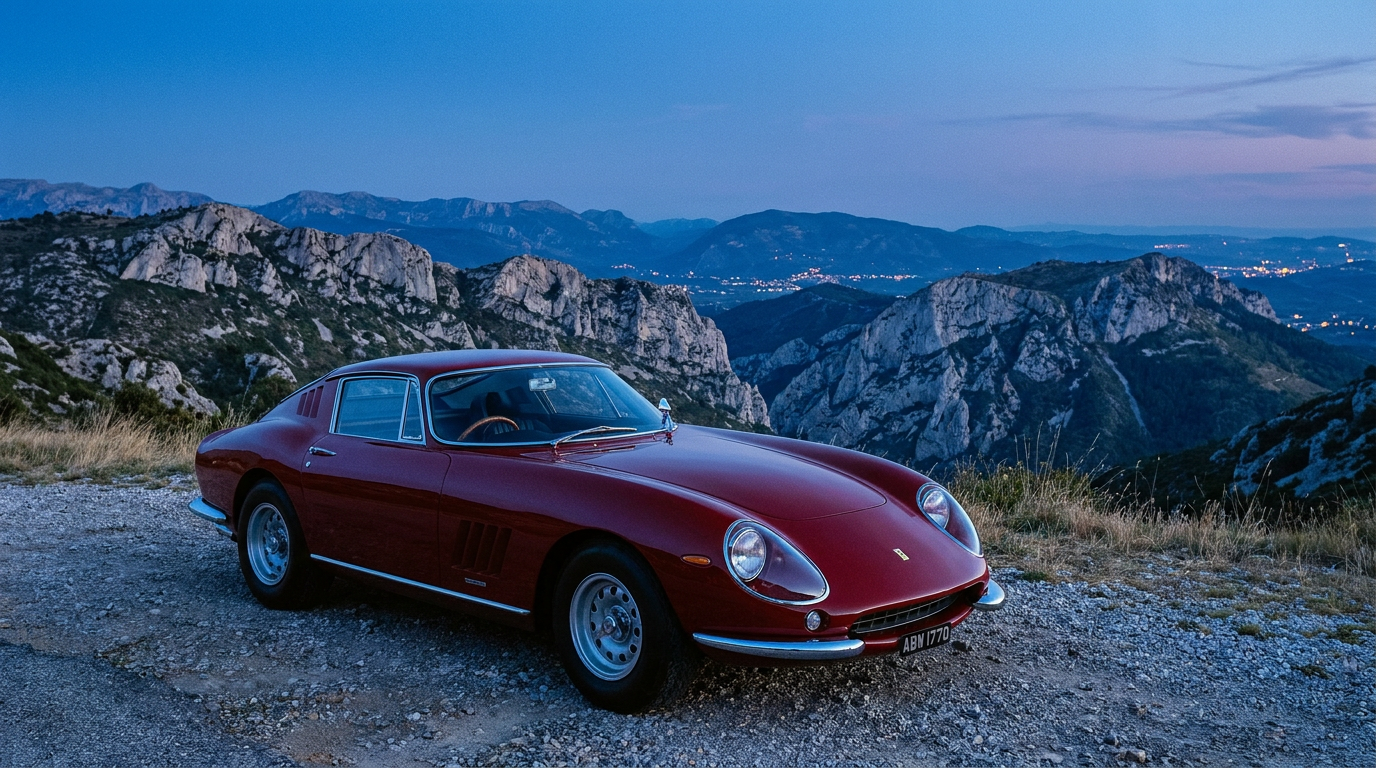
The morning air over the Col de Vence carried the faint, resinous bite of dried rosemary and cooling stone. It was mid-October, the quiet cusp of the Riviera season when the crowds have retreated to northern capitals, leaving the maritime foothills to the low slant of autumnal light. Waiting on the gravel apron of a stone bastide stood a 1968 Ferrari 275 GTB/4, its sculpted coachwork finished in an understated Grigio Argento.
Designed by Pininfarina and shaped in steel by Scaglietti, the four-cam evolution of the 275 GTB remains, for many who care about such distinctions, the zenith of front-engined Maranello gran turismos. It represented the final, absolute maturation of Gioachino Colombo’s short-block architecture before the architecture broadened into the 365 GTB/4 Daytona. Settling into the low-slung bucket, upholstered in aged Nero Connolly leather that smelled of lanolin, saddle soap, and half a century of gentle use, there was none of the claustrophobia common to modern machinery. The cabin is an airy pavilion of slender pillars, framed by the sweep of a thin, three-spoke Nardi steering wheel carved from laminated mahogany.
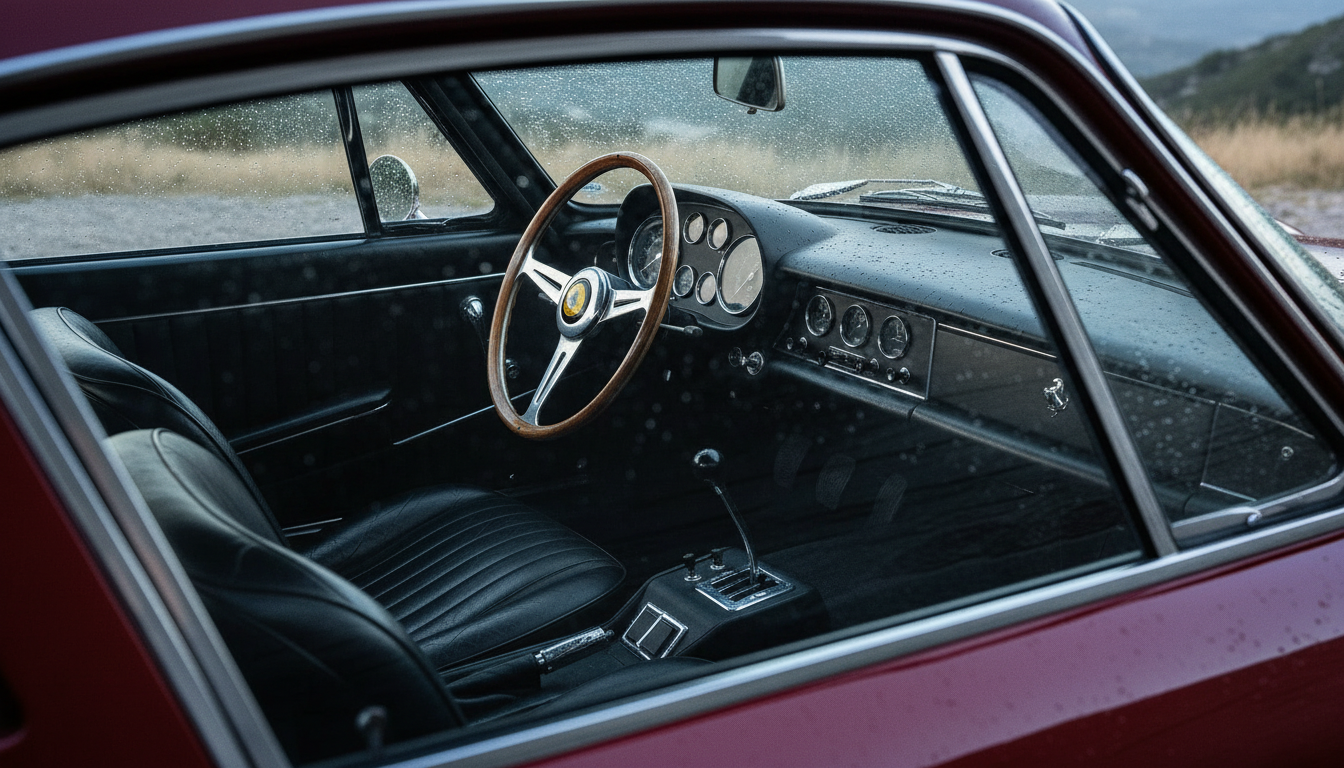
The Architecture of the Four-Cam
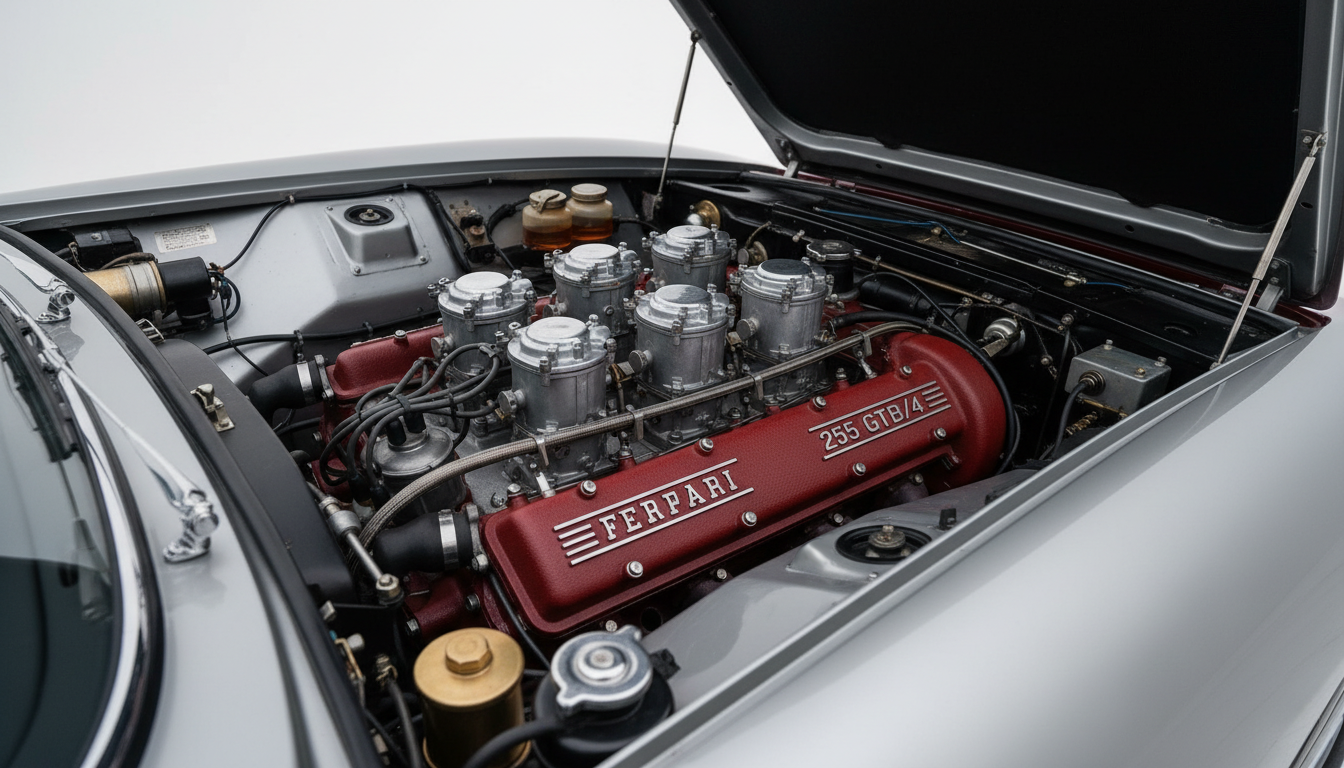
To bring the 3.3-litre Tipo 226 V12 to life requires patience and ritual. One turns the brass key, listens to the twin Bendix fuel pumps tick rhythmically beneath the boot floor until their cadence slows, and eases the throttle forward twice to prime the six downdraft twin-choke Weber 40 DCN carbs. The starter whines with mechanical purpose before all twelve cylinders fire into an irregular, chattering idle. There is no synthetic exhaust valve theatrics here; what one hears is mechanical friction transmuted into harmonic energy—chains driving four overhead camshafts, the clatter of twenty-four valves, and the deep, dry gulp of induction.
The introduction of dry-sump lubrication in the four-cam variant allowed the engine to sit significantly lower in the tubular chassis than in its twin-cam forebear, dropping the centre of gravity and granting Scaglietti the license to craft that predatory, long-nosed silhouette. Backing down the drive, the clutch is substantial but progressive, demanding deliberate quadriceps work rather than timid toe-prodding. The open-gate gear lever, crowned by a simple black Bakelite sphere, slips through the polished steel comb into dog-leg first with a firm, oily snick.
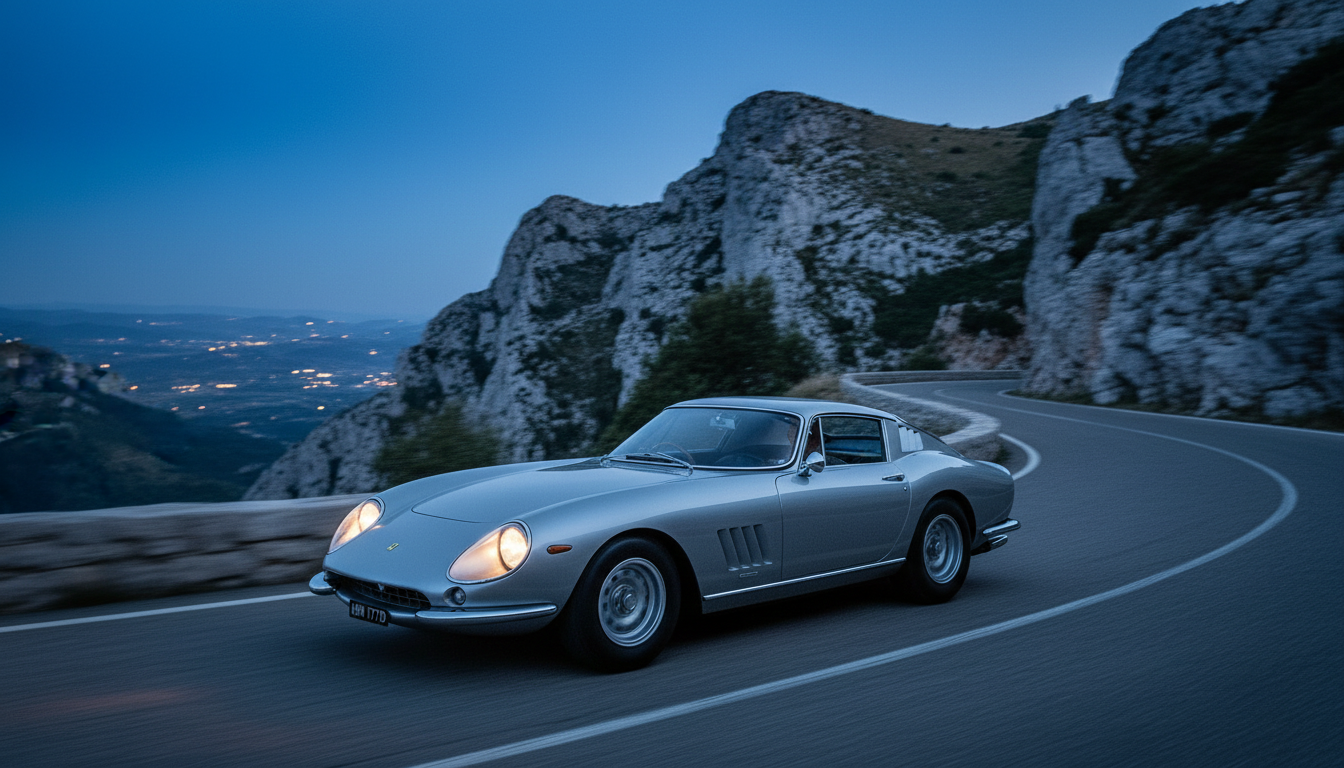
Across the Maritime Foothills
The initial ascent toward Gréolières along the D2 is an exercise in recalibration. The non-assisted worm-and-roller steering is unyielding at parking speeds, transmitting every seam in the asphalt directly through the rim. Yet as the needle on the Veglia tachometer sweeps past 2,500 rpm, the weight evaporates. The 275 becomes remarkably fluid. By housing the five-speed gearbox in a rear-mounted transaxle—introduced on the 275 series to replace the traditional gearbox-on-engine layout—Maranello achieved a near-perfect 50:50 weight distribution.
Through the switchbacks carving the limestone flanks of the Gorges du Loup, the chassis feels poised, balanced upon its independent rear suspension. There is a suppleness to the ride that modern low-profile rubber has murdered; riding on tall Michelin XWX tyres wrapped around magnesium Campagnolo wheels, the car breathes with the contour of the road rather than clattering across it. In third gear, climbing through the shadow of the cliffs, you hold the throttle steady, feeling the chassis load up progressively, the rear end hunkering down with absolute fidelity to line.
Six Webers at 7,000 RPM
It is only once the road straightens toward the plateau of Caussols that the four-cam reveals its true character. Modern supercars offer effortless, instantly accessible torque from idle, compressing the spine with digital immediacy. The Colombo V12 operates on an altogether different dramatic arc. Below 4,000 rpm, it is civilised, flexible, and polite—a grand tourer suited for slipping across international borders without raising alarms.
Cross that threshold, however, and the nature of the intake charge changes entirely. As the secondaries on all six Webers open wide, the metallic hum hardens into an operatic, brassy crescendo that reverberates off the stone parapets. The surge toward its 7,700-rpm redline is relentless, accompanied by a sound that no turbocharger or particulate filter will ever permit again: pure, unstrangled atmospheric aspiration. Up into fourth, the mechanical linkage shifts cleanly, the revs dropping right into the fat of the torque curve. At speed, the long bonnet acts as an arrow, cutting the brisk plateau air while the oil pressure gauge remains resolutely pinned at 80 psi.
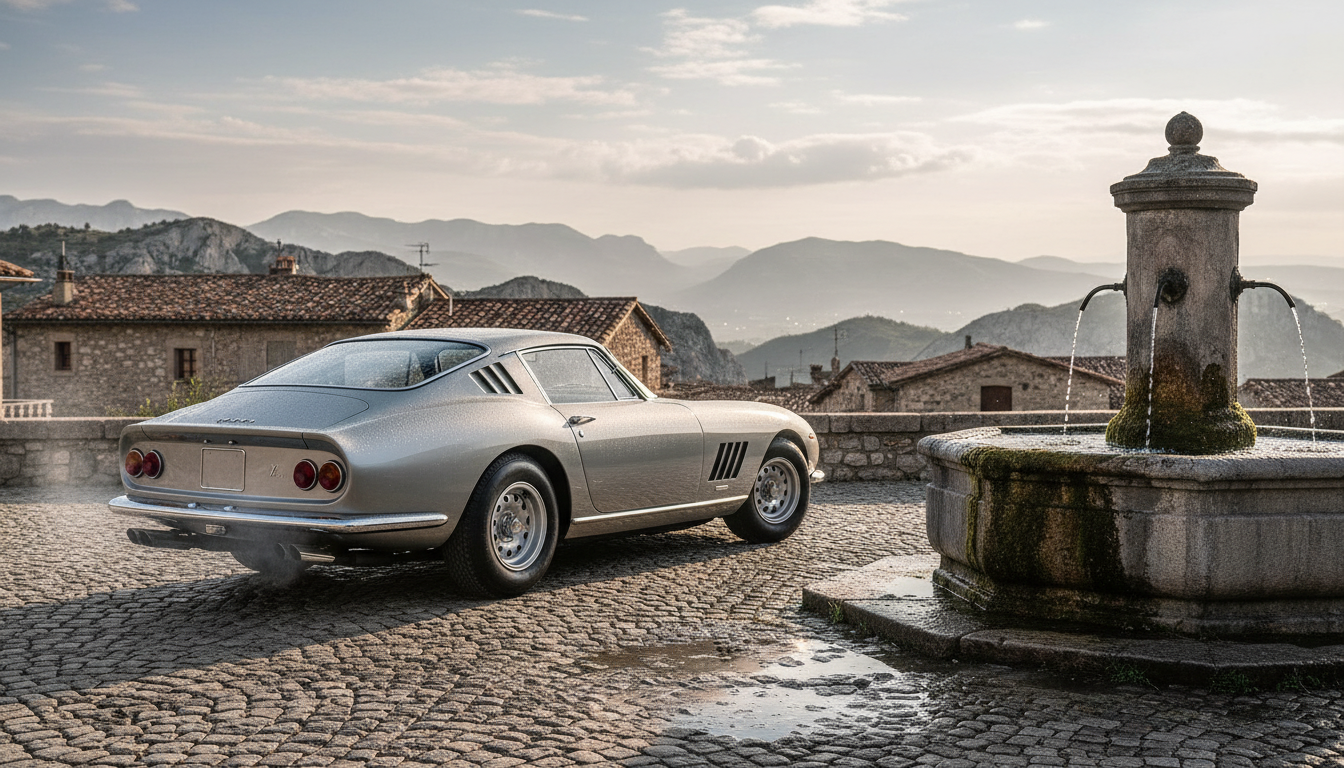
The Grace of an Analogue Twilight
Parking near the fountain in the deserted village square of Gourdon, the silence that followed the engine’s cutoff was total, save for the metallic ticking of exhaust manifolds dissipating heat. A faint vapour of warm mineral oil drifted through the louvres stamped behind the front wheel arches.
The modern automotive industry builds extraordinary things: faster, safer, vastly more capable instruments of speed. Yet they often lack the singular gift of the 275 GTB/4—the sensation that the car is an equal collaborator, requiring an engaged, attentive hand to yield its gifts. The long drive back down toward the coast, with the dusk painting the Mediterranean in shades of gunmetal and slate, confirmed what two decades of driving classic machinery has taught me: perfection is not the absence of effort, but the exact and beautiful proportion between mechanical honesty and human touch.