The Ferrari 250 GT Lusso: A Study in Motion
As the final evolution of the storied 250 GT platform, the Lusso was never a racing car. It was something more refined: a masterpiece of automotive sculpture and a definitive statement on the art of the grand tour.
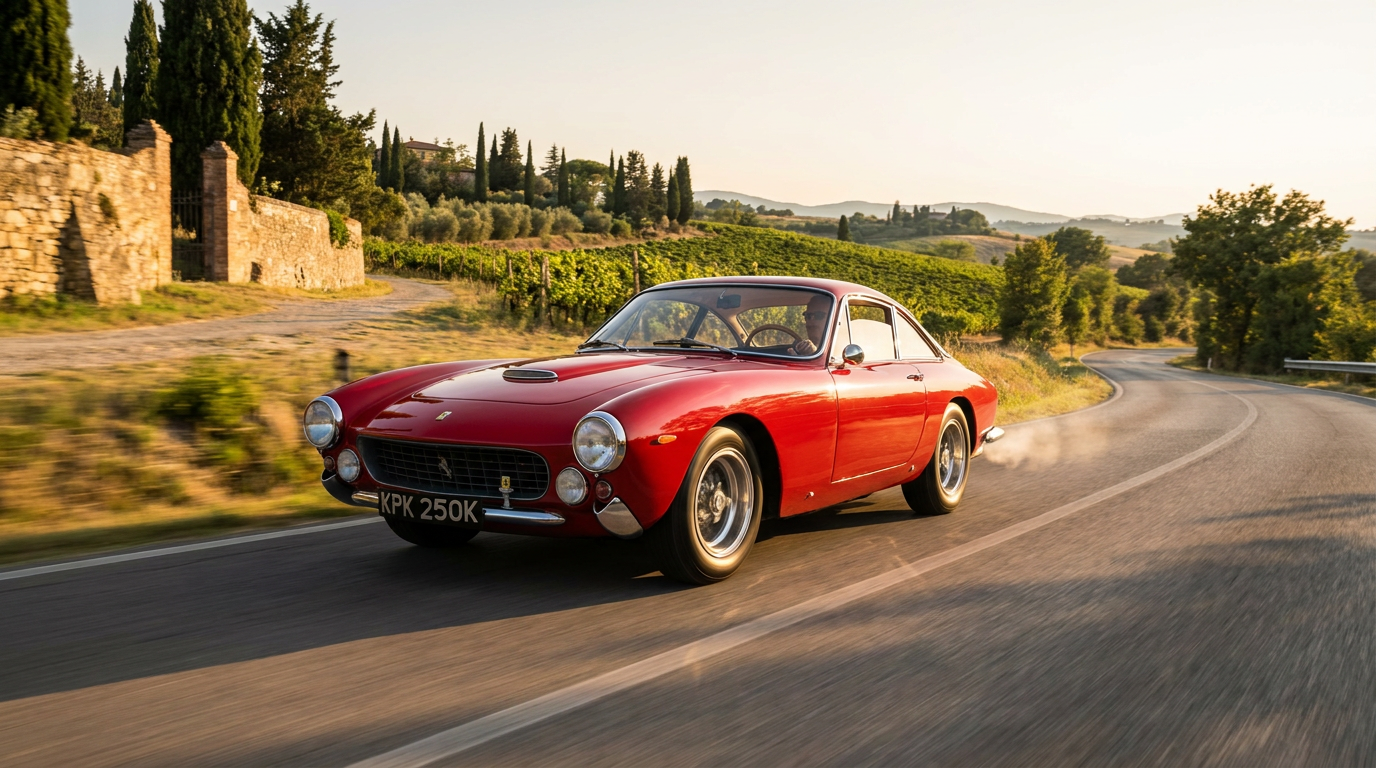
'''The key, a simple, unadorned piece of metal, felt impossibly slight for the machine it was meant to awaken. It was presented on a small leather tray in the cool shade of a Modenese portico earlier this month. Outside, the July sun was high, bleaching the colour from the terracotta roofs. The car, a 1963 Ferrari 250 GT Lusso, waited in the courtyard, its Blu Scuro coachwork absorbing the light, appearing almost black in the shadows. This was not a car that shouted. It didn’t need to. Of the 350 examples built, this one’s history was known from new, a quiet life spent between Italy and Switzerland. To stand before it was to understand the difference between a racing car and a road car, a distinction Enzo Ferrari himself held dear. The Lusso was never destined for the track; it was created for his most discerning clientele, a machine for crossing continents in comfort and at considerable speed. It was, and is, a statement of taste.
An Unbroken Line
The shape is pure Pininfarina, a single, fluid gesture from nose to tail, executed by Carrozzeria Scaglietti. One’s eye traces the long, low bonnet, over the subtle rise of the wings, across the airy glasshouse, and down the sharp, Kamm-tailed rear. It is a form without a single poor angle. Unlike its more aggressive siblings, the 250 SWB or the GTO, the Lusso—Italian for ‘luxury’—is an exercise in restraint. The grille is a delicate ‘egg-crate’ oval, the bumpers mere suggestions of chrome. Walking around the car, I noted the way the rear haunches swell almost imperceptibly, hinting at the power within. The most defining feature is the panoramic rear window, which flows down to the abrupt tail, incorporating a subtle spoiler that was a true aerodynamic innovation for its time. It is a design of immense sophistication, a final, perfect flourish to the 250 GT chapter.
The Heart of the Matter
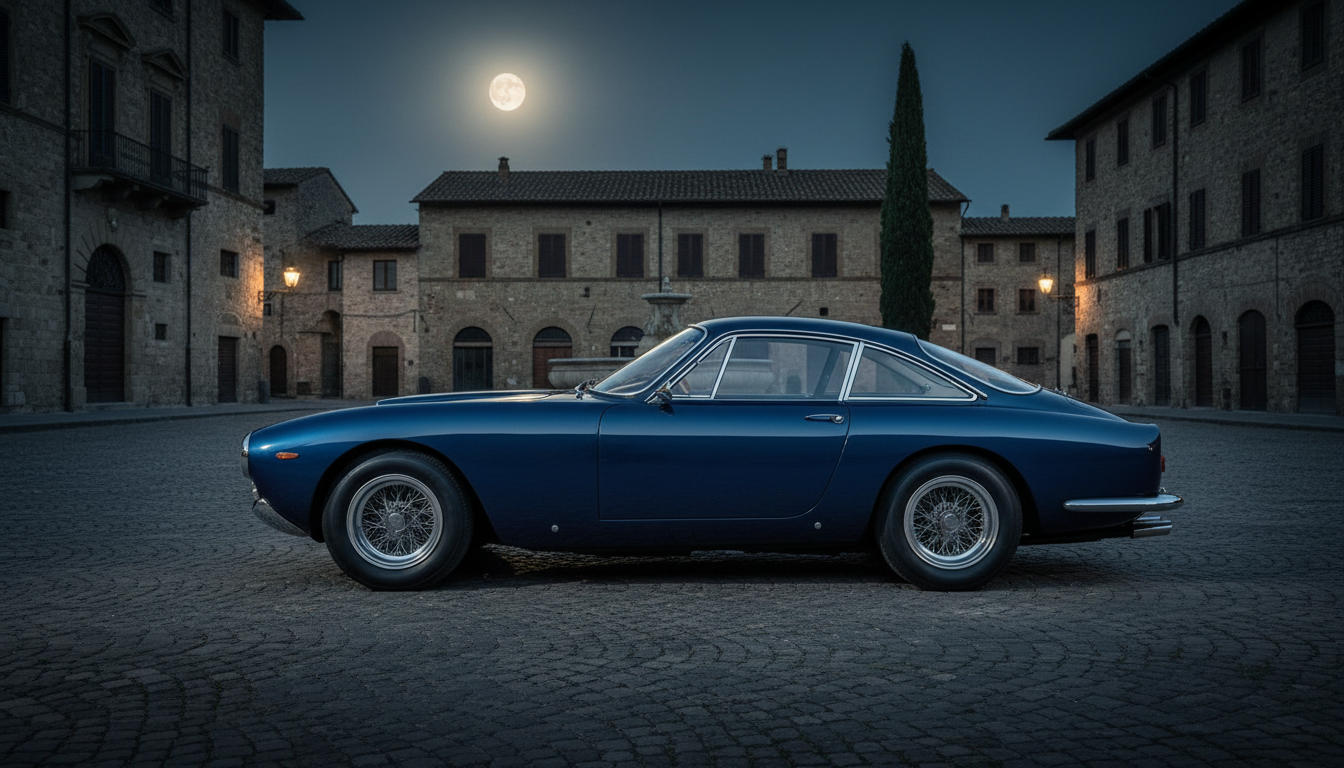
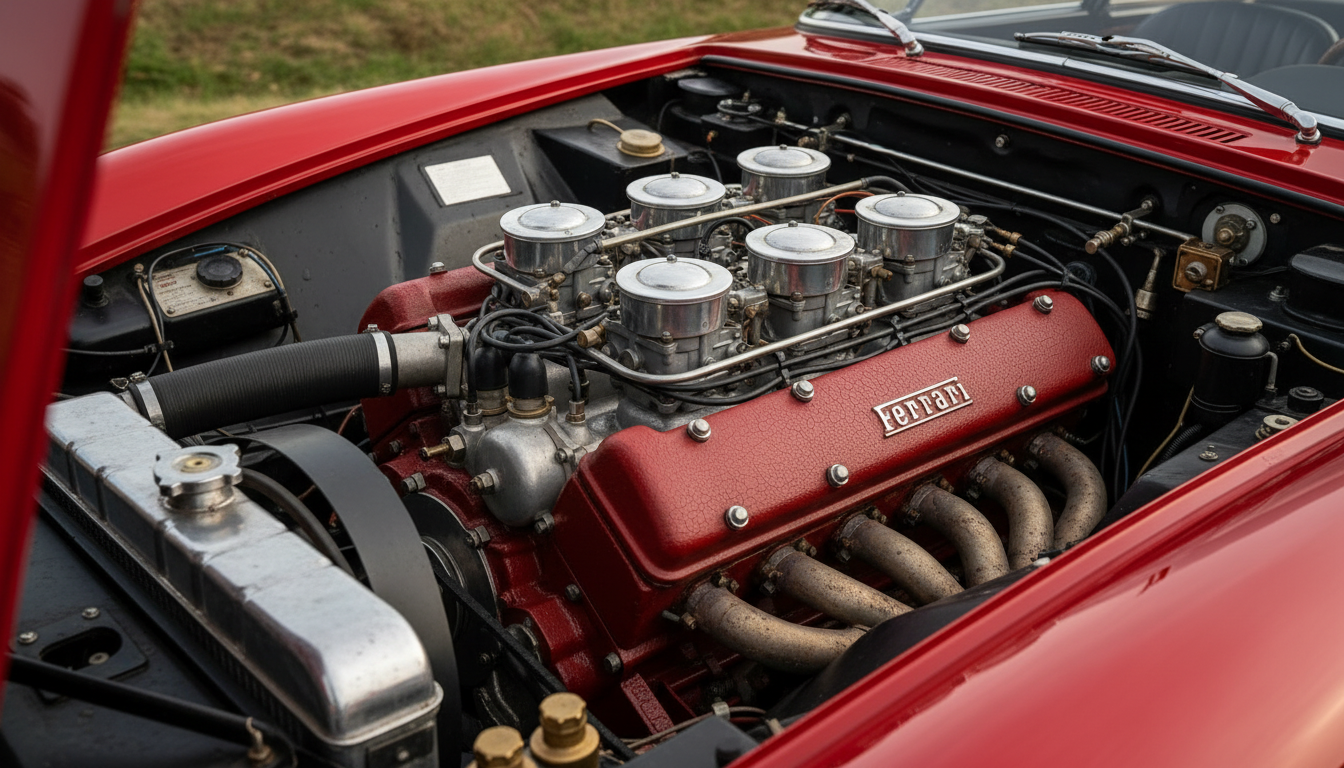
A turn of that simple key, a press of the starter, and Gioacchino Colombo’s 3.0-litre V12 coughed to life. It is a sound that begins as a complex, mechanical whirring—chains, valves, and six twin-choke Weber carburettors breathing in—before settling into a smooth, resonant idle. The clutch is surprisingly light, the travel long. The first engagement of the dog-leg first gear via the tall, delicate lever in its open gate requires a firm, deliberate hand. It is a conversation, not a command. Pulling out of the courtyard and onto the winding roads of the Emilian hills, the Lusso reveals its character. It is not a brutal machine. Power delivery is linear and progressive, the engine singing its way up the rev range with a cultured, metallic howl that is pure 1960s Ferrari. The thin, wood-rimmed Nardi wheel communicates every nuance of the road surface, alive in the hands. The car feels light, agile, and utterly analogue. It demands to be driven with precision, rewarding smooth inputs with a graceful, flowing pace that devours miles of twisting tarmac.
An Interior Landscape
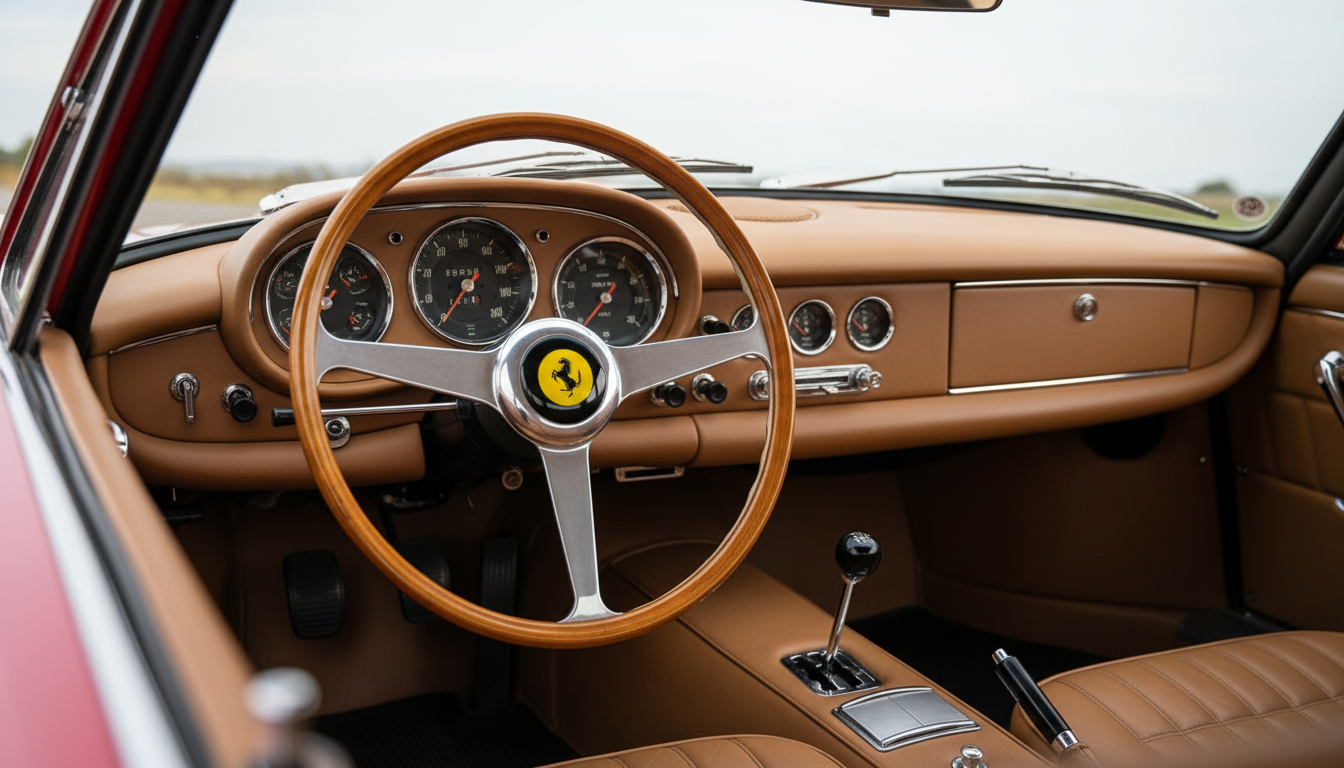
The cabin is an exercise in elegant, if slightly eccentric, design. The main instrument cluster, featuring the large speedometer and tachometer, is placed not in front of the driver, but in the centre of the dashboard, angled towards the pilot. This was supposedly to allow the co-driver to monitor the car’s progress, but one suspects an element of pure stylistic bravado. The remaining gauges are housed in a binnacle directly ahead, viewed through the Nardi wheel. My host had opted for a deep tan leather, which covered the seats, the transmission tunnel, and the luggage shelf behind the occupants. The aroma of aged hide and warm oil is the Lusso’s defining perfume. There is a sense of space and light, thanks to the thin pillars and large glass area. It is a cockpit designed for long journeys, a place of comfort and focus, a reminder that the greatest luxury is often a beautifully executed simplicity.
A Legacy in Motion
The Lusso’s legend is cemented by its owners as much as its engineering. Steve McQueen’s Marrone example is perhaps the most famous, a car he drove with his characteristic nonchalant cool. But to focus on celebrity provenance is to miss the point. The Lusso’s significance lies in its purity of purpose. In an era when Ferrari’s identity was forged in the crucible of motorsport, the Lusso was an admission that beauty for its own sake was a worthy goal. It was the ultimate road-going Ferrari of its day, a car that prioritised aesthetic harmony and driver satisfaction over outright lap times. Driving it now, in an age of paddle shifters and digital displays, is a profound experience. It is a direct connection to a more mechanical, more tactile form of motoring, a rolling piece of sculpture that demands everything of its driver and rewards them tenfold. As I guided the car back into the city as dusk fell, its V12 humming against the ancient walls, it felt less like a relic and more like a benchmark, a reminder of what a grand tourer should, and could, be. The journey was over, but the sensation of the drive would linger long after the engine fell silent.
'''