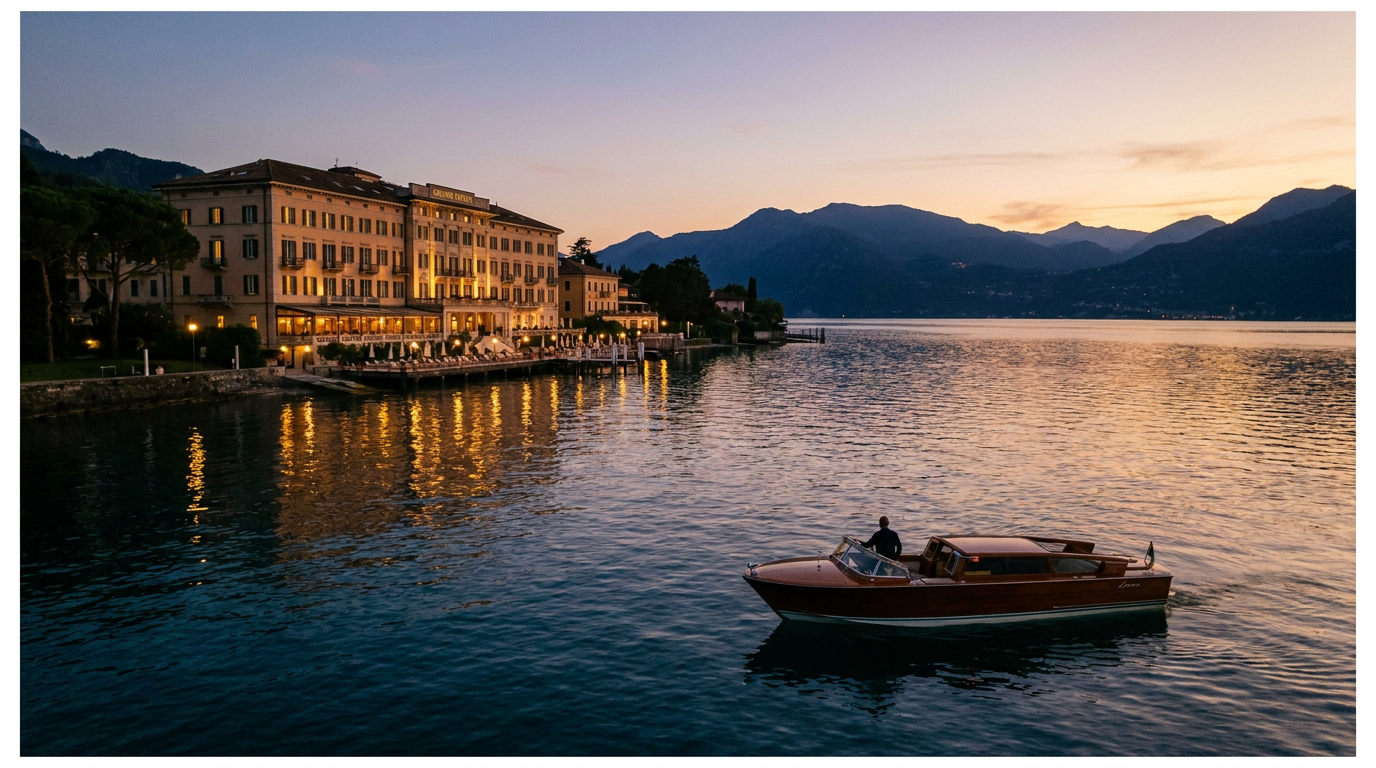
The Enduring Grace of Villa d’Este
On the shores of Lake Como, a sixteenth-century cardinal’s ambition and a nineteenth-century vision of hospitality converge. Villa d’Este is not merely a hotel, but a living monument to a certain kind of enduring, effortless Italian grace.
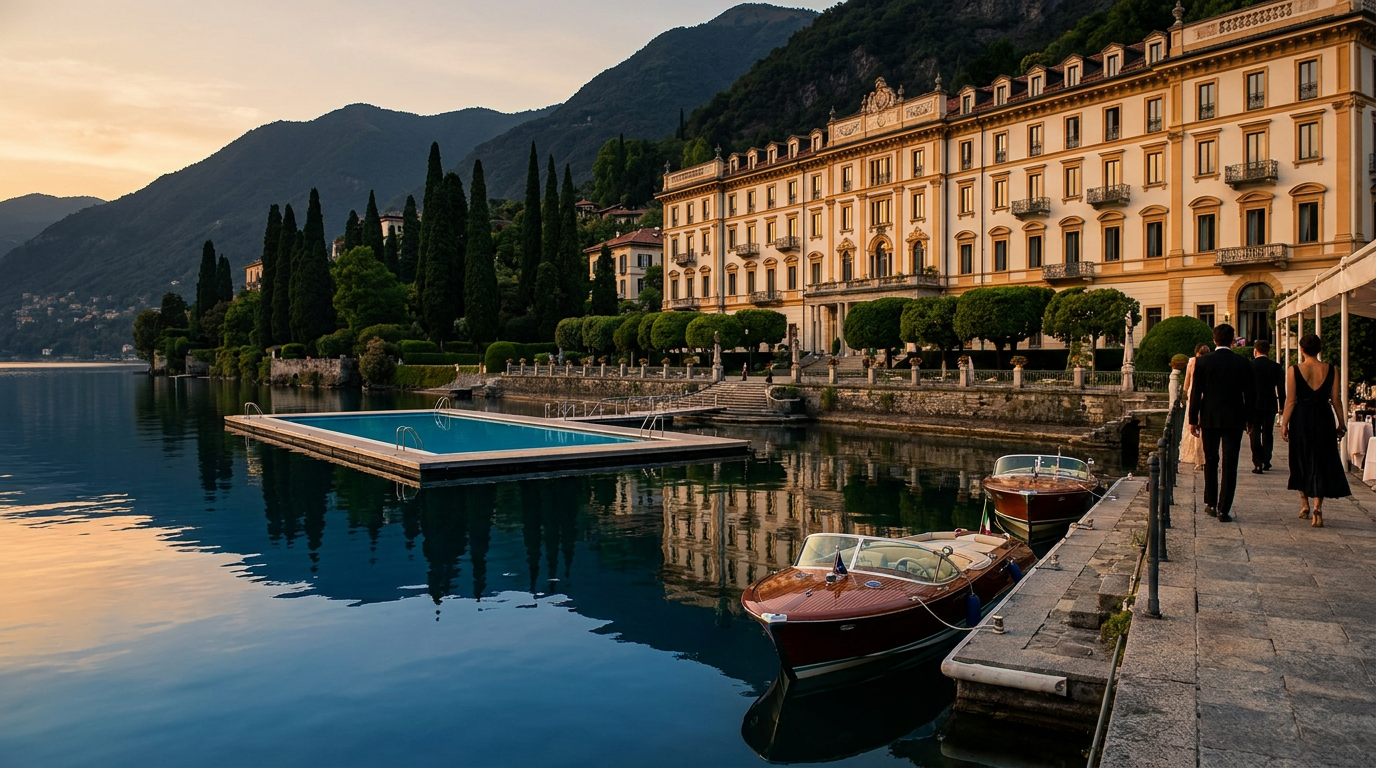
'''There are hotels, and then there are institutions. Villa d'Este, occupying a private park on the edge of Cernobbio, belongs firmly to the latter. It is a place woven into the fabric of Lake Como itself, a destination that commands a quiet reverence. To arrive here is not to check in, but to be received into a story that began more than four and a half centuries ago, a narrative of cardinals, princesses, and the quiet establishment of civilized leisure.
From Cardinal to Hotel
The story begins in 1568. Tolomeo Gallio, a Cernobbio native who had risen to the rank of Cardinal and Secretary of State to the Pope, commissioned the villa as a summer residence, naming it Villa Garrovo after the nearby torrent. Designed by the architect Pellegrino Tibaldi, it was conceived as a statement of power and taste, a place of ecclesiastical repose set against the dramatic backdrop of the lake and its surrounding peaks. For two centuries, it remained in the hands of the clergy and aristocracy. It was not until 1873 that a group of Milanese businessmen, sensing the shifting tides of European travel, transformed the private residence into the grand hotel we know today. This was the dawn of the Grand Tour, and Villa d’Este was poised to become one of its most essential stops, a role it has fulfilled with unwavering poise ever since.
The Water’s Embrace
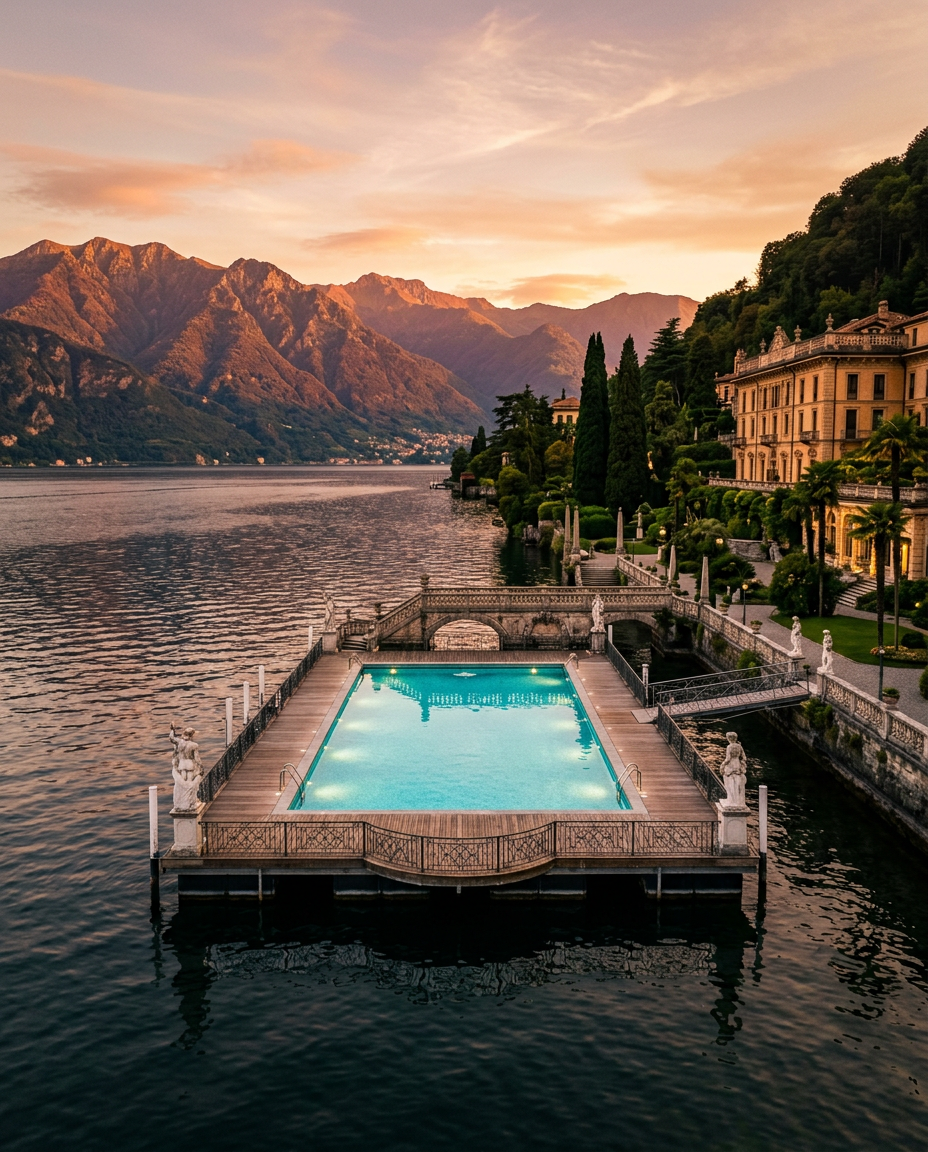
To speak of Villa d’Este is to speak of its relationship with the water. The hotel does not merely sit on Lake Como; it embraces it. The most emblematic expression of this is the famed floating pool, an audacious feat of engineering that has become a symbol of the property. Moored at the end of a jetty, this rectangular basin of heated lake water allows guests the singular experience of swimming on the lake, rather than merely in it. Surrounded by a wooden deck and crisp white loungers, it is a stage set for the theater of a perfect summer afternoon, with the Alps providing a suitably grand backdrop. It is an icon, imitated but never replicated, a testament to the hotel’s enduring ability to create moments of pure, unadulterated pleasure.
An Epicurean Stage
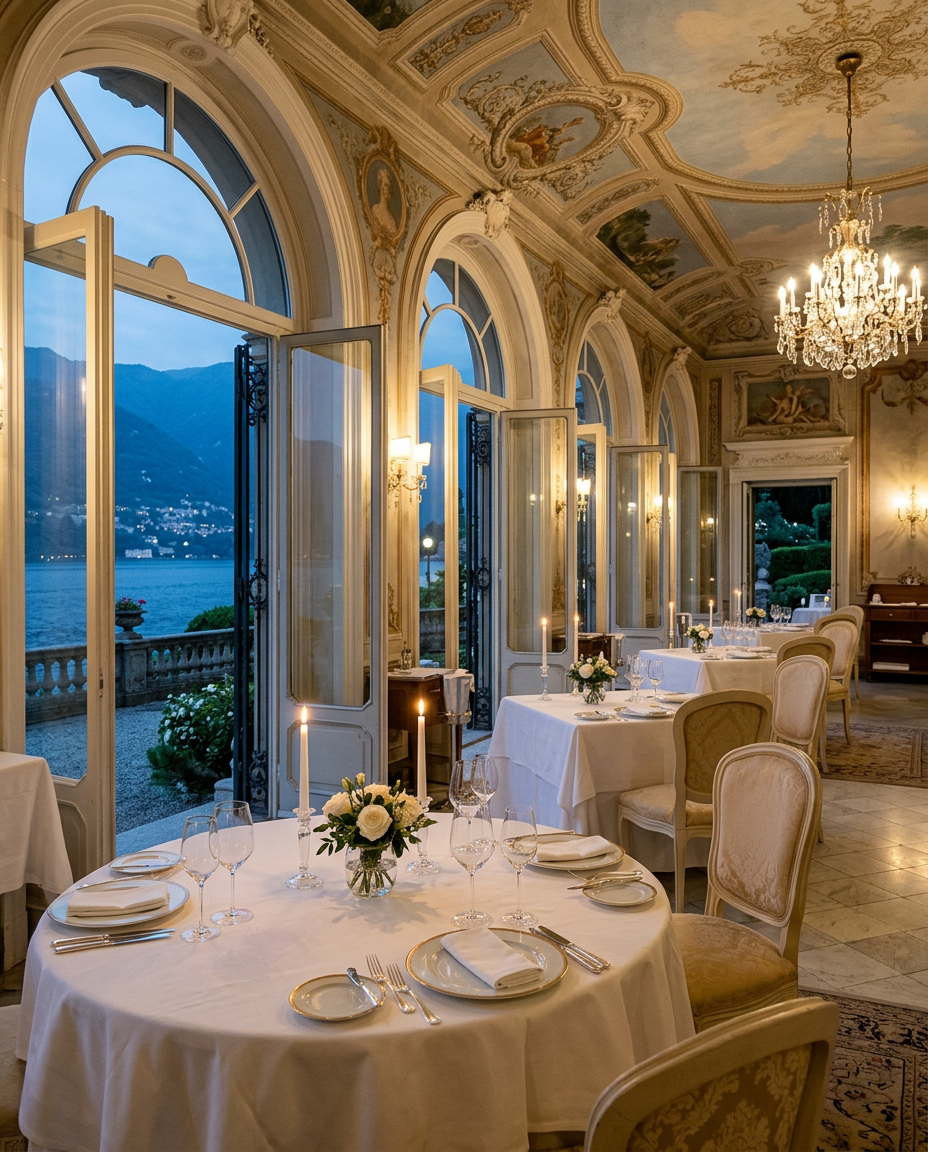
Dining at Villa d’Este is, like everything else here, an exercise in refined tradition. The primary stage for this is the Veranda, an elegant glass-walled restaurant that extends towards the water. In the evenings, with the lights of the shoreline twinkling across the lake, it is a scene of understated glamour. The menu, under the stewardship of the executive chef, respects Italian classicism while allowing for contemporary interpretation. One dines, rather than simply eats, with the gentle lapping of the lake as a constant companion. It is a formal affair, a place where jackets are still preferred, a quiet nod to a time when dressing for dinner was not a suggestion but a matter of course. This is not a pursuit of fleeting trends, but a commitment to the timeless art of hospitality.
A Garden of Earthly Delights
The hotel is composed of two main structures, the original Cardinal Building and the 19th-century Queen’s Pavilion. While the rooms and suites within are appointed with the expected degree of comfort and classical style, it is the 25 acres of formal gardens that truly set the property apart. These are not mere decorative afterthoughts, but a destination in themselves. A winding path leads upwards through terraced plantings, culminating in a magnificent 16th-century Nymphaeum, an elaborate mosaic grotto dripping with water, watched over by a statue of Hercules. It is a place of cool respite and quiet contemplation, a remnant of the Cardinal’s original vision. Walking these grounds is to walk through history, a dialogue between the structured formality of the Renaissance garden and the wild beauty of the surrounding Lombardy landscape.
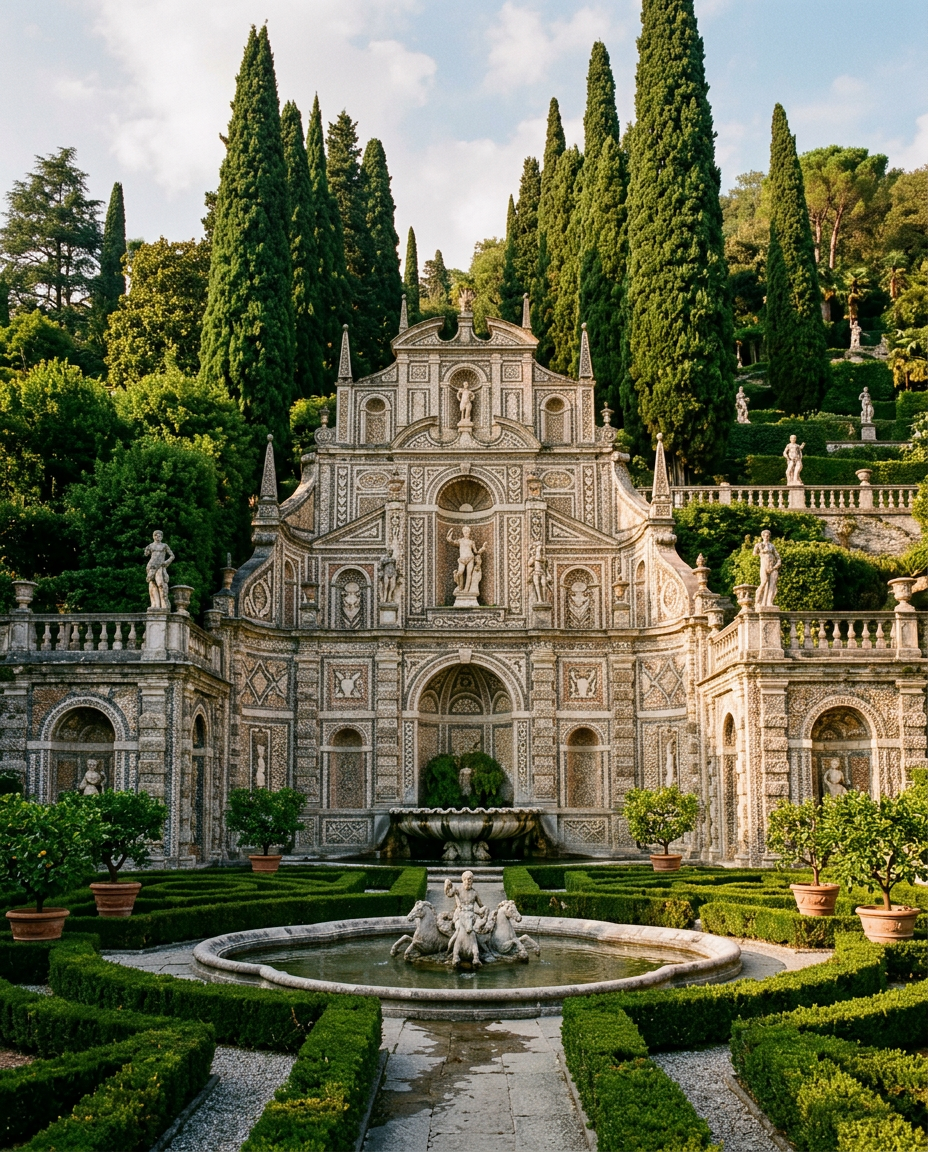
It is this seamless blend of history, landscape, and an unwavering commitment to service that defines Villa d’Este. It operates on a plane above the transient fashions of the hospitality industry, secure in its identity and its place in the world. It is a reminder that true luxury is not about novelty or ostentation, but about the preservation of beauty and the perfection of an experience, year after year, generation after generation. It remains, as it has for 150 years, the grandest of dames on Europe’s most storied lake.
'''