The Cellar's Keeper
At the highest levels of dining, the sommelier is not merely a steward of wine, but a storyteller, a historian, and the quiet architect of the meal’s narrative.
'''It is a common error to view the sommelier as a supporting actor in the theatre of the grand restaurant. The spotlight, after all, seems to naturally find the chef, that tempestuous artist of the hot line. The chef is the author, we are led to believe, and the sommelier is but an editor, perhaps a well-regarded one, but an editor nonetheless. This is a fundamental misreading of the parts they play. At the highest level, the relationship is a partnership of equals, a conversation between kitchen and cellar that culminates at your table. A truly great restaurant does not have a wine list; it has a wine philosophy, and the sommelier is its chief exegete.
The Curator of Liquid History
The most visible part of the sommelier’s craft—the tableside manner, the graceful uncorking of a bottle—is but the final flourish on a painstaking and deeply intellectual pursuit. The real work happens months, even years, before a diner arrives. It involves forging relationships with vignerons in far-flung appellations, securing allocations of bottles that may number in the dozens, and tasting, endlessly tasting, not for pleasure, but for potential. The cellar of a Michelin-starred establishment is not a collection of expensive labels; it is a living library, with each bottle a volume and each vintage a chapter. The sommelier is its chief librarian and curator.
Building such a cellar is a delicate act of balance. It requires respecting the classics—the Lafites and the Romanée-Contis that clients expect—while also championing the unsung and the avant-garde. It’s about understanding that a humble Muscadet from a master producer, served at the perfect moment, can be as profound an experience as a grand cru Burgundy. It is the sommelier’s palate that forms the bridge between the chef’s culinary vision and the vast, often intimidating world of wine. He or she must anticipate the kitchen’s direction, acquiring wines that will not just pair with, but elevate, the dishes that have yet to be conceived.
The Dance of Service
Back in the dining room, the performance begins. A good sommelier reads a table with the acuity of a seasoned psychologist. They assess the mood, the level of wine knowledge, the spirit of the occasion. The aim is never to upsell, but to guide; to engage in a quiet dialogue that leads to the perfect bottle. This is not about reciting tasting notes. It is about telling a story. It’s about explaining why a particular wine from the slopes of Mount Etna, with its volcanic minerality, is the ideal foil for the richness of a lamb dish. It is about understanding the occasion and finding a wine that speaks to it. A celebratory dinner demands a different voice from the cellar than a quiet, contemplative meal for one.
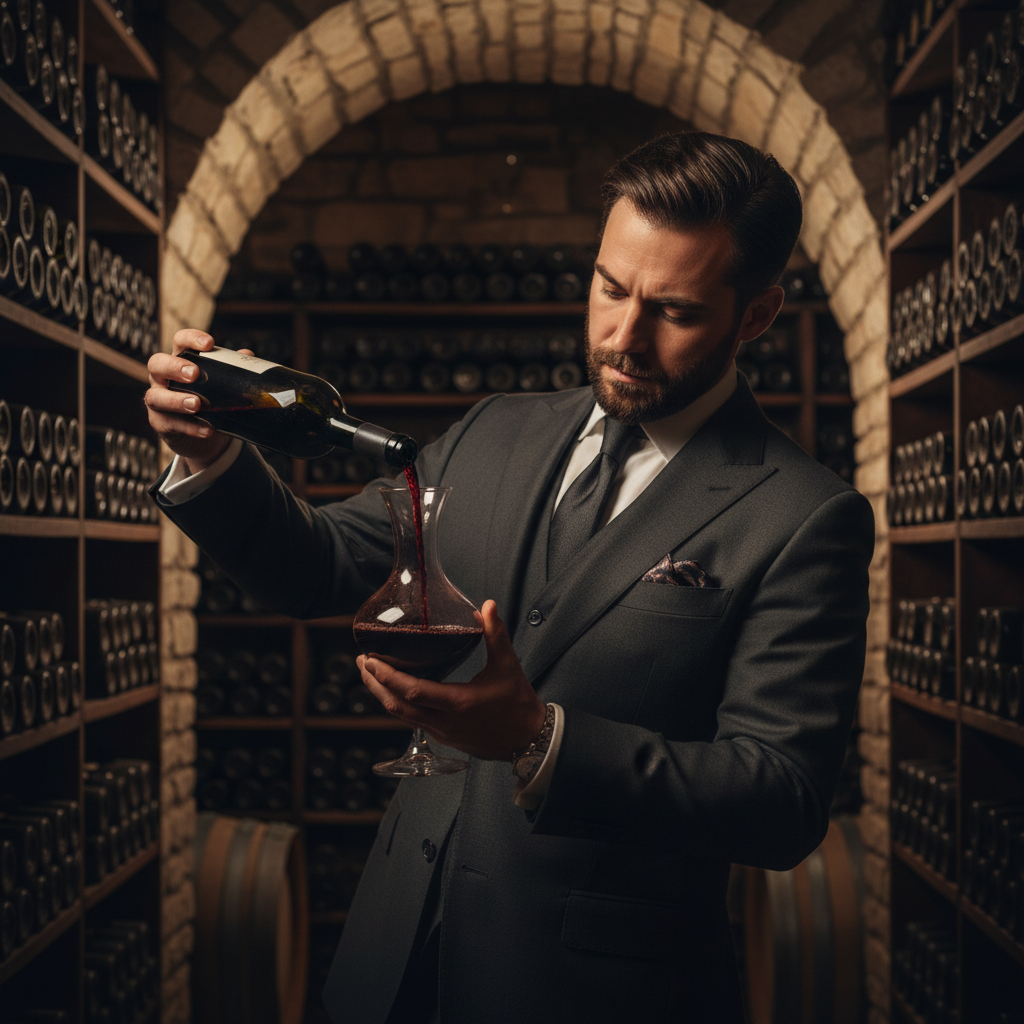
The physical rituals of service—the presentation of the bottle, the careful incision of the foil, the gentle decanting of a mature claret by candlelight—are not mere frippery. They are marks of respect for the winemaker’s craft, for the vintage’s journey, and for the diner’s experience. In these moments, the sommelier is a custodian of pleasure, ensuring that a bottle that has waited decades for its moment is presented in its finest form. This quiet, confident choreography is as integral to the magic of the meal as the plating in the kitchen.
One soon learns to appreciate the distinction between a wine waiter and a true sommelier. The former sells wine; the latter provides counsel. The weight of the silver tastevin worn around the neck is not just symbolic, it is a reminder of this responsibility. It represents a commitment to a body of knowledge that spans geology, chemistry, history, and agriculture. To witness a master at work is to understand that you are in the hands of not just an expert, but an artist whose medium is the fermented grape, and whose canvas is your palate. The chef may have composed the melody, but it is the sommelier who arranges the harmony.
'''