The Cartier Tank Cintrée: A Study in Curvature and Form
One of the most elegant and elusive expressions of the Tank, the Cintrée’s elongated, curved form has graced the wrists of the discerning for a century. I spent an afternoon with a recent platinum edition to understand its enduring, architectural appeal.
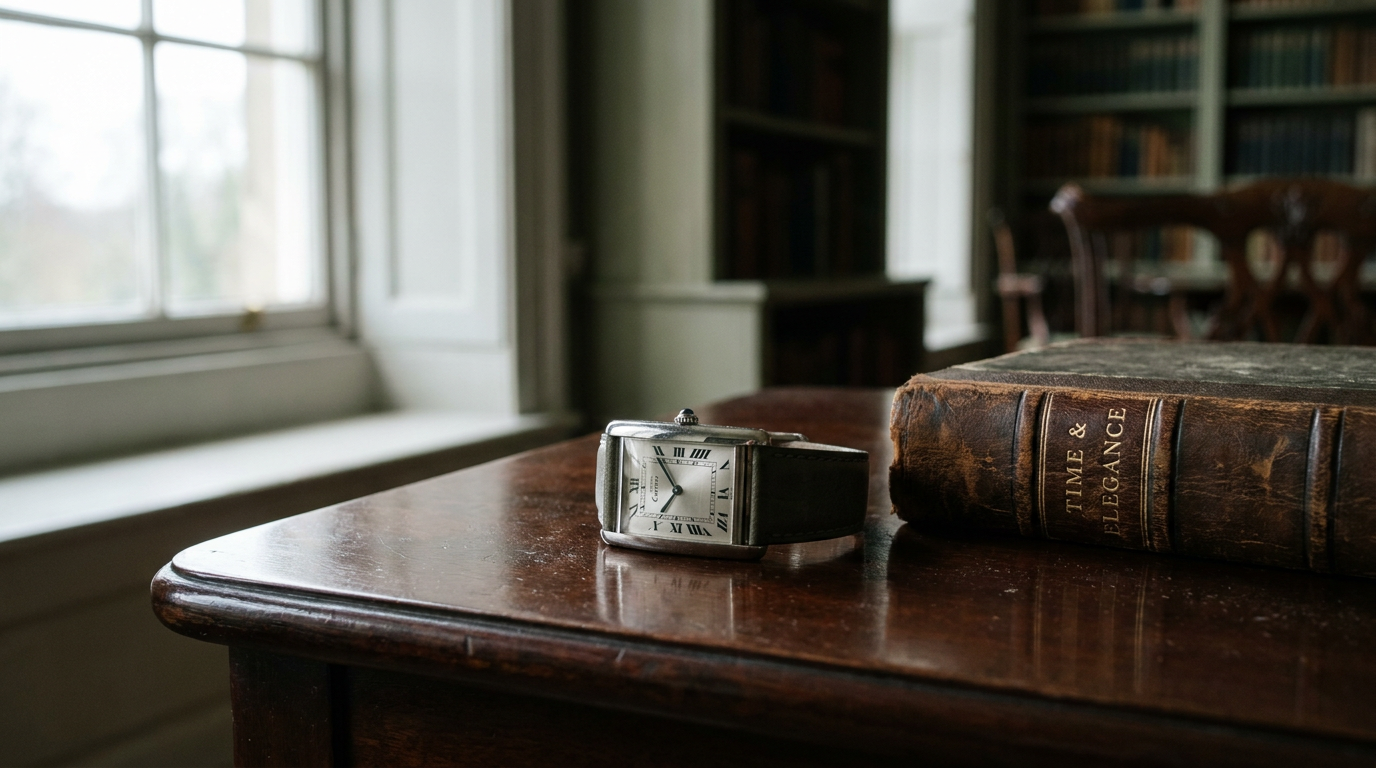
'''There are watches that command a room, and then there are watches that quietly define it. The Cartier Tank Cintrée, a design now over a century old, belongs firmly to the latter category. It does not shout; it speaks in a low, assured tone to those who are already listening. I had the pleasure of reacquainting myself with this particular form of quiet elegance earlier this month, when a friend wore his to a long lunch at The Wolseley. He was kind enough to pass it across the table, allowing me an hour to study its lines in the soft light of a Piccadilly afternoon.
First introduced in 1921, the Cintrée—French for "curved"—was a radical departure from the pocket watches and early, round wristwatches of its era. Its elongated, brancard-flanked case was designed not merely to sit on the wrist, but to follow its contour. The example I held, a modern platinum edition from the Cartier Privé collection, felt less like a machine for telling time and more like a piece of wearable sculpture. The curvature is not a mere suggestion; it is the watch's entire thesis, a profound commitment to ergonomics and elegance that feels as revelatory today as it must have a hundred years ago.
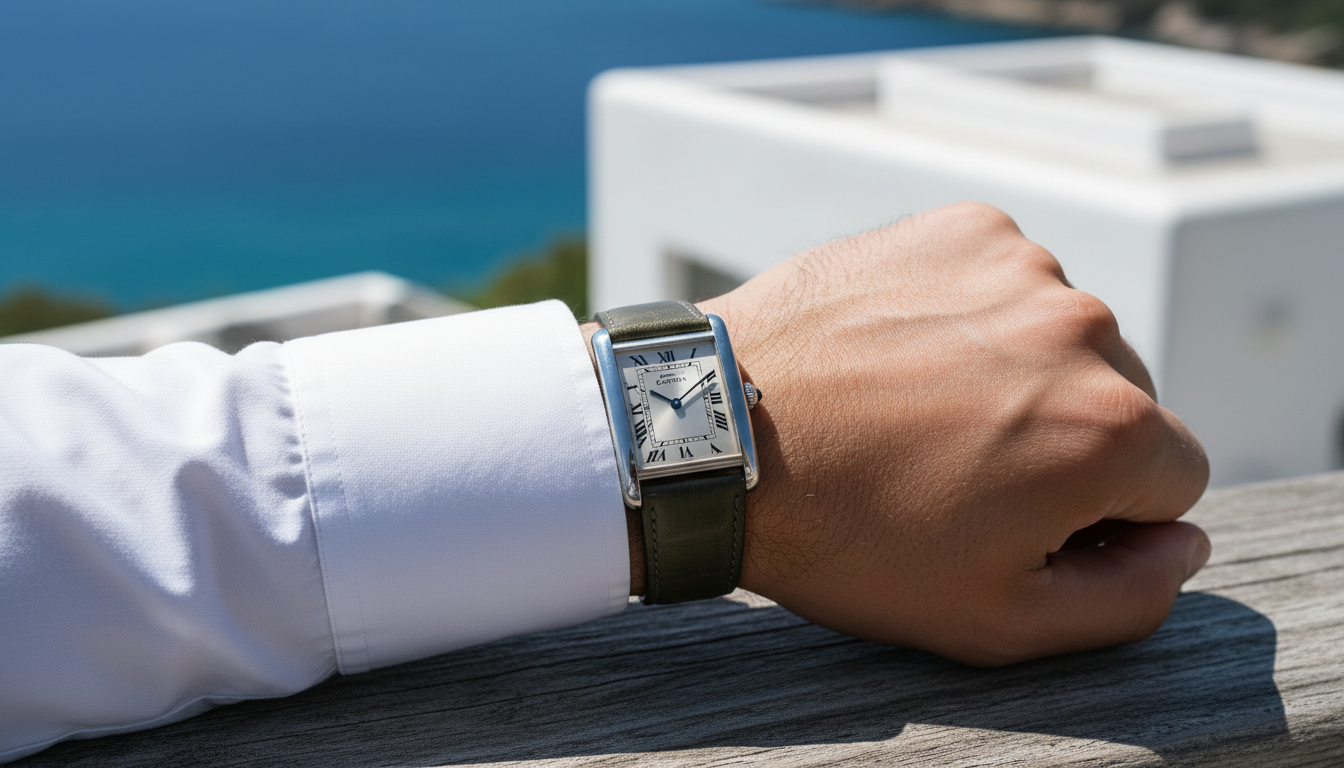
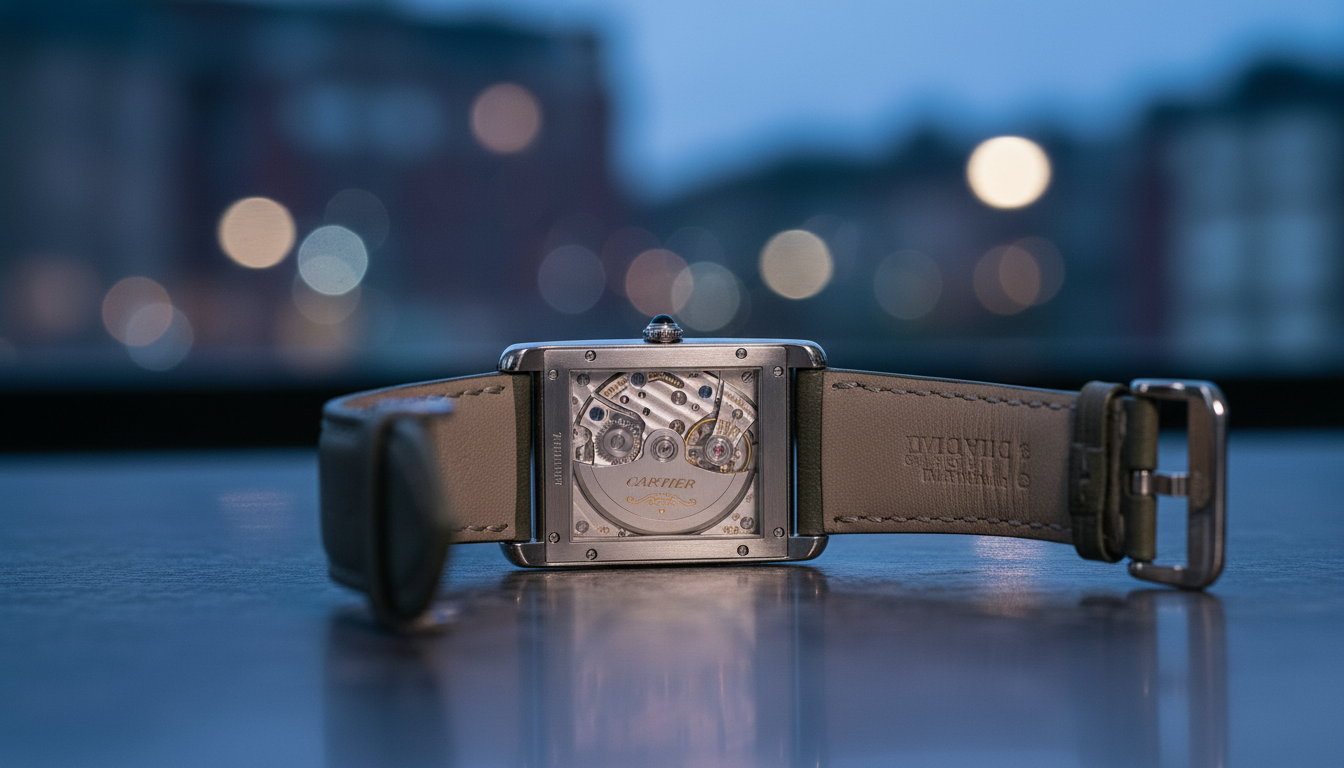
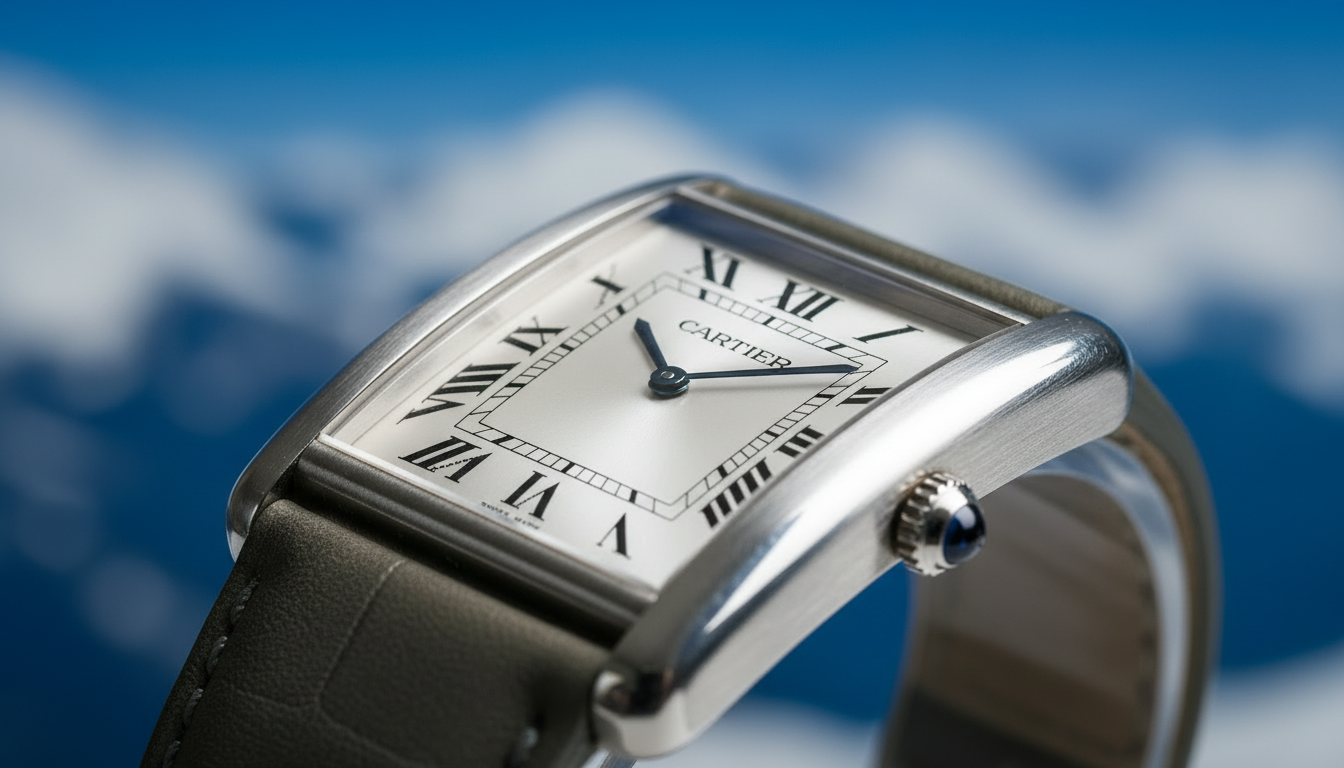
The dial is pure, distilled Cartier: black Roman numerals, a crisp railroad minute track, and blued-steel Breguet hands. On this particular reference, the numerals are stretched, distorted by the case’s extreme proportions, pulling the eye along the vertical axis. There is a tension in this distortion, a play between the classicism of the typography and the avant-garde nature of the case. It is a reminder that Louis Cartier was not just a jeweller, but a designer of immense talent, one who understood how to bend the rules of form without breaking the spirit of classicism. The manually-wound 9780 MC calibre, visible through the sapphire caseback, is similarly long and thin, a piece of mechanical engineering shaped to serve the design, not the other way around.
To wear the Cintrée, even for a few moments, is to understand its magic. At 46.3mm long but only 23mm wide, its dimensions are deceptive on paper. On the wrist, it is a sliver of platinum and leather, impossibly slender. It disappears under a cuff with an ease that modern sports watches can only dream of, its presence felt not as bulk, but as a subtle, considered statement. It is a watch for men who have nothing to prove, its elegance a quiet counterpoint to the prevailing trend of oversized, attention-seeking timepieces. It speaks of an old-world sensibility, of dressing for oneself rather than for an audience.
As my friend reclaimed the watch and slipped it back onto his wrist, I was struck by its timelessness. The Cintrée has been worn by style icons from Fred Astaire to Steve McQueen, yet it feels utterly contemporary. It is a testament to the power of a singular, brilliant idea. In a world of fleeting trends and constant reinvention, the Cintrée remains a fixed point of horological grace, a study in the enduring power of a perfectly executed curve. It is not a watch for every day, perhaps, but it is a watch for the ages.
'''