The Belmond Royal Scotsman: A Highland Passage
A journey through the Scottish Highlands aboard the Royal Scotsman is a lesson in the art of slow travel, where the landscape itself becomes the main event and the train a moving study in Edwardian grace.
'''
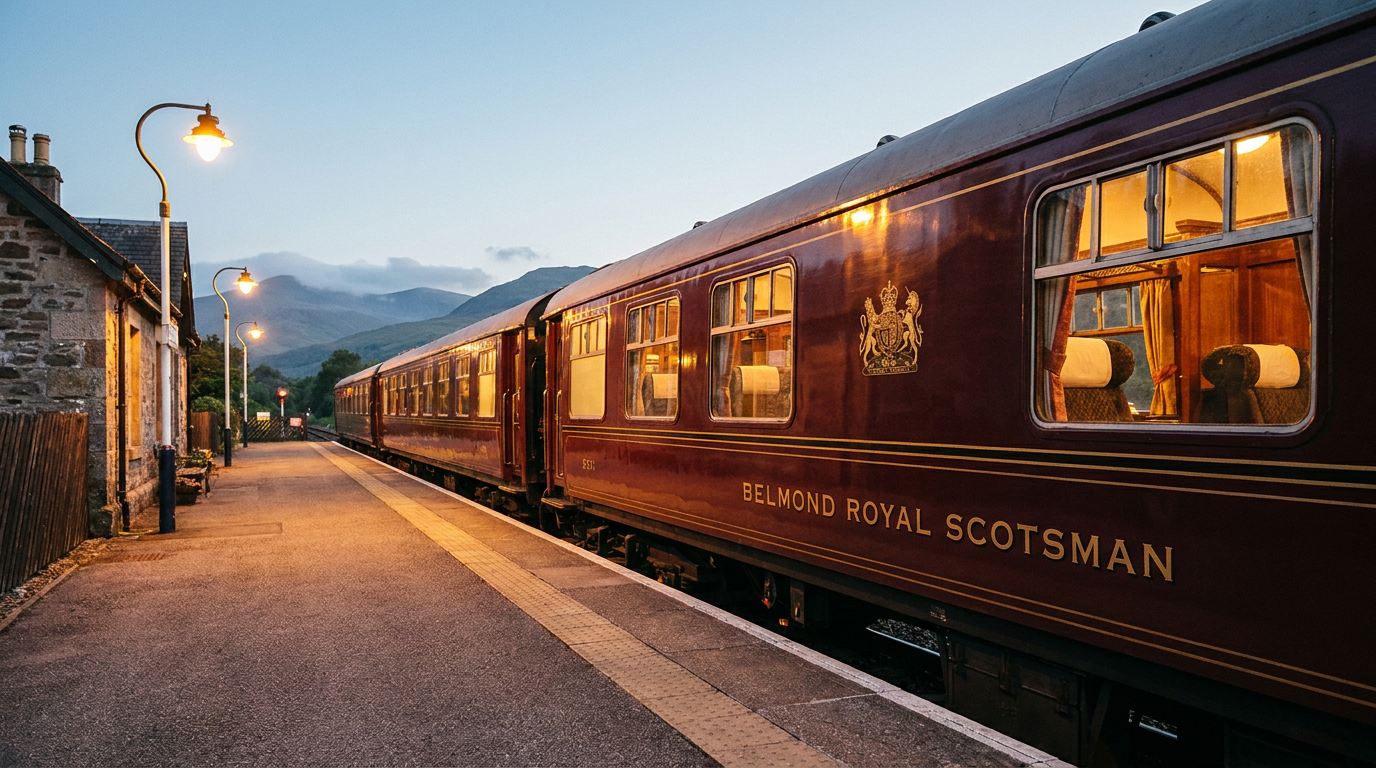
There is a particular quality to the light in the Scottish Highlands in late summer, a soft, golden hue that seems to linger on the heather-clad hillsides long after it should have faded. It was in this light, just a few weeks ago, that I stood on the platform at Edinburgh’s Waverley Station, watching the porters in their tartan affix the crest to the lead carriage of the Belmond Royal Scotsman. The name alone evokes a certain romance, a promise of civilized adventure, and as the pipes began to play, one felt the distinct sense of stepping not just aboard a train, but into a different time.
A Country House on Rails
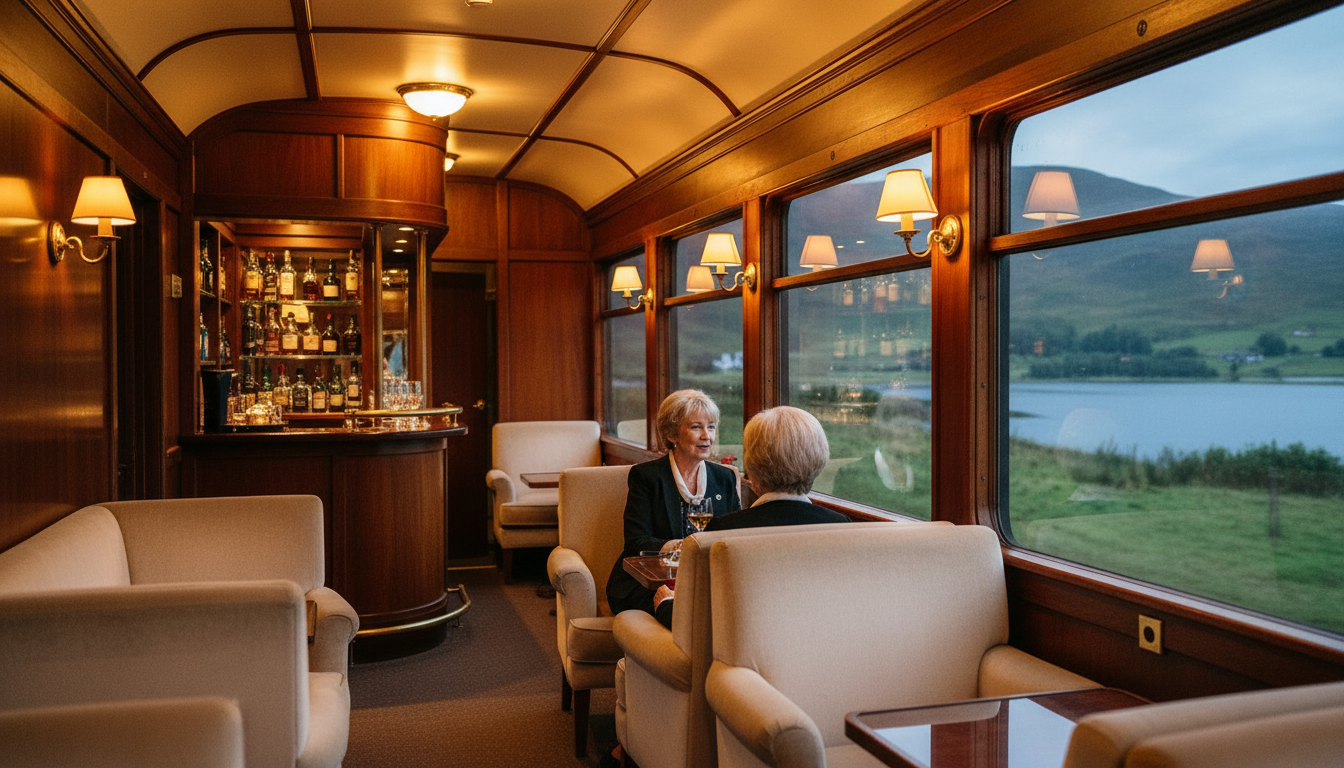
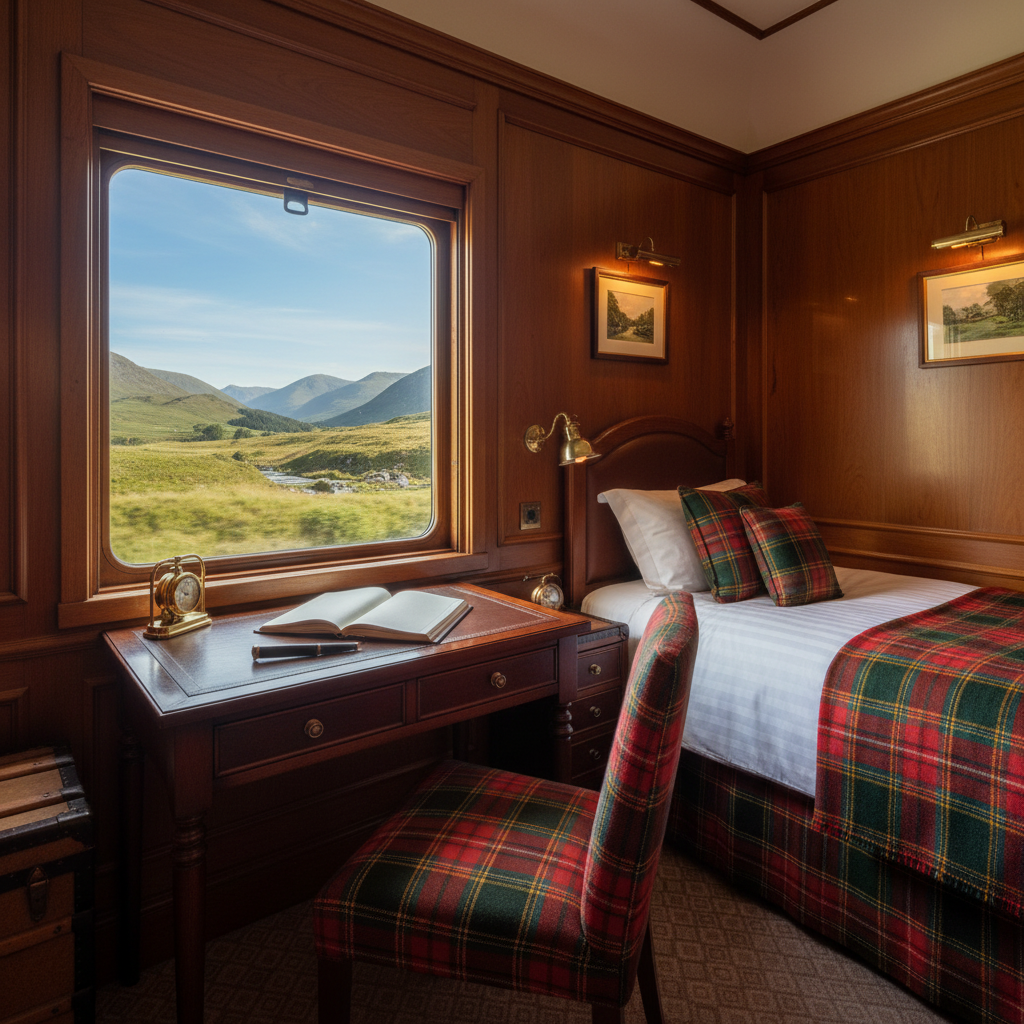
The train itself is an extraordinary piece of work. Comprising vintage Pullman carriages, meticulously restored and polished to a high gleam, it feels less like a mode of transport and more like a peripatetic country house. My cabin, panelled in rich, inlaid marquetry, was a masterpiece of compact comfort. A full-sized wardrobe, a proper writing desk, and an ensuite with constant hot water are not the usual provisions of rail travel, yet here they felt entirely natural. After settling in, I made my way to the Observation Car. With its open-air veranda at the rear, it is the heart of the train, a place to watch the scenery unspool with a glass of something appropriate in hand. As we pulled away from the city, the stone tenements giving way to rolling fields, the gentle rhythm of the tracks became a soothing, ever-present soundtrack.
The Unfolding Landscape
The route is a masterclass in scenic drama. From the gentle hills of the Lowlands, we climbed north into the Cairngorms, the landscape growing wilder and more magnificent with every passing mile. The journey is punctuated by curated excursions—a visit to a remote whisky distillery, a clay pigeon shoot on a private estate, a walk to a seal colony on the coast. One afternoon, we disembarked near the village of Boat of Garten for a stroll through the Rothiemurchus Estate, its ancient Caledonian pine forest a sanctuary of silence and stillness. The air, crisp and clean, carried the scent of pine and damp earth. It is this immersion in the landscape, this ability to step out of the train and into the very heart of the Highlands, that elevates the experience beyond mere sightseeing.
Dining in Motion
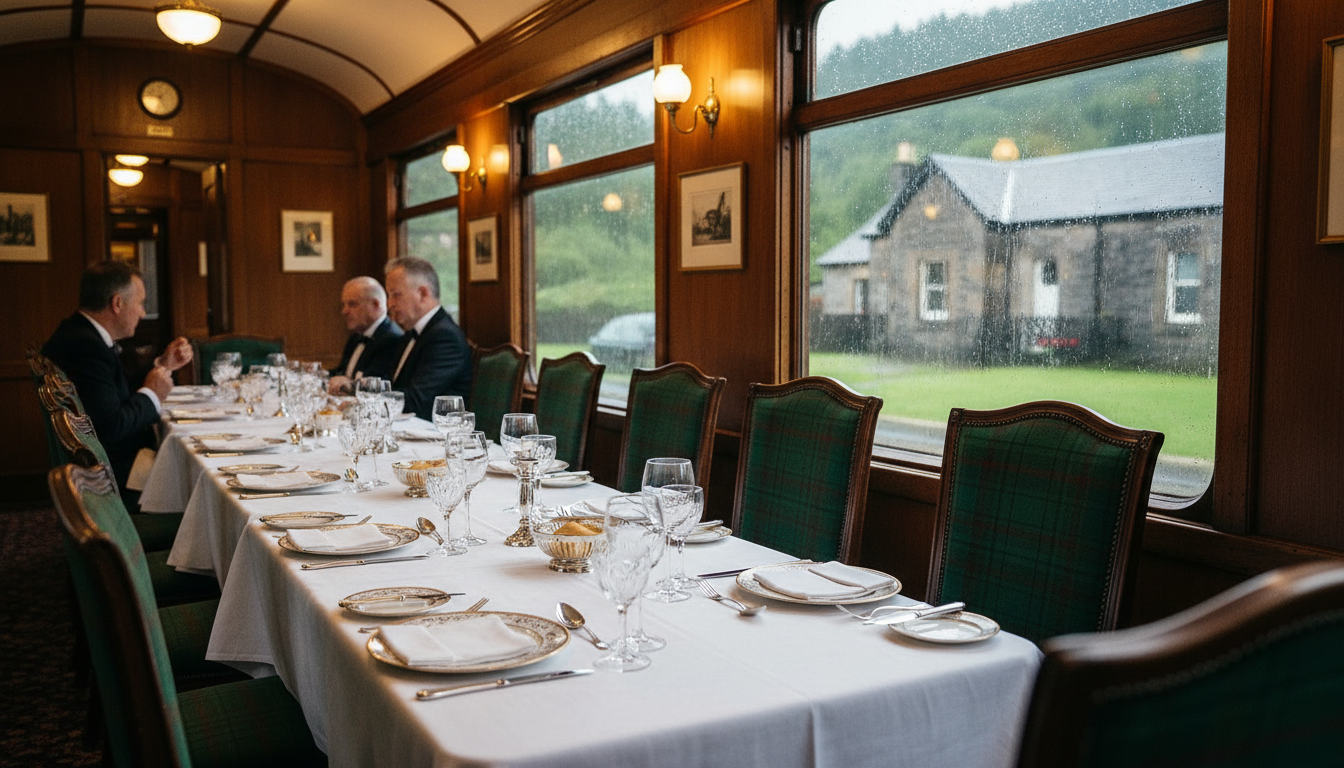
Dinner aboard the Royal Scotsman is a formal affair, and rightly so. The two dining cars, "Raven" and "Swift," are intimate spaces of polished wood, crisp linen, and sparkling crystal. The menu is a testament to the larder of Scotland itself. One evening, a loin of venison from the same estate we had walked through earlier was served with foraged chanterelles; another night brought hand-dived scallops from the Moray Firth, so fresh they tasted of the sea. The chefs perform a minor miracle in the galley kitchen, producing cuisine that would be notable in a stationary restaurant, let alone one swaying gently through the glens. To dine like this, watching the last light catch the peaks of the mountains as they slide past the window, is one of the great pleasures of the journey.
An Edwardian Grace
After dinner, guests gravitate towards the Observation Car, where a local musician might be playing the fiddle or telling stories of the glens. The atmosphere is convivial, like a house party with an ever-changing backdrop. There is no internet, no television, no distraction from the simple pleasures of conversation and contemplation. It is a forced, and welcome, digital detox. One evening, nursing a 25-year-old single malt, I stepped onto the open veranda as we crossed the Spey. The moon was high, the river a ribbon of silver below, the air sharp and cold. The Royal Scotsman is more than a train; it is a reminder that the journey, not just the destination, can be the reward. It is a slow, deliberate, and deeply civilized way to experience one of the world’s last great wildernesses, a passage not just through the Highlands, but to a more gracious state of mind.
'''