The A. Lange & Söhne Datograph: A Saxon Definition of Time
In 1999, a watch emerged from the small town of Glashütte that did more than tell time. It reset the standard for the modern chronograph, and its heartbeat can still be felt across the entire industry.
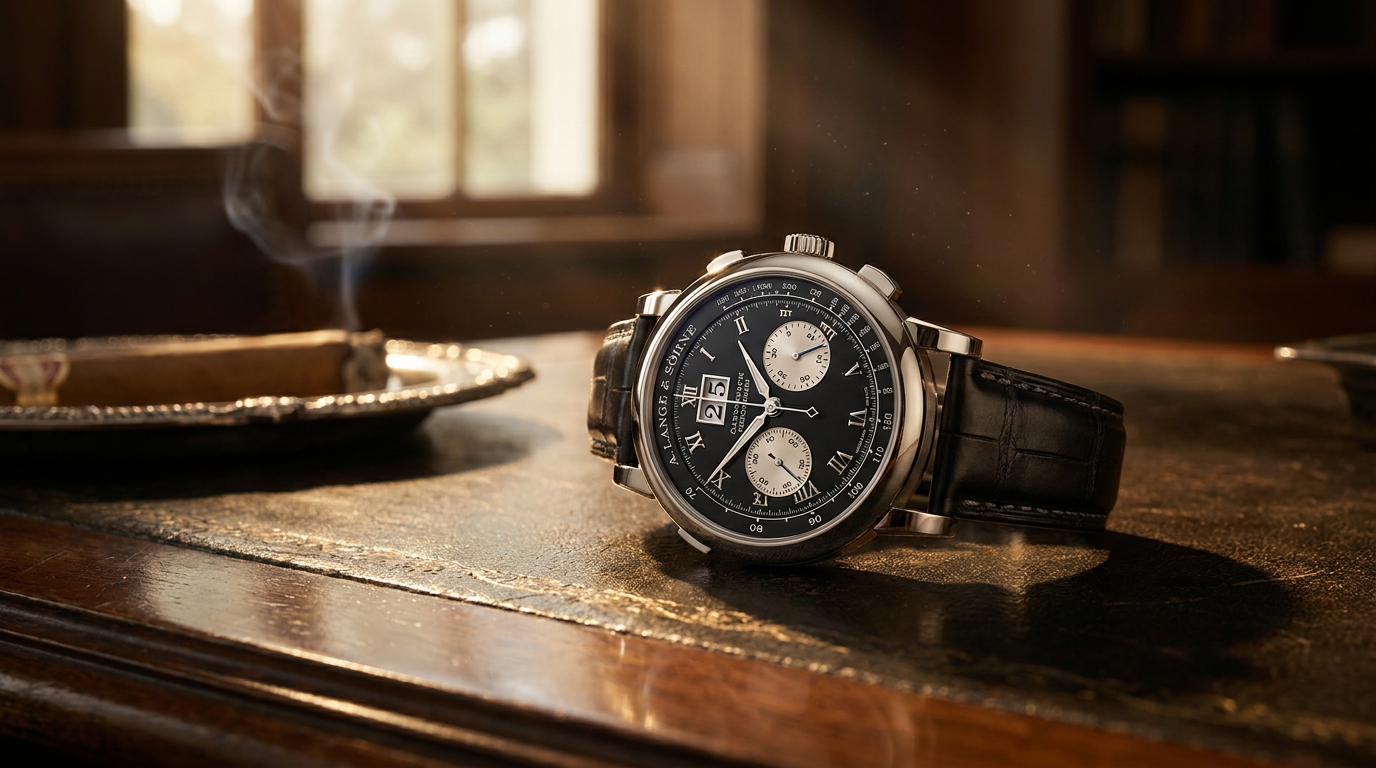
There are evenings when the best companion is not a person, but an object. Not for what it says, but for what it represents. Last night was one such occasion, the subject of my contemplation resting on the desk beside a glass of Saxon spätburgunder: the A. Lange & Söhne Datograph, first generation, in its coolly substantial platinum case. Its presence is formidable. To hold it is to understand the concept of density. Yet, its true weight is not measured in grams of precious metal, but in horological significance.
To appreciate the Datograph is to understand the context of its birth. When the Berlin Wall fell, it allowed not only for the reunification of a country but for the resurrection of its most storied watchmaking name. Ferdinand Adolph Lange’s legacy in Glashütte had been interrupted by war and expropriation, the workshops dismantled, the knowledge seemingly lost. When his great-grandson, Walter Lange, in partnership with the visionary Günter Blümlein, presented the first four modern A. Lange & Söhne wristwatches in 1994, it was a moment of profound cultural and industrial restoration. But the masterstroke was yet to come. The world waited to see if Lange could create a chronograph movement entirely its own. In 1999, the Datograph provided the answer.
A Calibre Like a City
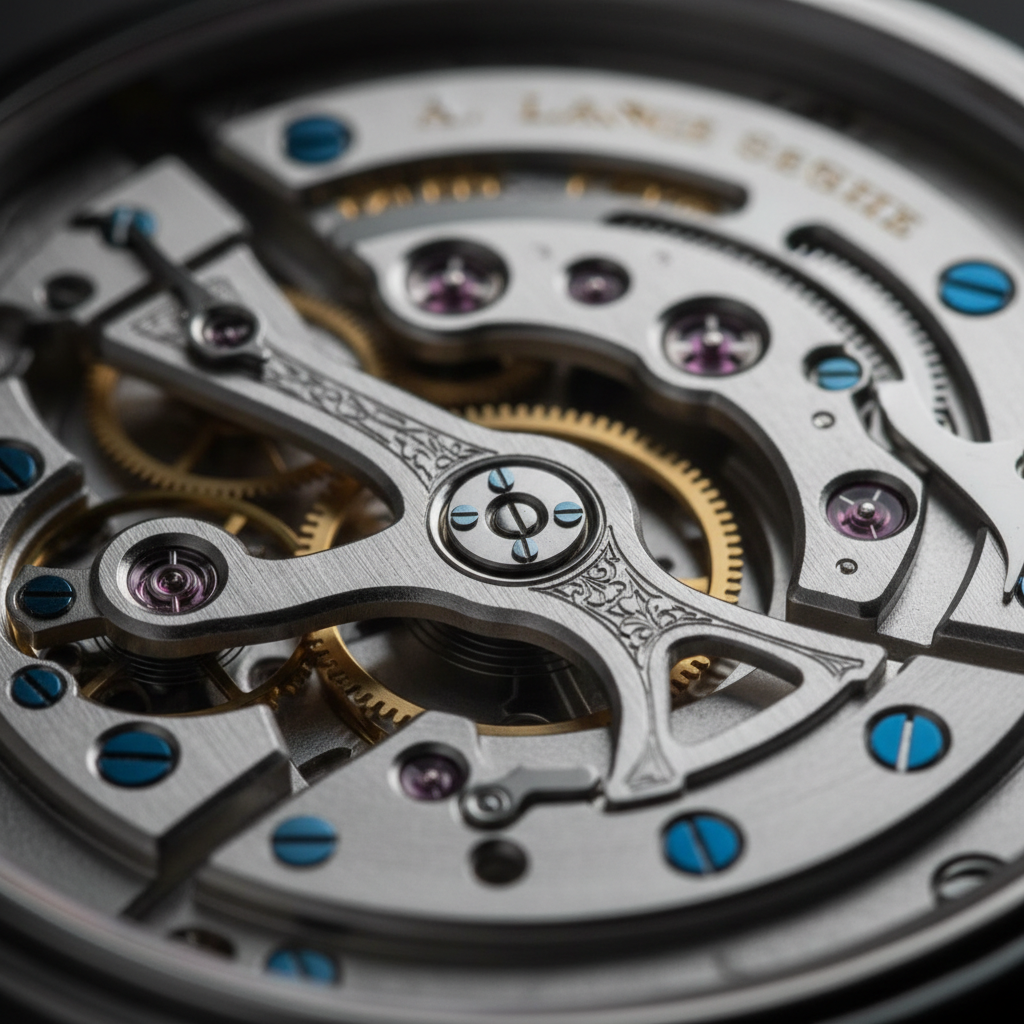
To turn the Datograph over is to be presented with one of the great vistas in modern watchmaking. The calibre L951.1 is not a movement; it is a multi-layered, three-dimensional sculpture of mechanical intent. Where others were content to build upon existing ebauches, Lange built from the ground up. The view through the sapphire crystal is of a city in miniature, crafted from untreated German silver whose warm, almost golden hue deepens with time. Bridges and levers rise and fall, creating a depth that invites endless study. Every component seems to exist on its own distinct plane, from the precisely controlled column wheel that governs the chronograph functions to the intricate levers of the flyback mechanism.
Observing the mechanism in action is a lesson in mechanical theatre. The press of the pusher at two o’clock is crisp, a clean break that engages the chronograph with none of the stuttering found in lesser calibres. The true marvel, however, is the precisely jumping minute counter. Where most chronographs see the minute hand creep forward, the Datograph’s jumps forward instantaneously at the 60-second mark. It is a small detail, an obsessive refinement, but it is in these details that Saxon watchmaking resides. It is a complication for the wearer’s satisfaction alone, a quiet nod to perfection that is the very soul of the brand.
The Dial as Dashboard
The dial is a study in clarity and balance, a masterclass in presenting a wealth of information without a hint of clutter. The outsize date, a signature of the modern Lange, sits proudly at twelve o’clock. It forms the apex of a perfect equilateral triangle with the two recessed, silvered subdials for the running seconds and the 30-minute chronograph counter. This geometric harmony is no accident; it is the source of the dial’s intuitive legibility and aesthetic calm. The applied Roman numerals at II, VI, and X add a classical touch, grounding the technical display in a grander tradition.
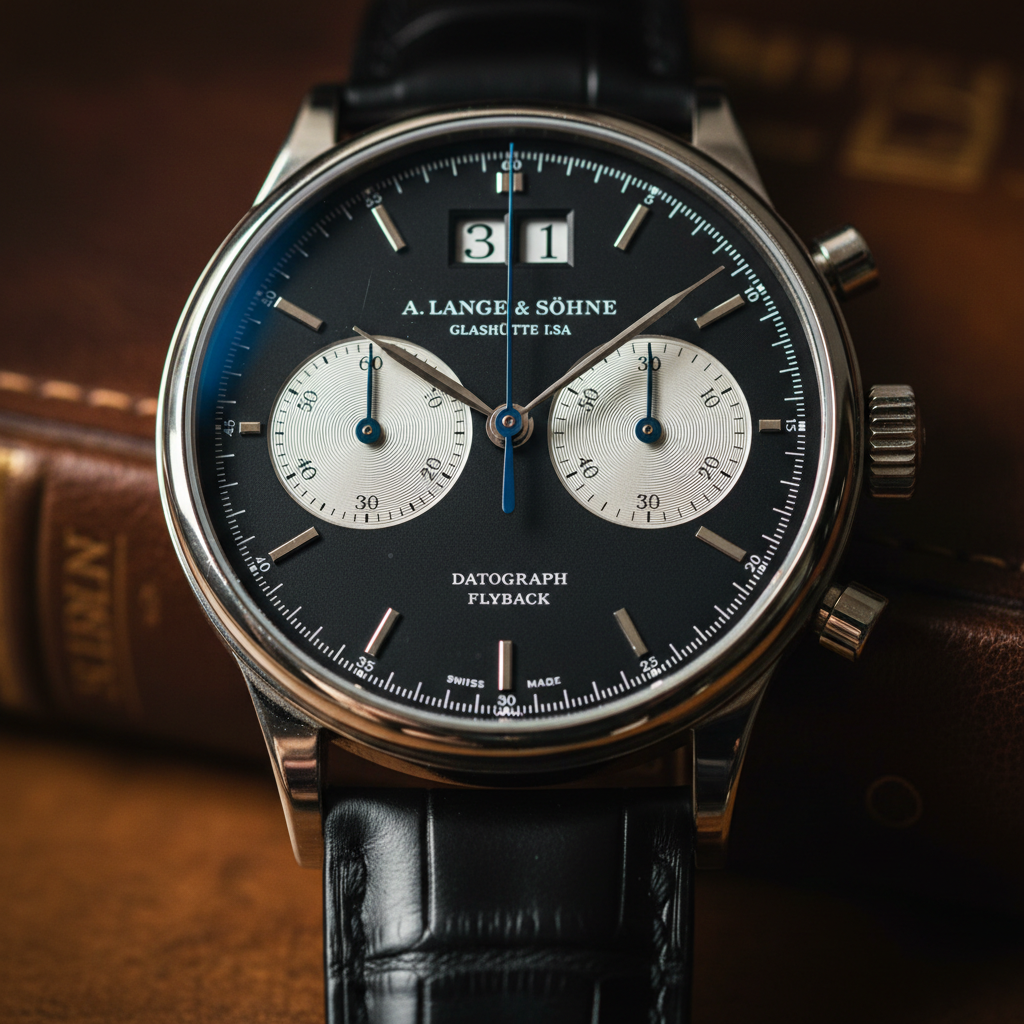
I activated the flyback function several times, watching the central seconds hand snap back to zero and restart its journey without missing a beat. This function, originally designed for pilots needing to time consecutive events, feels perfectly at home here. It speaks to a level of engineering that prioritizes not just function, but the elegance of that function’s execution. The tachymeter scale, framing the dial, is a final nod to the chronograph’s history as a tool for measuring speed, even if its primary use for most owners today is the measurement of moments, not miles.
A Study in Platinum
The case itself, a 39mm circle of solid platinum, is an integral part of the experience. It is unapologetically heavy, a constant and reassuring presence on the wrist. The architecture is simple but perfect: a polished, stepped bezel, brushed caseband, and the signature notched lugs that ensure it sits securely. The pushers and crown are sized for purpose, their operation conveying a sense of mechanical integrity that flows directly from the calibre within. This is not a watch that disappears under a cuff. It announces itself with a quiet, confident gravity.
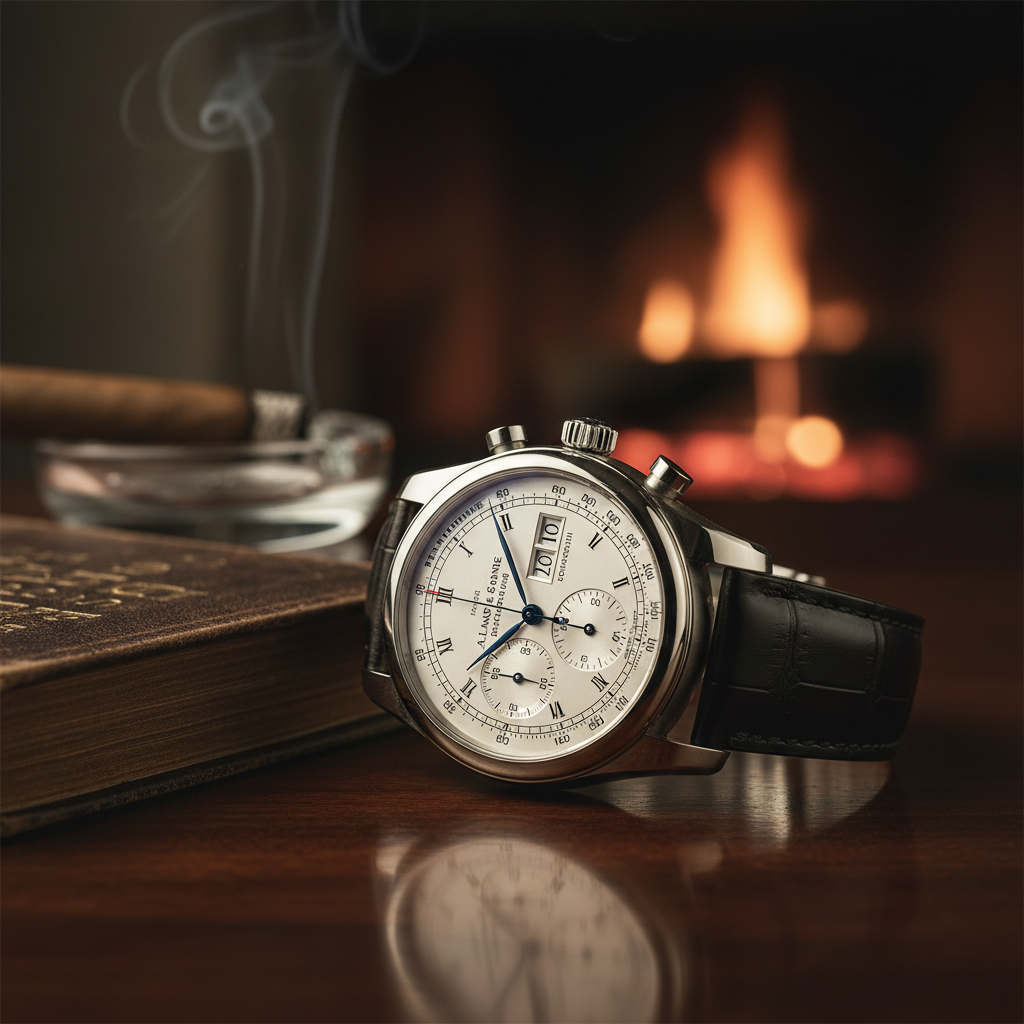
More than two decades after its debut, the first-generation Datograph has lost none of its power. It remains a benchmark, a titan against which other high-end chronographs are judged. It is a watch born of conviction, a statement that German watchmaking was not only back, but ready to lead. To wear it is to carry a piece of that history. It is a reminder that true excellence is not about fleeting trends, but about the patient, uncompromising pursuit of a perfect idea. The light caught the edge of the case one last time before I put it away. It did not sparkle. It glowed.