Passalacqua: An 18th-Century Lake Como Masterpiece Restored
On the western shore of Lake Como, an eighteenth-century patrician villa restored by the De Santis family offers a masterclass in Italian noble hospitality and lakeside seclusion.
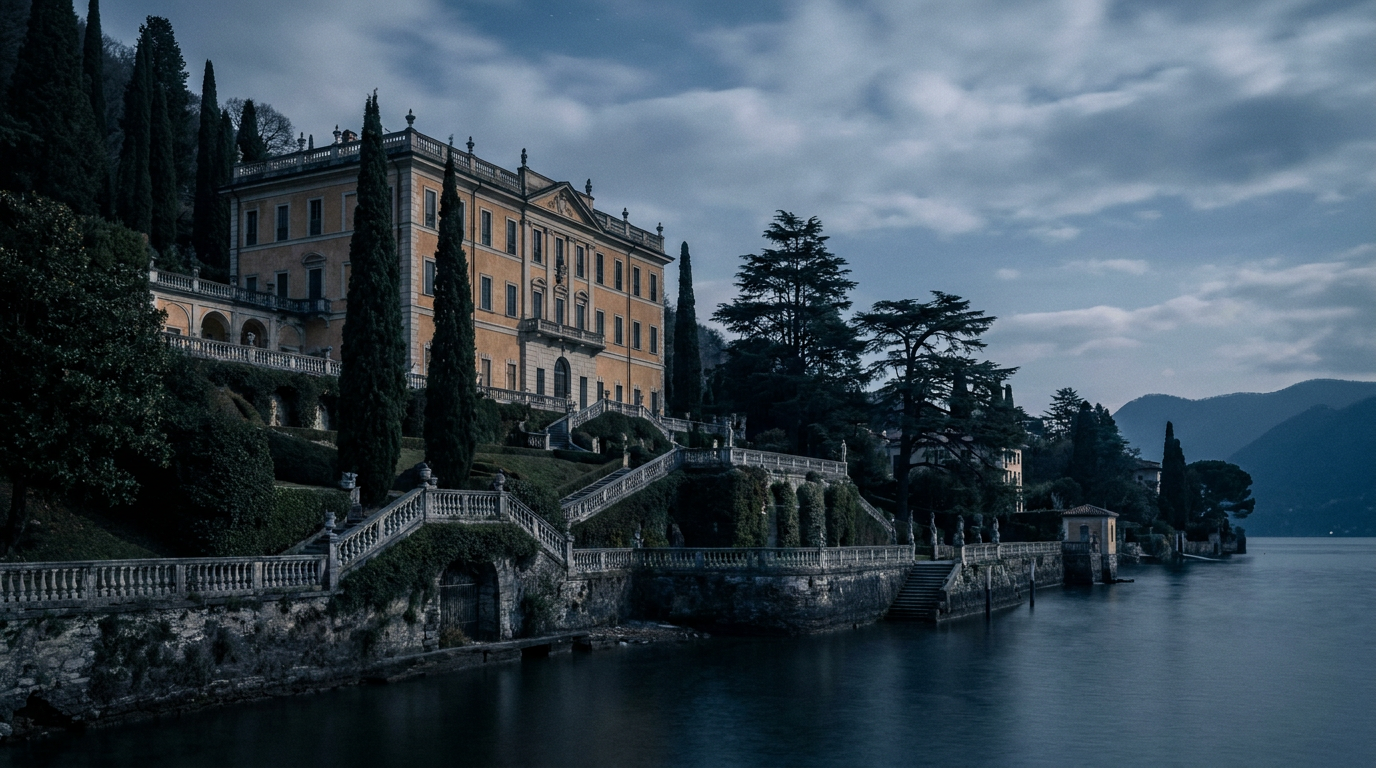
The approach to Moltrasio by water preserves a sense of scale that the lakeside road inevitably flattens. Arriving on a crisp afternoon in late October, when the beech trees across the eastern bank had begun their slow turn to copper, the villa revealed itself in stages. First came the stone water gate and the private pontoon, then the series of seven grand stepped terraces, and finally the pale ochre neoclassical facade of Passalacqua, commanding the slope above the lake with aristocratic calm.
Built in the late eighteenth century for Count Andrea Lucini Passalacqua on land formerly owned by the Odescalchi family, the estate has long represented the apex of Larian villa architecture. Felice Soave conceived the layout, but the villa's character was forged in the decades that followed, when European society gathered in its high-ceilinged salons. Vincenzo Bellini made it his home for long stretches in the early 1830s, composing movements of La Sonnambula and Norma at the keyboard while gazing down across the water. When the De Santis family acquired the property and undertook its meticulous restoration before opening it as a twenty-four-key residence in 2022, they resisted the prevailing urge toward institutional modernism. What they created instead is an authentic country retreat, rooted in the private rituals of noble Lombard domesticity.
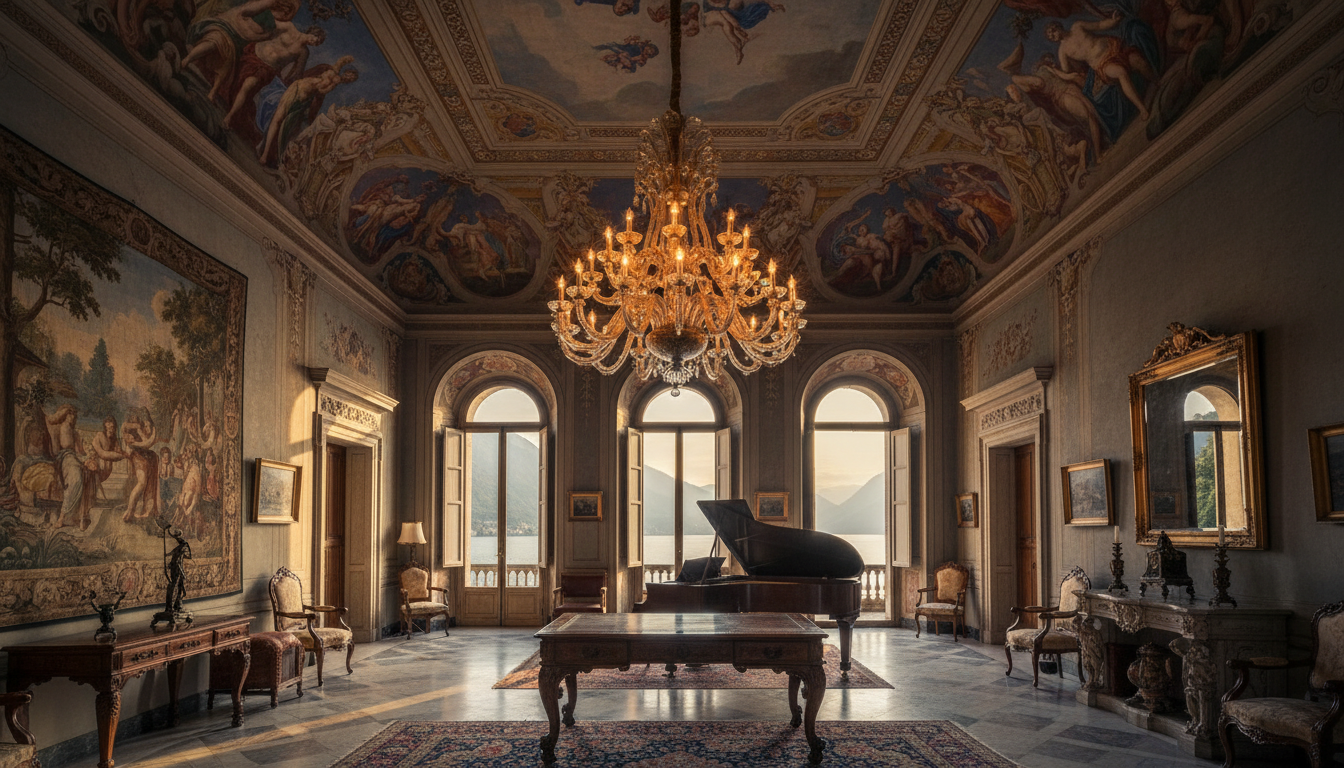
Step through the tall double doors of the piano nobile and the acoustics change instantly. The lake breeze drops away, replaced by the soft whisper of wool carpets over parquet and the faint aroma of dried citrus and beeswax. The reception rooms retain their original neoclassical stuccowork, gilded consoles, and frescoes attributed to Giocondo Albertolli. In the Sala della Musica, where Bellini worked, an 1830s grand piano stands silent beneath a Murano chandelier composed of blown amber glass, its drops reflecting the late-day sun glancing off the water.
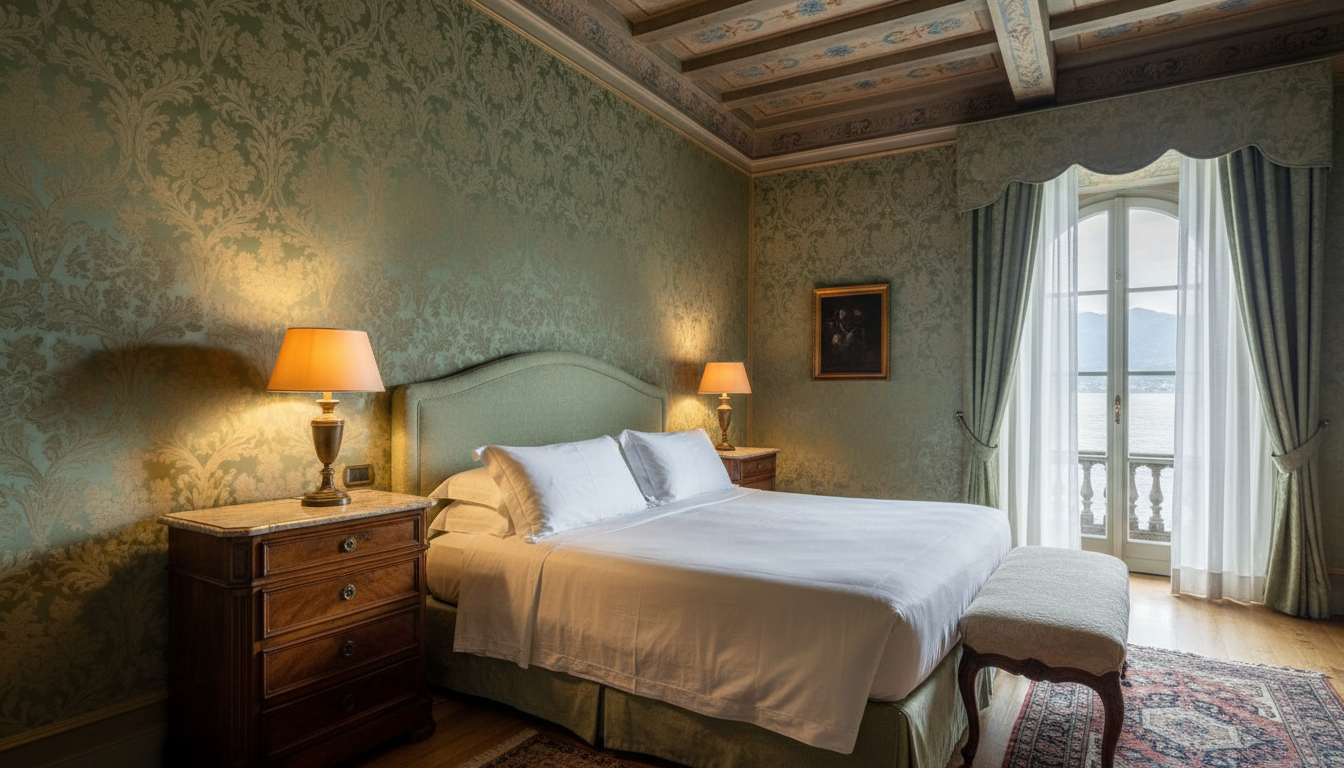
My quarters on the upper floor overlooked the formal parterres. The suite was an essay in layered craft: Fortuny silks in subtle moss tones hung against walls dressed in bespoke rubelli damask, while the ceiling rose into exposed timber beams hand-painted with botanical motifs. The bathroom, carved entirely from book-matched Breccia Pontificia marble, featured brass taps turned by hand in a workshop outside Verona. There was no conspicuous digital interface, no glowing tablet demanding interaction. A linen-bound directory rested on the desk, alongside a handwritten note from the concierge and a dish of candied chestnuts gathered from the estate's upper grove.
The gardens are the true heart of Passalacqua, cascading through seven distinct terraces from the village road down to the lake edge. Each level possesses its own cadence. The upper tier holds an ancient olive orchard and a working vegetable patch where gardeners were lifting autumn leeks and cavolo nero during my stay. Below that lies a formal rose garden, followed by a shaded gravel promenade flanked by monumental Lebanese cedars whose limbs have shaded three centuries of guests.
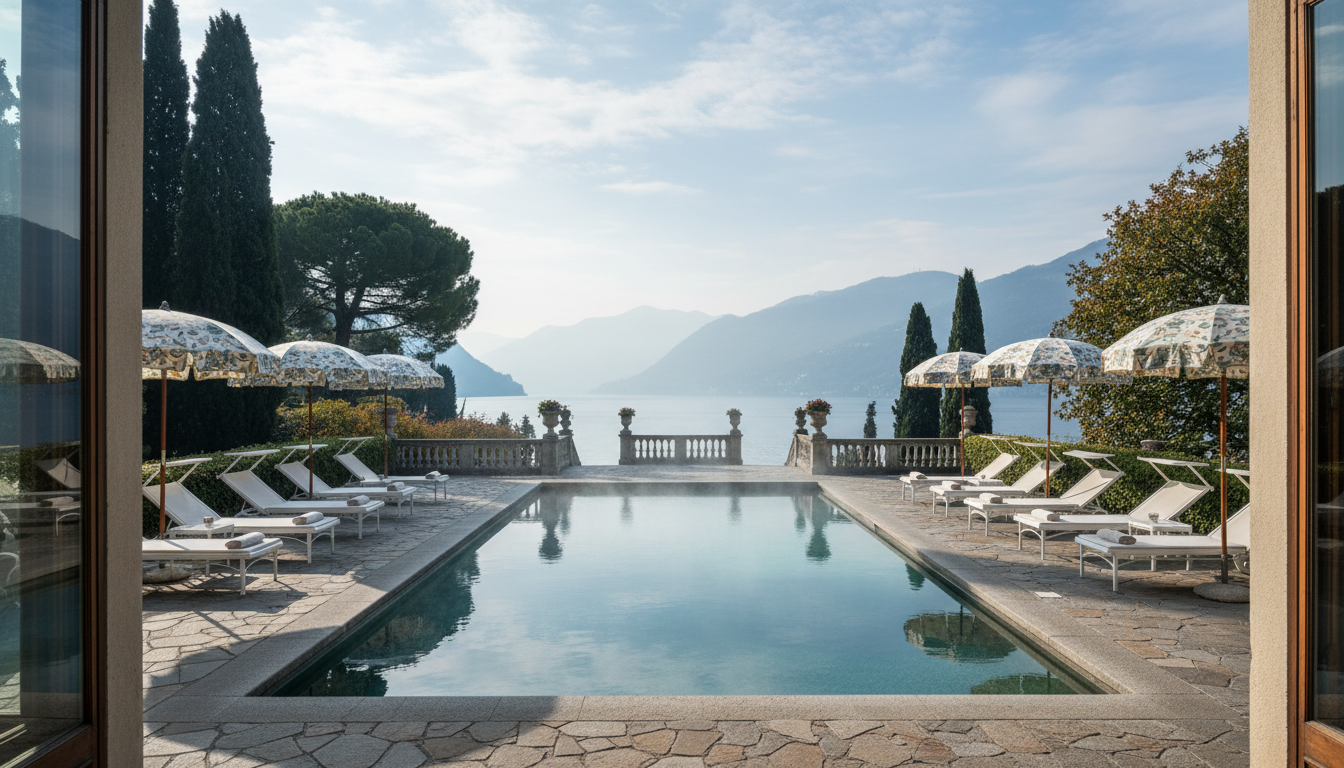
Further down, set into a stone plateau with an unobstructed panorama toward Torno, lies the swimming pool. The surrounding terrace is paved in pale Moltrasio stone, dotted with parasols custom-printed in a floral pattern designed by JJ Martin. Even in the brisk chill of late October, the water remains heated to body temperature, sending thin plumes of steam into the crisp mountain air as the sun dips behind the ridge of Monte Bisbino. Wrapped in a heavy terrycloth robe, espresso in hand, one watches the public ferries trace white wakes across the blue-grey water far below.
Dining at Passalacqua avoids the rigid choreographies of modern fine dining in favor of an open, residential generosity. There is no cavernous formal dining hall. Instead, meals occur wherever the hour and the mood dictate: on the terrace under the pergola at midday, or within the vaulted historic kitchen as evening falls. Chef Mauro Verza operates with a philosophy centered on simplicity and provenance, using produce gathered from the villa's grounds alongside regional ingredients sourced within a tight perimeter of Lombardy and Piedmont.
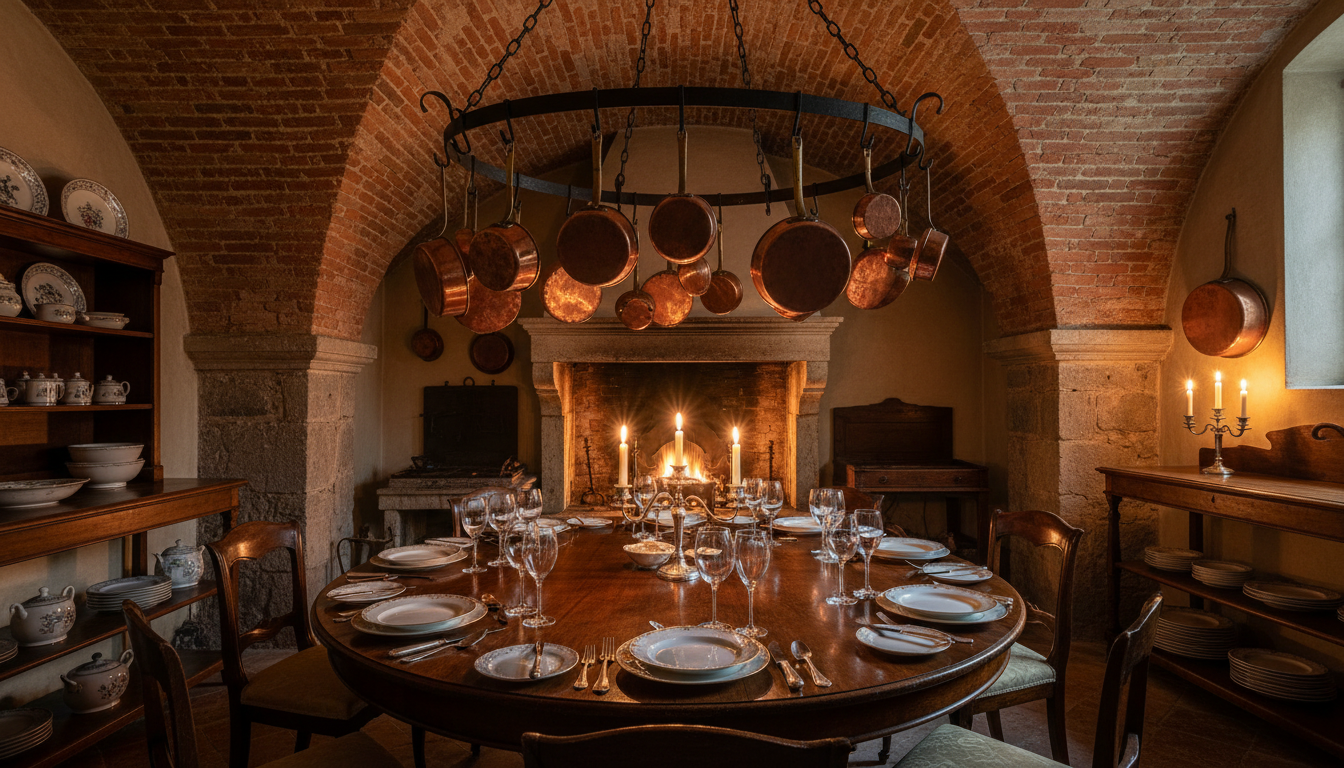
Dinner began in the old vaulted kitchen, where copper pans hung in rows beneath whitewashed brick arches. Over a glass of Franciacorta, the cook prepared fresh taglioni tossed with alpine butter and white truffles shaved with generous abandon. A fillet of lake perch followed, pan-fried crisp with brown butter and fresh sage, accompanied by autumn greens from the terrace above. The service moved with effortless warmth, completely devoid of stiffness yet entirely deferential to the setting.
Down at the private dock, the villa maintains two classic watercraft: a vintage open launch and a sleek motorboat crafted by local shipwrights. Departing early on my final morning, the mist still clung in ribbons to the forested hillsides across the water. As the boat eased away from the slipway, the engines humming beneath mahogany decking, Passalacqua receded into the hillside, its terracotta roof tiles catching the first cold pink of the dawn. It remains what its founders intended: an enduring redoubt of culture and private ease, preserved with rare intelligence.