Lake Garda — The Paradise on Earth
Como has the glitter, but Garda has the soul. Italy’s largest lake remains a bastion of Mitteleuropean discretion, a place of quiet grandeur where the Alps descend to meet the Lombard plain.
'''
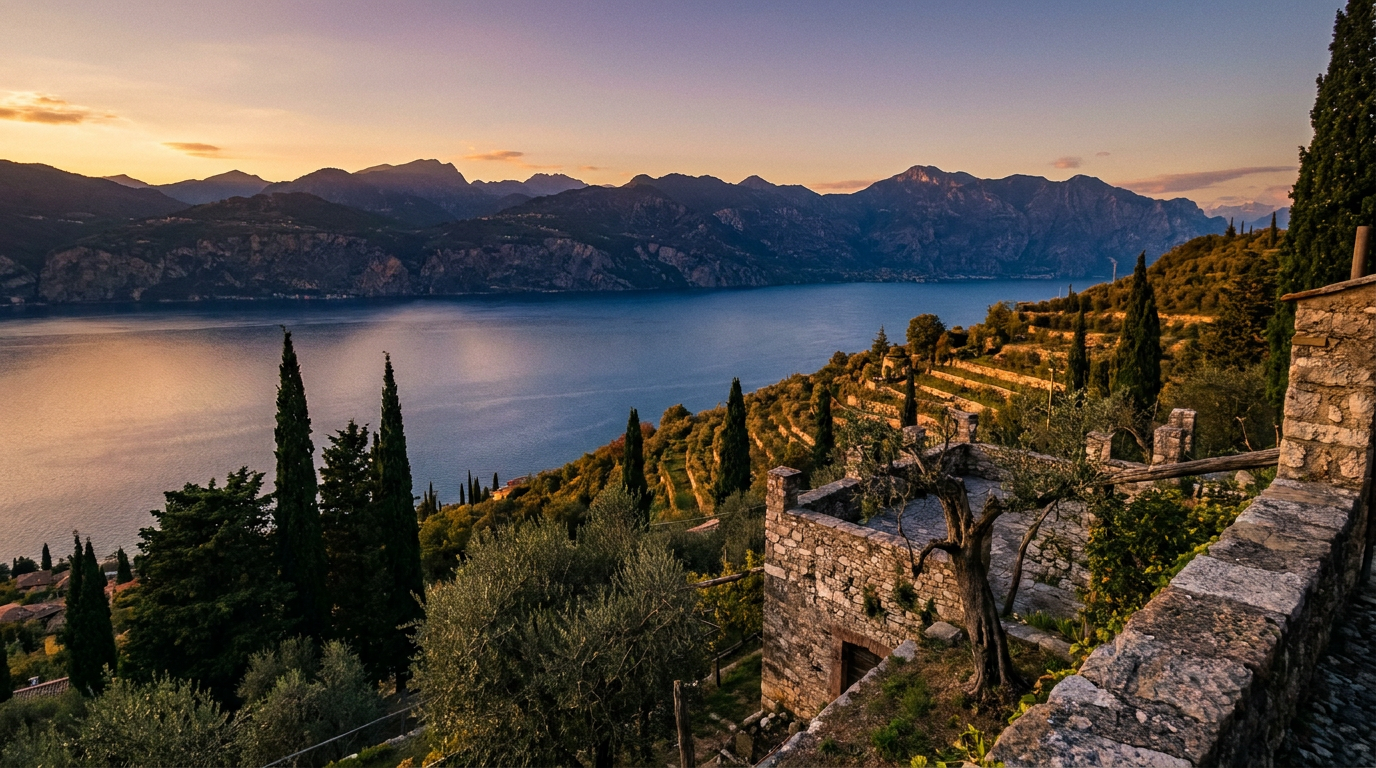
I am writing this from a terrace in Gardone Riviera, a grand old town on the western shore of Lago di Garda. Below, the water is a deep, serious blue, ruffled by the afternoon Ora blowing north from the plains. Across the expanse, the silhouette of Monte Baldo rises to nearly two thousand metres, its peaks still holding patches of spring snow. This is the essential duality of Garda: a landscape that is at once Alpine and Mediterranean, a culture that feels both Italian and Austrian. It is the largest of the Italian lakes, and in many ways, the most reserved—a place less concerned with being seen than its more famous sibling to the west.
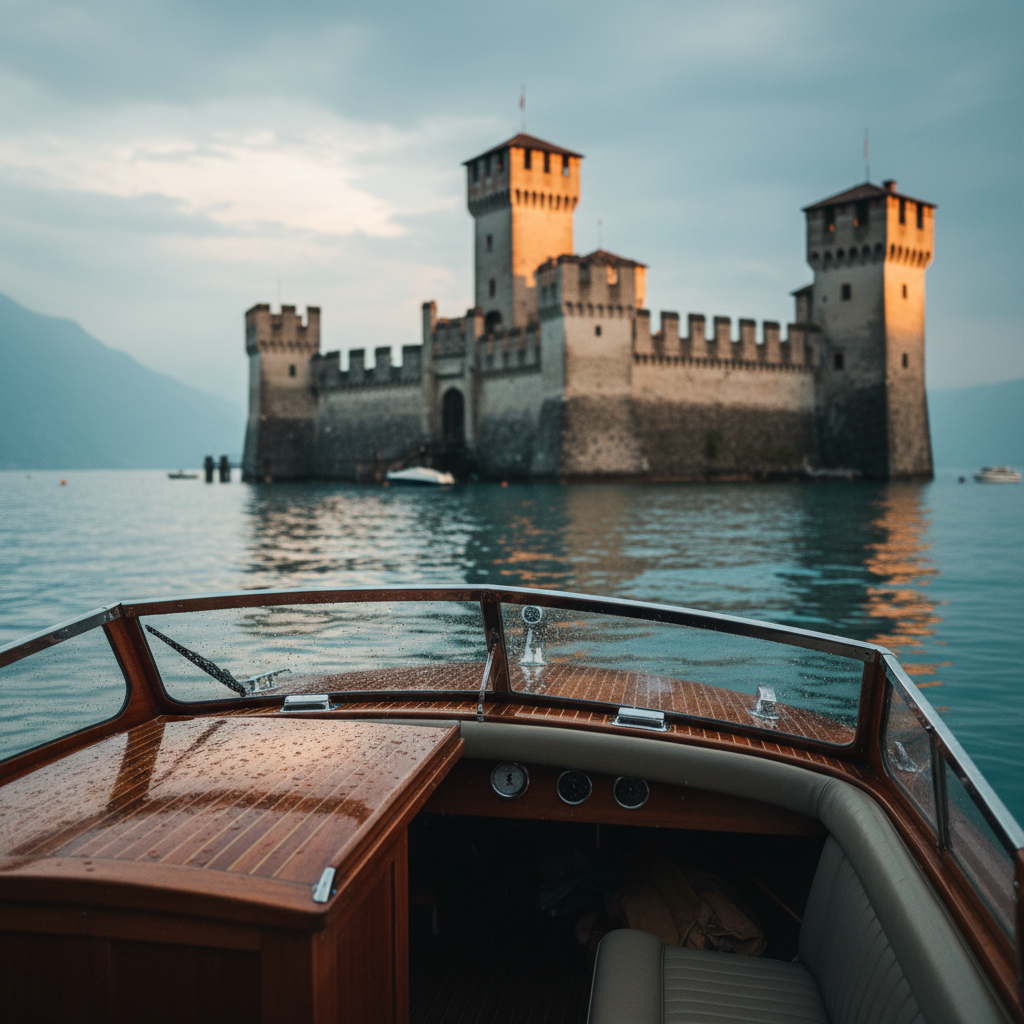
My circuit of the lake began, as it should, in the south. The Sirmione peninsula is a sliver of land stretching four kilometres into the water, a geographical flourish culminating in one of the lake’s most potent images: the Rocca Scaligera. It is a storybook castle, its turrets and crenellated walls rising directly from the water, the only entrance a pair of drawbridges. To approach it by boat, as I did earlier this week, is to understand the strategic power the Scaligeri family of Verona wielded over this water-road. Past the fortress and the thermal baths that have drawn visitors since Roman times, the very tip of the peninsula holds the Grotte di Catullo, the sprawling remains of a vast Roman villa. Walking among its broken walls and ancient olive trees with my wife — our Tibetan terrier, Alfie, and Charlie, a mid-size lab, trotting ahead in indignant competition for the best patch of shade — and with the lake shimmering on three sides, one feels a profound connection to the centuries of civilised life this shore has nurtured.
The Poet-Prince and the Battleship
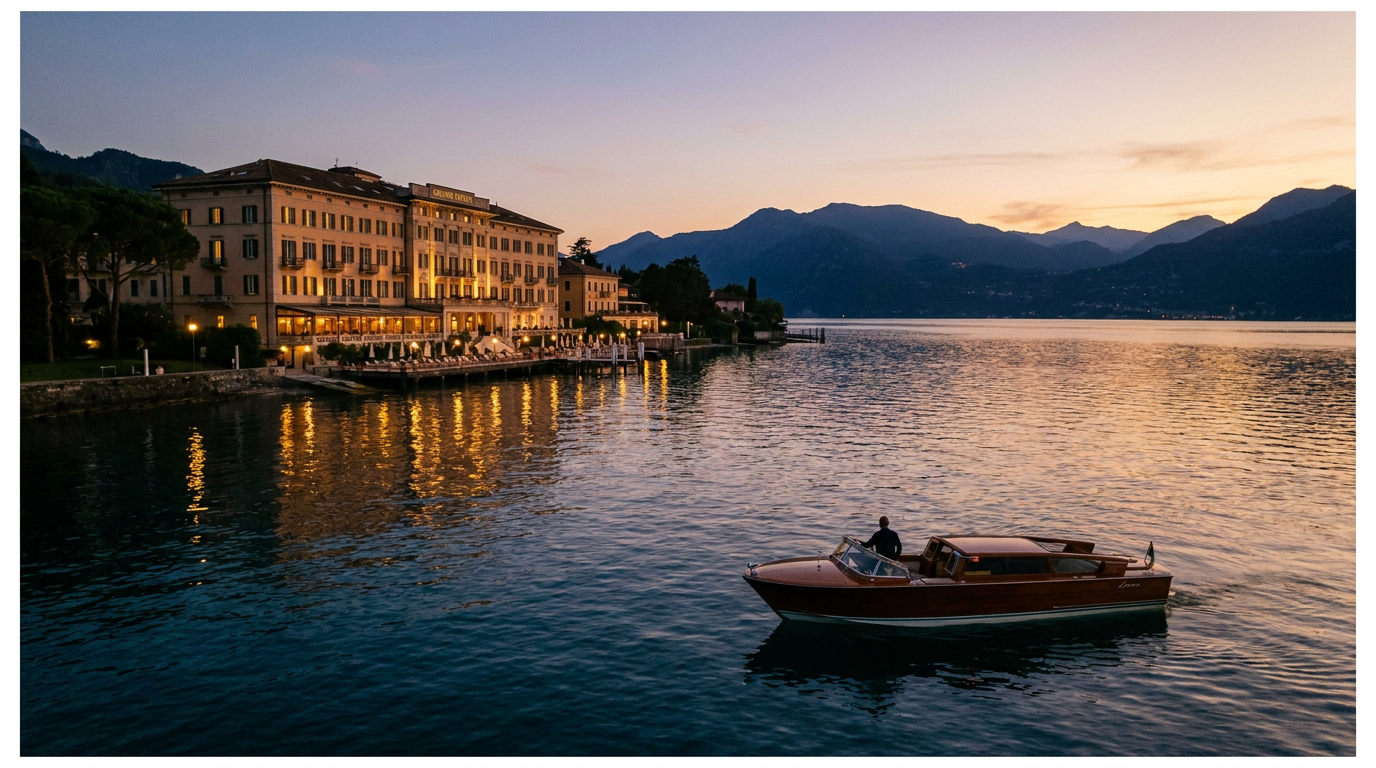
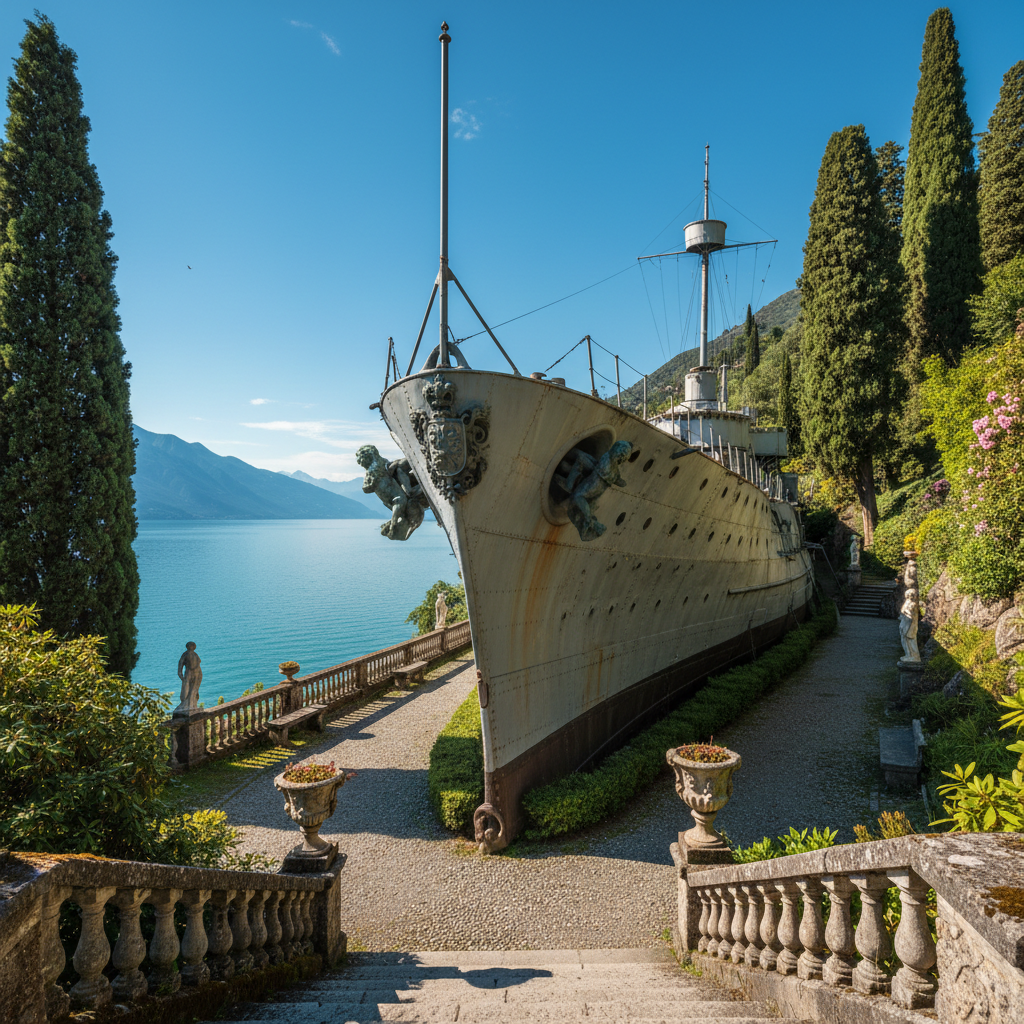
From Sirmione, the western shore—the ‘Riviera dei Limoni’—unfurls northwards. It’s a coastline of belle-époque grand hotels and impossibly cantilevered villages. One might check into the Grand Hotel Fasano, a former Austrian royal hunting lodge, to absorb the weight of its Habsburg past. But the true spirit of this shore, in all its decadent glory, resides a few kilometres up the road at Il Vittoriale degli Italiani. This was the final home of Gabriele dAnnunzio, the poet, patriot, and aesthete who fashioned himself into a living monument. To call the Vittoriale a mere villa is a profound understatement; it is a theatrical city-state, a dense and deeply strange testament to a colossal ego. Every room is a shadowy, cluttered shrine to his own life and obsessions, suffocated in velvet and packed with thousands of objects, from Art Deco statuettes to the very aeroplane he used for his propaganda-dropping flight over Vienna in 1918. It is a deeply claustrophobic and morbid place, the home of a man in love with death and glory. The true shock, however, lies outside. In the terraced gardens, overlooking the serene lake, d’Annunzio had the entire prow of the battleship Puglia installed, a vast grey spur of steel driven into the cypress-studded hillside as a memorial to its crew. It is a gesture of such magnificent, lunatic ambition that one can only stand before it in bewildered admiration.
The Vertical Gardens
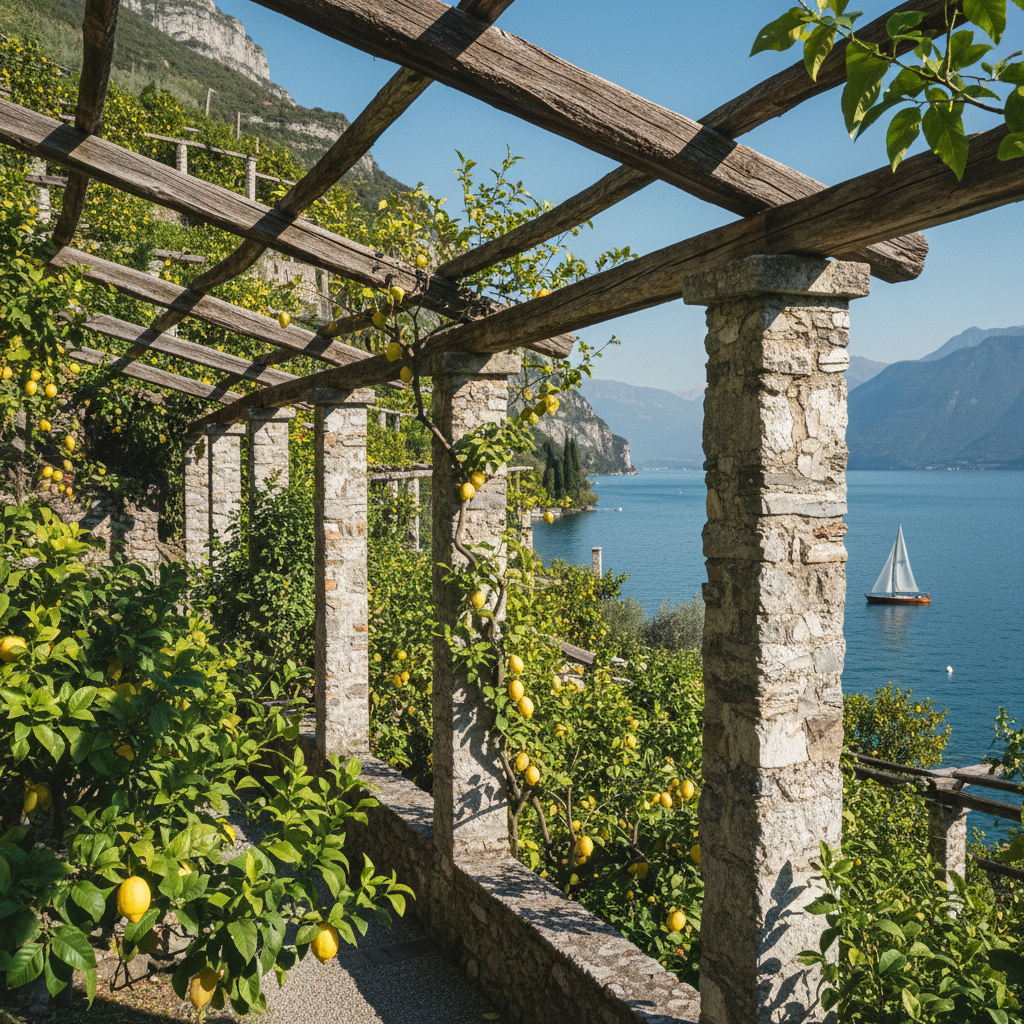
Continuing north, the road clings to the cliffs in a series of tunnels and galleries blasted from the rock. This is the most dramatic stretch of the Gardesana Occidentale, a triumph of engineering that opens intermittently to reveal villages seemingly glued to the mountainside. The most famous of these is Limone sul Garda, a name that is, perhaps surprisingly, unrelated to the citrus that made it famous. Until the road was built in 1932, Limone was almost completely isolated, accessible only by boat or mountain paths. This isolation forced its inhabitants to develop a unique form of agriculture: the cultivation of lemons in vast, stone-pillared greenhouses known as limonaie. These structures, some now in picturesque ruin, march up the hillsides, their white pillars like the bones of ancient temples. They were designed to be covered with glass and wood in winter, protecting the precious fruit that was once exported across Europe. To walk among them today is to feel the ghost of that arduous, specialised industry, a testament to human ingenuity in the face of a challenging landscape.
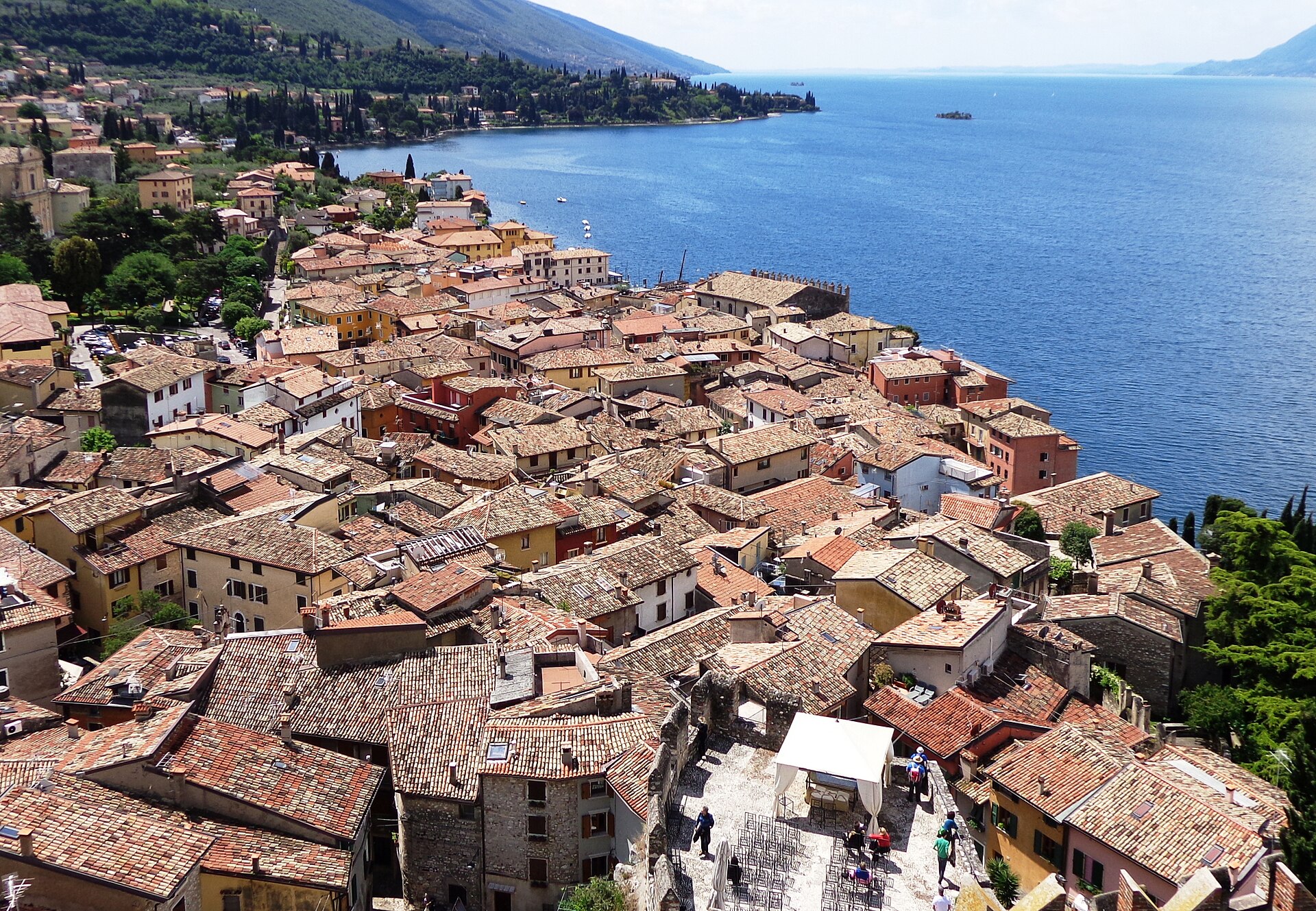
From the northern shore, I took a ferry east to Malcesine. If the western shore is one of grand hotels and dramatic cliffs, the eastern Riviera degli Olivi is gentler, its slopes carpeted with olive groves. Presiding over it all is the formidable mass of Monte Baldo, often called the ‘Garden of Europe’ for its botanical diversity. Malcesine itself is a perfect jewel of a town, a tangle of cobbled lanes clustered beneath another, altogether more severe, Scaliger castle. But the main event here is the ascent. A modern cable car, its cabin slowly rotating to provide a full panorama, lifts you from the lakeside to the mountain’s upper ridge at over 1,700 metres. The transition is breathtaking. One leaves the Mediterranean world of oleander and olive and, in a matter of minutes, arrives in a high-alpine environment of meadows and wind-stunted pines. The view is perhaps the finest in all the Italian lakes: the entire ninety-kilometre length of Garda laid out below, a vast fjord of impossible blue, its shores dotted with towns that look like tiny architectural models. To the north, the Dolomites tear at the sky; to the south, the lake dissolves into the haze of the Lombard plain.
The Winds of Riva and the Hills of Bardolino
The northernmost town, Riva del Garda, feels different again. Ceded to Italy by the Austro-Hungarian Empire only after the First World War, its architecture retains a distinctly Habsburg sobriety. It is a tidy, handsome place, enclosed by severe mountains that funnel the lake’s two famous winds: the Pelèr, which blows from the north in the morning, and the Ora, which returns from the south in the afternoon. This reliable daily cycle of wind has made Riva a global mecca for sailing and windsurfing. From the old Venetian bastion on the hillside, I watched the water come alive in the early afternoon, the surface suddenly flecked with whitecaps and a swarm of colourful sails zipping across the blue with astonishing speed. It is a vision of pure, kinetic energy, a modern counterpoint to the lake’s more historical and contemplative moods.
My journey concluded down the eastern shore, where the mountains recede and the landscape softens into rolling morainic hills. This is the Valpolicella and Bardolino wine country. The lakeside towns here—Garda, Bardolino, Lazise—are charming and less vertically dramatic than their western counterparts. The feeling is more pastoral, more relaxed. I stopped at a vineyard overlooking the water, the vines heavy with the promise of the autumn harvest. The local Bardolino wine is like the landscape itself: gentle, pleasant, and without pretence. It is not a wine for grand pronouncements, but for quiet enjoyment on a sun-drenched afternoon.
The Quiet Money
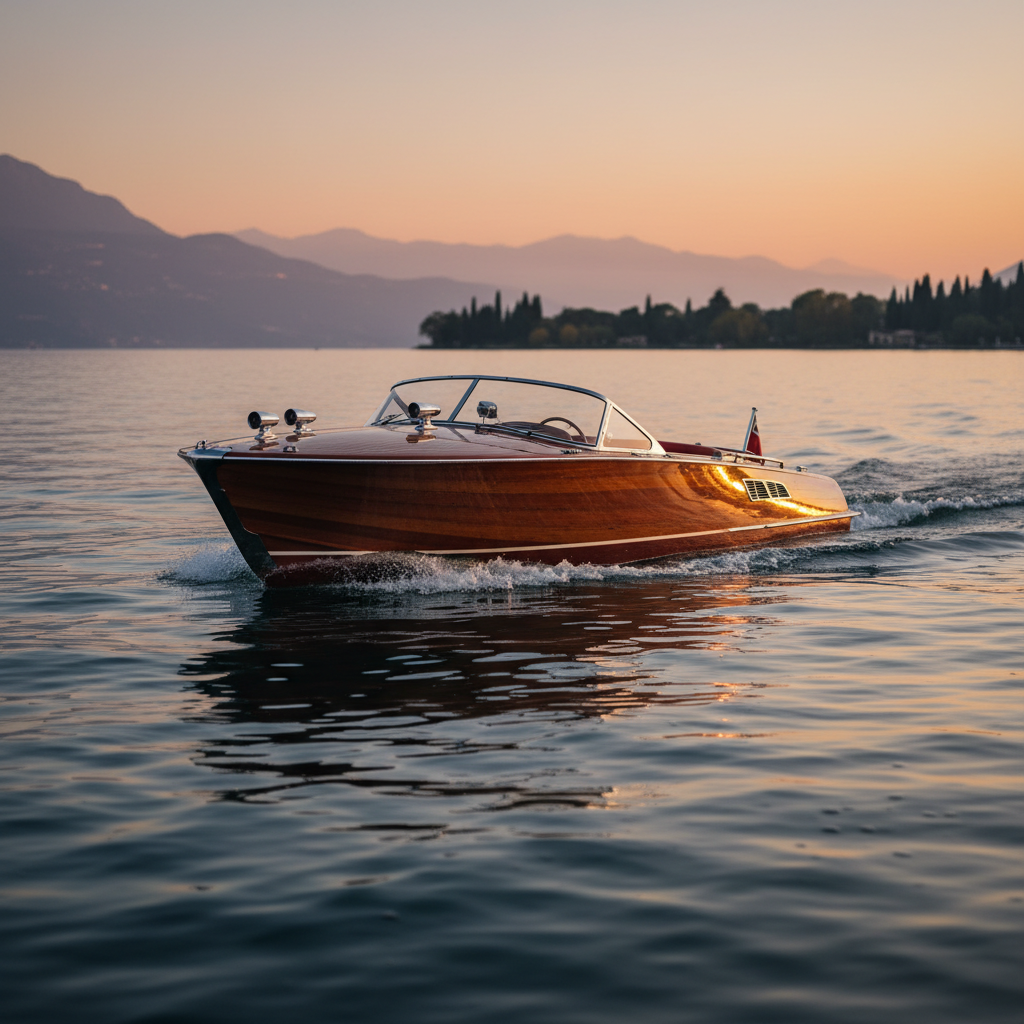
There is a reason you do not read about Lake Garda in the gossip columns, and it is not for lack of money. Over a long lunch in Gardone, a local notary explained the open secret of these shores: for decades, Swiss private bankers from Zurich and Lugano have been crossing the Alps to make their second homes here. The drive is barely four hours, the climate is kinder than the Ticino, and—crucially—nobody asks questions. The grand villas behind cypress hedges along the Gardesana, the restored limonaie converted into private residences, the discreet boathouses tucked into the folds of the western shore—a remarkable number are owned by people whose names you would recognise only if you read the back pages of the Neue Zürcher Zeitung.
Industrialists from Milan and Munich followed, and then a quieter wave: tech founders who sold their companies and wanted somewhere that was not Saint-Tropez, Russian and Ukrainian money that needed a softer landing than Monaco, German Mittelstand patriarchs who had simply had enough of being recognised at home. There is no paparazzi industry here because there is no audience for it. The locals are unimpressed by wealth—they have lived among it for two centuries—and the lake's geography conspires in the silence. The cliffs hide the houses, the boats come and go without docking publicly, and the nearest tabloid newsroom is a long drive away. Como sells its glamour; Garda sells its discretion. That is why, if you know where to look on a summer evening, you will see lights burning in villas whose owners have spent considerable sums to ensure you never learn their names.
And so I find myself back on this terrace in Gardone, the setting sun casting a golden light on the face of Monte Baldo. The Ora has died down, and the lake is returning to a state of glassy calm. Como may have the Clooney-fueled glamour and the celebrity villas, but Garda possesses a more profound and varied soul. It is a lake of poets and soldiers, of lemons and olives, of sailors and mountaineers. It does not need to shout its virtues. Its grandeur is a quiet, confident assertion, a deep and resonant chord that stays with you long after you have left its shores.