Le Bernardin and the Theology of Fish
In Midtown Manhattan, Eric Ripert’s temple to the sea continues to operate on a plane of its own, quietly asserting that the most profound statements are often the most direct.
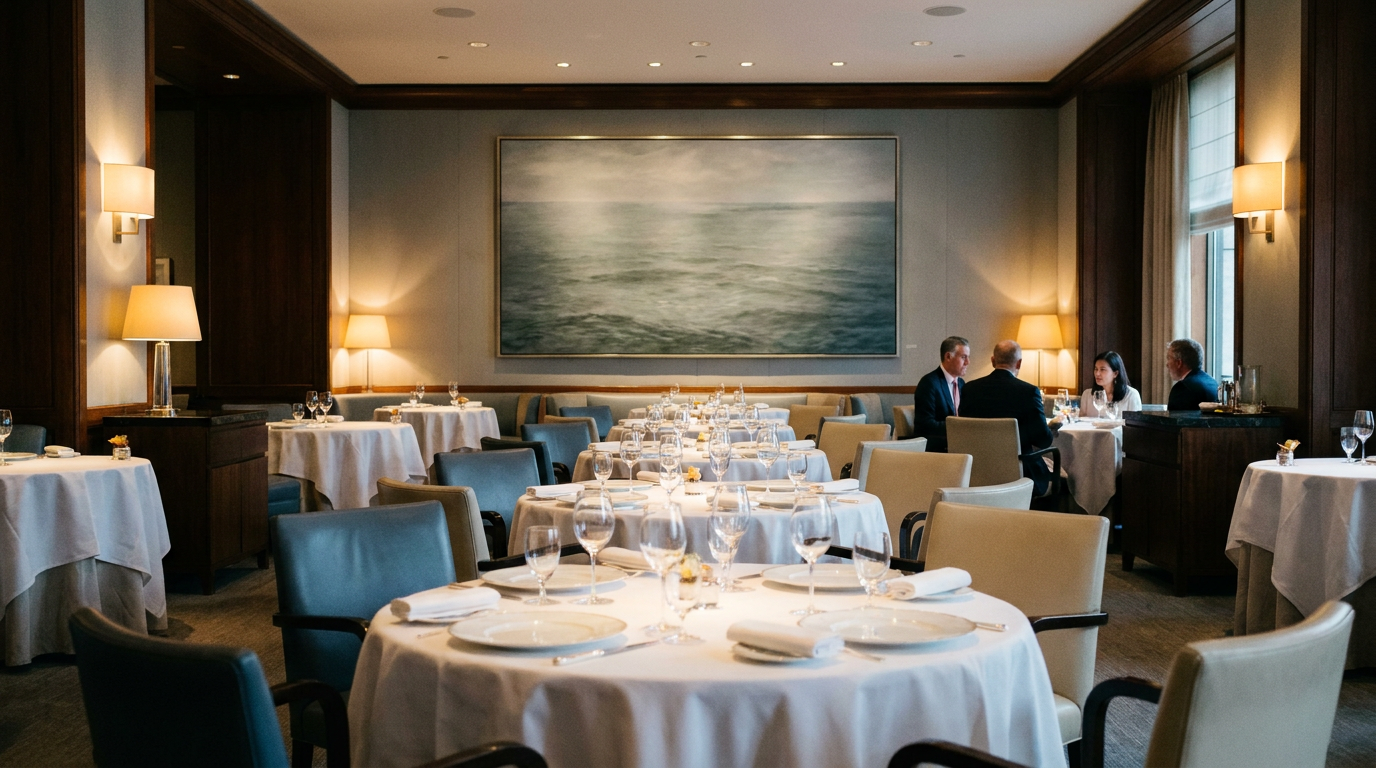
There is a certain hush that falls upon entering Le Bernardin. It is not the silence of a library, nor the forced reverence of a museum, but the quiet hum of purpose. Located within the unglamorous confines of the Equitable Building on West 51st Street, its entrance is a discreet portal into another state of being. The city’s frantic pace dissolves, replaced by a serene, blue-grey room where the only thing that truly matters is the plate that will soon be set before you.
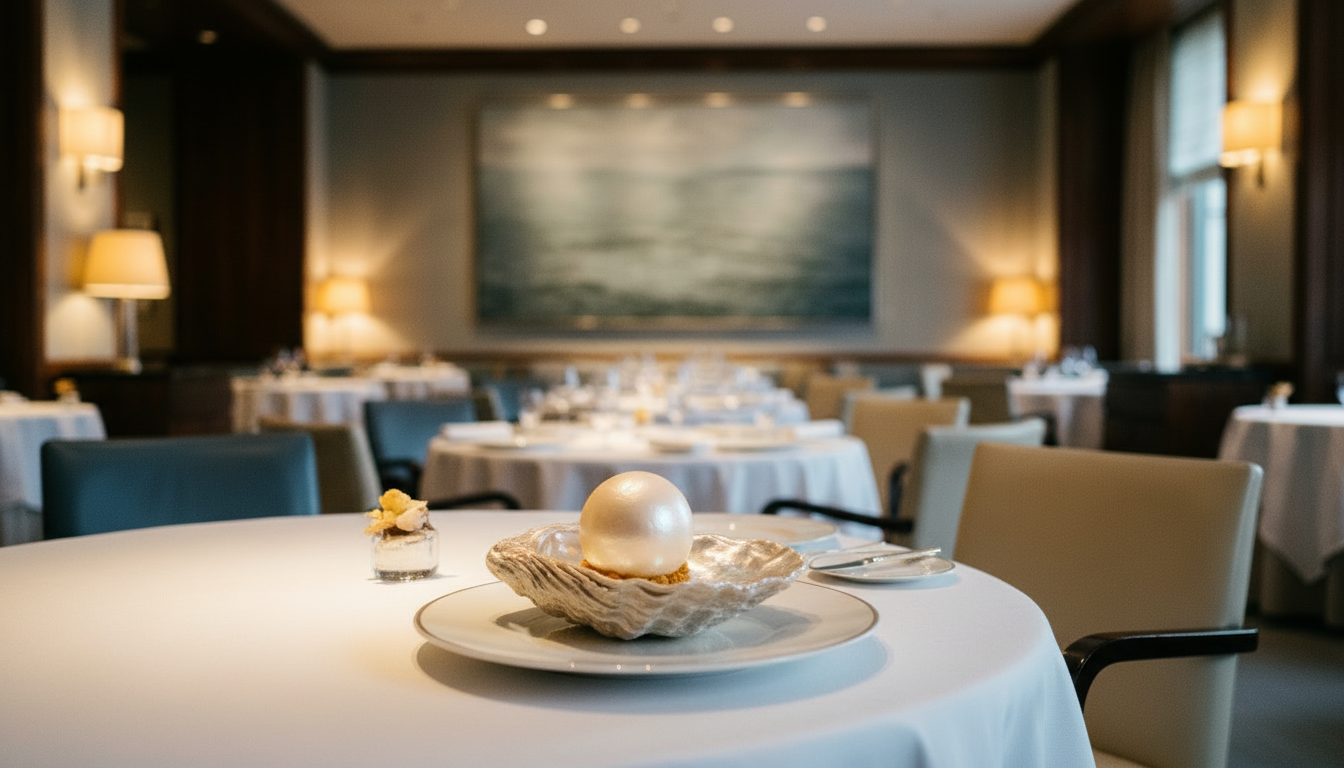
I returned a fortnight ago, in the lingering light of a late June evening. The room, redesigned some years back by Bentel & Bentel, remains a masterclass in sophisticated restraint. A vast, impressionistic triptych of a turbulent sea by Ran Ortner dominates one wall, a fitting altarpiece for this sanctuary of seafood. The service is a study in silent choreography, a ballet of anticipation and response, yet it is the philosophy of the kitchen that truly defines the experience. It is a doctrine established by the founding siblings, Maguy and Gilbert Le Coze, when they first opened in Paris in 1972, and carried forward with unwavering devotion by Chef Eric Ripert since Gilbert’s tragic passing in 1994: “The fish is the star of the plate.”
The Gospel of Crudo
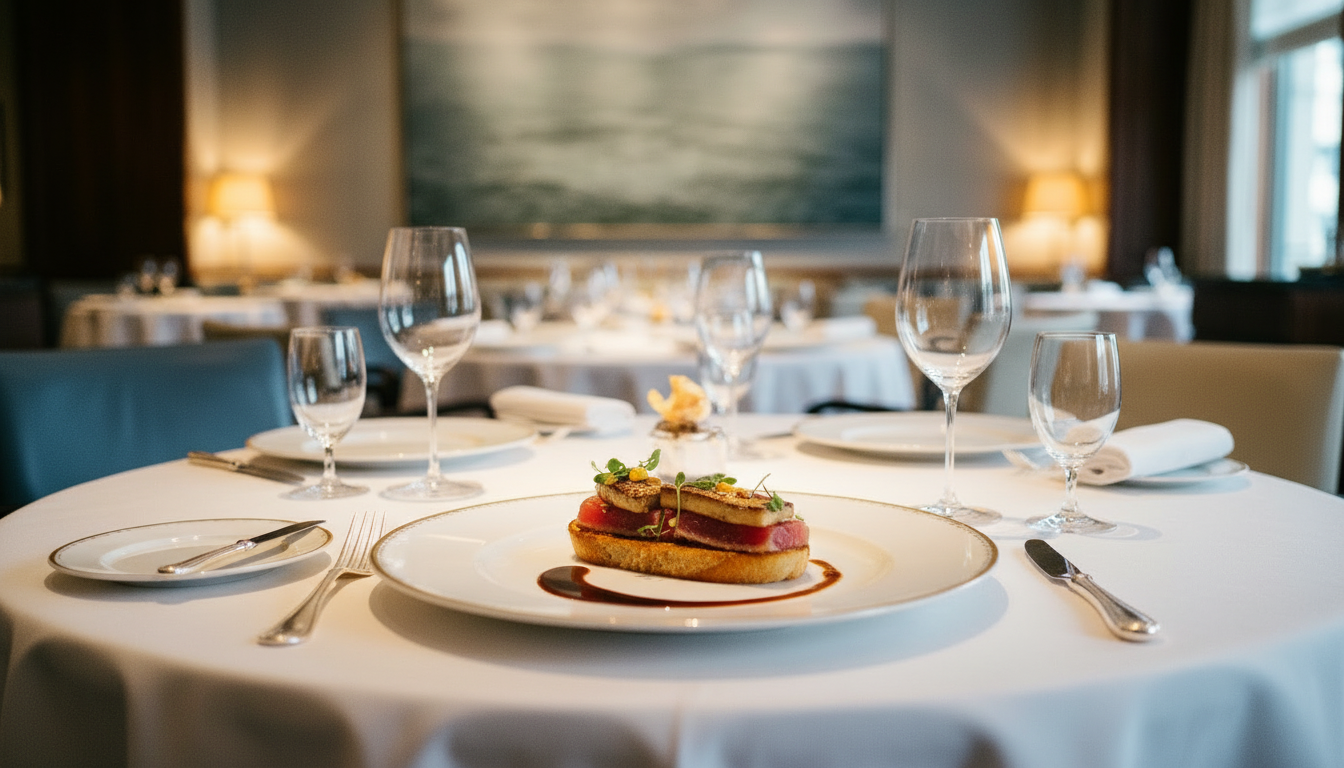
This philosophy is nowhere more apparent than in the opening courses. My first plate was a mosaic of thinly pounded yellowfin tuna, glistening under the soft light. It was draped over a wafer of toasted baguette, itself spread with a whisper of foie gras, and topped with chives. To describe it as a ‘tuna carpaccio’ would be an act of profound understatement. It was an essay on texture and temperature, the cool, clean minerality of the fish playing against the rich, earthy warmth of the foie gras. Each element was distinct, yet together they formed a new, singular sensation. This is the genius of Ripert’s approach. It is not about masking the ingredient, but about providing the perfect context for it to reveal its own essential nature. One does not simply taste the tuna; one is led to a deeper understanding of it.
The Precision of the Sear
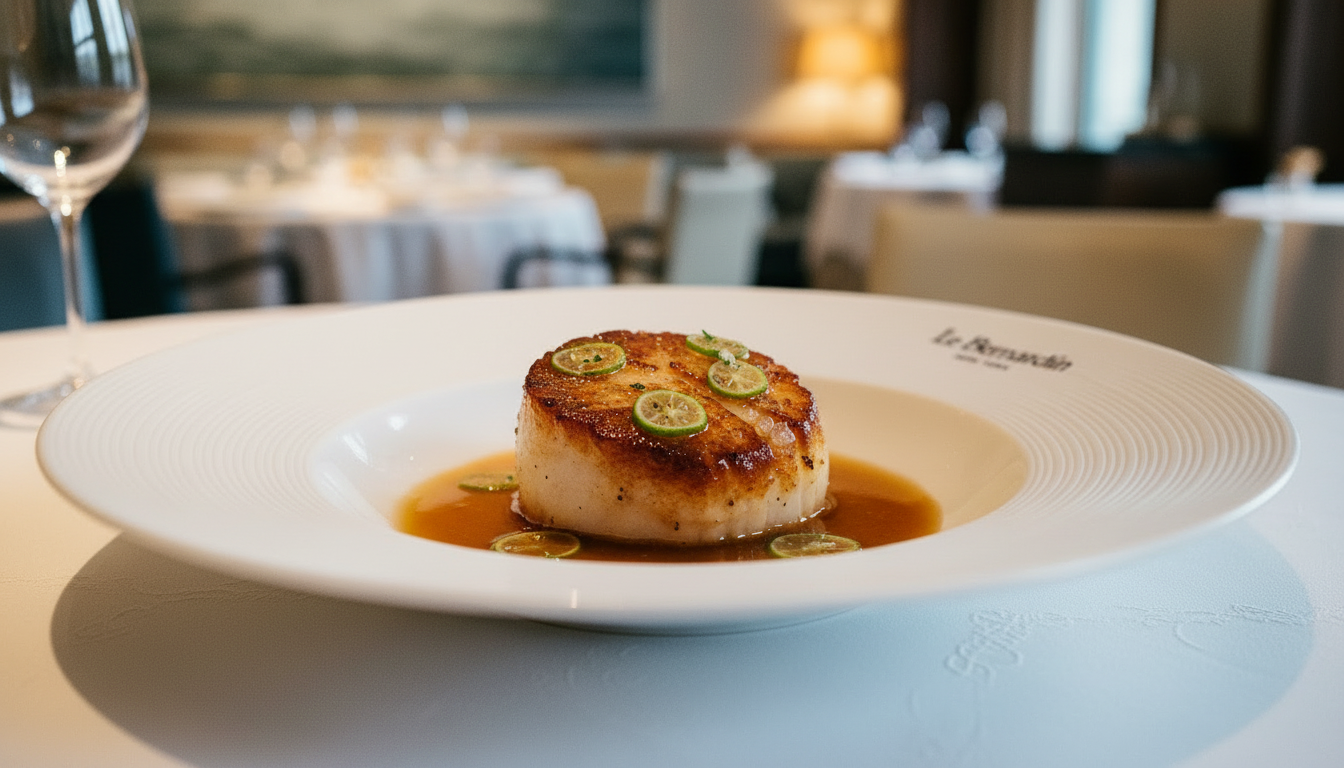
The main courses are categorised with a deceptive simplicity: “Almost Raw,” “Barely Touched,” and “Lightly Cooked.” I opted for a Barely Touched scallop, seared to a perfect, paper-thin Maillard crust on one side, the other retaining the sweet, translucent fragility of its raw state. It arrived in a shallow pool of brown butter, its nutty aroma rising to meet me, dotted with the sharp salinity of finger limes. Here, the cooking is not an act of transformation but of revelation. The heat is a tool used with surgical precision to unlock a new dimension of the scallop’s character without violating its integrity. The sommelier, a man of quiet confidence, suggested a 2022 Domaine François Raveneau Chablis 1er Cru ‘Montée de Tonnerre’, its flinty acidity cutting through the richness of the butter and cleansing the palate for the next bite. It was a partnership, not a pairing.
The Grace of the Finale
For a restaurant so singularly focused on the sea, the final act—dessert—could easily feel like an afterthought. At Le Bernardin, it is instead a thoughtful and necessary conclusion to the narrative. Under the direction of pastry chef Orlando Soto, the creations are intricate but never overwrought. A delicate sphere of white chocolate, presented as a pearl in an oyster shell, was cracked open at the table to reveal a passionfruit mousse and a sliver of banana cake. It was sweet, certainly, but also complex, with a tropical acidity that served as a final, bright echo of the meal’s clean flavours.
Leaving the restaurant and stepping back out onto the Manhattan pavement, the city’s noise felt different, its energy less chaotic. A meal at Le Bernardin is a recalibration of the senses. It is a reminder that in a world of relentless novelty and performative complexity, the most powerful experiences are often born of focus, discipline, and a profound respect for the ingredient. It is not a restaurant of trends; it is a restaurant of truths. And the truth it tells, night after night, is that a perfect piece of fish, handled with intelligence and grace, is a thing of beauty, and a joy forever.