Grand Hôtel de Cala Rossa: A Corsican Bastion of Quiet Grace
On a private granite peninsula in the Gulf of Porto-Vecchio, the Canarelli family’s bastide preserves the wild soul of southern Corsica with effortless Gallic elegance.
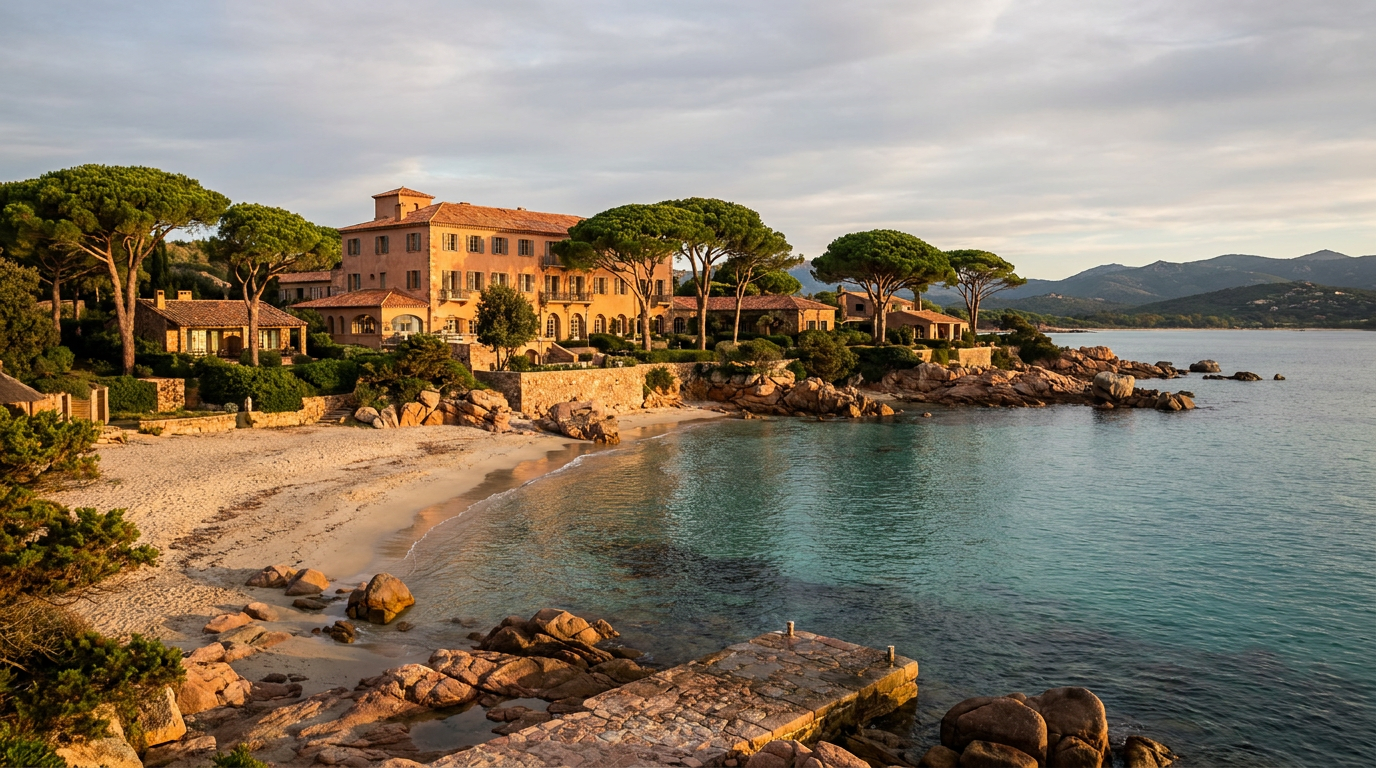
The descent from the Col de Teghime toward Saint-Florent is dramatic enough, but the true measure of Cap Corse reveals itself further west, where the limestone ridges tumble abruptly into the Gulf of Valinco and the northern swell of the Mediterranean. Yet it is not on the arid western cape that one finds the island’s most aristocratic retreat, but tucked within the secluded embrace of the Bay of Porto-Vecchio in the south. Late in October, as the scrub of the maquis turns russet and the midday air retains just enough warmth to wear unlined Irish linen without a jacket, I drove up the pine-fringed driveway of Grand Hôtel de Cala Rossa.
The property occupies a private peninsula of red porphyry granite, where the scent of umbrella pines mingles with the briny bite of the Tyrrhenian Sea. Founded in 1977 by Toussaint Canarelli on the grounds of his family’s ancestral estate, Cala Rossa never succumbed to the ostentatious glitter that occasionally tarnishes the Costa Smeralda just across the Strait of Bonifacio. Instead, it remains an archetype of private French refinement: a maison where generations of the same families return each autumn to close out the year before the winter mistral gathers force.
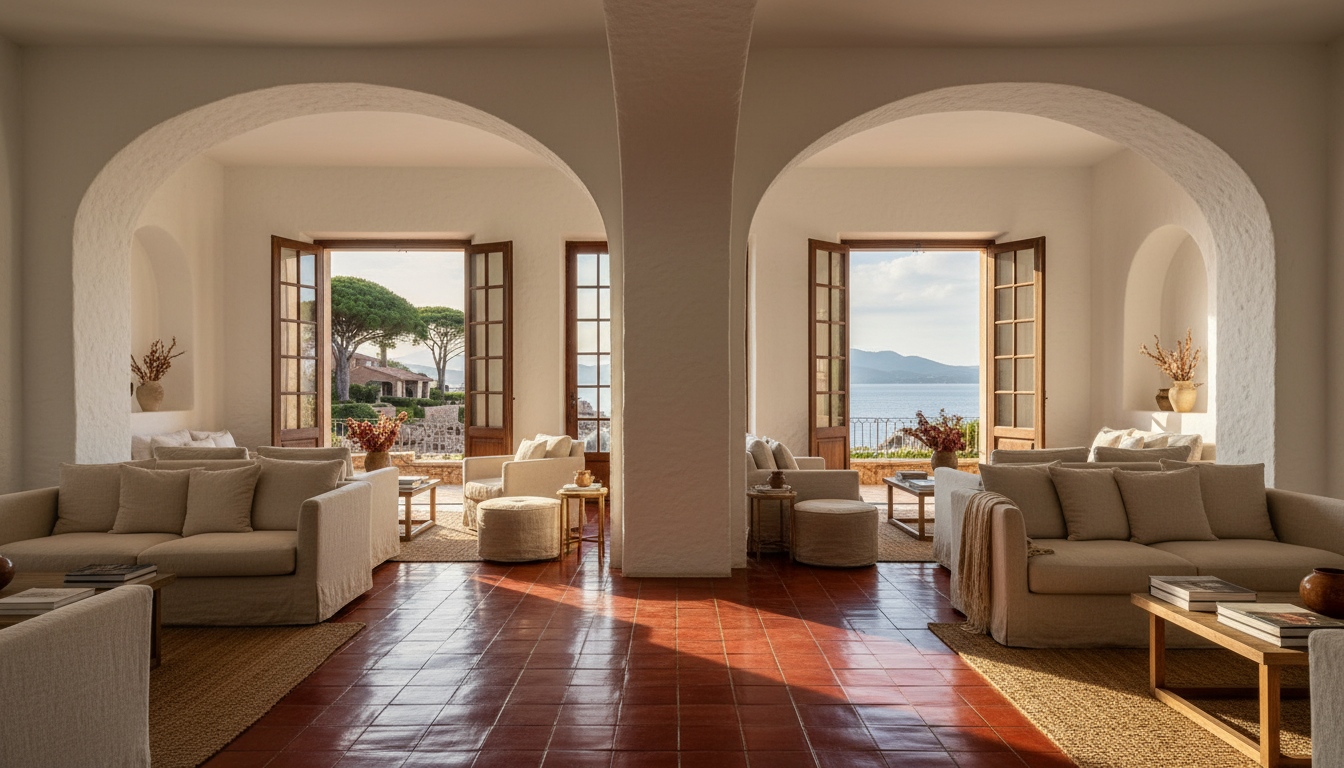
Stepping across the threshold of the main bastide, one is greeted not by the polished marble of an urban palace, but by terracotta tiles waxed to a deep oxblood patina, limewashed walls, and deep-set arches framing the sea. The service is delivered with an understated familiarity; the head concierge, having observed my arrival by car rather than the customary launch from Porto-Vecchio’s marina, had already orchestrated the transit of my luggage to the Junior Suite with silent efficiency.
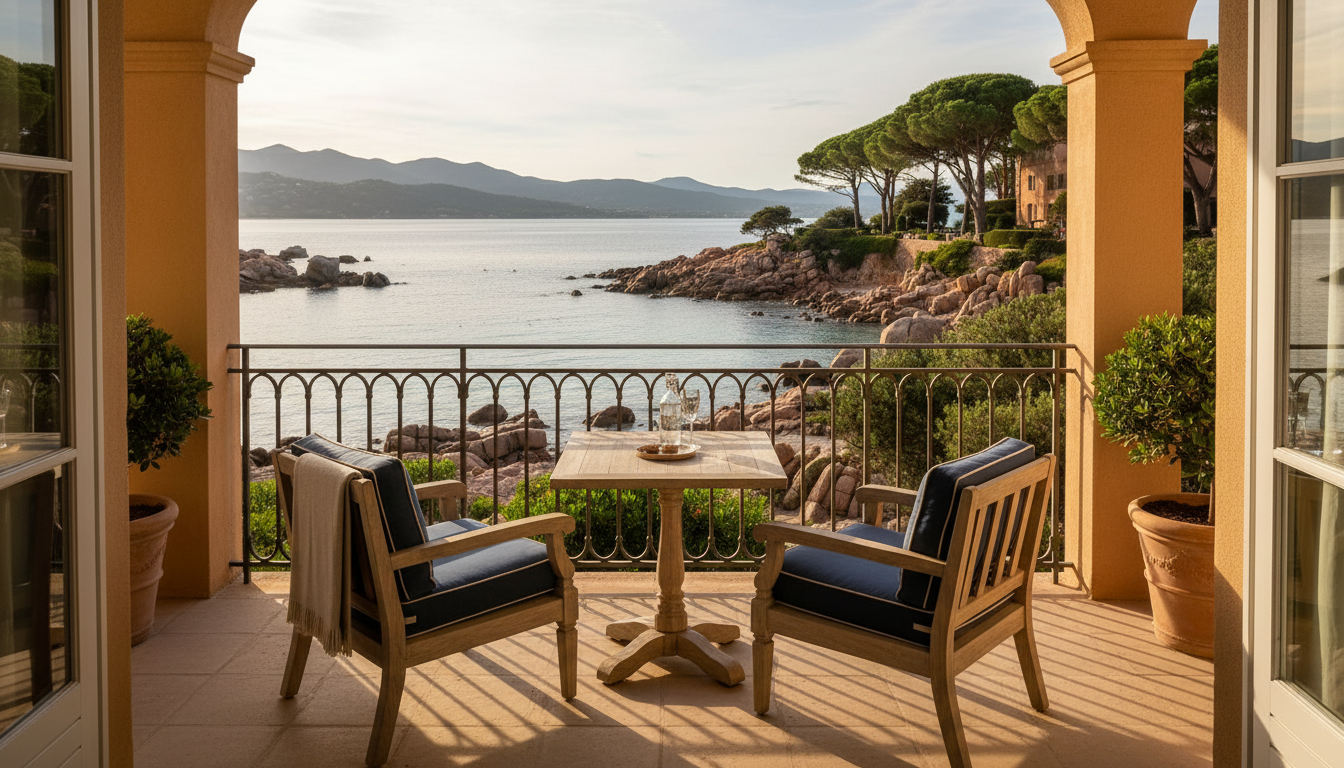
Inside the suite, the design avoids the traps of regional pastiche. Bleached oak, raw linen upholstery in shades of ecru and slate, and wrought-iron reading lamps create an atmosphere of monastic ease. French casement windows open onto a wide private terrace shaded by century-old maritime pines, through which the red sands of the cove glow in the late afternoon sun. In the bathroom, local Corsican granite forms deep soaking tubs supplied with essential oils of wild immortelle and myrtle, distilled from the hills behind the hotel.
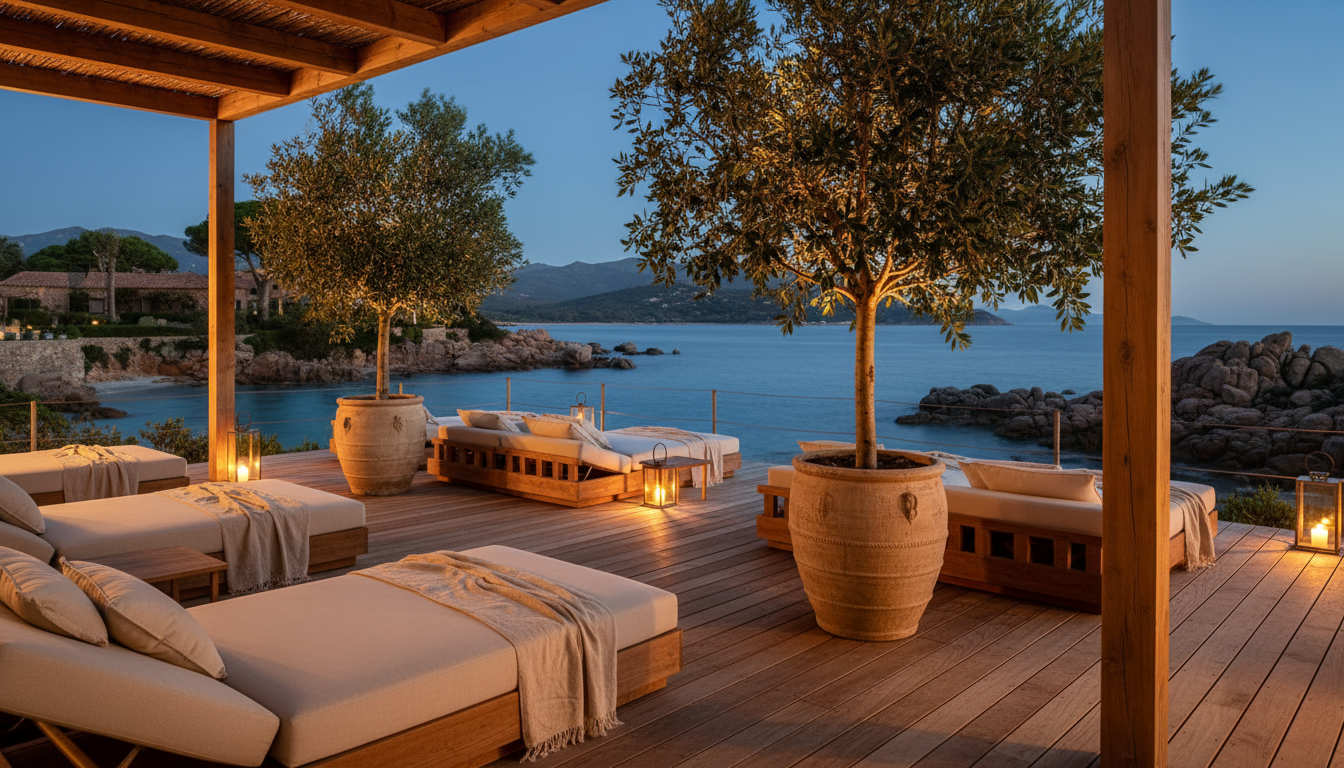
Down along the water’s edge, the private beach curves into a gentle crescent. Even in the final days of October, the sea here remains surprisingly temperate, shielded by the surrounding headlands from the prevailing westerly winds. Wooden loungers, their canvas cushions freshly dressed in pale taupe, are spaced generously along the shoreline. At the perimeter, where the red granite shelf dips into transparent water, a timber pontoon extends into the bay, serving as a quiet vantage point for watching the distant granite peaks of the Bavella needles fade into twilight.
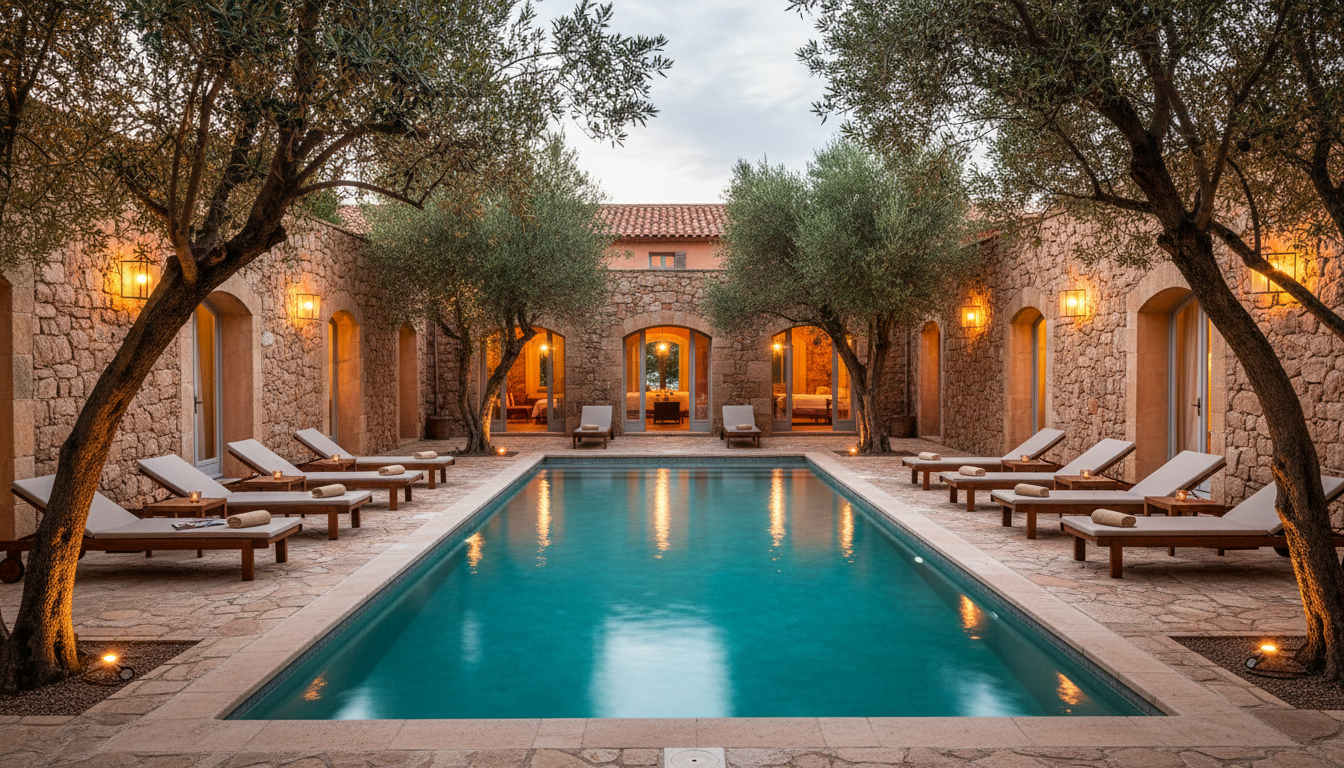
Just behind the strand sits the swimming pool, sunken into a courtyard of dry-stone walls and olive trees. It is heated year-round, its surface like green glass beneath the canopy of cork oaks. In the late morning, before the kitchen prepares the grills for luncheon, there is scarcely a sound here beyond the occasional drop of pine needles onto the deck and the gentle lap of the tide fifty paces away.
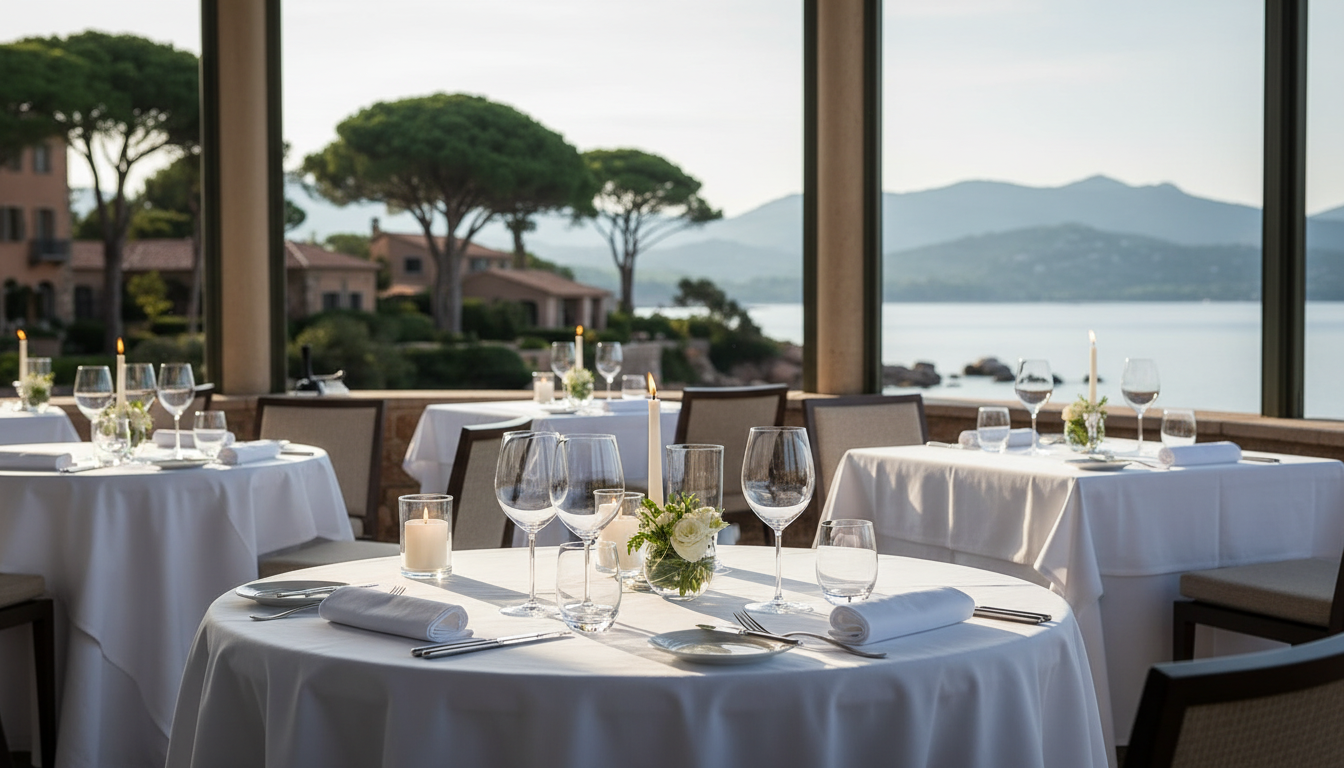
Dinner at the hotel’s Michelin-starred dining room, overseen by Chef Pascal Cayeux, is an unhurried exploration of the island’s micro-terroirs. The dining terrace is enclosed by glass against the October evening chill, illuminated by the flicker of tallow candles. What arrives at the table is profoundly tied to the estate’s three-hectare organic potager, tended just beyond the salt marsh. A carpaccio of local dentex, caught that morning off the Cerbicale Islands, was dressed with nothing more than cold-pressed olive oil from the Alta Rocca and finger lime grown on the grounds.
The centerpiece of the meal was wild boar, harvested from the maquis near Sartène, paired with braised chard, chestnut polenta, and a reduction infused with native nepita. The sommelier poured a 2018 Domaine Vaccelli Granit Rouge, an old-vine Sciaccarello of haunting elegance whose mineral backbone echoed the very stone on which the hotel rests. Here was Corsican gastronomy stripped of rustic heaviness, elevated by classical French discipline without losing its feral soul.
Before departure the following morning, I spent an hour in the spa, which occupies an airy timber pavilion shaded by eucalyptus. The treatment rooms rely entirely on Clarins botanicals blended with locally foraged helichrysum, known on the island as l’immortelle for its golden blooms that never fade. Lying on the cedar deck post-treatment with an infusion of wild mint, watching the morning light ignite the red rocks across the bay, one understands why Cala Rossa holds such quiet sway over its patrons. It is not merely a coastal sanctuary; it is a masterclass in how a grand hotel can anchor itself deeply into the soil of its province while maintaining the quiet poise of a European sovereign.