A Quinta da Auga: Granite, Water, and Galician Solitude
On the banks of the River Sar outside Santiago de Compostela, an eighteenth-century paper mill offers Atlantic quietude, stone masonry, and autumn repose.
The fog off the Ria de Vigo behaves unlike any other sea mist in Atlantic Europe. It does not roll in with the dramatic roar of an approaching squall; instead, it bleeds across the granite skerries, softening the contours of the bateas—those dark, floating mussel rafts that grid the sound—until the water and sky become a single pane of hand-rubbed slate. It was precisely this light that greeted me late last week as I turned off the coastal route onto the gravel apron of Relais & Châteaux A Quinta da Auga.
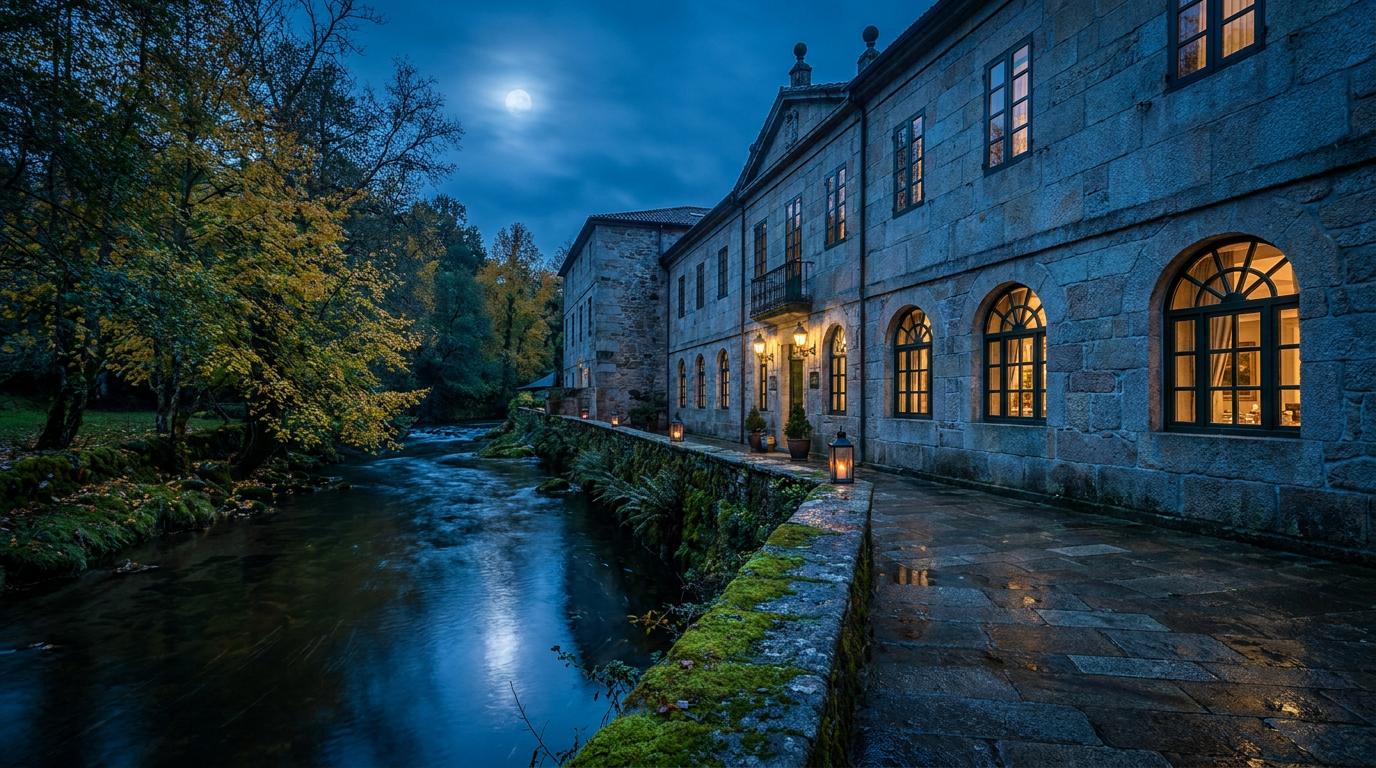
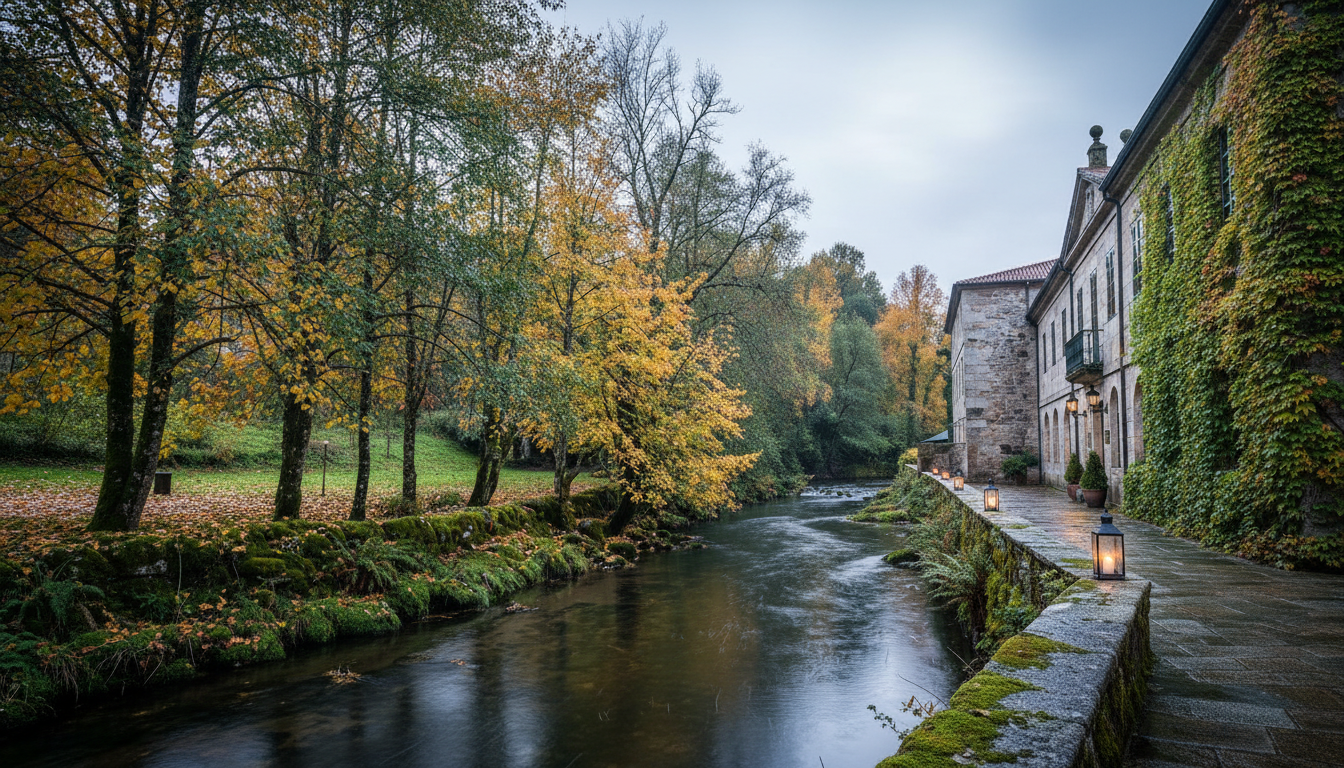
Tucked into a tranquil curve of the River Sar, just three miles south of the medieval centre of Santiago de Compostela, this eighteenth-century paper mill was erected in 1792 by French industrialist Juan Bautista de la Roche. The stone masonry here does not possess the swagger of Castilian limestone; it is the dense, moisture-darkened Galician granite that drinks in the Atlantic rain and wears its age in velvety patches of lichen and bronze moss. The Lorenzo family spent nearly two decades rescuing these four stone pavilions from ruin, finally opening the doors in 2009. The result is an escape of remarkable composure: a sanctuary that resists the relentless march of generic luxury in favor of an antique, deeply tactile quietude.
The vestibule sets the tone with austere confidence. Beneath thick chestnut beams salvaged from the original drying lofts, antique French commodes sit upon polished stone flagstones, warmed by hand-loomed wool carpets and the low, persistent murmur of the millrace. Check-in is conducted over a thimble of chilled albariño from the Rías Baixas, served without ceremony. There is no brass-and-marble fanfare here; the reception feels rather like entering the private library of an erudite friend who happens to possess seven acres of ancient bamboo groves, camellias, and rushing water.
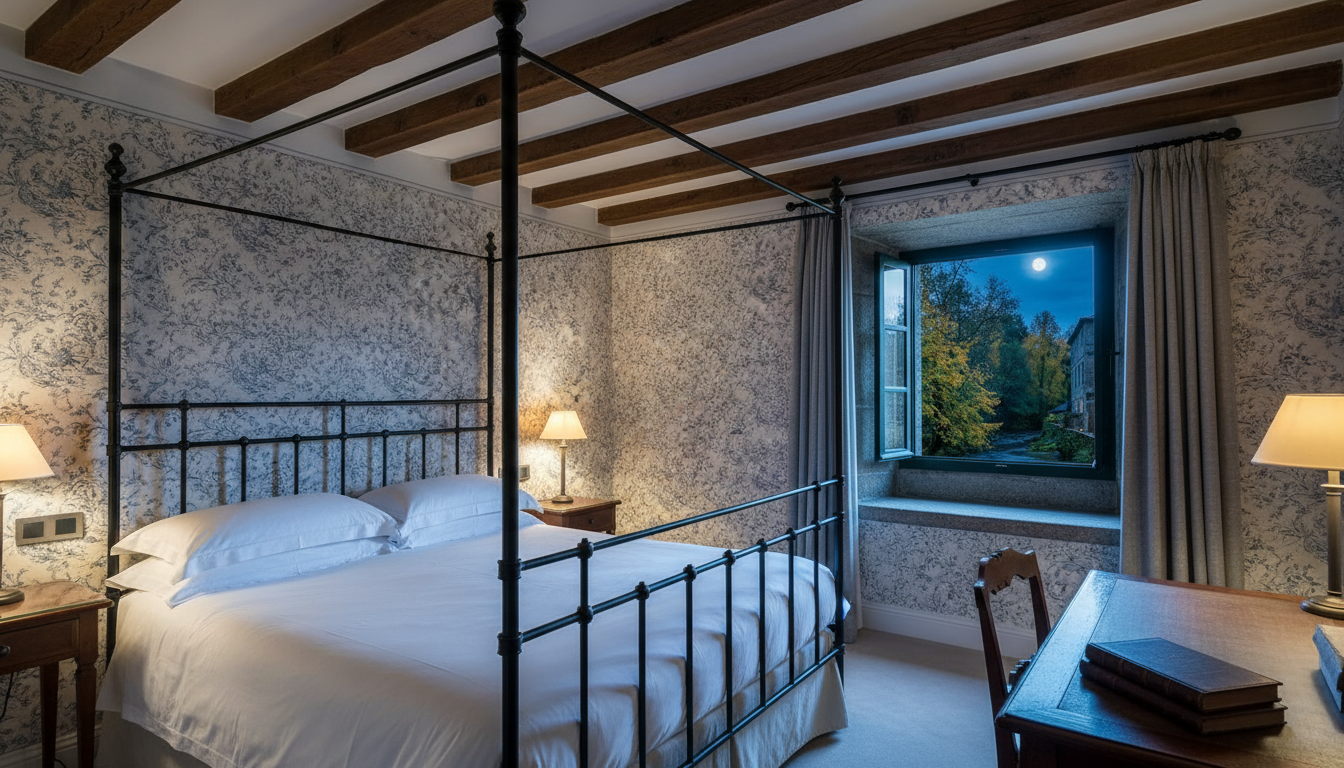
My quarters on the upper floor of the central mill pavilion looked out over the canopy of chestnuts and willow herb lining the Sar. In late October, Galician autumn reveals itself in the amber drift of leaves against granite window embrasures. The suite is appointed with an antiquarian’s discerning restraint: toile de Jouy wall coverings, mid-century club armchairs reupholstered in heavy taupe linen, and an iron four-poster bed draped in crisp Egyptian cotton that defies the humid coastal draft. The timber lintels are raw and crooked, their adze marks still crisp after two centuries.
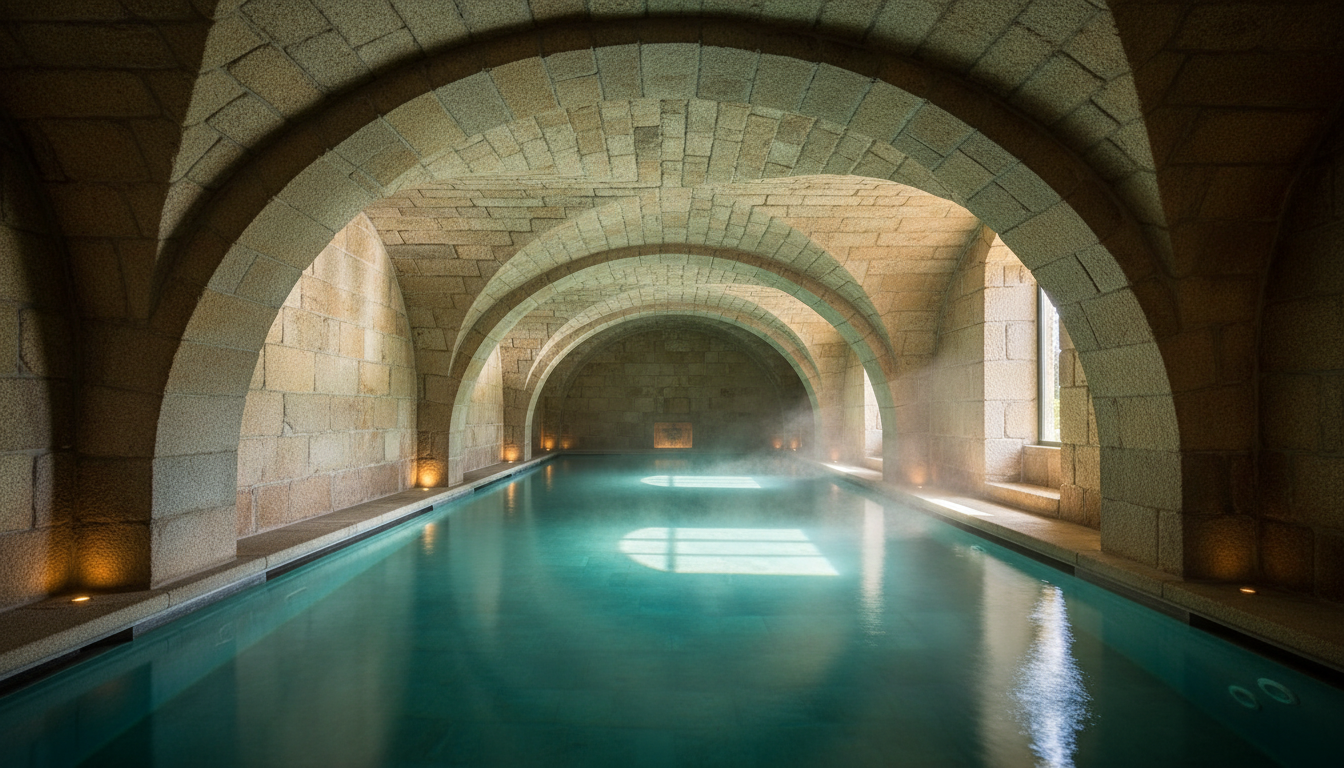
Downstairs, where the waterwheel once drove the heavy oak pestles to macerate linen rags, the hotel has installed its spa beneath high stone arches. The contrast between ancient masonry and contemporary hydrotherapy can easily veer into sterile pastiche, yet here the atmosphere remains subterranean and monastic. The flume still feeds the system; you hear the muffled thrum of the river through the foundation walls as you sit in the cedar sauna or float in the vitality pool. A solitary hour spent there in the late afternoon, following a bracing walk along the pilgrim trail through the oak woods of Vidán, proved restorative in the truest, non-clinical sense of the term.
As evening closed in, the gardens outside surrendered to a light, persistent orballo—that fine Galician drizzle that locals treat not as weather, but as atmosphere. The terrace lanterns flickered against the wet granite, casting long, oily reflections over the ancient canal that bifurcates the grounds.
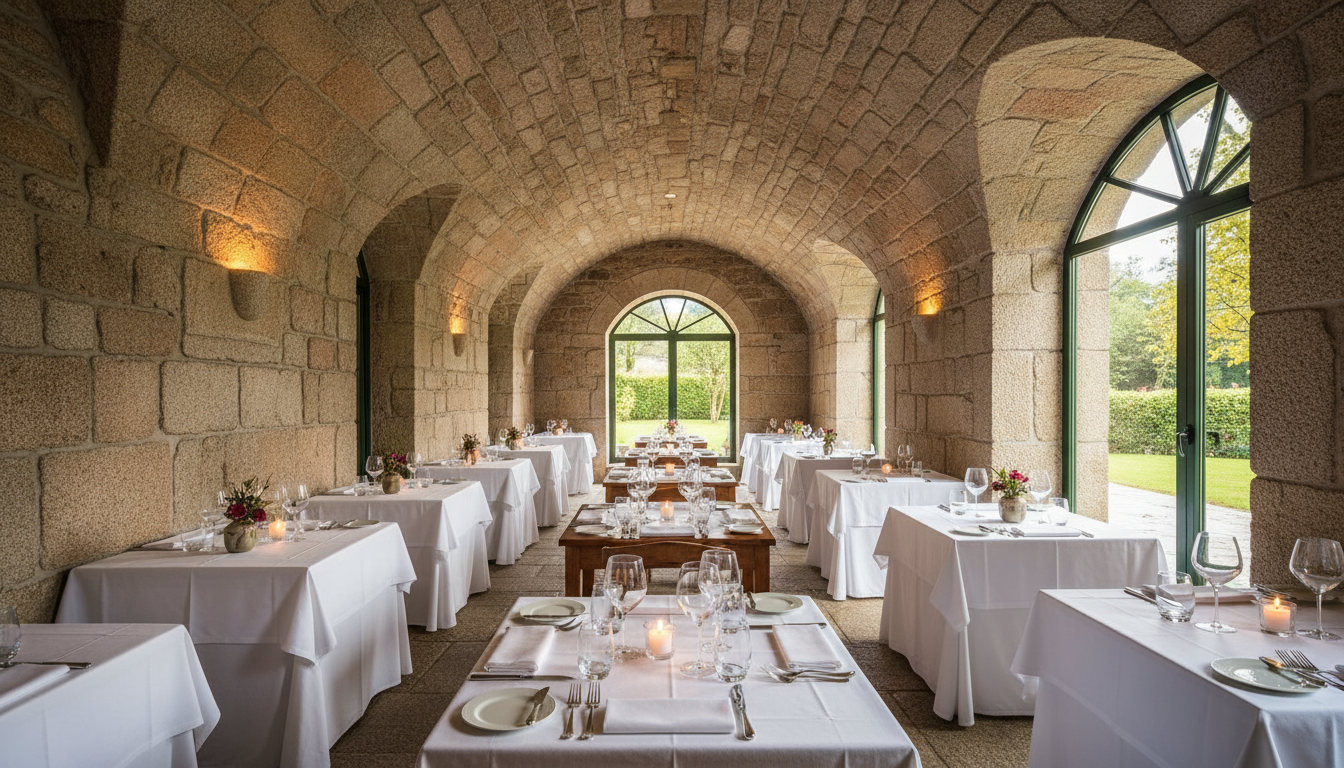
Dinner in the mill’s vaulted cellar, at Restaurante Filigrana, anchors the property firmly in its terroir. Under the culinary direction of chef Federico López Arcay, the dining room operates with an understated precision that suits the architecture. Galician seafood is rarely bettered by elaborate artifice, and the kitchen understands the virtue of restraint. A plate of goose barnacles—percebes pried from the wave-lashed cliffs of the Costa da Morte just hours before—arrived steaming on white linen, tasting purely of cold iodine and Atlantic surge. It was followed by line-caught hake, roasted over sweet embers and served with charred baby leeks and a velvety emulsion of its own gelatin, paired seamlessly with a saline, flinty 2021 Do Ferreiro Cepas Vellas.
Retiring through the dimly lit corridors, the only sound remaining was the constant, liquid rush of the Sar against the mill’s foundation stones. In an era where hospitality often mistakes loudness for consequence, A Quinta da Auga remains anchored in the quiet rhythms of stone, water, and timeless Galician hospitality.