A Matter of Sectors
The sector dial, a paragon of Art Deco restraint, is quietly enjoying a return to the fore. We examine its enduring appeal.
In the world of design, nothing is ever truly new. Instead, there exists a perpetual, quiet conversation between the decades. An idea is expressed, it lies fallow for a time, and then it is rediscovered and reinterpreted by a new generation. So it is with the sector dial, a design of such rationalist beauty that its return to the horological conversation feels less like a revival and more like a welcome continuation.
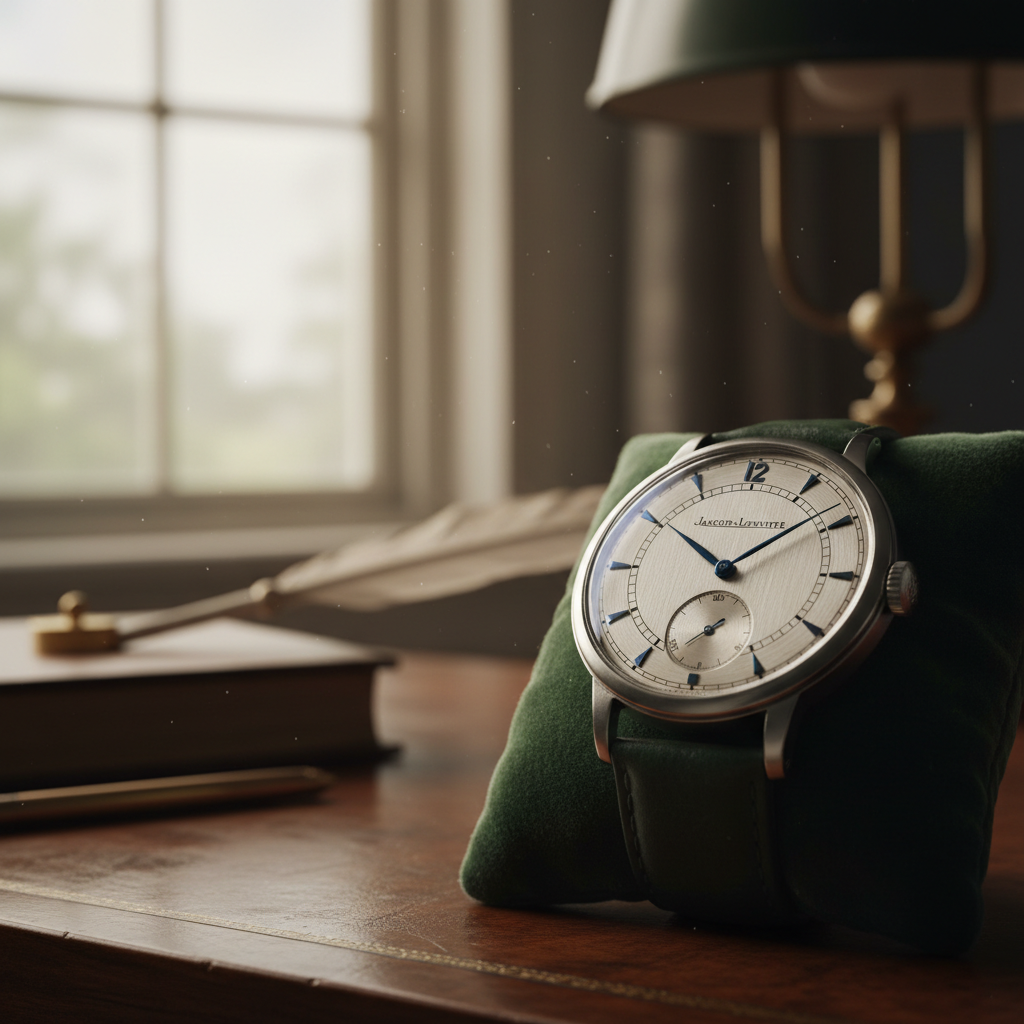
To the uninitiated, the sector dial—also known as a scientific or railroad dial—is a study in concentric circles and radial lines. Born in the 1930s, it is the antithesis of baroque ornamentation. Its purpose is legibility, its aesthetic born from the precise, almost architectural, division of time. It speaks to an era when a watch was, first and foremost, an instrument for measurement.
The Geometry of Legibility
The defining characteristic of a sector dial is its structure. A central chapter ring for the hours is connected to the outer minute track by fine, radiating lines, often at the cardinal points or every five minutes. This creates distinct ‘sectors,’ drawing the eye and allowing for an immediate, intuitive reading of the time. The design has its roots in both the functional dials of early 20th-century pocket watches used by military officers and engineers, and the clean, geometric principles of the Art Deco and Bauhaus movements.
There is an inherent intellectualism to the design. It is a dial for a man who appreciates structure, who finds beauty not in superfluous detail but in proportion and purpose. The typical two-tone finish—often a satin-brushed chapter ring against a matte inner dial—plays with light in a subtle, sophisticated dance. It is less a canvas for decoration and more a piece of precision instrumentation, as beautiful as a cartographer’s map or a surveyor’s transit.
From Instrument to Heirloom
The greatest names in watchmaking have all, at one time or another, offered their interpretation of the sector dial. Patek Philippe’s Calatrava reference 96 from the 1930s is perhaps the most famous historical example, a masterclass in balanced, utilitarian elegance. Early wristwatches from Jaeger-LeCoultre and Longines also made extensive use of the design, cementing its status as a hallmark of mid-century taste.
These were not watches designed to shout from across a room. They were personal objects, tools for navigating the day with quiet confidence. The sector dial flourished in an age of uncertainty, offering a small island of order and rationality on the wrist. It was a design born of function, which, as is so often the case, matured into a form of timeless beauty. It fell out of widespread favour with the changing tastes of the 60s and 70s, but like a well-made suit, its classic lines ensured it would never truly become obsolete.
The Modern Interpretation
In recent years, we have seen a noticeable return to classical proportions and designs across the watch industry, a palette cleanser after a period of exuberant, oversized statement pieces. The sector dial’s re-emergence is a leading indicator of this newfound maturity. Contemporary masters like Laurent Ferrier and independent titans such as F.P. Journe have offered sublime, modern versions, demonstrating that the design’s appeal is undiminished by the passage of time.
Even heritage brands are finding success by looking into their own archives. The Longines Heritage Classic, with its faithful recreation of a 1934 sector dial model, has been met with quiet acclaim from seasoned collectors. It proves that good design is a constant. The appeal of a sector dial today is the same as it was ninety years ago: it is clear, it is intelligent, and it is unapologetically refined. It is a choice for the man who knows that true style has no need to raise its voice.