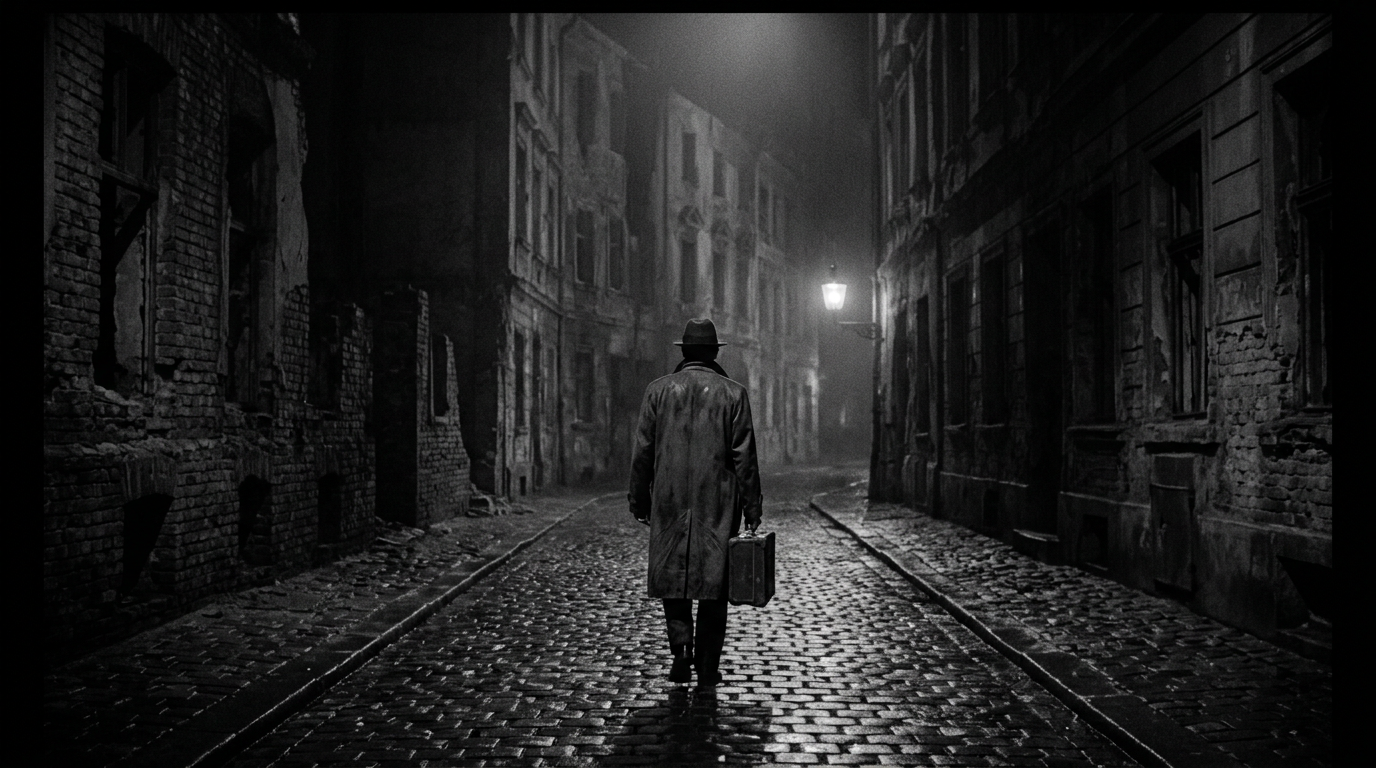
Original interpretation — not a still from the production
Carol Reed’s atmospheric masterpiece of post-war Vienna, where shadows conceal truths and allegiances are as fluid as the Danube.
The Continental Verdict
Essential
In the bombed-out labyrinth of Allied-occupied Vienna, Holly Martins, a pulpy American novelist, arrives to find his old school friend, Harry Lime, has met a suspicious end. Carol Reed’s masterful direction, shot through with Dutch angles and an oppressive chiaroscuro, transforms the ruined city into a character unto itself. Martins’s naive pursuit of the truth unravels a deeper, more sinister narrative of penicillin rackets and moral decay, set against the backdrop of a city struggling for its soul.
The film’s enduring power lies not just in its taut espionage plot, but in its profound sense of place and its unforgettable characters. Orson Welles, in a role that defined his charismatic villainy, delivers one of cinema’s most iconic entrances and a chilling philosophical monologue atop the Prater’s Riesenrad. Anton Karas’s solitary zither score, plucked with a mournful, haunting quality, weaves through the cobbled streets and sewers, providing an auditory signature as indelible as Robert Krasker’s stark cinematography. "The Third Man" remains a cornerstone of British noir, a sophisticated examination of friendship, betrayal, and the moral compromises exacted by desperate times.
Why Watch It
The Gentleman Factor
The gentleman takes from this a keen understanding of moral ambiguity and the price of integrity, even amidst crumbling grandeur. It is a cautionary tale of misguided loyalties and the seductive power of charisma.
Look Out For
- Austere post-war formal wear
- Trench coats
- Felt hats
The Locations
The bombed-out streets and grand, yet decaying, architecture of post-war Vienna; the Prater, its Riesenrad Ferris wheel; the intricate sewer system beneath the city.
More from the travel pages →The Cars
Period European civilian vehicles, police cars of the era.
More from motoring →The Wardrobe
While not overtly luxurious, the wardrobe of "The Third Man" reflects the somber austerity of post-war Europe. Joseph Cotten’s Holly Martins favours simple, slightly rumpled suits, often protected by a trench coat and fedora, characteristic of the American writer abroad. Alida Valli’s Anna Schmidt, by contrast, possesses a more refined if understated elegance, her tailored coats and dresses speaking to a European sophistication undimmed by scarcity. The military uniforms of the occupying powers are also prominent, providing a backdrop of martial order against the civilian chaos.
More on style →The Soundtrack
The haunting, iconic zither score by Anton Karas, a singular instrument defining the film’s unique atmosphere.
Into the music room →Watch Next
Where to Watch
Available for streaming on various platforms and via physical media. Check local listings for repertory screenings.
For the Collection
Also in Continental Cinema
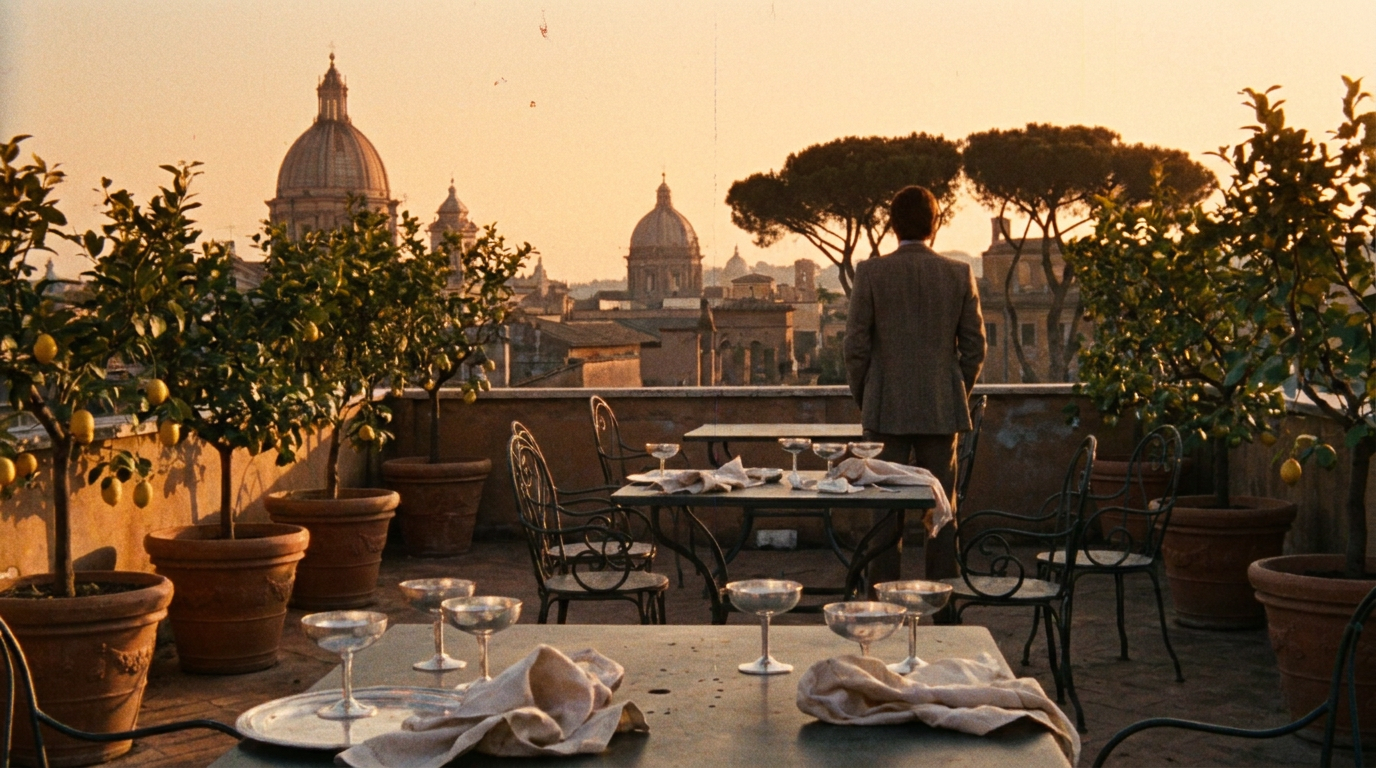
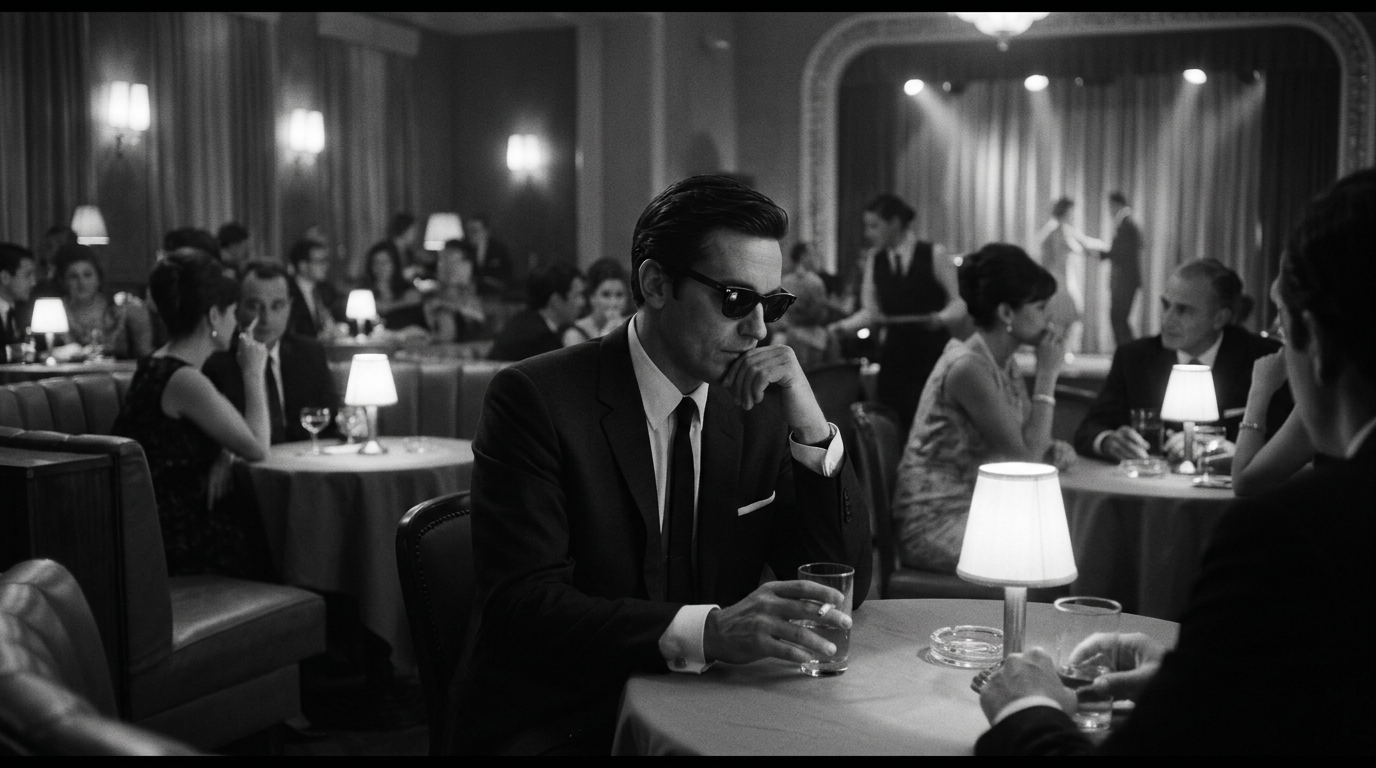
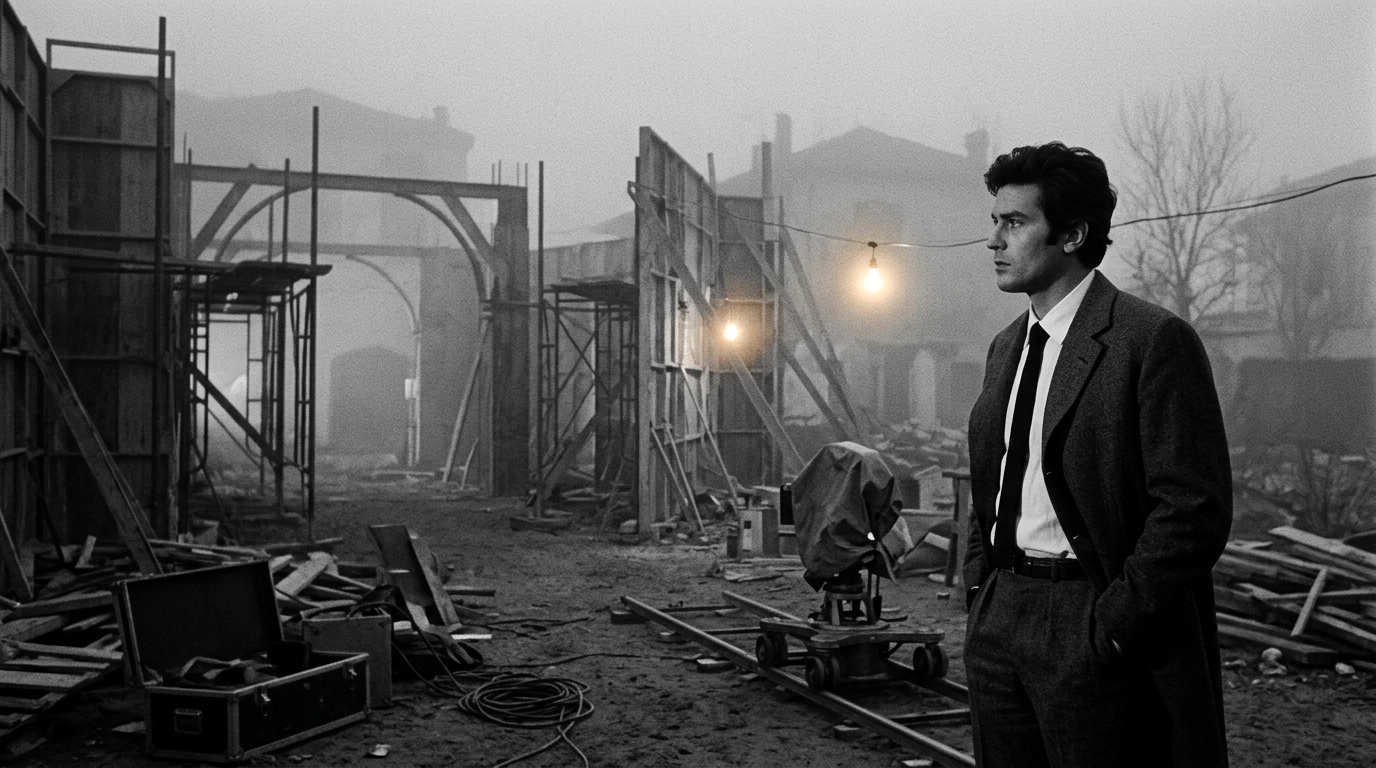
As an Amazon Associate I earn from qualifying purchases. Links cost you nothing and never influence what we recommend. Recommendations are honest and never paid for. Imagery is an original interpretation, not a still from the production.