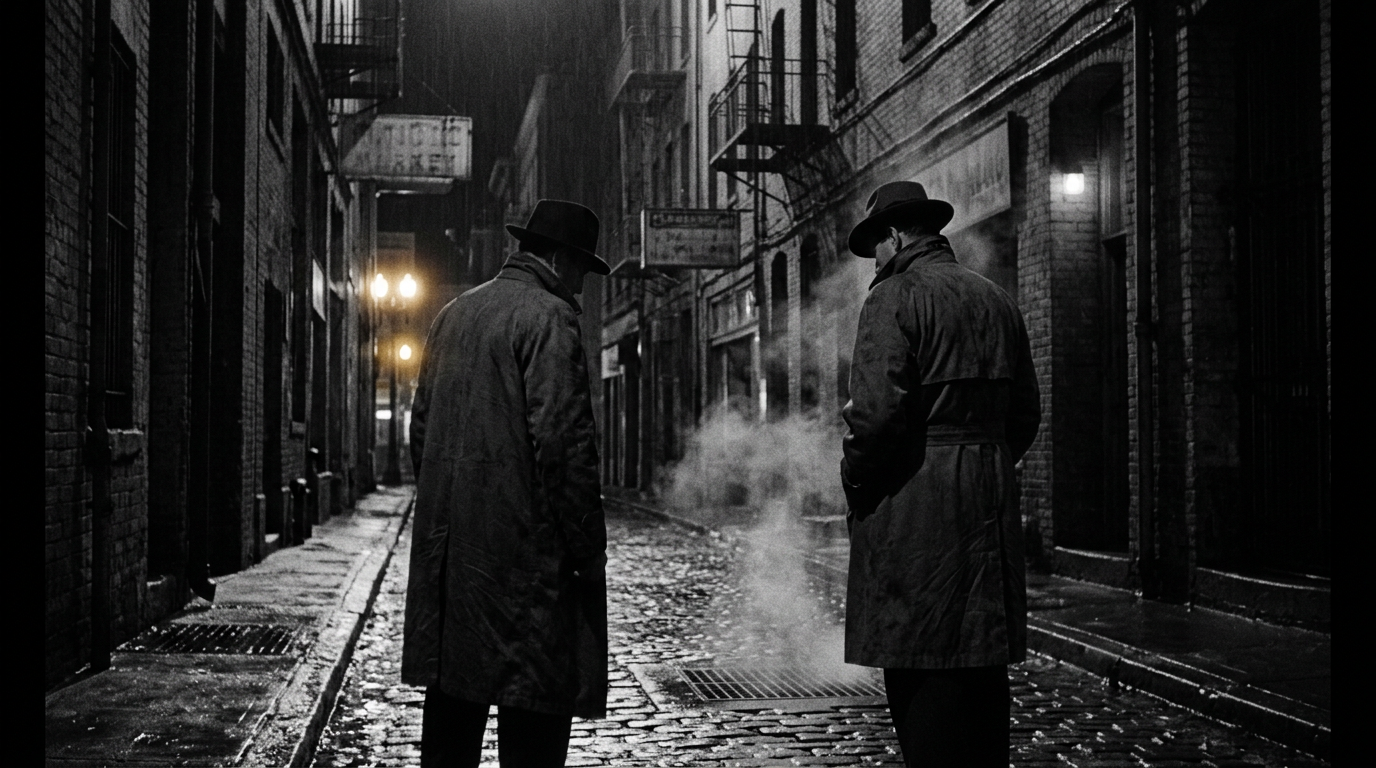
Original interpretation — not a still from the production
Bogart, a trench coat and no illusions at all.
The Continental Verdict
Essential
John Huston's directorial debut, The Maltese Falcon (1941), remains a seminal work of American cinema, a masterclass in the hard-boiled detective genre. Humphrey Bogart inhabits Sam Spade with a cynical charm that has rarely been matched, his trench coat a sartorial emblem of the film's rain-slicked moral ambiguity. The narrative, adapted from Dashiell Hammett's 1930 novel, unfolds with a precision that belies its intricate plot, involving a priceless, jewel-encrusted falcon statuette and a cast of characters whose loyalties shift like desert sands. Huston orchestrates this dark symphony with a lean economy, allowing the sharp dialogue and indelible performances to carry the considerable weight of the story.
The film transcends mere genre exercise, delving into themes of avarice, betrayal, and the corrosive nature of obsession. Spade, for all his gruff exterior, operates by a personal, albeit cynical, code, navigating a world where trust is a liability and beauty often a lure. The supporting cast—Mary Astor as the duplicitous Brigid O'Shaughnessy, Peter Lorre as the effete Joel Cairo, and Sydney Greenstreet as the Falstaffian Caspar Gutman—are all etched into the cinematic subconscious. Their collective performance creates an atmosphere thick with deceit and desperate ambition, solidifying The Maltese Falcon's place not just as a crime classic, but as a profound exploration of human fallibility.
Why Watch It
The Gentleman Factor
To appreciate the art of the cynical, yet honourable, operator; to understand the enduring appeal of a man who sees the world for what it is and navigates it on his own terms. It is also a masterclass in terse, impactful dialogue.
Look Out For
- Dark suits
- Trench coats
- Fedora hats
The Locations
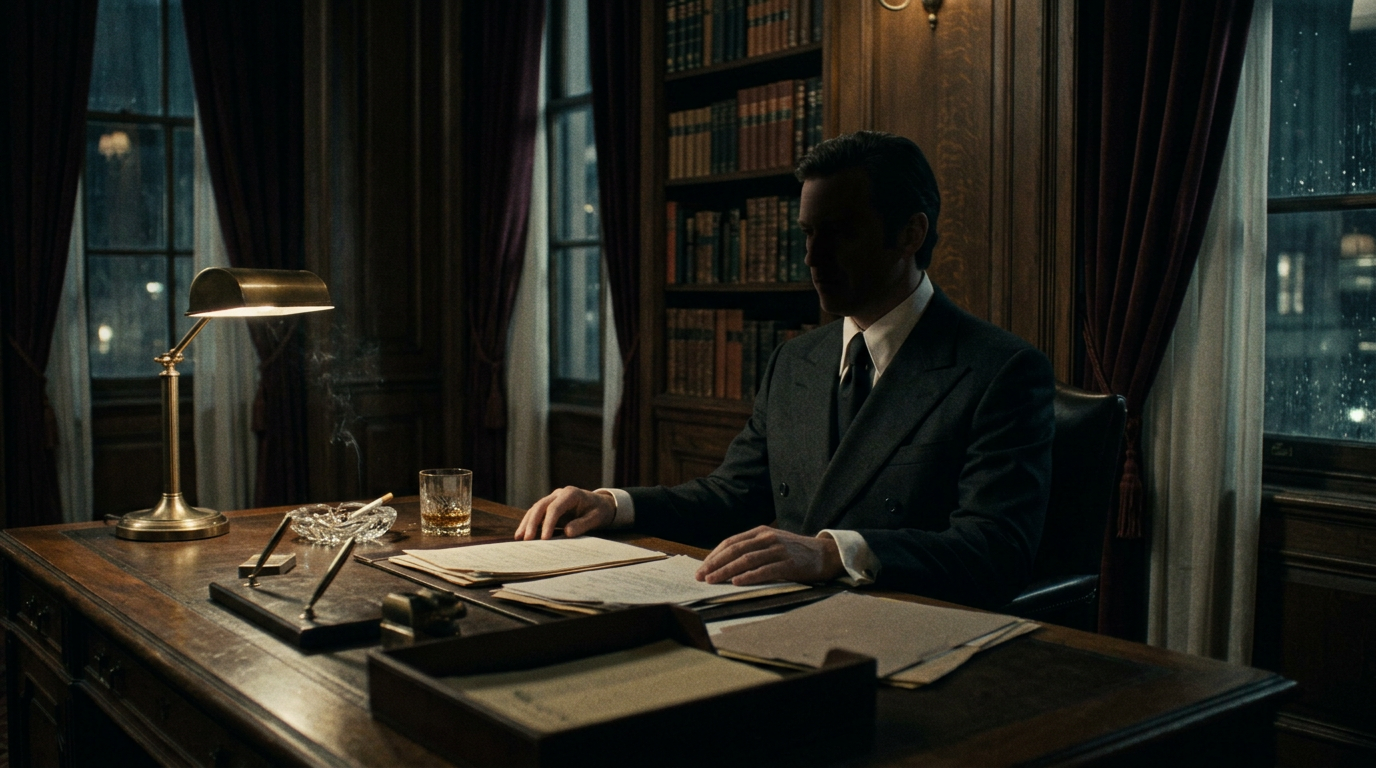
San Francisco, California, particularly the fog-shrouded streets and the dimly lit offices of private investigators.
More from the travel pages →The Cars
Period sedans, typical of 1940s American cities.
More from motoring →The Wardrobe
Orry-Kelly's costume design for Mary Astor is particularly noteworthy, shifting between vulnerable femininity and calculated allure. For Bogart, it was the iconic trench coat and fedora, which became synonymous with the detective genre.
More on style →The Soundtrack
Adolph Deutsch's score underscores the film's suspense and melancholic atmosphere without ever becoming intrusive.
Into the music room →Watch Next
Where to Watch
Available on DVD, Blu-ray, and various streaming platforms, including HBO Max and Amazon Prime Video.
For the Collection
Also in The Criminal Gentleman
As an Amazon Associate I earn from qualifying purchases. Links cost you nothing and never influence what we recommend. Recommendations are honest and never paid for. Imagery is an original interpretation, not a still from the production.