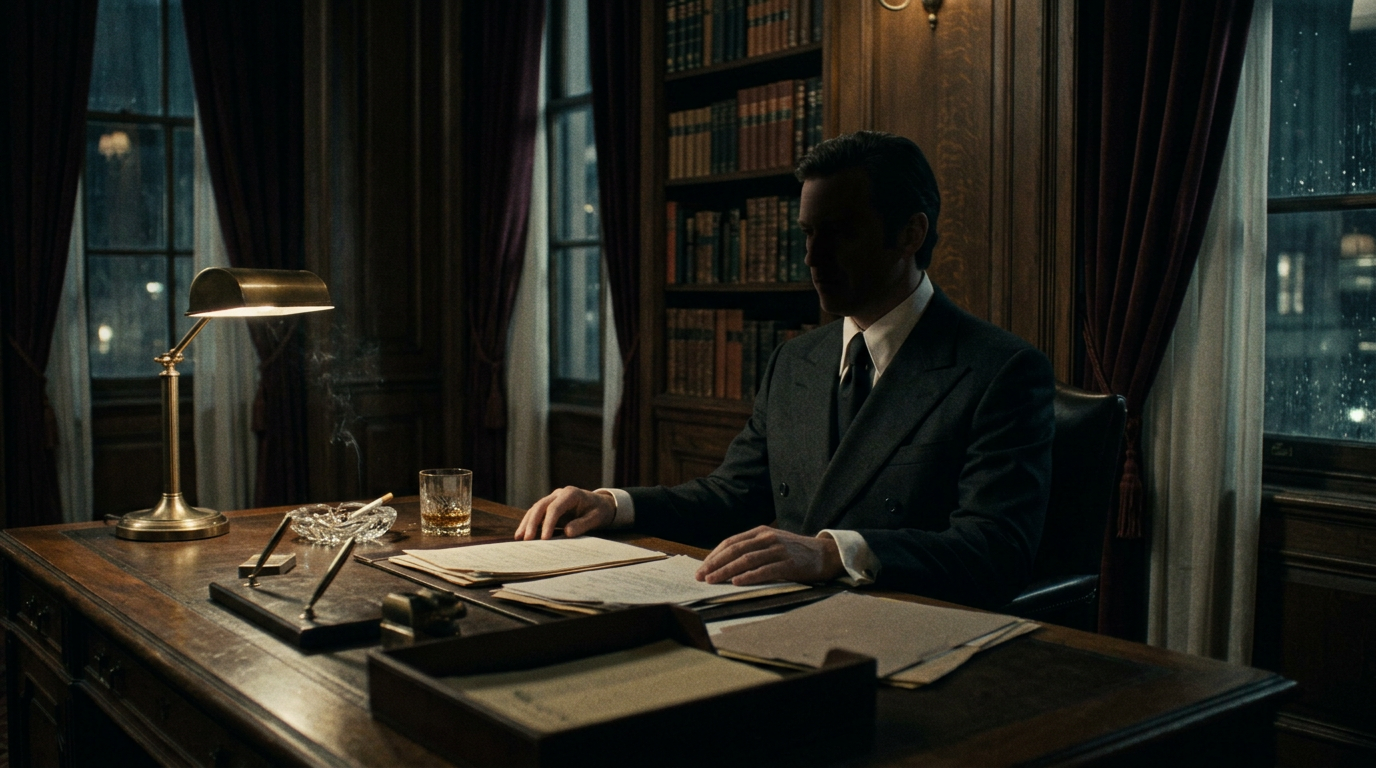
Original interpretation — not a still from the production
A masterclass in parallel narratives, offering a profound exploration of legacy, power, and the corrosive nature of ambition across generations of the Corleone family.
The Continental Verdict
Essential
Francis Ford Coppola's 1974 epic, "The Godfather Part II", accomplishes the near-impossible feat of surpassing its celebrated predecessor, not through sheer spectacle but through intricate storytelling and character development. The film masterfully interweaves two distinct timelines: the early 20th-century rise of Vito Corleone from Sicilian immigrant to New York crime boss, and the late 1950s/early 1960s struggles of his son, Michael, to legitimize the family business while navigating betrayal and moral decay. This dual narrative structure, rather than fragmenting the story, enhances it, providing a rich tapestry of cause and effect, illustrating how the sins of the father inevitably cascade upon the son.
Al Pacino delivers a chillingly nuanced performance as Michael, whose calculated detachment masks a soul increasingly burdened by the consequences of his ruthlessness. Robert De Niro, as the young Vito Corleone, provides an equally compelling portrayal, imbuing the nascent patriarch with a quiet dignity and strategic brilliance that belies his violent ascent. The film is a sombre meditation on the American dream, re-imagined through the lens of organised crime, and stands as a towering achievement in cinematic artistry, demanding repeated viewing to fully appreciate its layers of psychological complexity and historical sweep.
Why Watch It
The Gentleman Factor
The intricate dance of loyalty and betrayal, the burden of leadership, and the profound, often tragic, impact of one's choices on subsequent generations.
Look Out For
- Dark suits, fedoras, and overcoats for the 1950s; period-appropriate working-class attire for early 20th-century New York; crisp, tailored suits for Havana.
- Richly appointed Sicilian villas and American mansions.
- The subdued, often dimly lit, interiors reflecting the moral ambiguity of its characters.
The Locations
New York City, Lake Tahoe, Havana, Sicily
More from the travel pages →The Cars
A discernible presence of period-appropriate vehicles, though not central to the plot, including various American sedans from the 1950s and 60s, and earlier models in the flashback sequences.
More from motoring →The Wardrobe
The wardrobe, meticulously overseen by Anna Hill Johnstone and Theadora Van Runkle, ranges from the simple, functional clothing of young Vito's early life to the sharply tailored, increasingly formal attire of the Corleone family as their power consolidates. Michael's suits are impeccably cut, reflecting his desire for legitimacy, while Kay's evolving wardrobe subtly charts her disillusionment.
More on style →The Soundtrack
Nino Rota's iconic themes, augmented by Carmine Coppola's contributions, lend a melancholic, operatic grandeur to the proceedings, underscoring both the cultural heritage and the tragic undertones of the Corleone saga.
Into the music room →Watch Next
Where to Watch
Available for streaming and purchase on major digital platforms; frequently broadcast on classic film channels.
For the Collection
Also in The Criminal Gentleman
As an Amazon Associate I earn from qualifying purchases. Links cost you nothing and never influence what we recommend. Recommendations are honest and never paid for. Imagery is an original interpretation, not a still from the production.