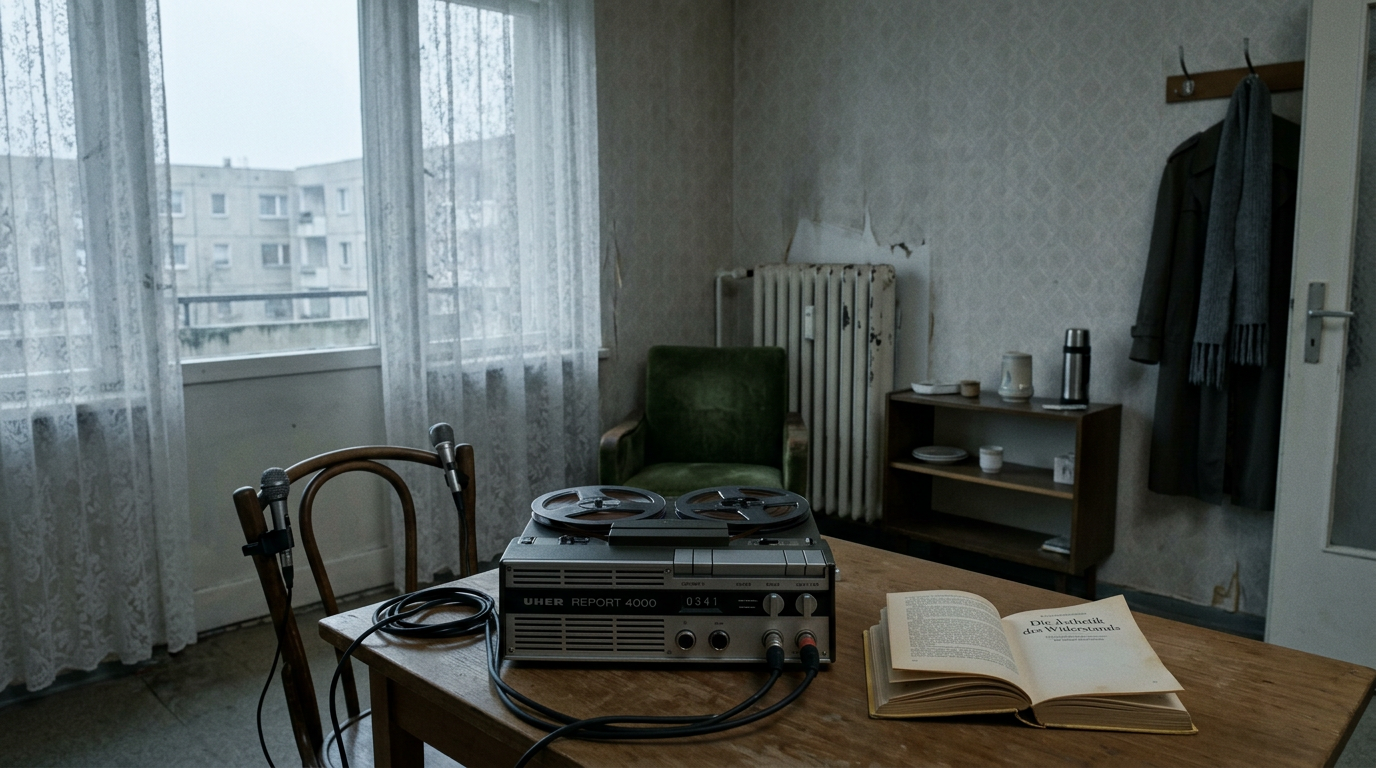
Original interpretation — not a still from the production
Stasi surveillance in East Berlin, and the quiet arrival of a conscience.
The Continental Verdict
Essential
Florian Henckel von Donnersmarck’s debut feature, "The Lives of Others," is a masterclass in tension and moral complexity. Set in 1984 East Berlin, the film meticulously details the Stasi’s pervasive surveillance state, focusing on Captain Gerd Wiesler, a dedicated but increasingly disillusioned agent. Wiesler is assigned to monitor Georg Dreyman, a successful playwright, and his actress partner, Christa-Maria Sieland. What begins as a routine operation, spurred by a jealous minister’s desire for Sieland, gradually transforms into a profound study of human connection and the quiet rebellion of individual spirit.
The film’s brilliance lies in its understated narrative and the superb performances that anchor it. Ulrich Mühe, in a career-defining role, portrays Wiesler with a chilling, almost bureaucratic detachment that slowly gives way to a poignant empathy. His transformation, born from his voyeuristic immersion in the lives of others, is both subtle and deeply moving. "The Lives of Others" is not merely a historical drama; it is a meditation on the power of art, the fragility of freedom, and the moral choices that define us, even within the most oppressive systems. It remains a poignant reminder of the human cost of totalitarianism and the enduring spark of humanity.
Why Watch It
The Gentleman Factor
The gentleman takes from this a profound lesson in moral courage and the enduring power of empathy, even in the most cynical environments. It is a testament to the quiet strength required to stand against the tide.
Look Out For
- Cold War aesthetics
- East Berlin apartment interiors
- Stasi headquarters
The Locations
East Berlin, particularly the Stasi headquarters and various apartments, offering a stark portrayal of life behind the Iron Curtain.
More from the travel pages →The Cars
Period-correct East German and Soviet-bloc vehicles, such as the Trabant and Wartburg.
More from motoring →The Wardrobe
The wardrobe, overseen by Gabriele Binder, accurately reflects the subdued, utilitarian style of East Germany in the 1980s: muted tones, practical fabrics, and a distinct lack of ostentation, reflecting the austerity of the era and the characters' differing social positions.
More on style →The Soundtrack
Gabriel Yared's poignant score, particularly "Sonate vom Guten Menschen," composed by Stéphane Moucha, provides a melancholic and reflective counterpoint to the film's tension, underscoring moments of beauty and sorrow.
Into the music room →Watch Next
Where to Watch
Available on most major streaming platforms for rental or purchase.
For the Collection
Also in Espionage
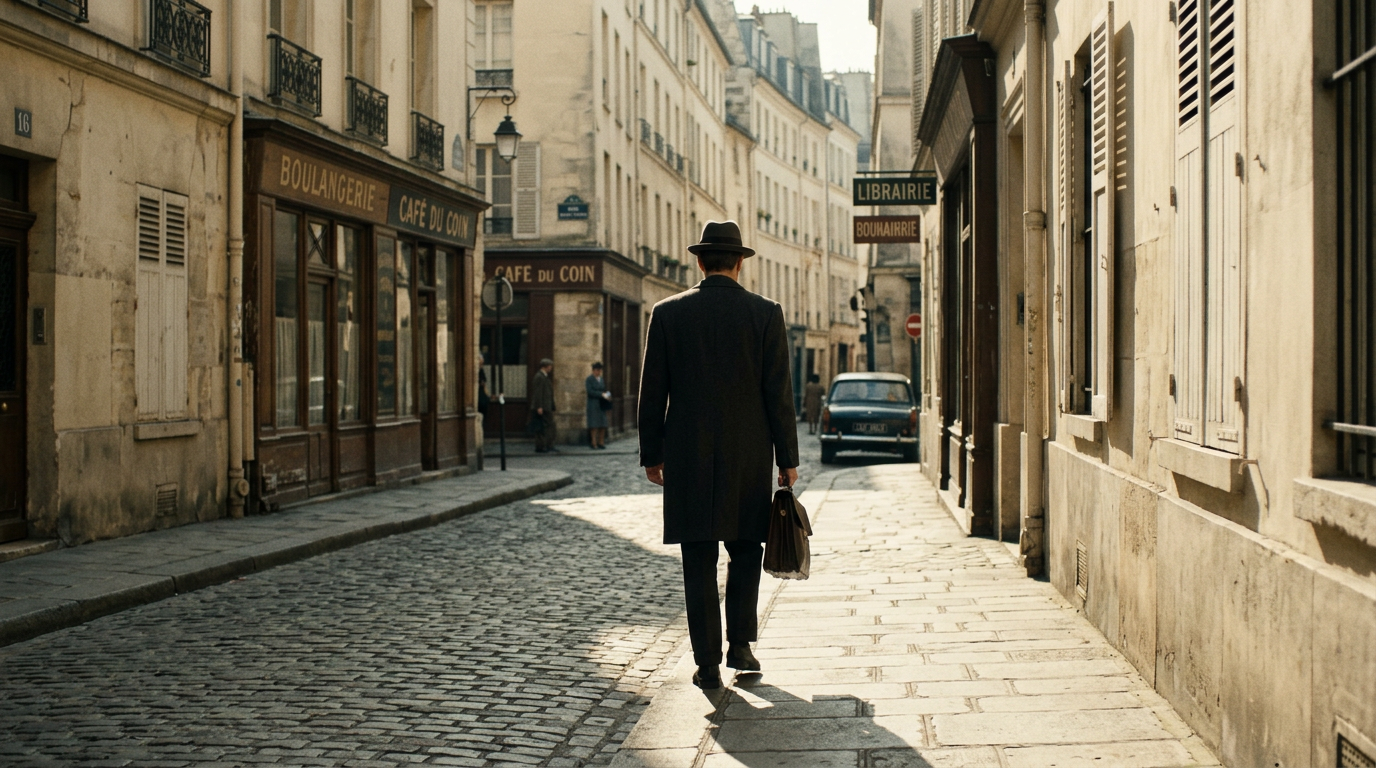
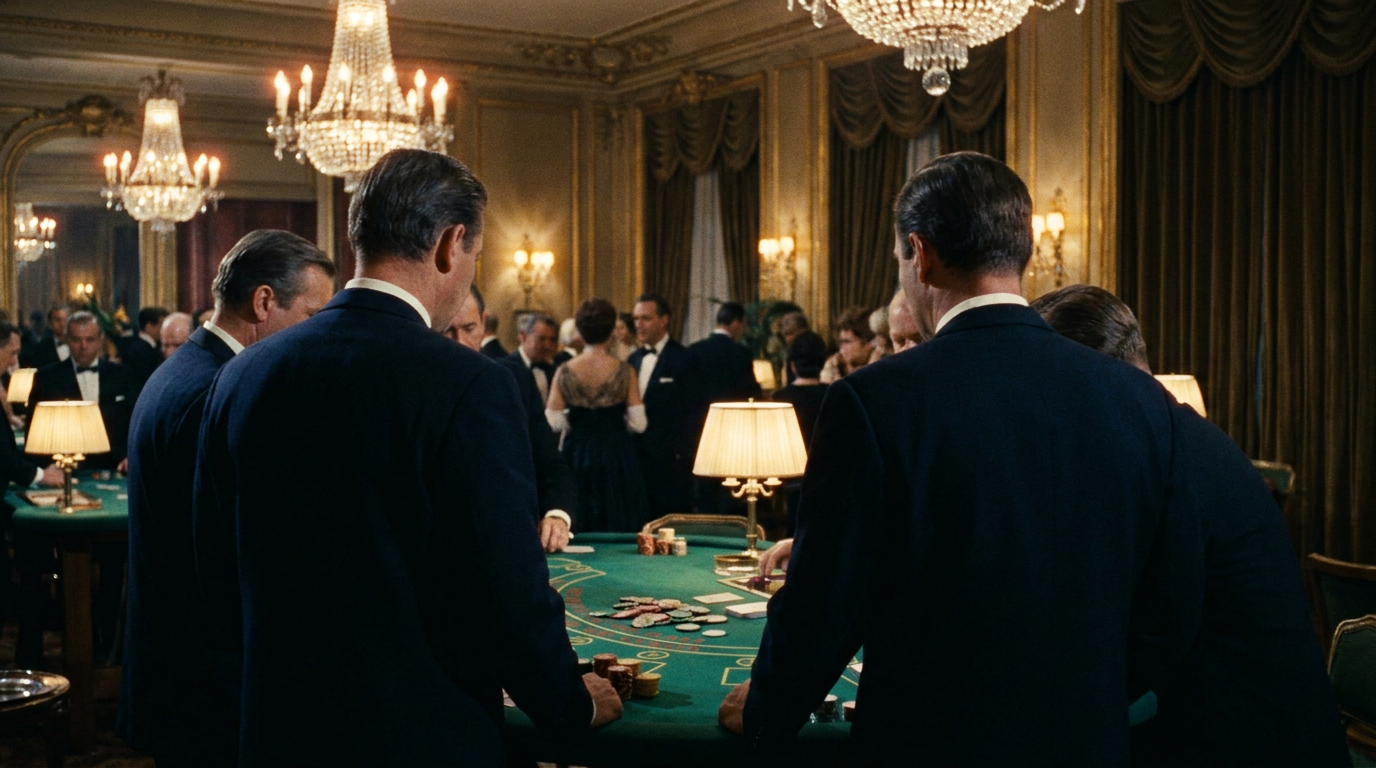

As an Amazon Associate I earn from qualifying purchases. Links cost you nothing and never influence what we recommend. Recommendations are honest and never paid for. Imagery is an original interpretation, not a still from the production.