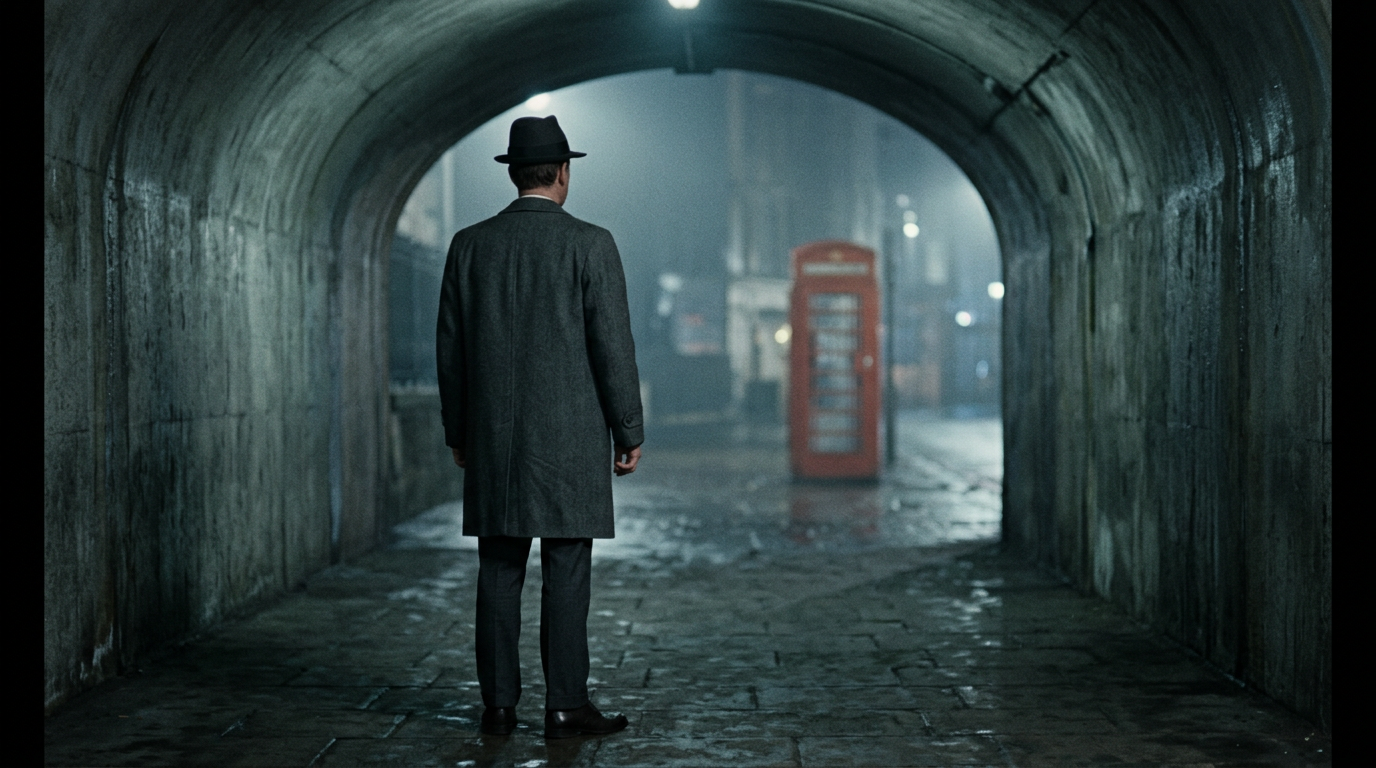
Original interpretation — not a still from the production
Michael Caine’s Harry Palmer, a working-class spy for the Ministry of Defence, navigates a labyrinthine plot of brain drain and double-dealing in a decidedly unglamorous Cold War London.
The Continental Verdict
Essential
Sidney J. Furie’s "The Ipcress File" (1965) stands as a stark, cerebral counterpoint to the more flamboyant espionage narratives of its era. Introducing Michael Caine as Harry Palmer, a bespectacled, culinary-inclined intelligence officer, the film deliberately eschews the glamour often associated with the genre, grounding its spycraft in the grimy reality of 1960s London. Palmer is not a suave playboy but an ex-military sergeant, conscripted into the drab, bureaucratic world of intelligence, where loyalty is fluid and threats are often unseen. The narrative unfolds with a disorienting, almost Kafkaesque quality, focusing on the abduction of British scientists and the unsettling implications of a new form of brainwashing.
What elevates "The Ipcress File" beyond a mere spy thriller is its meticulous attention to atmosphere and character. Furie’s direction, with its innovative use of Dutch angles and deep focus, creates a pervasive sense of unease and paranoia, mirroring Palmer’s own growing disorientation. The film’s aesthetic – from its brutalist architecture to its restrained colour palette – paints a picture of a Cold War where danger lurks in the mundane rather than the exotic. Caine’s portrayal of Palmer is understated yet utterly compelling, a man whose cynical wit and resourcefulness are born of necessity rather than innate heroism. He represents a new kind of screen gentleman: intellectual, self-reliant, and effortlessly stylish within the constraints of his civil service salary, making his pursuit of truth all the more resonant.
Why Watch It
The Gentleman Factor
To appreciate the art of understated competence, the subtle rebellion against bureaucracy, and the enduring appeal of quiet confidence in the face of chaos. One learns that style is not about opulence, but about presentation, even with limited means.
Look Out For
- Working-class grit with sartorial flair.
- British Modernism.
- Oversized spectacles and impeccably tailored suits.
The Locations
London, England; Salisbury Plain, Wiltshire, England; Buckinghamshire, England; Pinewood Studios, Buckinghamshire, England.
More from the travel pages →The Cars
Several period British saloon cars are seen, including a black Ford Consul Mk2 and a blue Austin Cambridge. Palmer occasionally drives a dark blue Ford Anglia 105E. These are primarily functional rather than aspirational.
More from motoring →The Wardrobe
Michael Caine's wardrobe, designed by Charles Hett Cole, is particularly noteworthy. It features grey and navy three-piece suits with slim lapels, often paired with button-down shirts, narrow ties, and thick-rimmed spectacles. Trench coats and gabardine macs are also prominent, lending him an air of intellectual anonymity rather than overt glamour. The overall aesthetic is one of understated, attainable sophistication.
More on style →The Soundtrack
John Barry's score is a distinct departure from his more famous Bond themes, favouring a more dissonant and unsettling tone. Its use of the cimbalom and unconventional orchestrations creates a mood of eerie mystery and tension, perfectly complementing the film's gritty realism.
Into the music room →Watch Next
Where to Watch
Available on Blu-ray, DVD, and various streaming platforms for rental or purchase.
For the Collection
Also in Espionage
As an Amazon Associate I earn from qualifying purchases. Links cost you nothing and never influence what we recommend. Recommendations are honest and never paid for. Imagery is an original interpretation, not a still from the production.