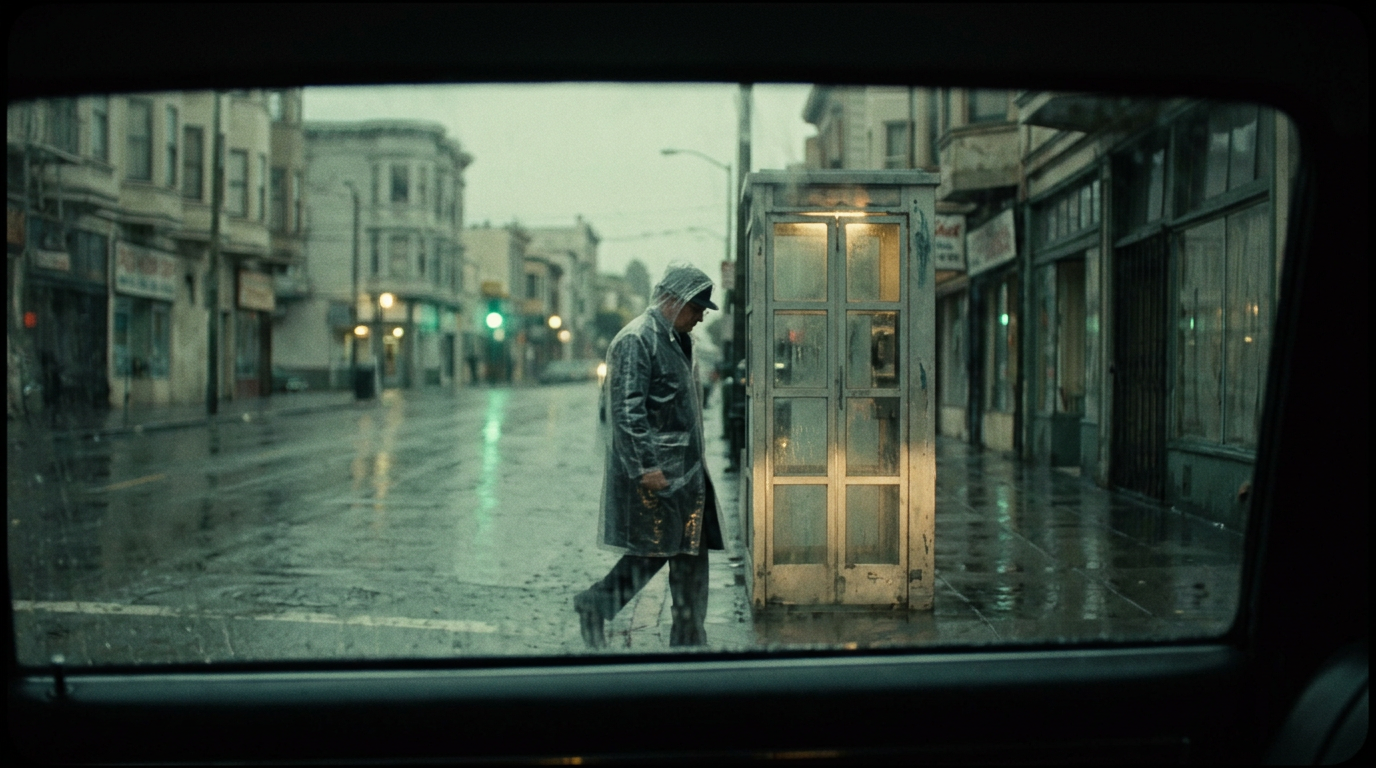
Original interpretation — not a still from the production
A master class in surveillance and paranoia, Francis Ford Coppola's "The Conversation" remains as unsettling and relevant today as it was upon its release.
The Continental Verdict
Essential
In the annals of 1970s American cinema, Francis Ford Coppola's "The Conversation" stands as a profoundly disquieting treatise on privacy, technology, and the corrosive nature of guilt. Released in 1974, just months before "The Godfather Part II", it presents a meticulous portrait of Harry Caul (Gene Hackman), a preeminent surveillance expert whose professional detachment begins to fray after he records a seemingly innocuous conversation. The film eschews overt action for psychological tension, building an atmosphere of creeping dread as Caul attempts to decipher the meaning of the whispered words, leading him down a rabbit hole of moral quandaries and profound isolation. Coppola, drawing inspiration from Michelangelo Antonioni's "Blowup" and the Watergate scandal unfolding concurrently, crafts a narrative that is both a taut thriller and a chilling character study, forcing the audience to confront the ethical ambiguities of observation and the devastating cost of a compromised conscience.
Gene Hackman delivers one of his career-defining performances as Caul, a man so obsessed with his own privacy that he lives a life devoid of genuine connection, yet profits from the invasion of others'. His quiet intensity and internal turmoil are palpable, making his descent into paranoia deeply compelling. The film's brilliance lies in its meticulous attention to detail, from the analogue surveillance equipment to the claustrophobic editing by Walter Murch and Richard Chew, which mirrors Caul's unraveling mind. It is a work that rewards repeat viewings, each time revealing new layers of its intricate psychological tapestry. "The Conversation" is not merely a period piece; its themes of privacy, the power of information, and the surveillance state resonate with chilling prescience in our contemporary digital age, cementing its status as an enduring masterpiece.
Why Watch It
The Gentleman Factor
A profound meditation on ethical responsibility, the burden of knowledge, and the ultimate futility of true privacy in a world constantly listening. It is a stark reminder that even the most detached professional cannot escape the consequences of their actions.
Look Out For
- Understated
- Gritty
- Authentic 1970s
The Locations
San Francisco, with key scenes at Union Square and the Jack Tar Hotel.
More from the travel pages →The Cars
Predominantly ordinary 1970s American sedans, reflecting the mundane reality of urban life.
More from motoring →The Wardrobe
Costume designer Aggie Guerard Rodgers ensured authenticity with Harry Caul's ubiquitous clear plastic raincoat, worn over simple, unassuming attire, epitomising his desire for invisibility and protection.
More on style →The Soundtrack
An understated, jazz-inflected score by David Shire, featuring prominent piano motifs that contribute significantly to the film's melancholic and paranoid atmosphere.
Into the music room →Watch Next
Where to Watch
Available on Blu-ray, DVD, and streaming platforms.
For the Collection
Also in Espionage
As an Amazon Associate I earn from qualifying purchases. Links cost you nothing and never influence what we recommend. Recommendations are honest and never paid for. Imagery is an original interpretation, not a still from the production.