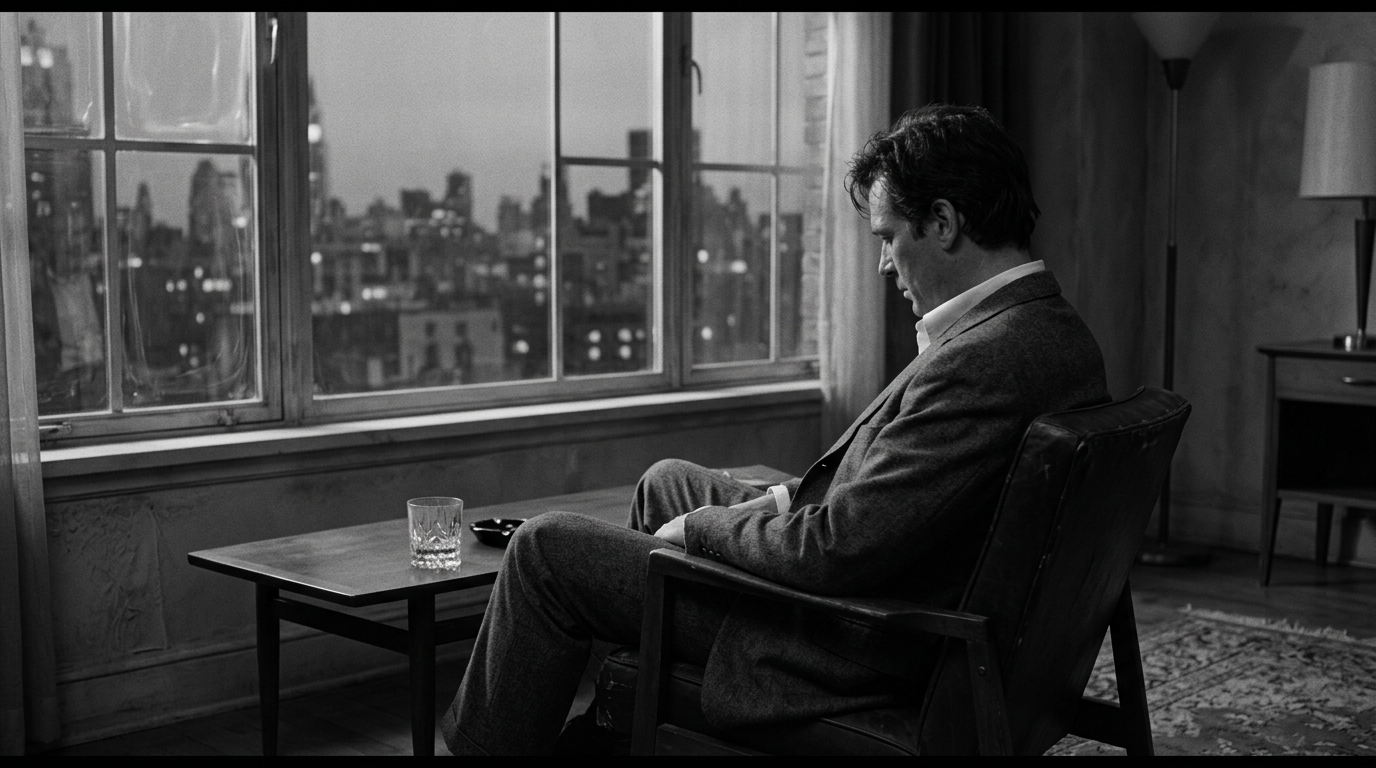
Original interpretation — not a still from the production
Billy Wilder's 1960 masterpiece, a poignant and sharply observed commentary on corporate life and moral compromise, remains as relevant today as it was six decades ago.
The Continental Verdict
Essential
Jack Lemmon delivers one of his most indelible performances as C.C. "Bud" Baxter, an ambitious but ultimately decent insurance clerk who, in a Faustian bargain, lends his Upper West Side apartment to his superiors for their extramarital liaisons. Wilder, ever the master of the cynical yet humanistic narrative, dissects the soulless machinations of corporate culture and the loneliness it engenders. The film navigates the precarious balance between dark comedy and profound melancholy, forcing the audience to confront the quiet desperation of its characters, all against the backdrop of a bustling yet indifferent New York City. It is a nuanced portrayal of a man attempting to climb the ladder, only to find himself entangled in a moral quagmire, a common predicament for many in the pursuit of advancement.
The screenplay, penned by Wilder and I.A.L. Diamond, is a clinic in economy and wit, with dialogue that sparkles with a bittersweet intelligence. Shirley MacLaine, as the elevator operator Fran Kubelik, provides a heart-wrenching counterpoint to Lemmon's genial everyman, their connection forming the emotional core of the narrative. Fred MacMurray's portrayal of the callous executive Mr. Sheldrake is a chilling study in casual amorality. The film's black-and-white cinematography, by Joseph LaShelle, perfectly captures the sterile grandeur of the office and the intimate, often solitary, moments in Baxter's apartment, creating a visual language that underscores the emotional landscape. It is a work that manages to be both deeply specific to its era and remarkably universal in its themes of integrity, ambition, and the search for connection.
Why Watch It
The Gentleman Factor
A reminder that professional ambition must always be tempered with personal integrity; a gentleman understands where to draw the line between advancement and self-respect. One is reminded that true success is not merely climbing a corporate ladder, but maintaining one's moral compass.
Look Out For
- Mid-century corporate architecture
- Urban loneliness
- Festive melancholy
The Locations
The bustling corporate towers of New York City; the intimate, often melancholic, interiors of Bud Baxter's Upper West Side apartment; Central Park.
More from the travel pages →The Cars
A 1959 Chevrolet Impala convertible is prominently featured.
More from motoring →The Wardrobe
Costumes by Edith Head. The drab, slightly ill-fitting suits of the corporate drones, contrasting with the sharper attire of the executives. Fran Kubelik's practical yet elegant uniforms and dresses, reflecting her quiet dignity. The sartorial expressions of corporate hierarchy are subtly but effectively conveyed.
More on style →The Soundtrack
Adolph Deutsch's score, featuring "Lonely Room" and the iconic "Jealous Lover" (also known as "Theme from The Apartment") by Charles Williams, perfectly encapsulates the film's poignant and sophisticated mood.
Into the music room →Watch Next
Where to Watch
Available for streaming on various platforms and on Criterion Collection Blu-ray.
For the Collection
Also in Power & Money

As an Amazon Associate I earn from qualifying purchases. Links cost you nothing and never influence what we recommend. Recommendations are honest and never paid for. Imagery is an original interpretation, not a still from the production.