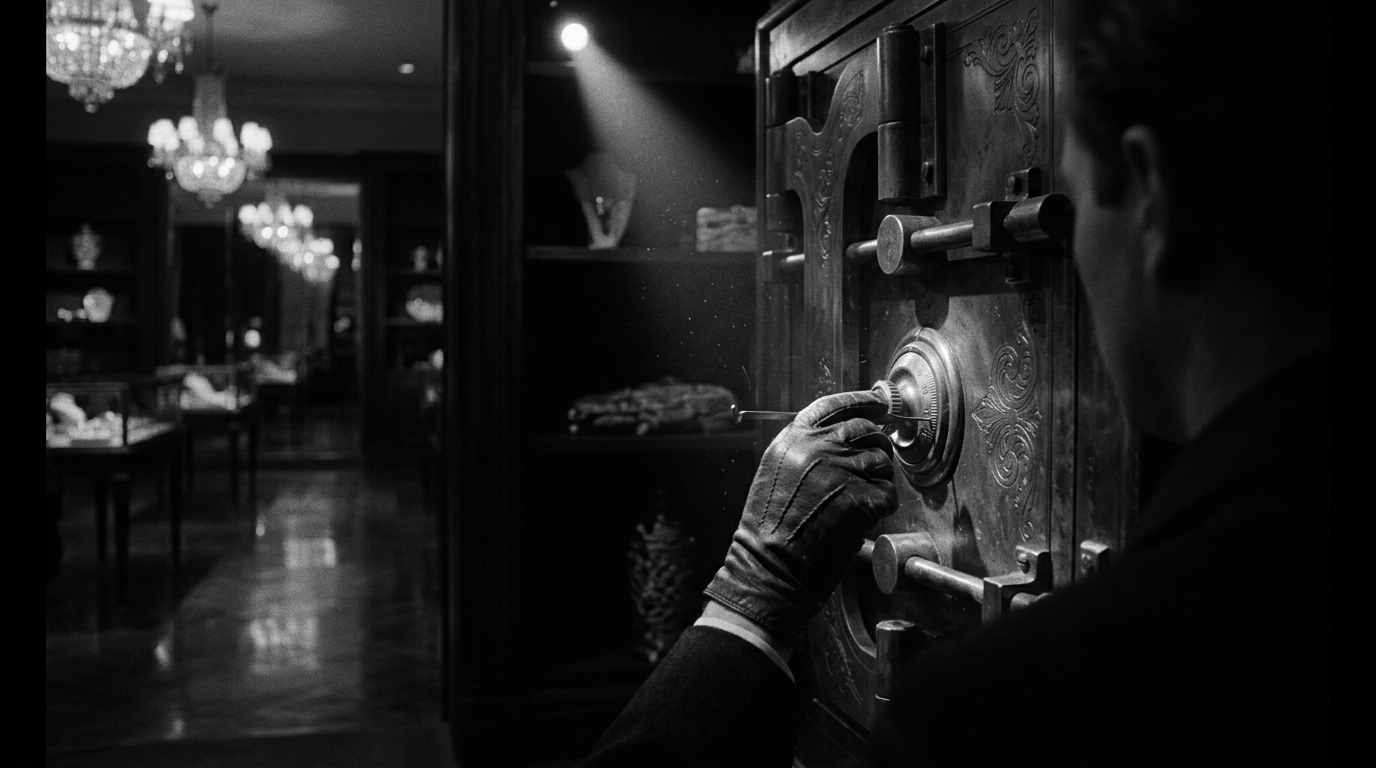
Original interpretation — not a still from the production
Jules Dassin’s seminal 1955 caper establishes the template for all cinematic heists, a meticulous ballet of criminal endeavour underscored by an enduring sense of melancholy.
The Continental Verdict
Essential
Jules Dassin’s 1955 masterpiece, *Du rififi chez les hommes*, remains the undisputed blueprint for the cinematic heist. Stripped of dialogue for its central, thirty-minute sequence, the film meticulously details the execution of a jewellery store robbery with an almost clinical precision that has yet to be surpassed. This silent, protracted ballet of lock-picking, safe-cracking, and ceiling-breaching is not merely a technical marvel, but a profound exploration of professional dedication. Dassin, himself blacklisted from Hollywood at the time, imbued the picture with a stark, almost documentary-like realism, eschewing overt glamour for a gritty, unromanticised portrayal of Parisian underworld figures.
Beyond its celebrated central act, *Rififi* is a compelling character study. Jean Servais’s Tony le Stéphanois, newly released from prison and suffering from tuberculosis, is a man whose code of honour, however skewed, is as unyielding as the steel he and his confederates confront. The film’s narrative descends into a brutal denouement, demonstrating that while the planning of such a feat can be executed with cold logic, the human elements of loyalty, betrayal, and vengeance ultimately prove far more volatile. Its influence is immeasurable, from Melville to contemporary thrillers, yet few have matched its austere power or its unflinching gaze into the fragile, fleeting triumph of transgression.
Why Watch It
The Gentleman Factor
The meticulous planning and execution of a complex task, the steely resolve in the face of overwhelming odds, and the often-grim consequences of an unyielding personal code.
Look Out For
- Black and white cinematography
- Post-war Parisian grit
- Smoking jackets
The Locations
Paris, France; particularly the atmospheric streets, shadowy apartments, and opulent jewellery stores.
More from the travel pages →The Cars
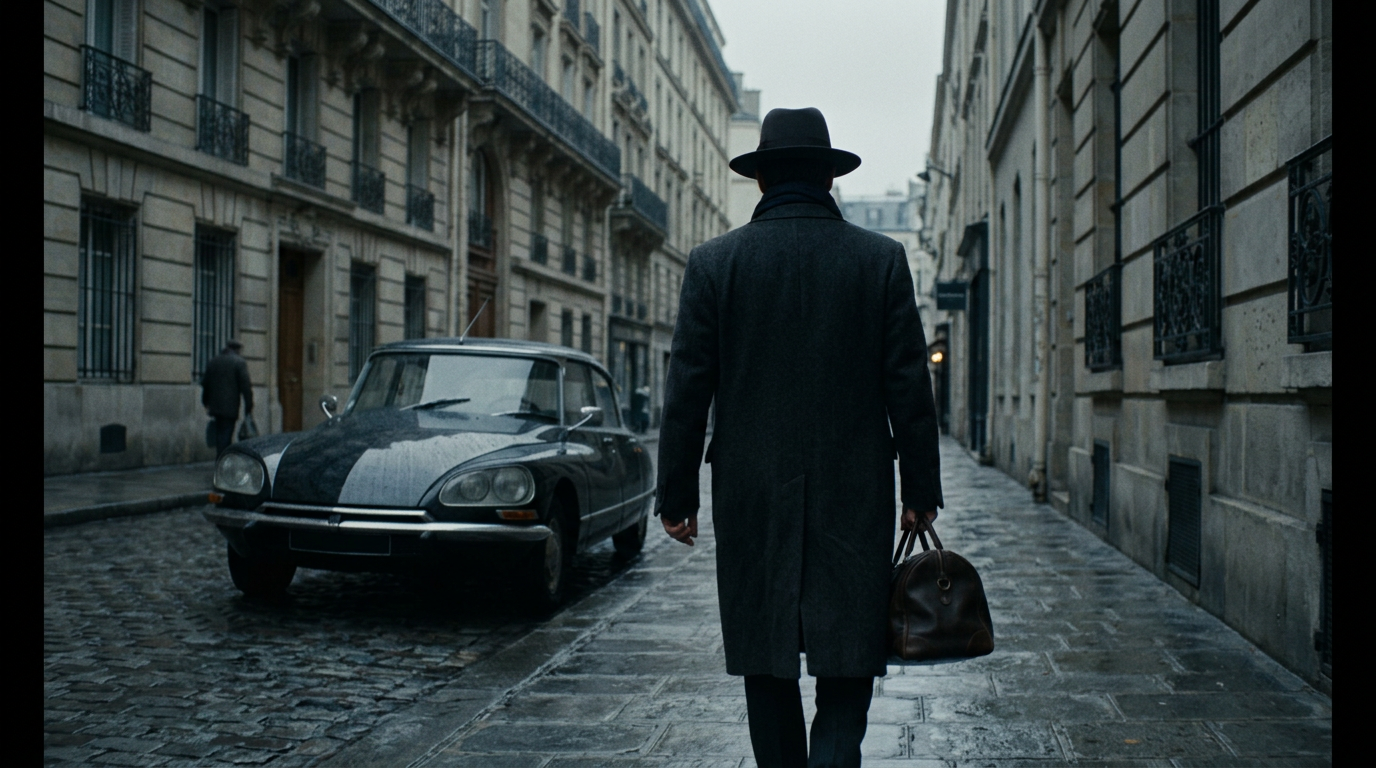
Period French sedans and taxis, including models from Citroën and Peugeot, often seen navigating the narrow Parisian streets.
More from motoring →The Wardrobe
Functional and understated post-war Parisian menswear: trench coats, fedoras, suits, and a certain sartorial weariness that reflects lives lived on the margins.
More on style →The Soundtrack
Georges Auric’s score is sparingly used, but effective, creating a mood of tension and foreboding. The film is famous for its long, silent heist sequence, making the absence of music particularly impactful.
Into the music room →Watch Next
Where to Watch
Available on Criterion Collection Blu-ray/DVD; streaming services vary by region.
For the Collection
Also in The Criminal Gentleman
As an Amazon Associate I earn from qualifying purchases. Links cost you nothing and never influence what we recommend. Recommendations are honest and never paid for. Imagery is an original interpretation, not a still from the production.