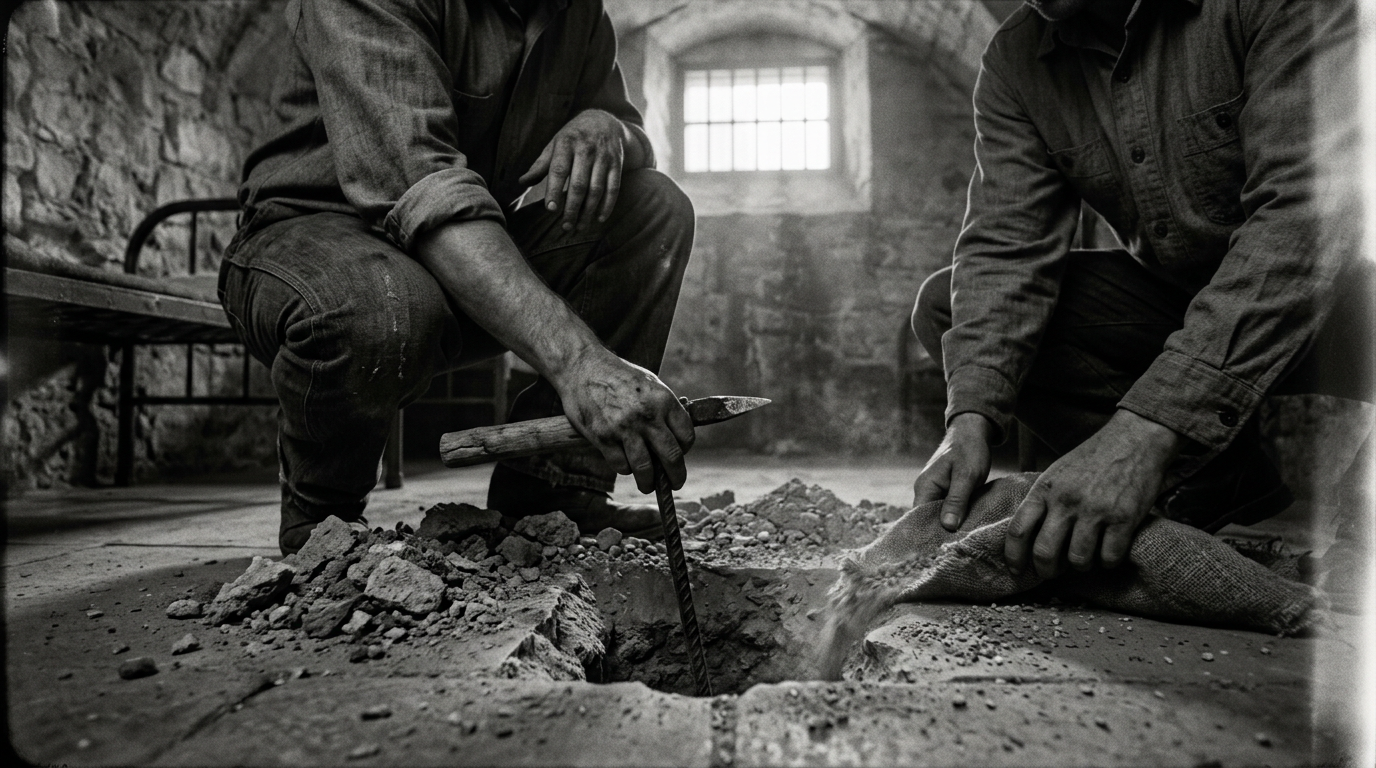
Original interpretation — not a still from the production
A study in desperation and meticulous execution, Jacques Becker’s final film is the apotheosis of the prison break genre, executed with an almost forensic precision.
The Continental Verdict
Essential
Jacques Becker’s "Le Trou" stands as a monumental achievement in cinematic realism, depicting a prison escape with an unvarnished authenticity that few films have ever matched. Set within the formidable walls of La Santé Prison in Paris, the narrative unfolds with a relentless, almost excruciating tension as five inmates embark on a meticulously planned attempt to regain their freedom. Becker, known for his rigorous attention to detail, strips away all extraneous elements, focusing instead on the painstaking physical labour and psychological strain inherent in such an endeavour. The film’s predominantly male cast, including several non-professional actors who had themselves experienced incarceration, lends an extraordinary veracity to the proceedings, elevating the arduous process of chiselling through concrete and navigating subterranean tunnels into a profound meditation on human endurance and the fragile bonds forged under duress.
The film’s narrative austerity is its greatest strength; dialogue is sparse, allowing the rhythmic sounds of tools against stone and earth to punctuate the oppressive silence. This immersive approach demands patience, yet rewards it with an unparalleled sense of presence within the confined, claustrophobic world of the prisoners. "Le Trou" is not merely an action film, but a profound character study, exploring themes of trust, betrayal, and the desperate yearning for liberty. The almost documentary-like style, combined with Philippe Brun’s stark, black-and-white cinematography, creates an atmosphere of stark realism that firmly plants the viewer alongside the protagonists, sharing in their fleeting hopes and crushing setbacks. It is a work of unflinching integrity, a masterclass in suspense, and a sobering reminder of the human spirit’s capacity for both ingenuity and despair.
Why Watch It
The Gentleman Factor
The gentleman can appreciate the profound demonstration of ingenuity, meticulous planning, and resilience under extreme duress. It speaks to the universal desire for self-determination and the stark realities of moral compromise.
Look Out For
- Monochromatic realism
- Stark chiaroscuro lighting
- Unembellished prison attire
The Locations
The film was largely shot in a disused wing of La Santé Prison in Paris, lending an undeniable authenticity to the claustrophobic interiors and dank tunnels.
More from the travel pages →The Cars
No significant cars are featured; the film is confined almost entirely within the walls of a prison.
More from motoring →The Wardrobe
Authentic, unglamorous 1940s-1950s French prison attire: coarse shirts, trousers, and minimal personal effects, reflecting the austere setting.
More on style →The Soundtrack
Georges Delerue's score is used sparingly, primarily focusing on ambient sounds and the rhythmic clangs and scrapes of tools, enhancing the raw realism rather than dictating emotion.
Into the music room →Watch Next
Where to Watch
Available for streaming on various platforms and via Criterion Collection Blu-ray.
For the Collection
Also in The Criminal Gentleman
As an Amazon Associate I earn from qualifying purchases. Links cost you nothing and never influence what we recommend. Recommendations are honest and never paid for. Imagery is an original interpretation, not a still from the production.