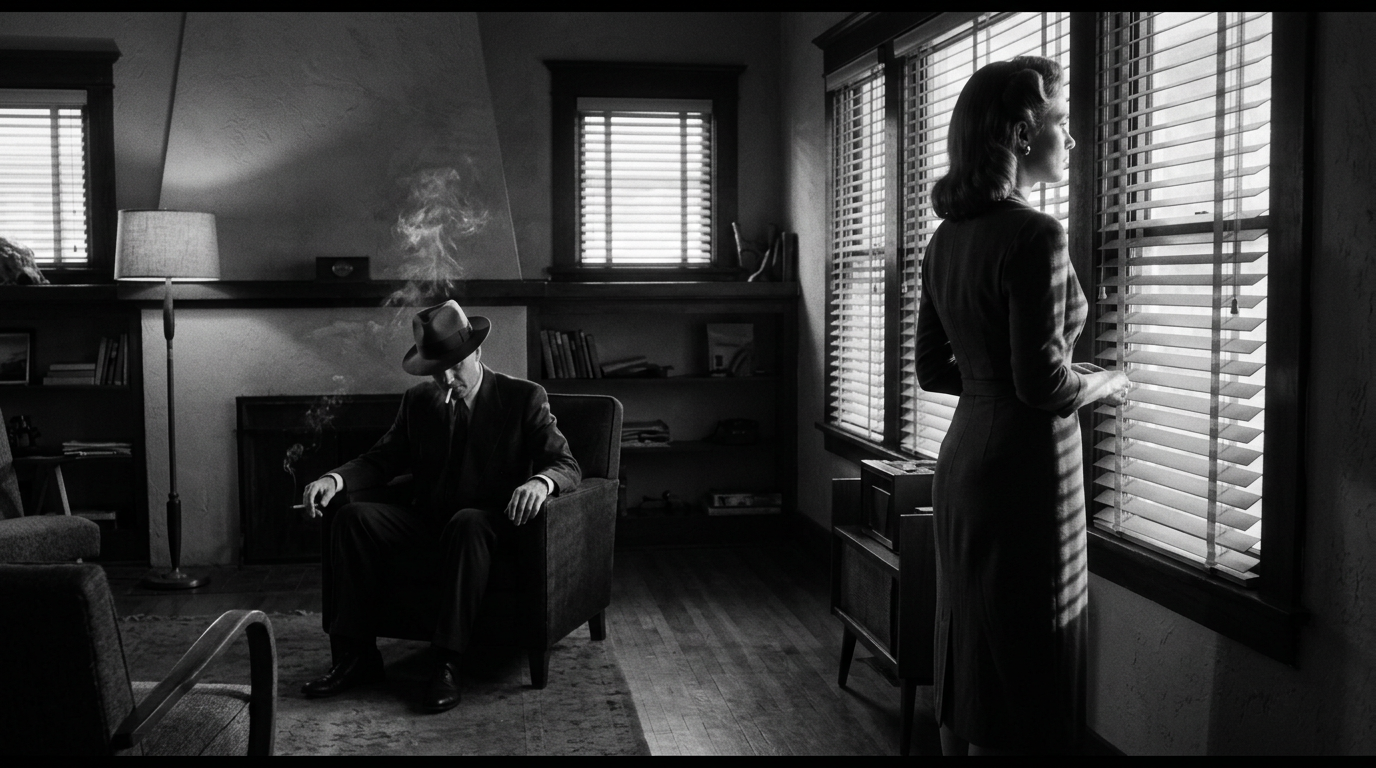
Original interpretation — not a still from the production
A masterpiece of cynical noir, where a smooth-talking insurance salesman is lured into a murderous plot by a calculating femme fatale.
The Continental Verdict
Essential
Billy Wilder's 1944 film noir, 'Double Indemnity', remains a cornerstone of the genre, a perfectly constructed machine of deceit and desire. Adapted from James M. Cain’s novel, the screenplay, penned by Wilder and Raymond Chandler, crackles with an unparalleled wit and cynicism. The narrative unfolds through the confessions of insurance salesman Walter Neff, gravely wounded and recounting his entanglement with Phyllis Dietrichson. From their first encounter over a shared match, the dialogue establishes a dynamic charged with dangerous attraction and thinly veiled manipulation, a ballet of words that is both seductive and chilling. The film’s tension builds not from sudden shocks, but from the inexorable march towards an inevitable, grim conclusion, propelled by the fatalistic choices of its characters.
Fred MacMurray, shedding his usual genial persona, delivers a career-defining performance as Neff, a man whose confident veneer slowly crumbles under the weight of his transgression. Barbara Stanwyck's Phyllis Dietrichson is the archetypal femme fatale: alluring, icy, and utterly ruthless, her ankle bracelet shining ominously in the California sun. Edward G. Robinson, as the tenacious claims adjuster Barton Keyes, provides the moral and intellectual counterpoint, his unyielding pursuit of truth a stark contrast to Neff's spiralling descent. John F. Seitz's stark, chiaroscuro cinematography—all Venetian blinds and pools of shadow—transforms ordinary domestic spaces into claustrophobic traps, perfectly reflecting the moral quagmire in which the characters find themselves. Miklós Rózsa's score, with its haunting main theme, punctuates the simmering dread and sudden bursts of violence, cementing the film's place as a towering achievement in cinematic storytelling.
Why Watch It
The Gentleman Factor
The intricate dance of deception and consequence, and the allure of a fatal attraction, offering a cautionary tale on the intoxicating power of forbidden desires and the limits of one’s moral compass. Observe the meticulous planning and the inevitable unraveling of even the most cunning schemes.
Look Out For
- Art Deco architecture
- Chiaroscuro lighting
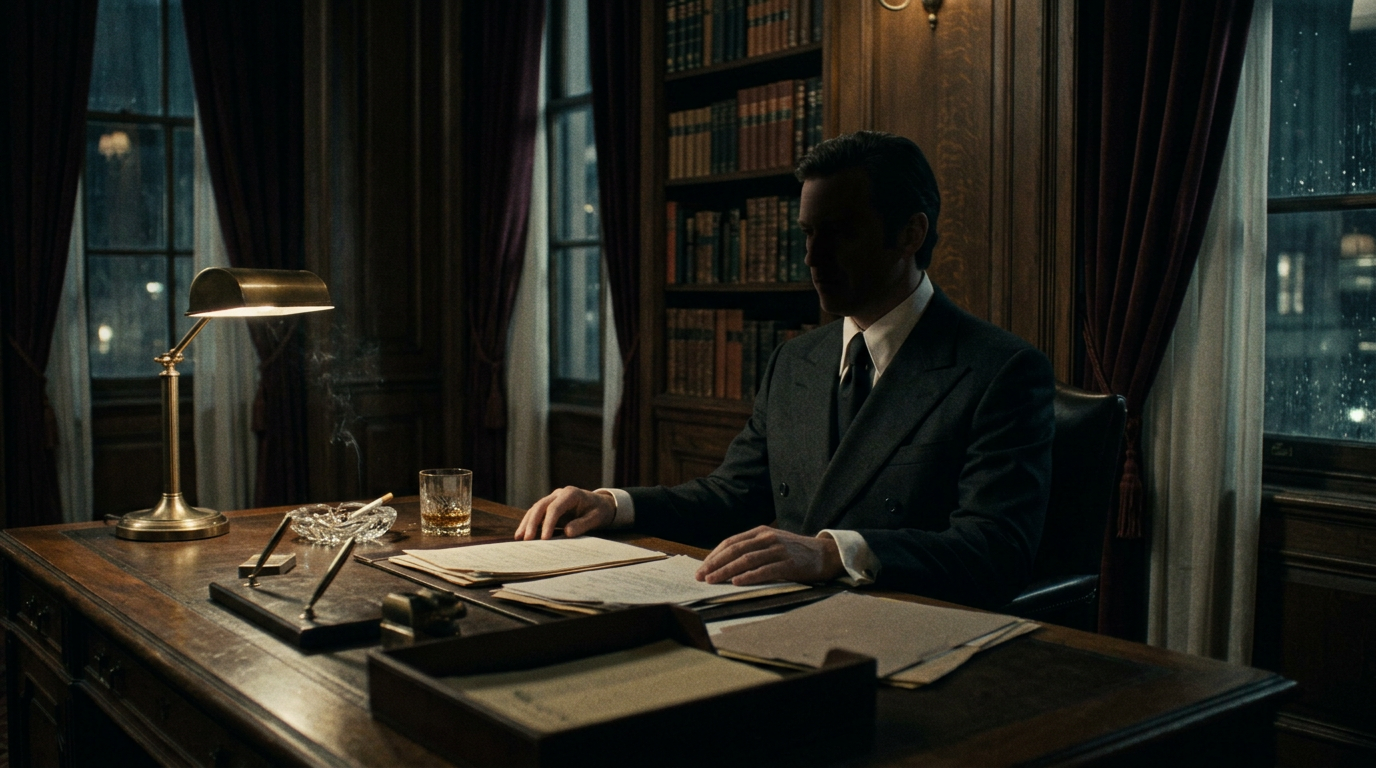
- Smoking room atmosphere
The Locations
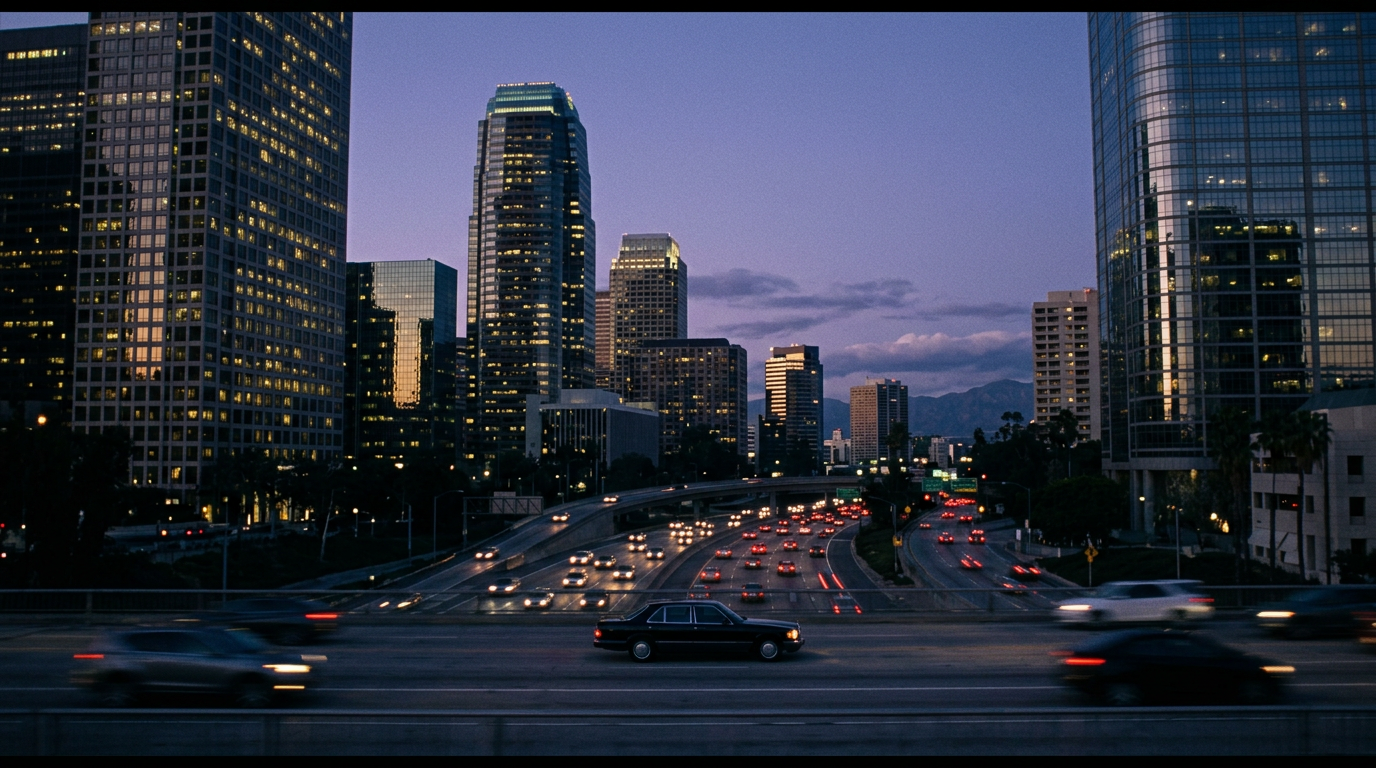
Los Angeles, California, including the iconic Hollywood Bowl and various suburban bungalows.
More from the travel pages →The Cars
A 1940s sedan (Packard or Cadillac likely for Neff), and various period automobiles on Los Angeles streets.
More from motoring →The Wardrobe
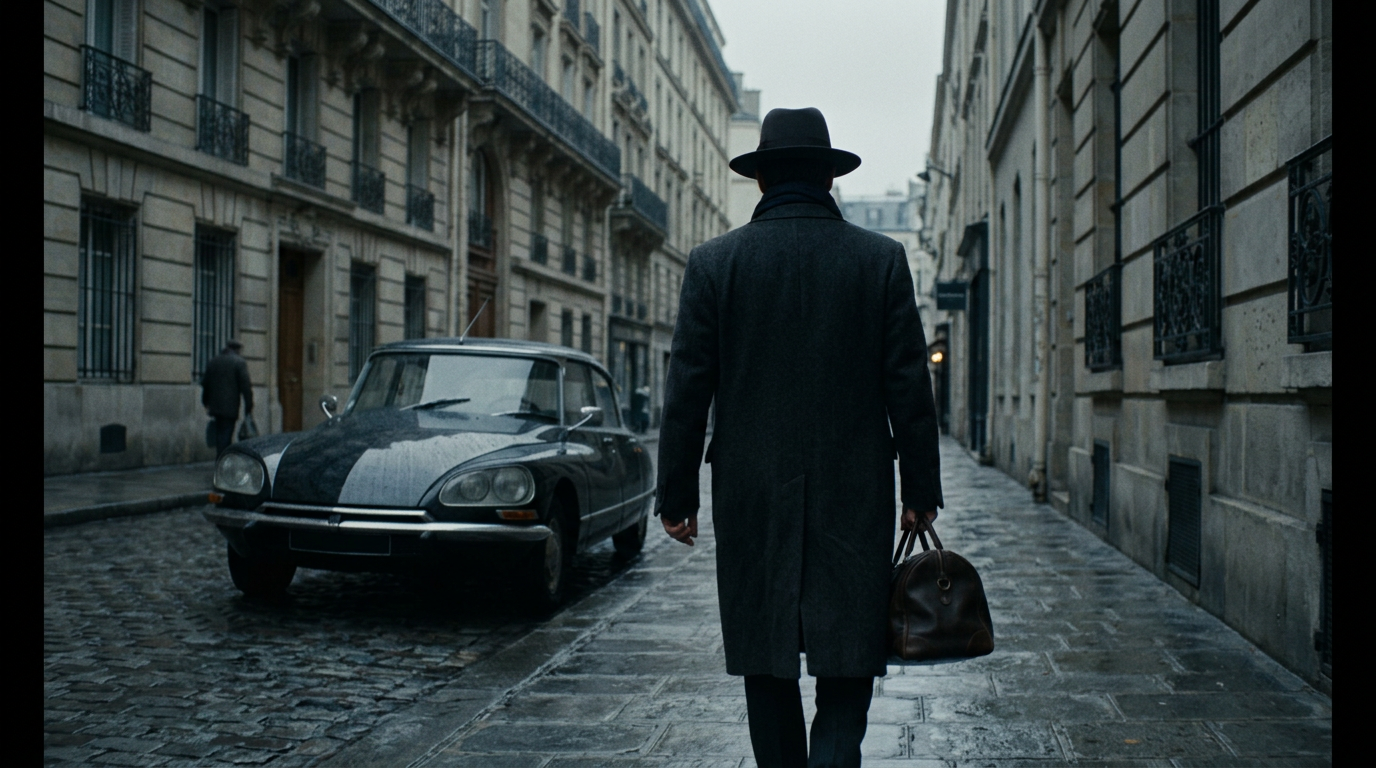
For Neff: impeccably tailored suits, fedoras, and trench coats. For Phyllis Dietrichson: sophisticated 1940s dresses, often with sharp shoulders, elegant hats, and a distinctive anklet. Costume design by Edith Head.
More on style →The Soundtrack
A dramatic, suspenseful score by Miklós Rózsa, pioneering the use of a theme for the femme fatale.
Into the music room →Watch Next
Where to Watch
Available on physical media and streaming platforms (e.g., Criterion Channel, Amazon Prime Video for rent/purchase).
For the Collection
Also in The Criminal Gentleman
As an Amazon Associate I earn from qualifying purchases. Links cost you nothing and never influence what we recommend. Recommendations are honest and never paid for. Imagery is an original interpretation, not a still from the production.