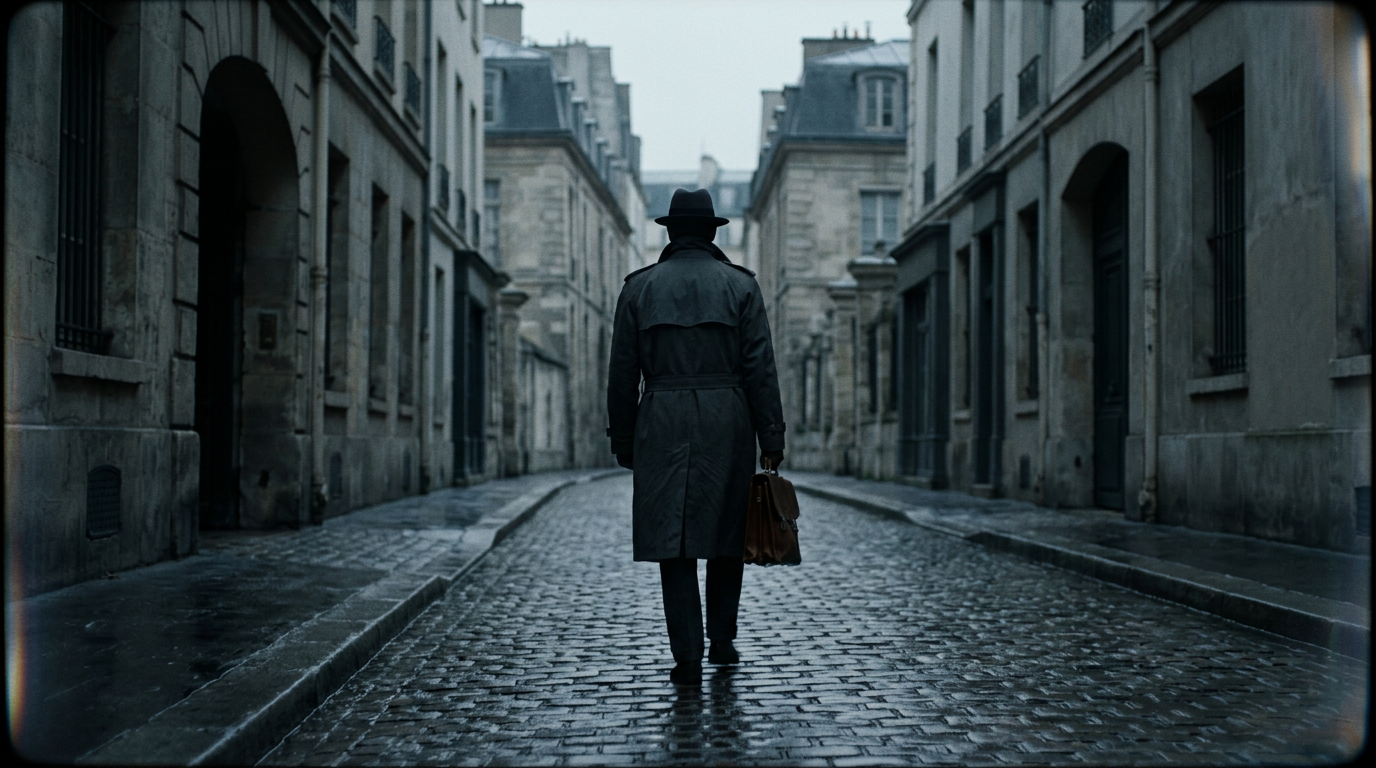
Original interpretation — not a still from the production
A study in quiet defiance and inescapable peril during the French Resistance.
The Continental Verdict
Essential
Jean-Pierre Melville's 1969 masterpiece, 'L'Armée des ombres', stands as a stark, unromanticised portrait of the French Resistance during the Second World War. From its opening shot of German soldiers marching triumphantly down the Champs-Élysées, the film establishes a tone of profound sombreness and existential dread. Lino Ventura, as the stoic and world-weary engineer Philippe Gerbier, anchors the narrative with a performance of remarkable restraint, embodying the quiet, often brutal, sacrifices demanded by the clandestine struggle. Melville strips away all notions of cinematic heroism, presenting the Resistance as a network of weary, isolated individuals bound by an impossible duty, where every act of courage is shadowed by the imminent threat of betrayal and death. The meticulous, almost ritualistic, depiction of operational procedures – coded messages, safe houses, clandestine assassinations – creates a palpable sense of authenticity and continuous tension.
The film’s power lies in its unflinching portrayal of the moral compromises and personal costs inherent in warfare, particularly in a conflict fought in the shadows. The absence of overt sentimentality, combined with a stark, almost monochromatic visual style, lends 'Army of Shadows' an austere beauty. The performances, particularly those of Simone Signoret as Mathilde and Paul Meurisse as Luc Jardie, contribute to this sense of quiet, understated heroism and tragic resignation. It is a work that demands reflection, challenging any simplistic understanding of wartime bravery. Melville, a veteran of the Resistance himself, infuses every frame with a lived understanding of its grim realities, making this an enduring testament to human endurance under the most dire circumstances.
Why Watch It
The Gentleman Factor
The stoicism, quiet resolve, and profound sense of duty exhibited by characters facing impossible odds, along with an appreciation for the meticulous planning and perilous execution of clandestine operations. It is a lesson in enduring adversity with dignity, even when the outcome is uncertain.
Look Out For
- Gloomy
- Authentic
- Unromantic
The Locations
Occupied Paris, clandestine safe houses, military prisons, and the stark, windswept landscapes of the French countryside.
More from the travel pages →The Cars
Black Citroën Traction Avant, German military vehicles.
More from motoring →The Wardrobe
Practical trench coats, fedoras, and restrained, period-appropriate civilian attire reflecting the privations of wartime France. Costumes by Gitt Magrini.
More on style →The Soundtrack
Sparse, melancholic score by Éric Demarsan, often giving way to the stark sound of silence and ambient noise, enhancing the film's austere mood.
Into the music room →Watch Next
Where to Watch
Available on Criterion Collection Blu-ray and select streaming platforms.
For the Collection
Also in War & History

As an Amazon Associate I earn from qualifying purchases. Links cost you nothing and never influence what we recommend. Recommendations are honest and never paid for. Imagery is an original interpretation, not a still from the production.