The Mercedes-Benz 300 SL: A Silver Arrow for the Road
More than just its iconic doors, the 300 SL was a triumph of engineering born from the racetrack. To pilot one today is a lesson in the enduring power of purposeful design and the demands it makes of its driver.
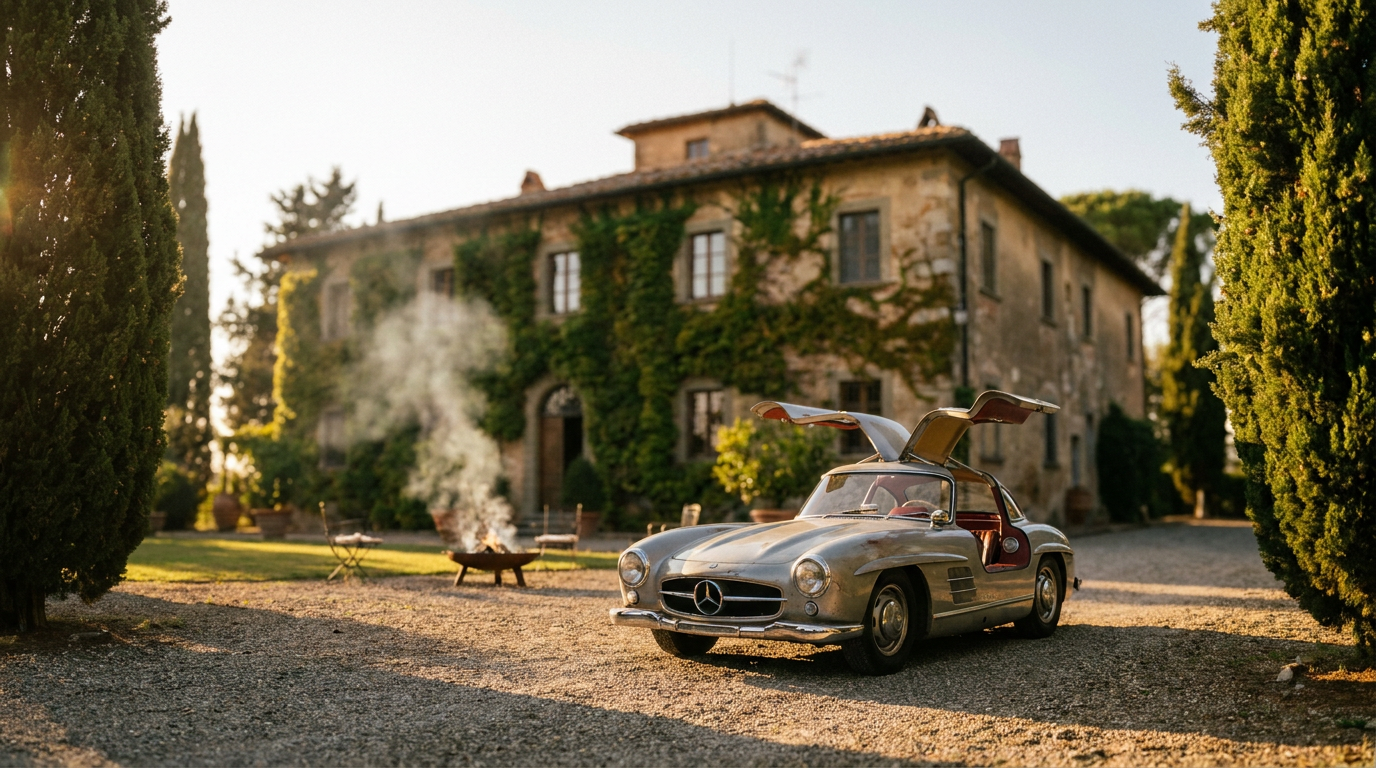
The key is a simple, unadorned piece of metal, a world away from the weighty, logo-stamped fobs of today. It feels entirely appropriate. The Mercedes-Benz 300 SL, even at rest, communicates a seriousness of purpose that requires no embellishment. Standing before it in a quiet Cotswolds garage as the morning light filtered through the high windows, the car’s reputation felt palpable. Finished in the archetypal silver, its alloy bodywork seemed to absorb and soften the light, defining the subtle curves and crisp lines that are so familiar in photographs, yet so much more impactful in person.
The genesis of the 300 SL (for Sport Leicht) is a well-told story, but one that bears repeating. It was not a boardroom decision, but a direct descendant of the W194 racing car that had brought Mercedes-Benz back to the forefront of motorsport in 1952. The road car, the W198, only came to be at the insistence of the legendary American importer, Max Hoffman, who saw a market for a road-going version of the champion and guaranteed an order of 1,000 units. It was a masterstroke. The resulting car, unveiled in New York in 1954, was not merely a fast tourer, but a genuine race car, barely tamed for the street.
A Cockpit of Purpose
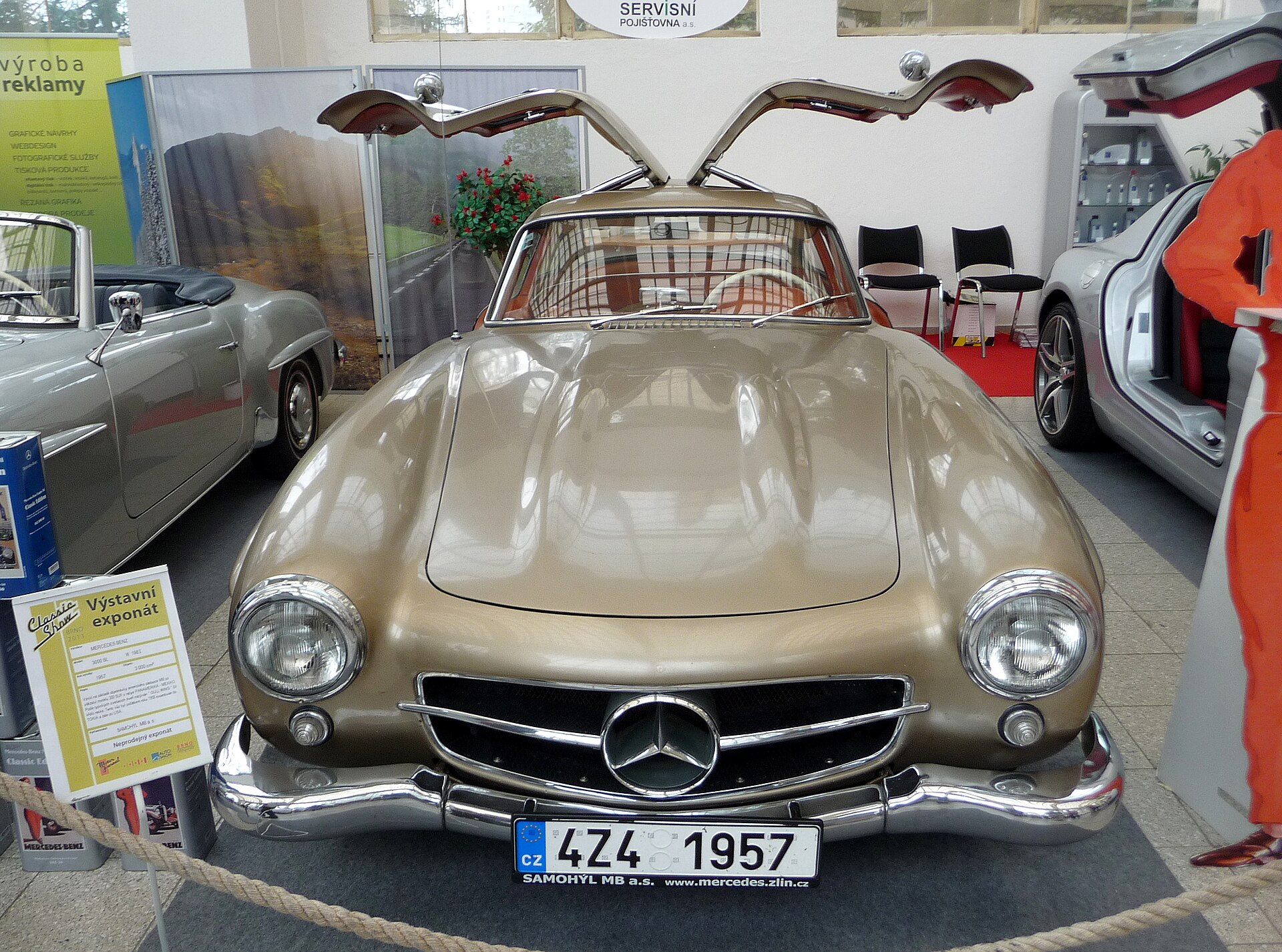
Access is, of course, the first part of the ritual. The famous ‘Gullwing’ doors are not a stylistic flourish but a brilliant piece of engineering necessity, dictated by the high and wide sills of the tubular space frame chassis. One swings the door up—it is surprisingly light—and navigates the sill. The technique is to place one’s right foot inside, slide onto the sill, and then pivot into the seat, bringing the left leg in after. The large, white steering wheel tilts down to aid the process. Once settled into the surprisingly comfortable plaid cloth seat, the door clicks shut with a solid, reassuring finality, enclosing you in a cabin that is at once intimate and airy, thanks to the large glass area.
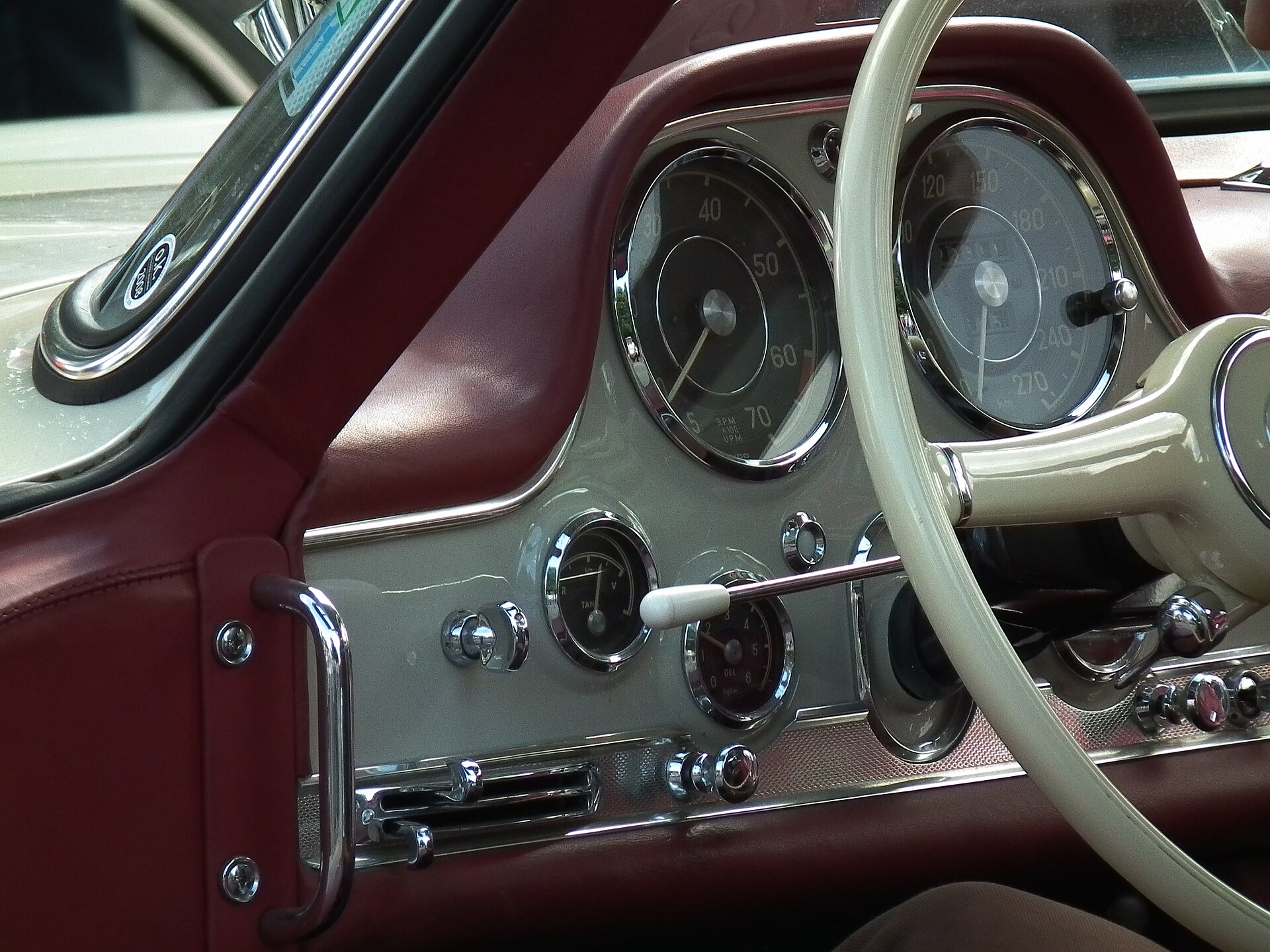
The view from the driver’s seat is pure 1950s function. A pair of large, clear dials for speed and revs sit directly ahead, framed by the thin-rimmed wheel. The secondary gauges are arranged neatly across the painted metal dash. There is no extraneous trim, no distraction. Every switch and lever feels mechanical and direct. The scent is a heady mix of leather, wool, oil, and high-octane fuel—a perfume that has all but vanished from modern motoring.
The Heart of the Matter
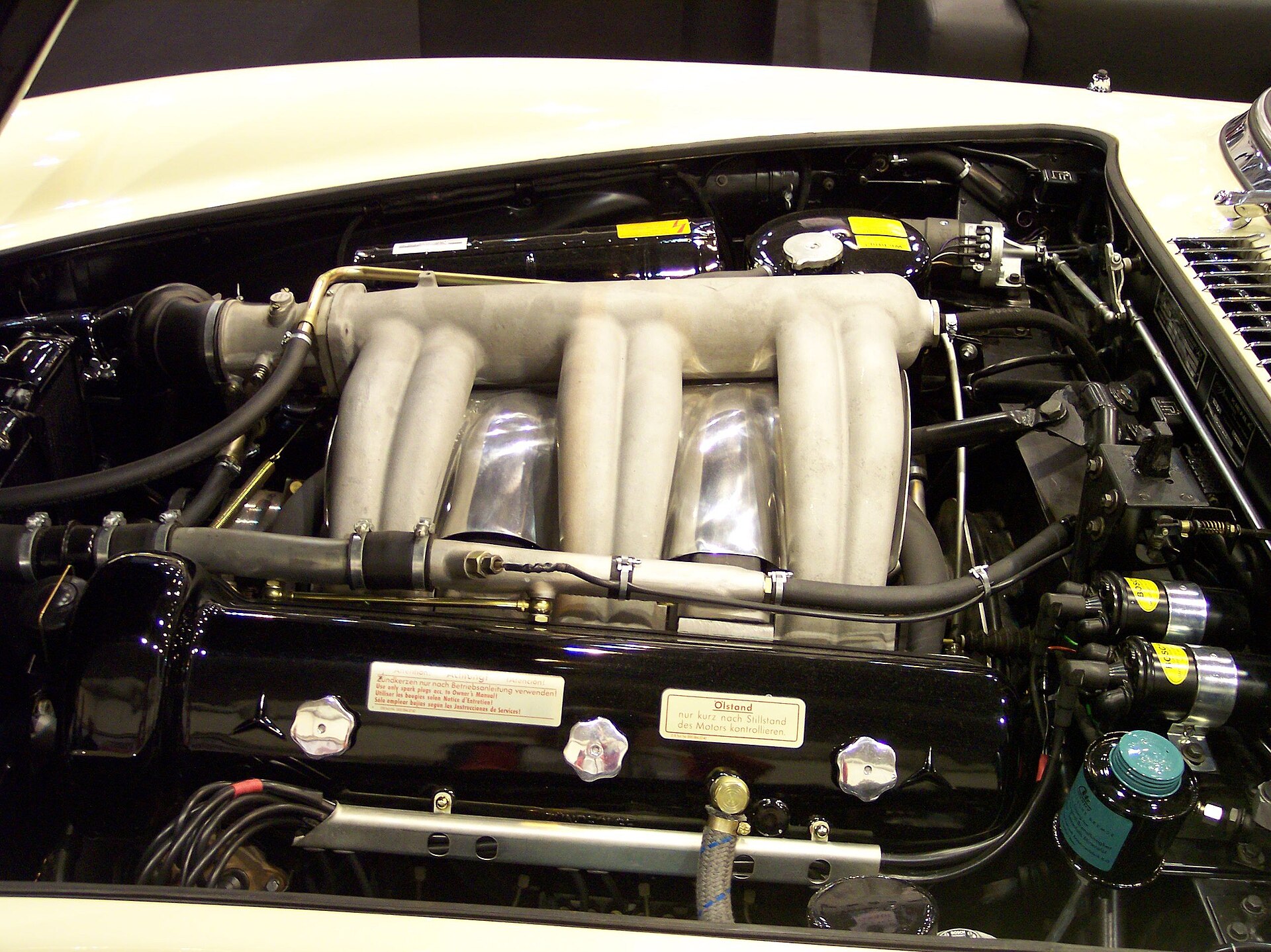
Turning the key brings the 3.0-litre straight-six to life. There is no roar, but a complex, mechanical whirring and chattering as the Bosch direct fuel injection system—a world-first on a production car, adapted from the Messerschmitt Bf 109E fighter—primes itself. A prod of the accelerator and the engine settles into a smooth, potent hum. This is not a thundering V8; it is a sophisticated, high-strung thoroughbred. The engine is canted over at a 50-degree angle to lower the bonnet line, another nod to the car’s racing roots and a contributor to its aerodynamic profile.
That engine, producing a formidable 215 horsepower in its most common tune, was a marvel. It transformed the 300 SL into the fastest production car of its day, capable of speeds approaching 160 mph depending on the final drive ratio. To inspect it is to appreciate the craftsmanship of an era where the engine bay was not hidden under a shroud of plastic, but presented as a piece of mechanical sculpture.
On the Road
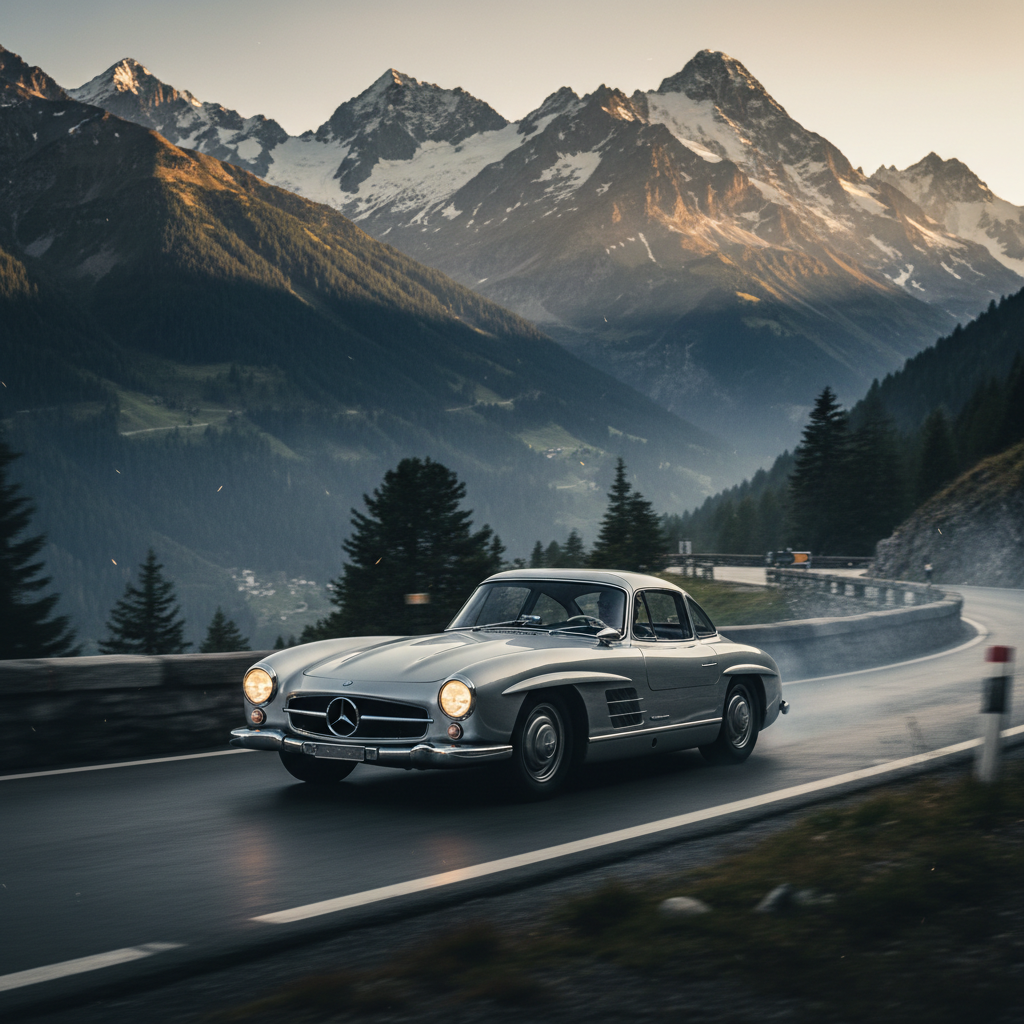
The clutch is firm and the four-speed gearbox requires a deliberate hand. The car moves off with an eagerness that belies its age. On the narrow, hedge-lined lanes, the 300 SL feels surprisingly nimble. The steering is unassisted, of course, and it weights up considerably in tight corners, but once moving it communicates every nuance of the road surface. One does not simply steer the 300 SL; one guides it, feeling the grip and balance through the rim of the wheel and the base of the seat.
It is the infamous swing-axle rear suspension that commands the most respect. On smooth, sweeping bends, the car is beautifully balanced. But a mid-corner bump or a sudden lift of the throttle can remind you of its vintage. This is not a car for the complacent. It demands concentration and a smooth, measured approach. Get it right, however, and the rhythm is sublime. The engine’s note hardens as the revs climb, the exhaust echoing off dry-stone walls, the chassis flowing with the road. It is an immersive, analogue experience that engages the driver on a level that modern, computer-mediated supercars cannot replicate.
An Enduring Form
After a few hours of spirited driving, I pulled over at a scenic overlook. Stepping out and seeing the car in the open landscape, its design seems even more remarkable. Friedrich Geiger’s masterpiece is a study in proportion and aerodynamic efficiency. The bulges over the wheel arches, the long bonnet, the Kamm tail, and the signature side vents—all are there for a reason. And yet, the result is breathtakingly beautiful.
To see those doors open against the sky is to understand why the car became an instant icon. They are a defining feature, a piece of theatre that never gets old. But the true legacy of the 300 SL is not its doors. It is the integrity of its design, the ambition of its engineering, and the uncompromising way it brought racetrack performance to the public road. It set a benchmark that few have matched since.
Returning the key at the end of the day felt like closing a chapter in a very special book. The 300 SL is not a car for every day, nor for every driver. It is a demanding machine that asks for skill and rewards with an experience that is pure, unfiltered, and unforgettable. It remains, more than sixty years on, a true Silver Arrow for the road, a high-water mark of automotive history, and a drive that will remain etched in my memory for a long time to come.