The Grand-Hôtel du Cap-Ferrat: A Riviera Bastion
On a peninsula of pines and rock between Nice and Monaco, a palace hotel has for over a century defined the Côte d’Azur’s particular blend of tranquil elegance and discreet glamour. It remains a world unto itself.
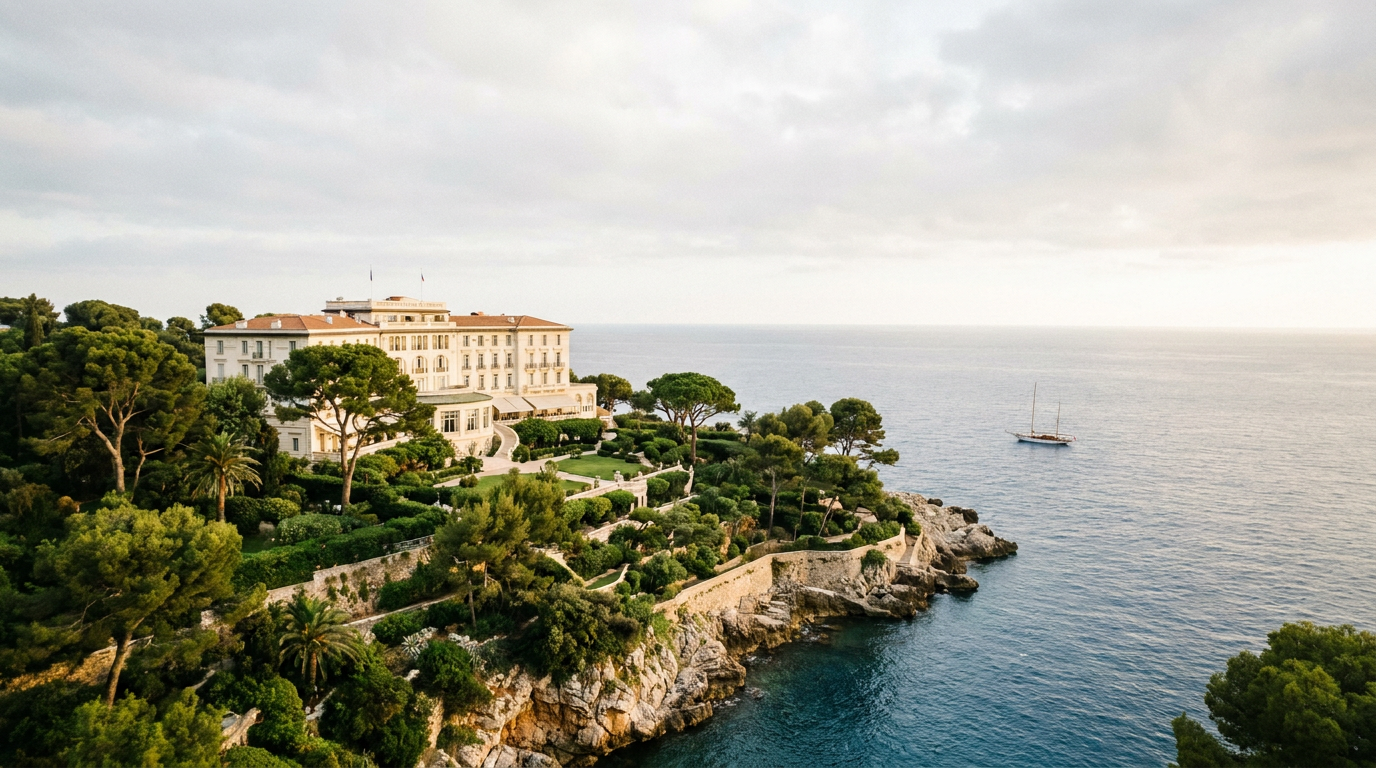
There is a moment, after leaving the bustle of Nice behind and committing to the winding roads of Saint-Jean-Cap-Ferrat, when the world recedes. The peninsula, a verdant comma of land pointing into the blue immensity of the Mediterranean, has always been a place apart. Driving through the gates of the Grand-Hôtel, a fortnight ago under the brilliant light of early June, felt less like an arrival and more like a retreat into a more rarefied atmosphere. The long, private drive, flanked by ancient Aleppo pines, builds the anticipation until the final reveal: the white, wedding-cake facade of the hotel, as pristine and confident as it was upon its opening in 1908.
It stands not on the water’s edge, but above it, a bastion of calm surveying its domain. This is not a place of fleeting trends, but of enduring tradition. One feels the weight of its history, but it is a comfortable, reassuring weight. This was a favoured winter redoubt for the European aristocracy of the Belle Époque, before it was reimagined in the 1920s and ‘30s as a summer playground for a new set of luminaries—Cocteau, Chaplin, the Duke of Windsor. It was here, in this pocket of supreme civility, that the modern idea of the Riviera summer was forged.
The Art of Arrival
The building itself, a 1909 design by Albert-Frédéric Pouniou-Devra, is a study in elegant restraint. The entrance leads into a low-lit lobby, where the scent of magnificent floral arrangements, changed daily, hangs in the cool air. There is no grand, cavernous space designed to intimidate, but rather a series of intimate, human-scaled salons. The famous rotunda, with its glass roof designed by Gustave Eiffel, draws the eye upward, but the true focal point is always the view outward. Through every arch and window, the sea and sky are framed by the dark green of the pines, a constant, living work of art.
The check-in was a model of quiet efficiency. There is a particular pleasure in being greeted by name, a small but significant gesture that sets the tone for a stay. Within moments, I was being escorted to my suite, the corridors hushed and cool, a welcome respite from the afternoon sun.
A Room Above the Pines
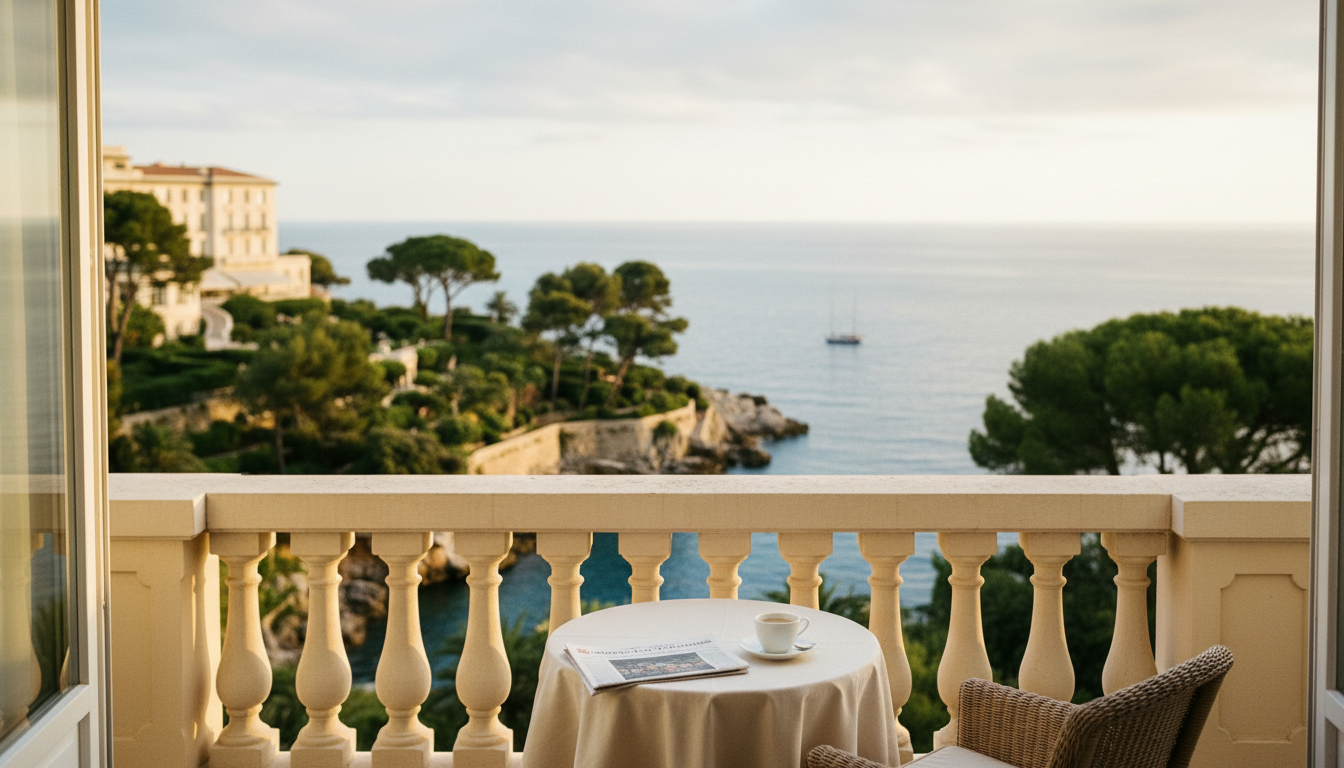
My rooms were in the original palace building, facing east over the gardens toward the sea. The palette was a symphony of whites, creams, and a dusty blue that perfectly echoed the tones of the Mediterranean outside. The furnishings were classic, without a hint of pastiche. It is a difficult balance to strike—to feel historic yet entirely contemporary—but it is achieved here with apparent ease. The real triumph, however, was the terrace. Stepping outside, the panorama of the coast stretching towards Monaco was breathtaking. It became an immediate ritual to take coffee there in the morning and a glass of rosé in the evening, watching the light change on the water, the only sounds the distant cry of gulls and the gentle rustle of the pines below.
Descent to the Sea
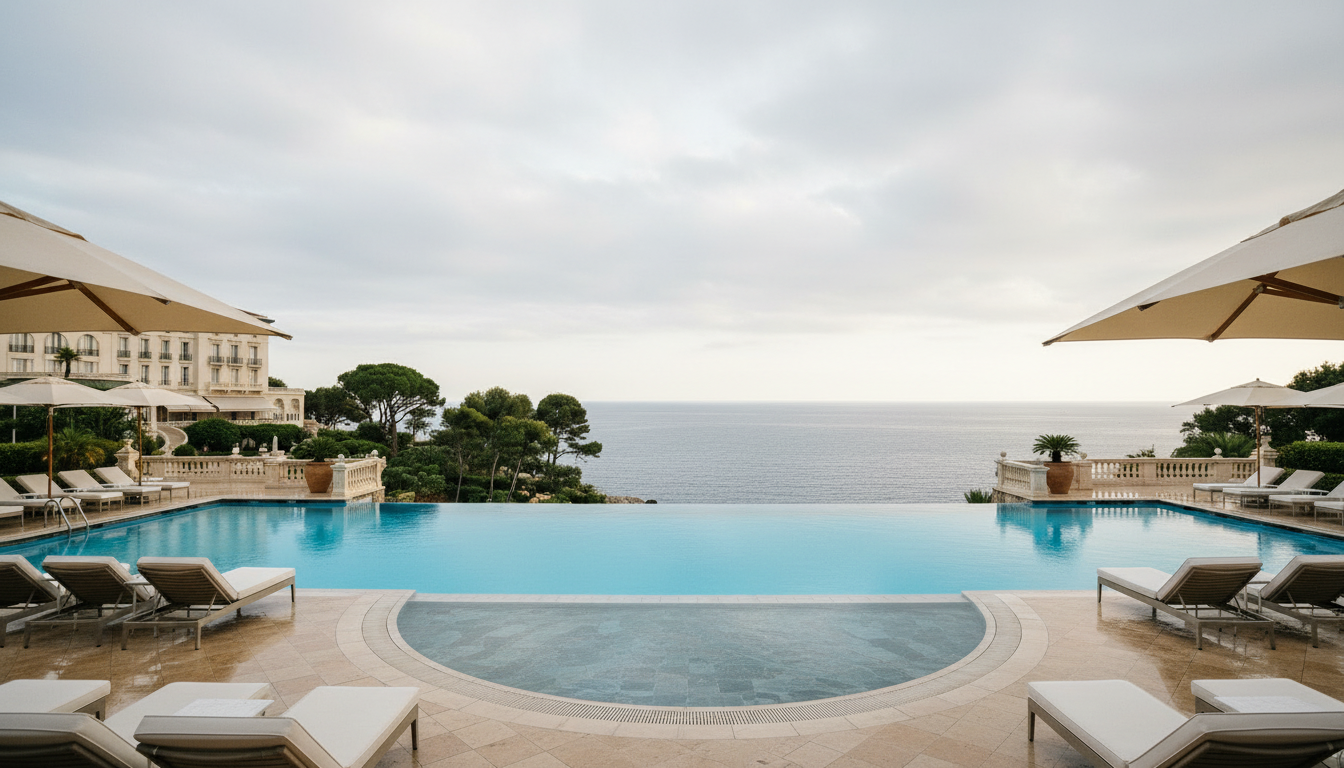
One does not simply walk to the pool at the Grand-Hôtel. One descends. A glass-walled funicular, a charmingly retro piece of engineering, glides you down the cliffside through the fragrant canopy of the pines. The short journey is a moment of theatre, a gradual reveal that ends with one of the most iconic sights on the entire coast: Club Dauphin. The impossibly long, slender seawater pool, cantilevered over the rocks, has been the hotel’s heart since 1939. To swim its length is to feel suspended between the sky and the sea. I spent an entire afternoon there, moving between the cool saltwater of the pool and the warm embrace of the sun, the service as crisp and unobtrusive as the sea breeze. The cabanas, named for the artists and writers who once frequented them, offer a private haven, a place to read and doze, utterly removed from the outside world.
An Evening at Le Cap
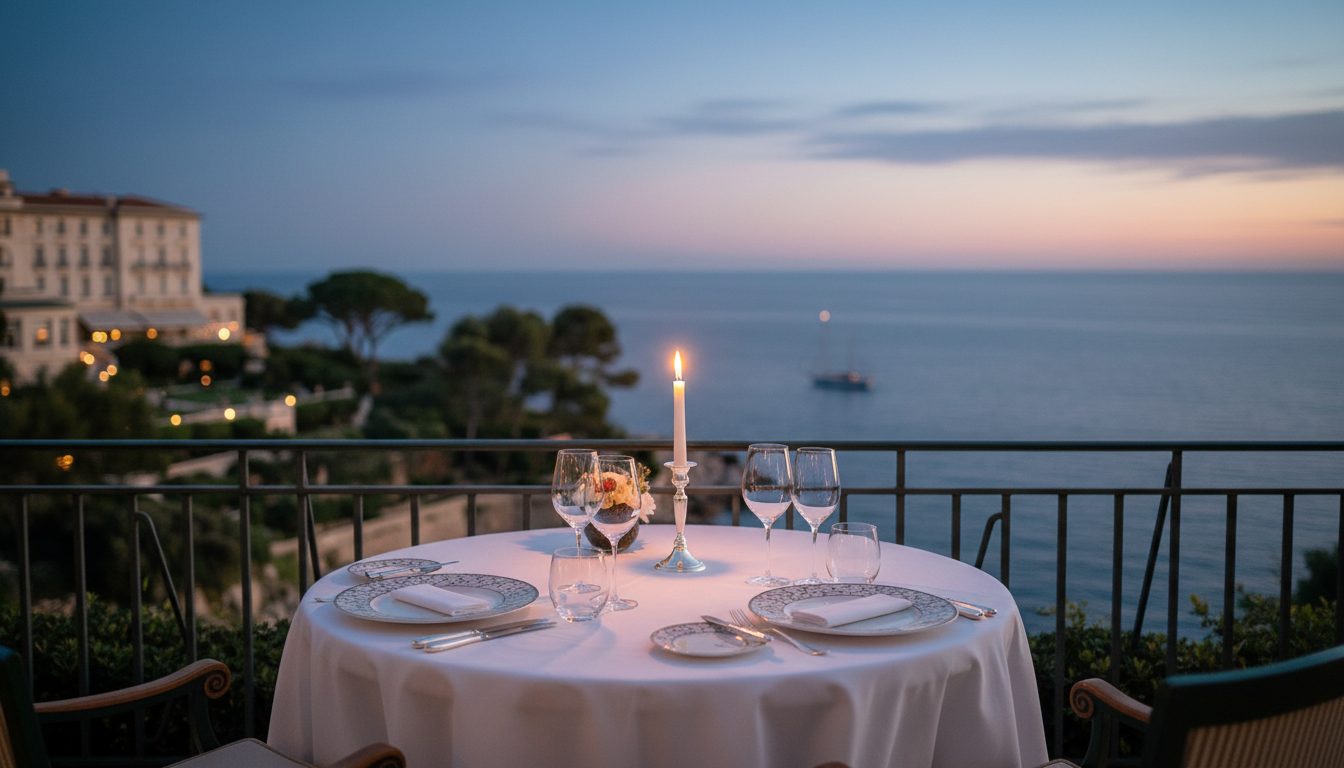
The hotel’s gastronomic ambitions are centred on Le Cap, the Michelin-starred restaurant on a terrace shaded by pines. I dined there as dusk began to settle, the sky turning a deep indigo. The menu, under the direction of chef Yoric Tièche, is a testament to the region’s bounty. A starter of local red mullet, prepared with citrus and fennel, was a taste of the sea itself. It was followed by a perfectly roasted saddle of lamb, accompanied by artichokes from the garden. The service was a silent ballet, attentive but never intrusive, allowing the food, the wine, and the magnificent setting to hold centre stage. It was a meal that was both sophisticated and deeply honest, rooted in the terroir of the Riviera.
The Garden Path
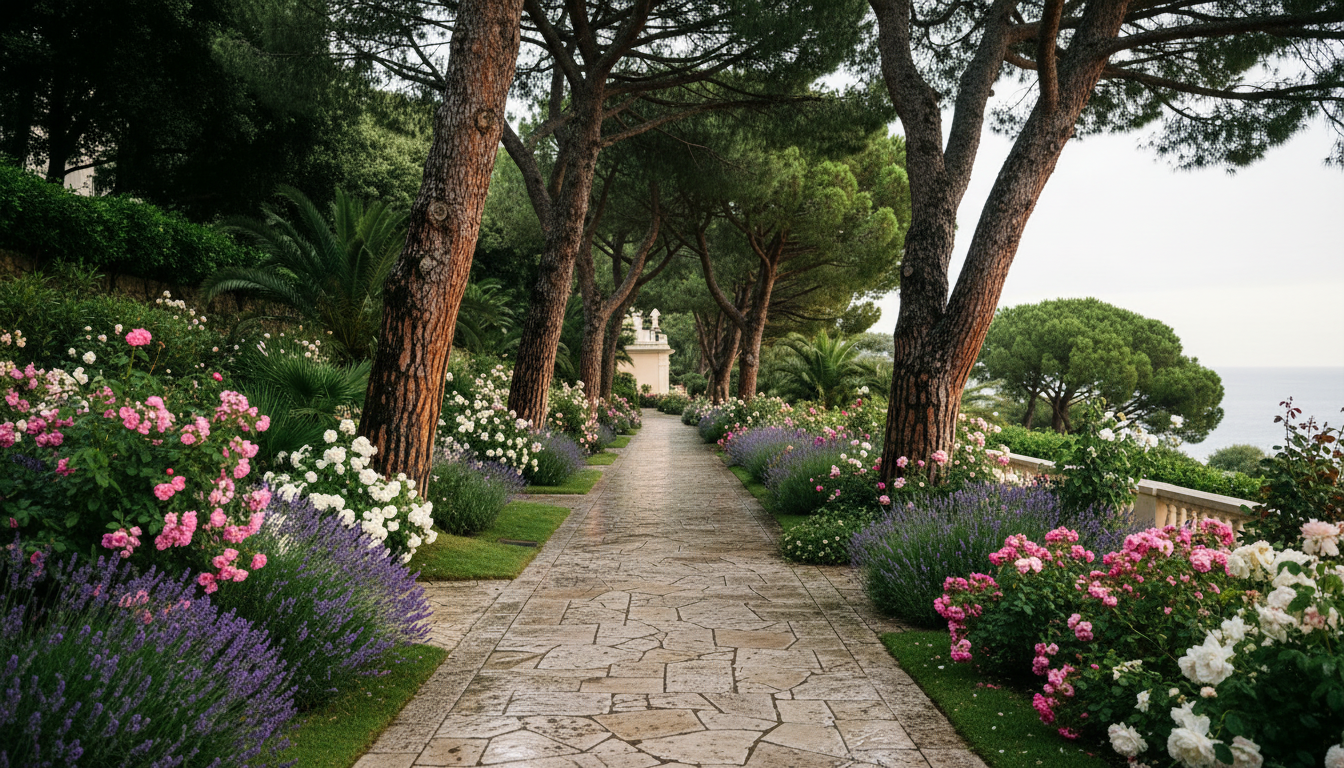
The seven hectares of gardens that surround the hotel are as much a part of its identity as the building itself. They are a masterpiece of landscape design, with winding paths that lead through rose gardens, past lavender beds, and under canopies of ancient trees. I took a walk after breakfast one morning, following a path down towards the coastal trail. The air was thick with the scent of jasmine and honeysuckle. In one corner of the garden, a collection of sculptures is artfully placed among the foliage. It is a place for quiet contemplation, a reminder that the greatest luxury is often space, silence, and beauty.
Leaving the Grand-Hôtel is a reluctant process. As the car wound its way back down the drive, a final glance in the rear-view mirror showed the white palace, partially obscured by the pines, looking as serene and permanent as the cliffs on which it stands. It is more than a hotel. It is a custodian of a certain ideal, a beautifully preserved fragment of a more gracious age, yet one that feels entirely present. It does not shout for attention; it has no need. It simply is. And for those who appreciate its particular frequency, that is more than enough.