L'Ambroisie: A Study in Culinary Classicism
In a quiet corner of the Place des Vosges, Bernard Pacaud's three-star temple to haute cuisine eschews trends in favor of a timeless, product-driven perfection that feels more relevant than ever.
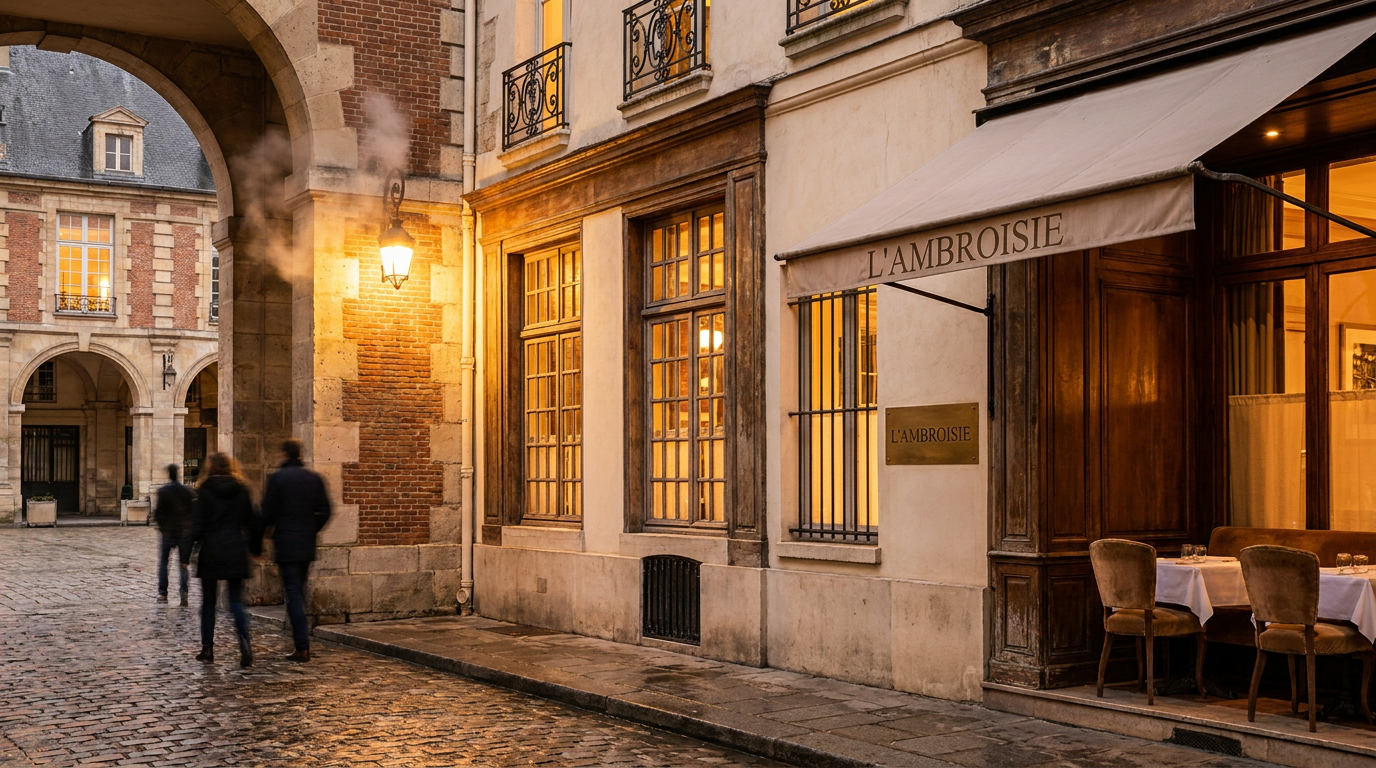
To dine at L’Ambroisie is not to engage with the fleeting fashions of the culinary world, but to commune with its eternal verities. Tucked into the 17th-century arcade of the Place des Vosges, its presence is so discreet as to be almost invisible. There is no grand sign, no doorman, merely a polished brass plaque and a glimpse of warm light behind heavy curtains. To push open the door is to leave the present moment behind.
I arrived on a cool autumn evening, the stone arches of the square damp with a fine Parisian mist. Inside, the immediate impression is one of profound, almost monastic, calm. This is not a stage for culinary theatre; it is a sanctuary for taste. The welcome is formal yet sincere, a forgotten art of hospitality that puts one immediately at ease while upholding a sense of occasion.
The Sanctum
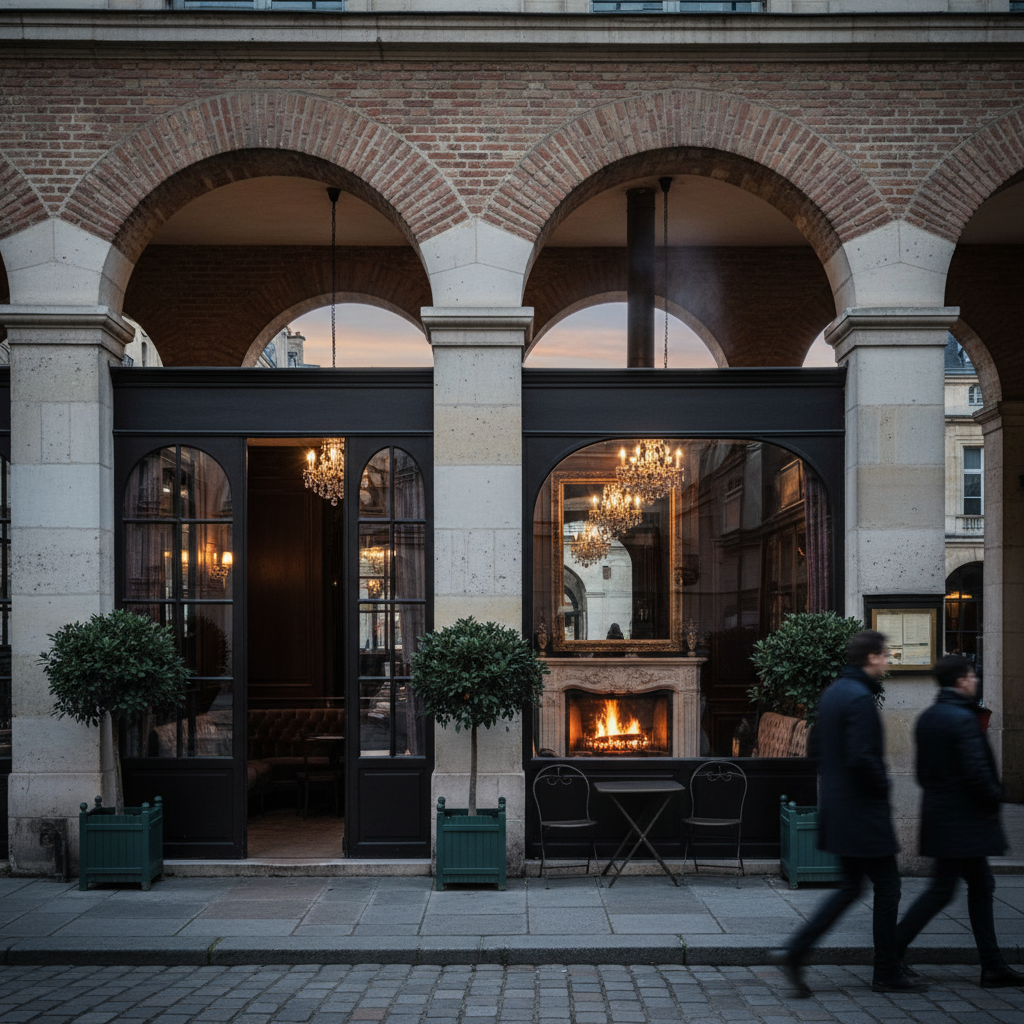
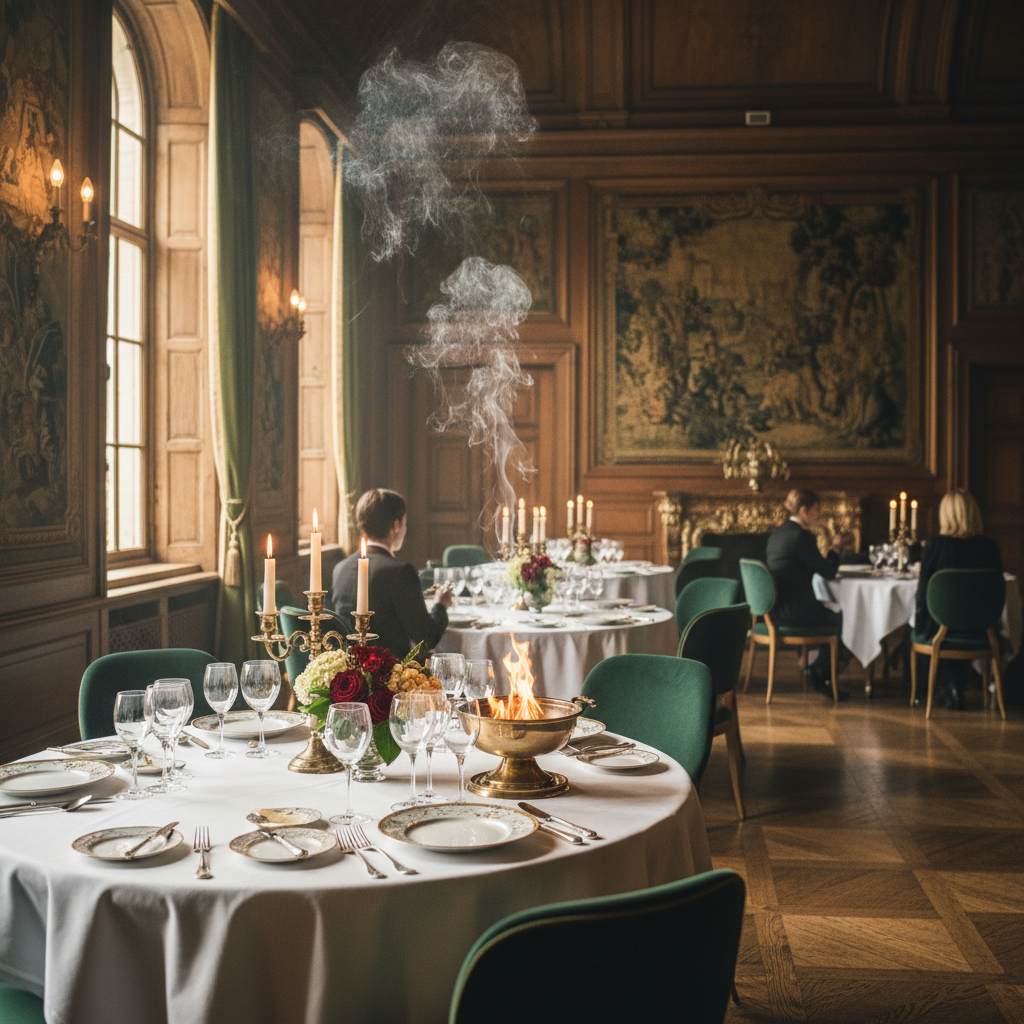
The main dining room is small, intimate, and unapologetically classical. It feels less like a public restaurant and more like the private dining room of a discerning connoisseur. Walls are hung with magnificent antique tapestries, their muted colours absorbing sound and lending a hushed, reverential atmosphere. The tables, generously spaced, are dressed in heavy white linen, set with polished silver and delicate crystal that glints in the soft, indirect light. There is no soundtrack, save for the civilised murmur of conversation and the balletic quiet of the service staff. In an age of cavernous, acoustically challenging dining spaces designed for spectacle, the serene focus of this room is a statement in itself. It is a space designed for concentration, for appreciation, for the singular pleasure of the meal to come.
The Doctrine of the Product
Bernard Pacaud’s philosophy, carried on now by his son Mathieu, is one of radical simplicity, a devotion to the ingredient so absolute that it borders on the spiritual. The menu is short, its descriptions unadorned. It is a testament of faith in the quality of the produce. My first course arrived as a perfect expression of this creed: fines feuilles de langoustines au sésame, sauce au curry. The Breton langoustines, barely kissed by heat, were arranged in a delicate rosette, their oceanic sweetness perfectly balanced by a whisper of curry and the nutty crunch of sesame. It was not a dish of complex transformation, but of perfect preservation—the chef’s role reduced to that of a curator, presenting a flawless natural object in its most ideal light.
This is the essence of the Pacaud style. It requires a courage that many chefs lack: the courage to do less, to trust the ingredient, to resist the urge to embellish. It is a culinary classicism that finds its roots not in the elaborate constructions of Escoffier, but in the even older French tradition of letting perfect things speak for themselves.
The Apex of Technique
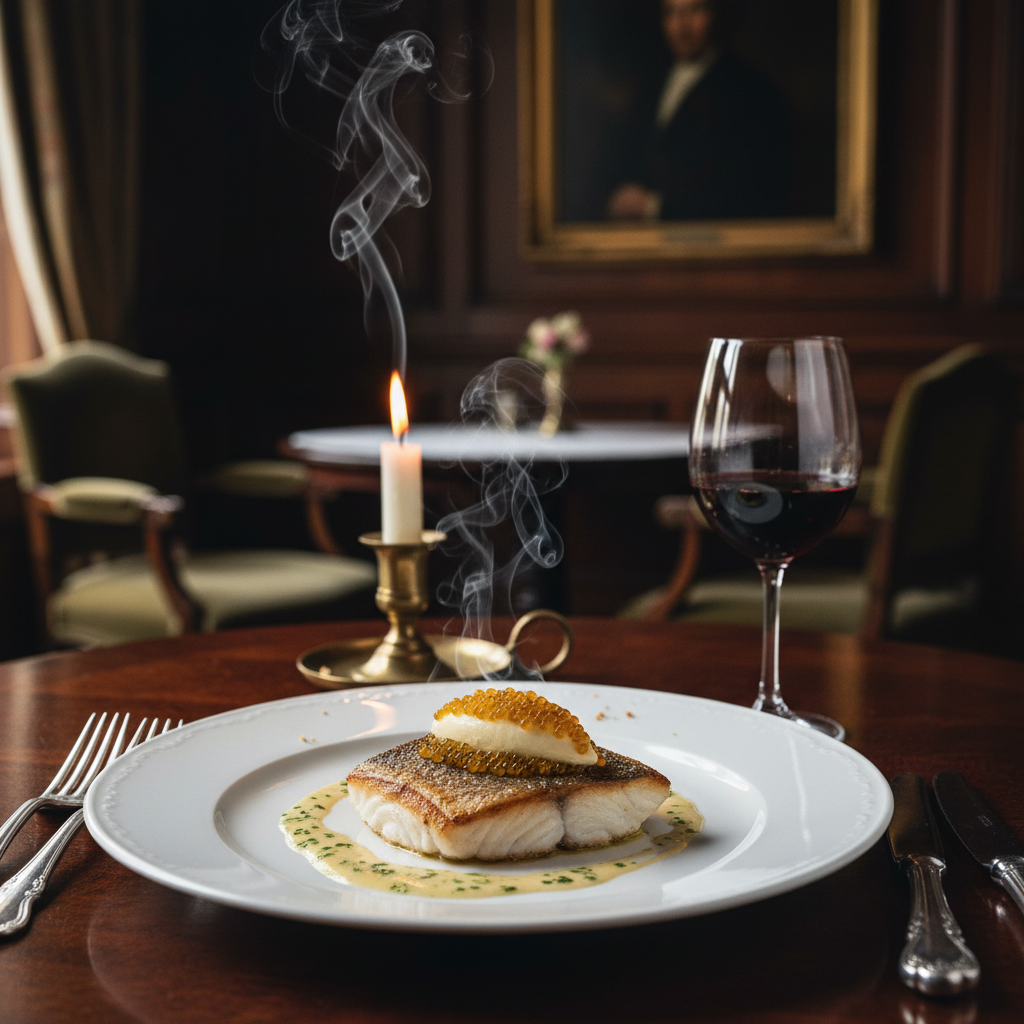
For the main course, I chose another pillar of the house: the escalope de bar à l'émincé d'artichaut et caviar. A thick, pearlescent tranche of line-caught sea bass, pan-seared to achieve a skin of impossible crispness while leaving the flesh succulent and translucent. It sat on a bed of finely shaved artichoke, its subtle bitterness a perfect counterpoint to the richness of the fish. Crowned with a generous spoonful of golden Osetra caviar, the dish is a study in luxury, but a luxury born of purity, not ostentation. The saline pop of the caviar, the tender flake of the bass, the earthy note of the artichoke—each element was distinct, yet combined into a harmonious whole that was breathtaking in its clarity. One understands, in tasting a dish like this, that the highest form of technique is not that which is most visible, but that which becomes invisible, leaving only the perfection of the result.
A Perfect Coda
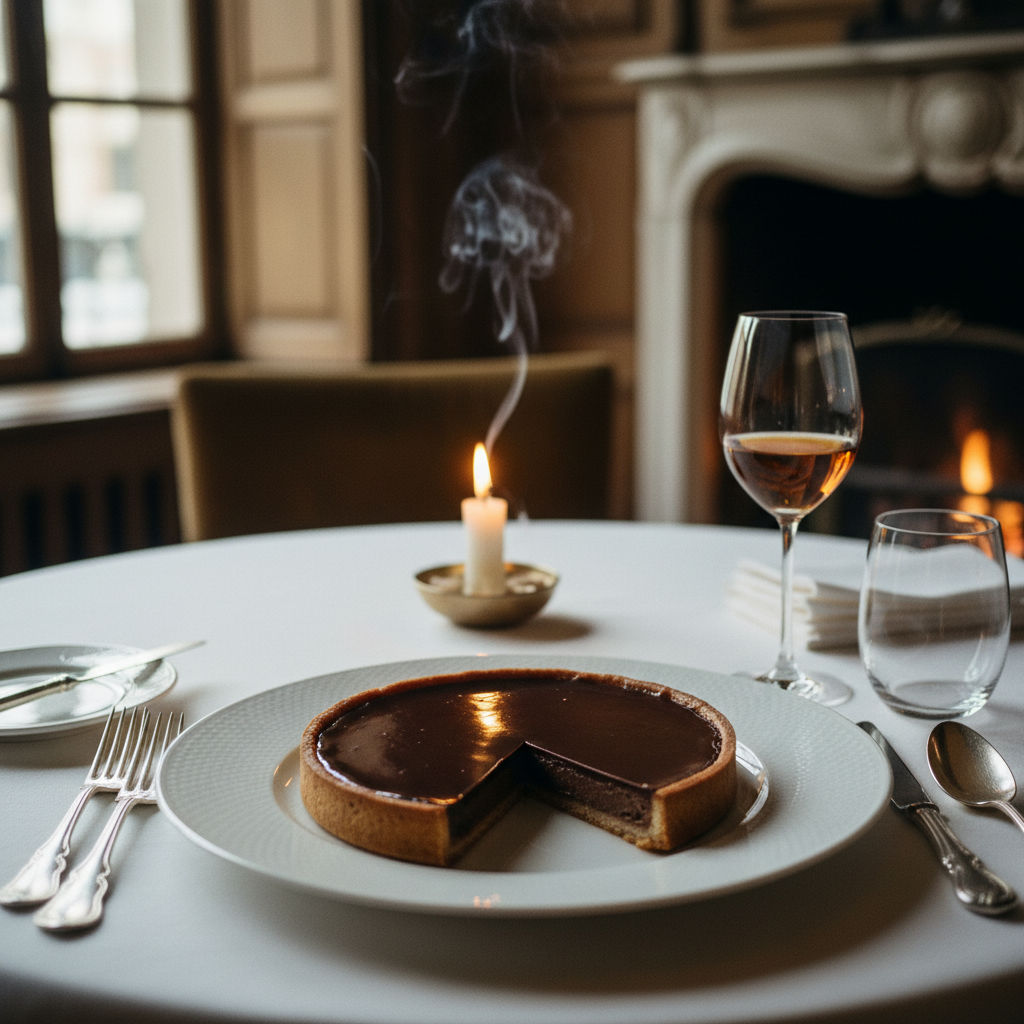
Even the conclusion of the meal is an exercise in this philosophy of essentialism. The famed tarte fine sablée au chocolat is a dessert spoken of in hushed tones by gastronomes the world over, and for good reason. It is, on its face, a simple chocolate tart. But to taste it is to understand the difference between the simple and the simplistic. An impossibly thin, crisp pastry shell holds a layer of pure, dark, liquid chocolate ganache, so intense and unadulterated it feels like a direct transmission from the cacao bean itself. It is served unadorned, with no cream, no fruit, no distracting dustings of powder. It needs nothing.
Leaving L’Ambroisie and stepping back out into the quiet dark of the Place des Vosges, one feels a sense of recalibration. In a world of constant noise and novelty, a meal here is a reminder that the most profound statements are often the quietest. It is not about what is new, but what is true. And in its unwavering commitment to that truth, L’Ambroisie remains not just a great restaurant, but a necessary one.