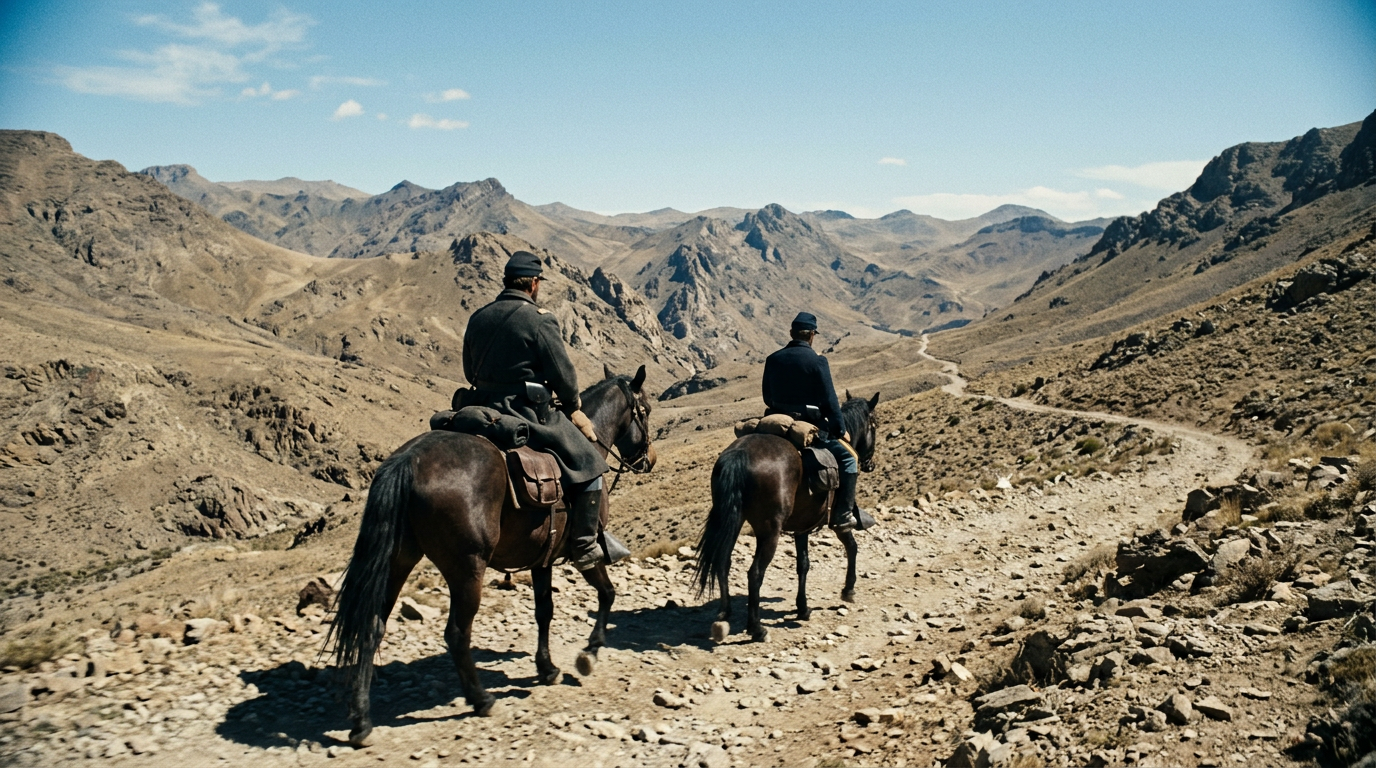
Original interpretation — not a still from the production
Ambition, empire and two magnificent scoundrels.
The Continental Verdict
Essential
John Huston's 1975 epic, "The Man Who Would Be King," remains a cornerstone of adventure cinema, an adaptation of Rudyard Kipling's 1888 novella that faithfully captures its spirit of grand ambition and inevitable hubris. Sean Connery and Michael Caine, in roles that feel tailor-made, portray Daniel Dravot and Peachy Carnehan, two former British soldiers who venture into the remote Kafiristan with the audacious aim of becoming kings. Their journey is a testament to the era of imperial dreams and the indomitable, if often misguided, spirit of exploration. Huston, who had harboured a desire to film this story for decades, imbues the narrative with a potent blend of action, humour, and ultimately, tragedy, set against a backdrop of breathtaking, rugged landscapes.
What elevates "The Man Who Would Be King" beyond a mere adventure yarn is its astute observation of friendship, loyalty, and the corrupting nature of power. Dravot's descent from pragmatic schemer to deluded deity, and Carnehan's unwavering, albeit cynical, devotion, form the emotional core of the film. Christopher Plummer's portrayal of Kipling himself, serving as the framing device, lends an additional layer of authenticity and reflection on the nature of storytelling and colonial enterprise. The film is a masterclass in pacing, building steadily from a roguish caper to a profound meditation on the folly of man, leaving a lasting impression of the price paid for an empire built on illusion.
Why Watch It
The Gentleman Factor
The film presents a study in male camaraderie and aspiration, however flawed. It examines the fine line between daring enterprise and reckless folly, and the ultimate wisdom in knowing when to retreat. A reminder that true character is often revealed not in victory, but in defeat and loyalty.
Look Out For
- The majestic and often brutal landscapes of Morocco, standing in for Kafiristan.
- The intricate details of period military attire and tribal adornments.
- The stark beauty of ancient mountain passes and secluded valleys.
The Locations
Filmed predominantly in Morocco, with scenes in Marrakesh and Ouarzazate, effectively conveying the remote and formidable terrain of the Hindu Kush.
More from the travel pages →The Cars
None significant to the plot or visual aesthetic.
More from motoring →The Wardrobe
Designed by Edith Head, the costumes accurately reflect the late 19th-century British military dress and the vibrant, textured attire of the Kafiristani tribes.
More on style →The Soundtrack
Composed by Maurice Jarre, the score is suitably epic, incorporating traditional instrumentation to evoke the exotic setting.
Into the music room →Watch Next
Where to Watch
Available for streaming on various platforms; check local listings.
For the Collection
Also in The Gentleman's Canon
As an Amazon Associate I earn from qualifying purchases. Links cost you nothing and never influence what we recommend. Recommendations are honest and never paid for. Imagery is an original interpretation, not a still from the production.