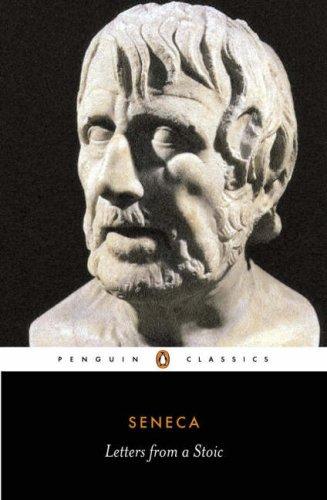
Publisher edition artwork
Letters from a Stoic
Seneca · First published 65
Seneca’s counsel on resilience, virtue, and living a good life, delivered from the heart of the Roman Empire
Essential
Moderate · Approximately 250-300 pages, depending on edition and translation.
Why Read It?
To understand the practical application of Stoic philosophy for navigating life’s challenges and cultivating inner tranquillity.
What It's About
A collection of 124 letters from Seneca to his friend Lucilius, exploring various aspects of Stoic philosophy, including virtue, reason, adversity, friendship, wealth, and the fear of death.
Why It Matters
It offers timeless wisdom on human nature, ethical living, and resilience, providing practical guidance for achieving a serene and purposeful life.
The Review
Lucius Annaeus Seneca, the illustrious Roman statesman, playwright, and philosopher, penned his “Epistulae Morales ad Lucilium” – commonly known as “Letters from a Stoic” – during the twilight of his life. Written as a series of letters to his younger friend Lucilius Junior, these missives transcend mere correspondence, evolving into a profound exposition of Stoic philosophy. Seneca, a man of immense wealth and influence, often found himself navigating the treacherous currents of imperial Rome under Nero, a context that lends an immediate, practical urgency to his reflections on inner peace, the ephemeral nature of fortune, and the inevitability of death.
The genius of these letters lies in their accessible, conversational style, which belies the depth of the wisdom contained within. Seneca does not preach from an ivory tower, but rather engages in a candid dialogue, sharing his own struggles and triumphs on the path to Stoic virtue. He dissects fundamental tenets such as the control of emotions, the pursuit of wisdom, the judicious use of time, and the acceptance of one’s fate. His advice, though two millennia old, remains remarkably pertinent, offering a framework for confronting contemporary anxieties with a measured, philosophical detachment. The clarity of his prose, even in translation, ensures that these letters are not merely academic exercises but practical guides for living a more considered and resilient existence.
What makes “Letters from a Stoic” particularly compelling is the inherent tension between Seneca’s personal circumstances and his philosophical proclamations. He writes of moderation from opulent villas, and of facing death with equanimity despite his own forced suicide at Nero’s command. This perceived hypocrisy, far from undermining his message, imbues it with a certain humanity. It suggests that even those most entangled in the world’s luxuries and power struggles can strive for, and find solace in, the rigours of Stoic thought. It is a testament to the enduring power of ideas, proving that true wisdom often blossoms in the most improbable of settings, offering guidance that transcends the specifics of time and place.
Best Read
In a quiet study, or perhaps during a contemplative moment in a library, preferably with a strong cup of Earl Grey.
Three Things You'll Take From It
- 01
The importance of distinguishing between what is within our control and what is not.
- 02
The pursuit of virtue as the ultimate good.
- 03
The necessity of facing and accepting mortality.
Better Read or Heard?
While several audio versions exist, the gravitas of Seneca’s prose is often best appreciated on the page, allowing for moments of pause and reflection.
If You Like This…
Meditations — Marcus Aurelius
Another cornerstone of Stoic thought, offering the private reflections of a Roman Emperor.
Find it on AmazonOn the Shortness of Life — Seneca
A powerful essay exploring the value of time and how to live a meaningful existence.
Find it on Amazon
The Edition to Own
The Penguin Classics edition, translated by Robin Campbell (1969), is widely respected for its clarity and accessibility. Available in paperback.
As an Amazon Associate I earn from qualifying purchases. Links cost you nothing and never influence what we recommend.