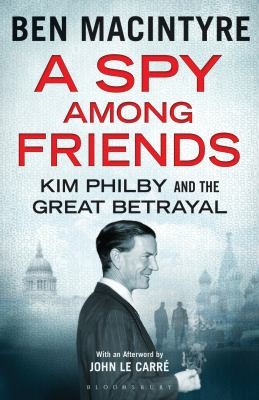
Publisher edition artwork
A Spy Among Friends
Ben Macintyre · First published 2014
Philby, betrayal and the clubland trust that made it possible. Reads like fiction; is not
Essential
Moderate · 352 pages
Why Read It?
To understand the intricate psychology of betrayal, the vulnerabilities inherent in entrenched social circles, and the enduring allure of espionage narratives rooted in inconvenient truths.
What It's About
The intricate story of Kim Philby, the notorious Soviet mole within the British intelligence services, focusing particularly on his deep friendship with fellow MI6 officer Nicholas Elliott and the eventual unmasking of his treachery.
Why It Matters
It offers a penetrating insight into the Cold War’s human cost, the psychology of double-dealing at the highest echelons of power, and the profound impact of individual betrayal on national security and personal trust. It also serves as a cautionary tale about the perils of unchecked privilege and unchallenged assumptions.
The Review
Ben Macintyre's 'A Spy Among Friends' casts its keen eye over one of the 20th century's most enduring mysteries: the betrayal of Kim Philby. Macintyre, with his characteristic blend of exhaustive research and narrative flair, illuminates the complex web of personal loyalties and institutional blind spots that allowed Philby to operate as a Soviet agent at the heart of the British establishment for decades. The focus here is not merely on the mechanics of espionage, but on the profound human element – the friendships, the shared class assumptions, and the almost wilful blindness that characterised the relationships between Philby, Nicholas Elliott, and James Angleton. Macintyre deftly navigates the social milieu of Cambridge, the Secret Intelligence Service, and the gentleman's clubs of London, demonstrating how a particular brand of British upper-class trust, cultivated within a small, interconnected world, became both a strength and a fatal vulnerability.
The book excels in its portrayal of Elliott, Philby's closest friend and ultimate interrogator, and the devastating impact of the deception on him. It explores the psychological toll of such a profound betrayal, not just on individuals, but on an entire institution. Macintyre eschews sensationalism, opting instead for a meticulous reconstruction of events, drawing on declassified documents, personal testimonies, and the memoirs of those involved. He presents a nuanced portrait of Philby – not as a cartoon villain, but as a man of formidable intellect and charm, whose ideological convictions were concealed behind an impeccable facade of British civility. The narrative maintains a tension throughout, even for those familiar with the outcome, by delving into the 'how' and 'why' of the betrayal, rather than simply the 'what'.
Best Read
In a well-worn leather armchair, with a glass of a decent single malt, as dusk settles.
Three Things You'll Take From It
- 01
The destructive power of unchecked loyalty and ingrained social trust.
- 02
The meticulous nature of long-term espionage and counter-intelligence.
- 03
The profound personal and institutional cost of betrayal.
Better Read or Heard?
The audiobook, often narrated by Ben Macintyre himself, offers an immersive experience, capturing the author’s precise articulation and measured tone, well-suited to the gravity of the subject.
If You Like This…
Tinker Tailor Soldier Spy — John le Carré
For a fictional, yet deeply authentic, exploration of the psychological and moral complexities of British espionage.
Find it on AmazonOperation Mincemeat — Ben Macintyre
For another brilliantly researched and engaging true story from Macintyre, focusing on WWII deception.
Find it on Amazon
The Edition to Own
The 2014 Bloomsbury Publishing PLC hardback edition offers a robust and aesthetically pleasing volume for the serious reader.
As an Amazon Associate I earn from qualifying purchases. Links cost you nothing and never influence what we recommend.